
What Is a Dual Polarized Yagi Antenna?






2018-10-02 13:00:09
A Dual Polarized Yagi antenna recieving wire is an progressed directional recieving wire plan that combines the conventional Yagi-Uda structure with double polarization capabilities. This inventive radio wire sort permits for the synchronous transmission and gathering of signals in two orthogonal polarizations, regularly even and vertical. By consolidating different components, counting a driven component, reflector, and chiefs, the Double Polarized Yagi radio wire accomplishes tall pick up and directivity whereas keeping up the capacity to handle signals in different polarizations. This interesting combination of highlights makes it an important apparatus in cutting edge communication frameworks, advertising upgraded execution, made strides flag quality, and expanded flexibility over a wide extend of applications.
Definition and operating principle of a dual polarized Yagi
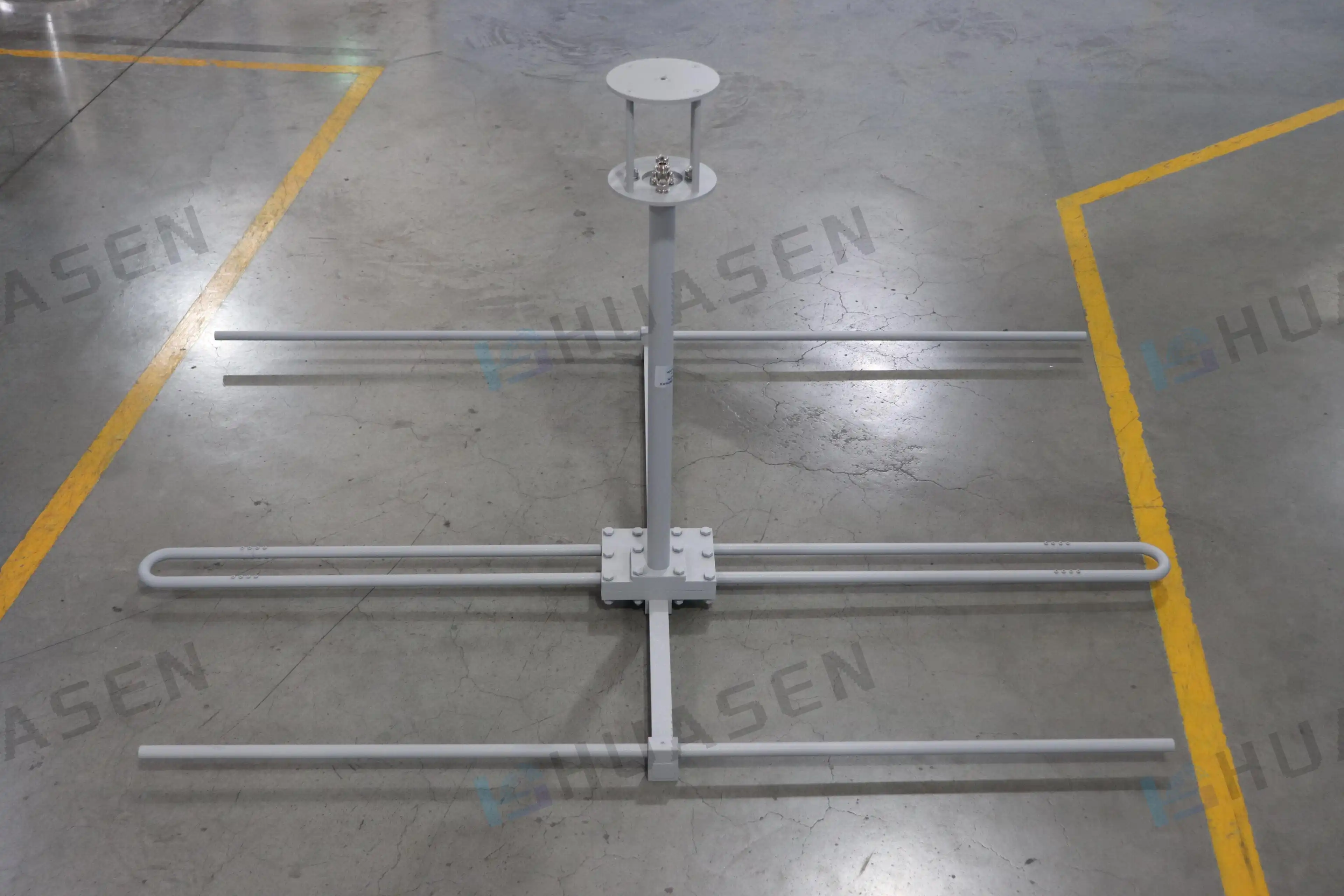
The Dual Polarized Yagi antenna builds upon the classic Yagi-Uda design, which has been a staple in directional antenna technology for decades. At its core, this antenna type consists of several key components working in harmony to achieve its remarkable performance:
Key Components:
- Driven Element: The active radiating element, typically a dipole, that connects to the transmitter or receiver
- Reflector: A slightly longer element positioned behind the driven element to enhance forward gain
- Directors: Multiple shorter elements placed in front of the driven element to focus the radiation pattern
- Boom: The supporting structure that holds all elements in precise alignment
What sets the Dual Polarized Yagi apart is its ability to handle two orthogonal polarizations simultaneously. This is achieved through a clever design that incorporates two separate feed systems within the driven element, each excited independently to produce either horizontal or vertical polarization. The result is an antenna that can transmit and receive signals in both polarizations without the need for physical rotation or switching mechanisms.
Operating Principle:
The Dual Polarized Yagi antenna operates on the principle of electromagnetic coupling between its various elements. As the driven element is excited by the radio frequency signal, it induces currents in the nearby passive elements (reflector and directors). These induced currents create a phased array effect, shaping the radiation pattern into a highly directional beam. The dual polarization feature is implemented by feeding the driven element with two separate signals, each corresponding to a different polarization. This allows the antenna to maintain high gain and directivity while simultaneously supporting multiple polarization states.
Benefits of dual polarization in Yagi antenna systems
The incorporation of dual polarization capabilities in Yagi antenna systems offers a multitude of advantages that significantly enhance communication performance and versatility:
Enhanced Signal Quality and Reliability:
One of the primary benefits of dual polarization is its ability to mitigate the effects of multipath fading and interference. By utilizing both horizontal and vertical polarizations, the antenna can capture signals that may have undergone polarization rotation due to reflections or atmospheric effects. This redundancy in signal reception leads to improved signal-to-noise ratios and more reliable communications, especially in challenging environments.
Increased Channel Capacity:
Dual polarization effectively doubles the available channel capacity without requiring additional frequency spectrum. By transmitting independent data streams on each polarization, communication systems can achieve higher data rates and improved spectral efficiency. This is particularly valuable in bandwidth-constrained scenarios or when upgrading existing infrastructure without changing frequency allocations.
Versatility and Adaptability:
The ability to operate in multiple polarization modes makes the Dual Polarized Yagi antenna incredibly versatile. It can easily adapt to different communication protocols and system requirements without the need for physical antenna changes or realignment. This flexibility is especially beneficial in dynamic environments where polarization may vary or in applications that require interoperability with diverse equipment.
Improved MIMO Performance:
The assorted application scenarios of waveguide coordinating loads in RF/microwave test frameworks and radar frameworks emphasize their basic significance in keeping up flag judgment, guaranteeing estimation exactness, and optimizing framework execution. From accuracy calibration and successful end to their utilize in radar transmit chains and as sham loads, these components play a crucial part over a wide run of high-frequency applications. As a trusted Waveguide Matching Load supplier and Dual Polarized Yagi Antenna supplier, Huasen Microwave Technology Co., Ltd. provides precision-engineered solutions designed to ensure superior performance and reliability in demanding RF and microwave environments.
Typical applications of dual polarized Yagi (e.g. communications, broadcasting)
The versatility and performance advantages of Dual Polarized Yagi antennas make them suitable for a wide range of applications across various industries:
Telecommunications:
In the rapidly evolving world of telecommunications, these antennas play a crucial role in enhancing network performance and capacity. They are commonly used in:
- Cellular Base Stations: Providing improved coverage and capacity for mobile networks, especially in 4G and 5G deployments
- Point-to-Point Links: Establishing high-bandwidth, reliable connections for backhaul networks
- Fixed Wireless Access: Delivering broadband internet services to remote or underserved areas
Broadcasting:
The broadcasting industry benefits significantly from the directional properties and dual polarization capabilities of these antennas:
- Television Transmission: Ensuring wide coverage and signal quality for digital TV broadcasts
- Radio Broadcasting: Enhancing signal reach and clarity for FM and digital radio stations
- Satellite Communications: Facilitating ground-to-satellite links for various broadcasting applications
Radar Systems:
Dual Polarized Yagi antennas find extensive use in radar applications, offering improved target detection and classification:
- Weather Radar: Providing more accurate precipitation measurements and storm tracking
- Air Traffic Control: Enhancing aircraft detection and tracking capabilities
- Maritime Radar: Improving vessel detection and navigation in coastal waters
Scientific Research:
These antennas are valuable tools in various scientific fields:
- Radio Astronomy: Capturing weak signals from celestial sources with high sensitivity
- Environmental Monitoring: Collecting data on atmospheric conditions and climate patterns
- Electromagnetic Compatibility Testing: Evaluating electronic devices for compliance with regulatory standards
Defense and Security:
The robust performance and adaptability of Dual Polarized Yagi antennas make them suitable for defense applications:
- Tactical Communications: Providing reliable, secure links for military operations
- Electronic Warfare: Supporting signal intelligence and countermeasure systems
- Border Surveillance: Enhancing long-range detection and monitoring capabilities
Conclusion
The Dual Polarized Yagi antenna represents a significant advancement in antenna technology, offering a powerful combination of high gain, directionality, and polarization diversity. Its ability to enhance signal quality, increase channel capacity, and adapt to various applications makes it an invaluable asset in modern communication systems.
For broadcast communications companies, framework trustworthiness, and gear producers looking for to optimize their RF arrangements, Huasen Microwave Innovation Co., Ltd. offers a run of high-performance Double Polarized Yagi radio wires. With over three decades of ability in microwave and millimeter-wave component fabricating, Huasen is committed to conveying solid, customizable radio wire arrangements that meet the demanding requests of today's progressed communication frameworks. Whether you're updating existing foundation or creating cutting-edge applications, our group of specialists is prepared to help you in finding the culminate radio wire arrangement for your needs. Contact us at sales@huasenmicrowave.com to learn more approximately how our Double Polarized Yagi radio wires can hoist your communication frameworks to unused statures of execution and reliability.
References
1. Johnson, R.C. and Jasik, H. (1984). Antenna Engineering Handbook, Second Edition. McGraw-Hill Book Company.
2. Balanis, C.A. (2005). Antenna Theory: Analysis and Design, Third Edition. Wiley-Interscience.
3. Stutzman, W.L. and Thiele, G.A. (2012). Antenna Theory and Design, Third Edition. John Wiley & Sons.
4. Kraus, J.D. and Marhefka, R.J. (2002). Antennas for All Applications, Third Edition. McGraw-Hill.
5. Volakis, J.L. (2007). Antenna Engineering Handbook, Fourth Edition. McGraw-Hill Professional.
6. Milligan, T.A. (2005). Modern Antenna Design, Second Edition. John Wiley & Sons.
Send Inquiry
Related Industry Knowledge
- Coaxial Load vs. Coaxial Attenuator: What’s the Difference?
- What Is an AC Power Amplifier?
- Why Can Broadband Double Ridged Horn Antennas Cover Ultra-Wide Frequencies?
- What Is a Circularly Polarized Horn Antenna? A Beginner-Friendly Guide
- How Does a Waveguide Seal Window Achieve Air/Thermal Seal While Transmitting RF/Microwave Signals?
- What Are the Application Scenarios of Circular Waveguide to Coaxial Adapters in Satellite Communication Systems?
- What Are the Application Scenarios of Waveguide Flex in Radar Systems?
- What Is a Dual Polarized Yagi Antenna?
- How to Pick the Right Waveguide Switch: Key Differences Between Electric and Manual Models
- Features and Selection Guide: Manual Waveguide Switches vs. Electric Waveguide Switches
