
How to Pick the Right Waveguide Switch: Key Differences Between Electric and Manual Models






2018-01-01 13:30:02
Selecting the fitting waveguide switch for RF and microwave applications requires understanding the crucial contrasts between electric and manual setups. The choice between these operational modes specifically impacts framework execution, computerization capabilities, reaction time, and operational effectiveness. An Electric Waveguide Switch offers robotized control, fast exchanging capabilities, and consistent integration with advanced communication and radar frameworks, making it perfect for applications requesting high-speed flag directing and farther operation. Manual waveguide switches give straightforwardness and cost-effectiveness for inactive setups or research facility situations where exchanging recurrence remains moo. Understanding these refinements empowers engineers to optimize framework plan, diminish operational costs, and guarantee solid flag administration over broadcast communications, aviation, defense, and testing foundation.
Understanding the Core Operating Principles
Electric Waveguide Switch Mechanism and Control Systems
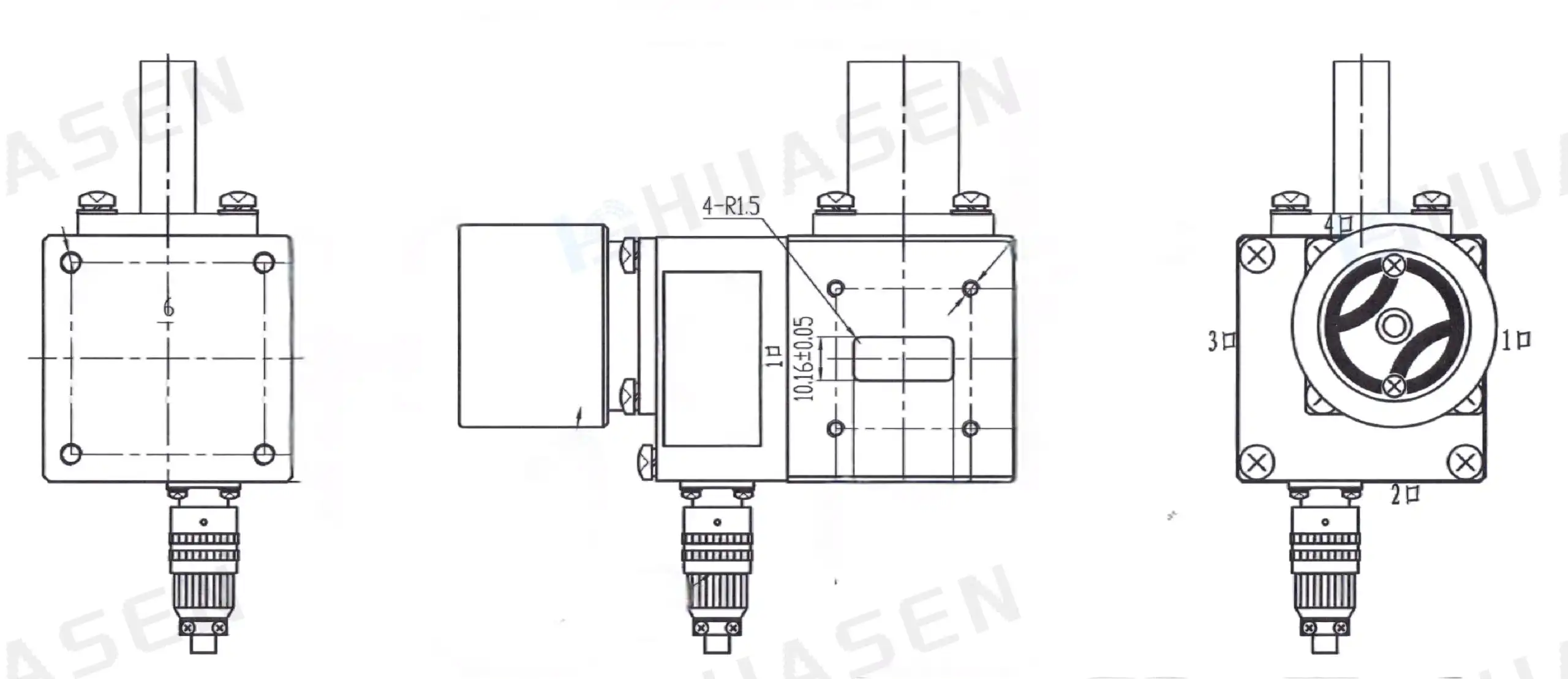
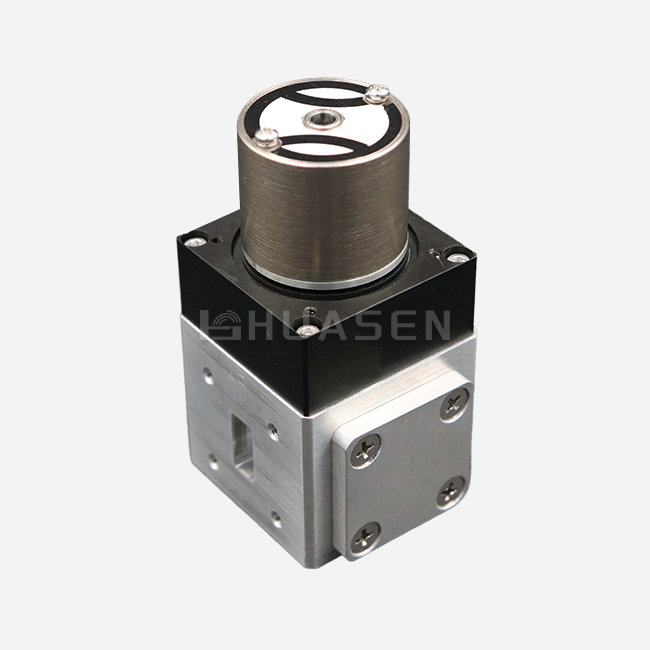
An Electric Waveguide Switch works with electromechanical or ferrite-based actuation systems that allow exact signal routing through electromagnetic control. To move electrical parts inside the waveguide structure, these switches use two different types of power supplies to power internal mechanisms. The E-plane (WES) and H-plane (WHS) configurations are the two main ways to build a structure, and they can both accommodate rectangular and dual-ridge waveguide types. Accurate CNC machining makes sure that the waveguide has the best shape and maintains the necessary dimensions to keep insertion loss to a minimum and separation to a maximum. Using advanced plating methods to apply silver or gold to copper surfaces makes them more conductive across the whole frequency range. It is amazing how well the swapping mechanism works because the insertion loss is less than 0.1 dB at low frequencies and less than 0.5 dB at high frequencies, and the isolation levels stay above 70 dB. This great separation performance makes sure that signals don't leak too much between ports, which is very important for keeping signals pure in complicated RF systems. Ferrite-based Electric Waveguide Switch designs can switch on and off in as little as 2 microseconds, which lets phased array radar systems and high-speed telecommunications equipment route signals almost instantly. Standard electromechanical models, on the other hand, have switching times of 300 milliseconds or more.
Manual Waveguide Switch Construction and Performance
Manual waveguide switches use spinning mechanisms or sliding contact systems to move mechanically when they are physically moved. Precision-machined parts made from high-grade copper and metal are used in these devices to make sure they always work electrically and mechanically. Manual switches don't need an outside power source like electric ones do, so you don't have to worry about power outages or radio interference. The mechanical simplicity makes it very reliable over a long period of time with little upkeep needed in environments that are kept in good shape. The insertion loss (IL) and isolation levels for manual designs are about the same, with IL values of less than 0.15 dB and isolation levels of more than 60 dB across all frequency bands. The building can hold waveguides of different sizes, from WR-2300 to WR-10, and can handle frequencies from 1.72 GHz to 112 GHz. To find the best mix between conductivity, weight, and corrosion resistance, materials selection focuses on oxidized aluminum or silver-plated copper.
Comparative Performance Characteristics
Performance differences between electric and manual switches manifest primarily in switching speed, automation capability, and environmental suitability. Electric Waveguide Switch technology delivers switching times from 300 milliseconds to under 2 microseconds, enabling rapid signal path reconfiguration essential for radar scanning, frequency hopping communications, and automated test sequences. This speed advantage becomes critical in smart factories and IoT sensor networks where real-time signal routing supports dynamic network topologies. Manual switches, while slower, provide absolute reliability in applications where switching events occur infrequently. Multi-channel configurations available in Electric Waveguide Switch products, including SPDT, DPDT, and three-channel six-port designs, offer unprecedented flexibility for complex signal routing scenarios. EMI/RFI shielding compliance with IEC 61000-6-2 and IEC 61000-6-4 standards ensures both switch types maintain signal integrity in electromagnetically noisy environments typical of high-power microwave systems and satellite communications.
Selection Criteria Based on Application Requirements
System Integration and Automation Considerations
Determining whether an Electric Waveguide Switch or manual alternative best serves specific applications demands evaluation of system-level integration parameters. Modern telecommunications infrastructure depends on centralized control systems managing thousands of signal paths simultaneously, making electric switches indispensable for automation density. The dual power supply control method facilitates seamless integration with programmable logic controllers and network management platforms through standard electrical interfaces. Remote operation capability eliminates personnel access needs, particularly valuable in hazardous environments or satellite ground stations. Test and measurement equipment increasingly specifies Electric Waveguide Switch components to enable automated test sequences without manual intervention, dramatically improving throughput. Manual switches excel in research laboratory environments where configuration changes occur infrequently and direct human verification provides additional operational assurance.

Frequency Coverage and Environmental Requirements
Matching waveguide switch specifications to application frequency requirements represents a critical selection factor. Electric Waveguide Switch products covering 1.72 GHz to 112 GHz accommodate virtually all commercial and defense RF applications. Wide-frequency operation enables system designers to standardize on a single switch technology platform across multiple frequency bands. Low insertion loss specifications maintain critical importance in receiver front-end applications where every tenth of a decibel impacts system noise figure. High isolation exceeding 70 dB proves essential in radar systems where transmit/receive switching must prevent high-power transmitter energy from reaching sensitive receiver components. Operating environment characteristics significantly influence the appropriate choice between technologies. Electric Waveguide Switch designs incorporating sealed actuator housings withstand harsh conditions typical of outdoor installations and aerospace applications. Rigorous quality control at every production stage ensures consistent performance across temperature extremes and prolonged operational periods.
Cost Analysis and Long-Term Value Considerations
Total Cost of Ownership and Operational Efficiency
The acquisition cost differential represents only the initial component of comprehensive lifecycle cost analysis. Manual switches typically command lower unit prices, making them attractive for budget-constrained projects. However, total cost of ownership must incorporate installation expenses, operational labor costs, and system downtime considerations. Electric switches eliminate manual intervention requirements, reducing operational staffing needs in automated test facilities. The switching time advantage enables higher equipment utilization rates by reducing non-productive intervals. Smart factories benefit from Electric Waveguide Switch integration enabling dynamic network reconfiguration without technician dispatch, translating to substantial operational cost savings over multi-year deployments. System scalability considerations influence selection when anticipating future expansion. Electric Waveguide Switch installations integrate readily with control system expansions through standardized electrical interfaces.
Performance Reliability for Mission-Critical Applications
Applications where switch failure carries significant operational consequences demand careful reliability assessment beyond basic cost comparisons. Electric Waveguide Switch designs undergo extensive qualification testing validating performance across environmental extremes and electrical operating conditions. State-of-the-art manufacturing processes including precision CNC machining and advanced plating techniques ensure dimensional consistency across production quantities. Quality control protocols verify insertion loss, isolation, switching time, and power handling specifications for every unit prior to shipment. The isolation specification of ≥ 70 dB and insertion loss of ≤ 0.1 dB demonstrate precision manufacturing capability essential for reliable high-frequency performance in aerospace platforms and defense systems.
Conclusion
Selecting between electric and manual waveguide switches depends on adjusting computerization prerequisites, exchanging speed needs, natural conditions, and lifecycle costs against particular application requests. Electric Waveguide Switch innovation conveys prevalent execution for computerized frameworks and quick flag directing, whereas manual choices give cost-effective arrangements for inactive arrangements.
As one of the best Electric Waveguide Switch manufacturers and suppliers, Huasen Microwave makes Electric Waveguide Switches (WDESMD) in a number of different designs, such as single-pole double-throw, double-pole double-throw, and three-channel six-port. The waveguide sizes that can be made on our line range from WR-2300 to WR-10. They have an isolation level of at least 70 dB, an insertion loss level of at least 0.1 dB, a switching time of at least 300 ms, and a frequency range of 1.72 GHz to 112 GHz. Send us an email at sales@huasenmicrowave.com to talk about your unique needs and find out how our precision-engineered solutions can improve the performance of your RF system.
References
1. Pozar, David M. Microwave Engineering, 4th Edition. John Wiley & Sons, 2012.
2. Collin, Robert E. Foundations for Microwave Engineering, 2nd Edition. IEEE Press, 2001.
3. Ramo, Simon, John R. Whinnery, and Theodore Van Duzer. Fields and Waves in Communication Electronics, 3rd Edition. John Wiley & Sons, 1994.
4. Clarricoats, P.J.B. and A.D. Olver. Corrugated Horns for Microwave Antennas. IET Electromagnetic Waves Series, 1984.
5. Saad, Theodore S. Microwave Engineers' Handbook, Volumes 1-2. Artech House Publishers, 1971.
6. Montgomery, C.G., Robert H. Dicke, and Edward M. Purcell. Principles of Microwave Circuits. MIT Radiation Laboratory Series, Dover Publications, 1948.
Send Inquiry
Related Industry Knowledge
- How to Use a Coaxial Fixed Attenuator in RF Testing (With Common Mistakes to Avoid
- How to Use a Coaxial Directional Coupler for 5G Base Station Power Monitoring?
- What Is a Circularly Polarized Horn Antenna? A Beginner-Friendly Guide
- How Does a Coplanar WG Perform in High-Speed Signal Transmission?
- How to Fabricate a High-Precision Mitered Bend Waveguide for Microwave/MMWave Applications?
- When to Choose a Dual Channel vs. Single Channel Waveguide Rotary Joint?
- How to Pick the Right Waveguide Switch: Key Differences Between Electric and Manual Models
- What Affects Crossguide Couplers’ Phase Stability? Factors to Control in System Design
- Features and Selection Guide: Manual Waveguide Switches vs. Electric Waveguide Switches
- Flexible Twistable Waveguides vs. Traditional Rigid Waveguides: A Performance Comparison
