Why Can Broadband Double Ridged Horn Antennas Cover Ultra-Wide Frequencies?






2019-01-11 13:23:17
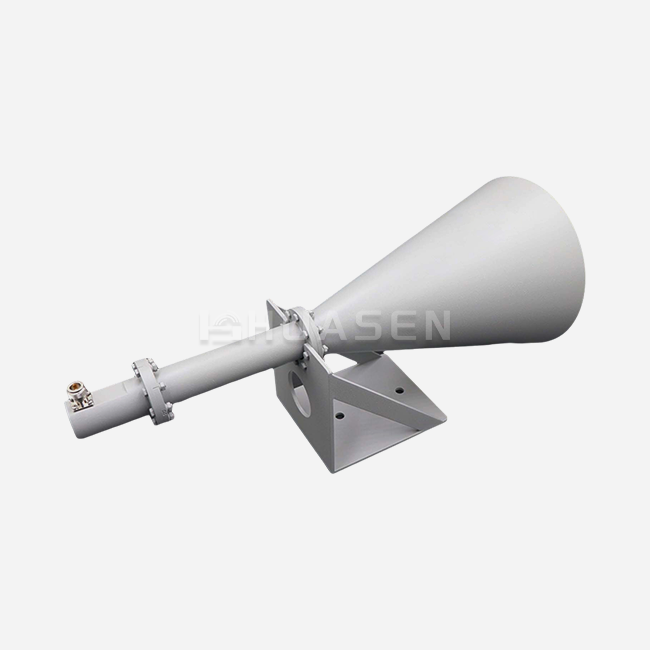
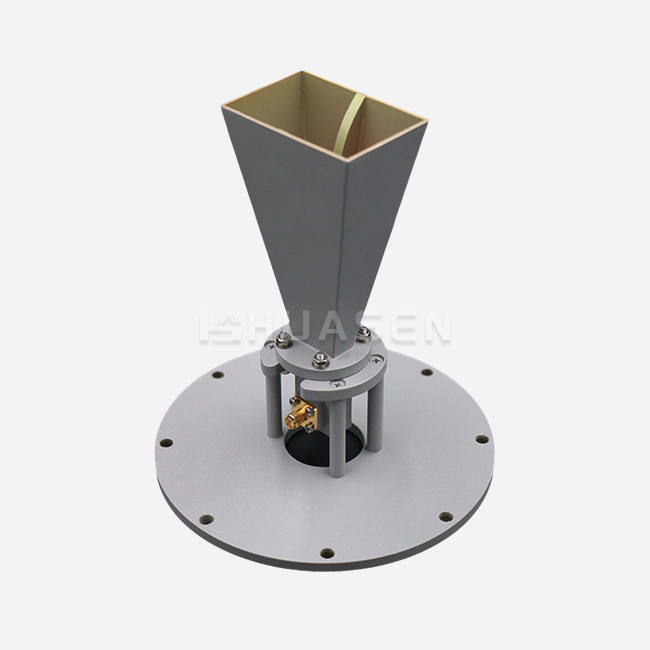
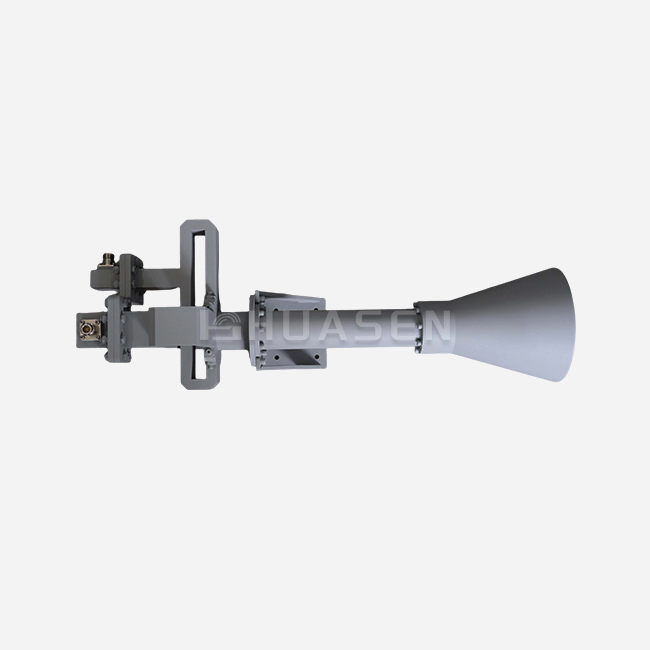
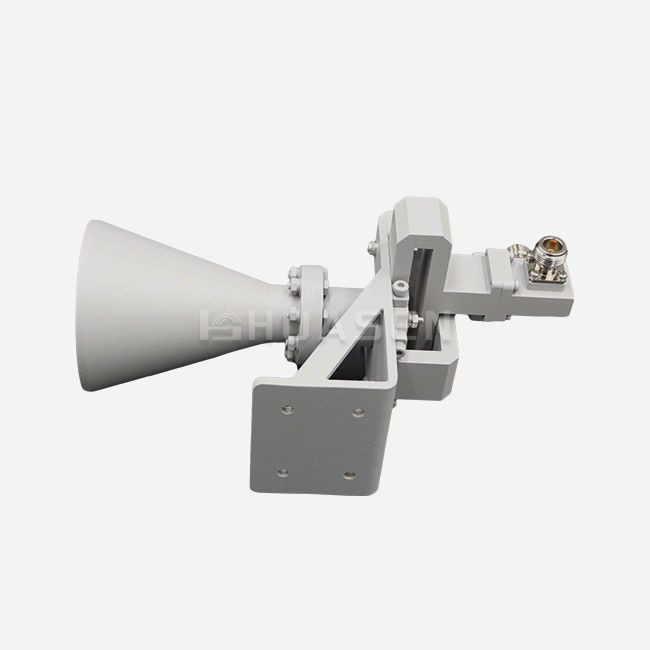
Broadband Twofold Furrowed Horn Receiving wires accomplish ultra-wide recurrence scope through an inventive auxiliary plan including two parallel metallic edges amplifying along the horn's longitudinal hub, which in a general sense modifies the electromagnetic field dispersion and brings down the cutoff recurrence altogether compared to customary smooth-walled horns. This design makes the Broadband Double Ridged Horn Antenna an ideal choice for applications requiring wide bandwidth, stable radiation patterns, and high measurement accuracy. These edges make a capacitive stacking impact that decreases the required physical measurements while amplifying operational transmission capacity to cover octave or indeed decade recurrence ranges. The geometry empowers consistent recurrence scope from 0.1 GHz to 40 GHz, supporting applications in EMC testing, electronic observation, and remote investigation where multi-band operation is fundamental. By producing tall electromagnetic field quality with negligible input control and accepting low-level signals with remarkable pickupextending from 3 dB to 20 dB, these receiving wires have gotten to be crucial instruments in broadcast communications, radar improvement, and aviation businesses requiring dependable wideband performance.

Electromagnetic Field Modification
The ridge structures in a Broadband Double Ridged Horn Antenna fundamentally transform how electromagnetic waves propagate through the antenna aperture by concentrating electric field energy in the gap between opposing ridges. This concentration effect reduces the cutoff frequency of the dominant mode significantly below what would occur in an equivalent rectangular waveguide without ridges, enabling operation at much lower frequencies without increasing physical antenna dimensions. The capacitive loading introduced by the ridges counteracts the inductive characteristics of the waveguide, creating a more favorable impedance environment across extended frequency ranges. As frequency increases, the relative effect of ridge loading diminishes gradually, allowing the antenna to maintain consistent radiation characteristics throughout its operational spectrum. Modern designs achieve stable gain variation within ±1.5dB across entire frequency ranges, demonstrating remarkable consistency that conventional horn antennas cannot match. The adjustable beamwidth capabilities, with E-plane coverage from 15° to 80° and H-plane coverage from 11° to 62°, provide flexibility for various measurement scenarios and application requirements. Engineering analysis shows that ridge dimensions, spacing, and taper profile critically influence bandwidth performance, with optimized geometries enabling decade bandwidth coverage while maintaining acceptable return loss and radiation pattern stability throughout the frequency spectrum.
Impedance Matching Mechanisms
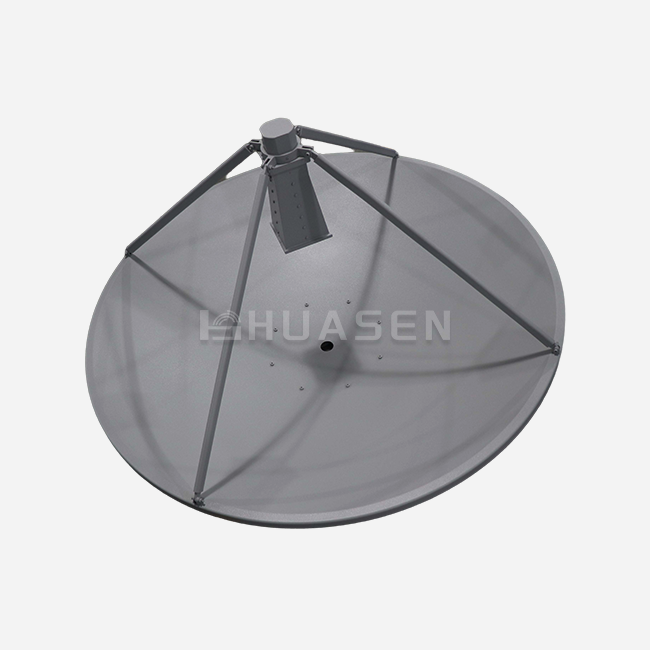
Achieving broadband impedance matching represents one of the primary challenges in Broadband Double Ridged Horn Antenna design, requiring careful optimization of ridge profiles and flare angles to ensure smooth transitions from feeding waveguide to free space across ultra-wide bandwidths. The ridges create a gradual impedance transformation that prevents reflections which would otherwise limit usable bandwidth and create standing wave patterns. Advanced designs employ exponentially tapered ridges that maintain optimal impedance relationships as the horn aperture expands, ensuring voltage standing wave ratio remains acceptably low across multiple octaves. The transition region between the feeding waveguide and the ridged section requires particular attention, with stepped or continuously tapered interfaces preventing impedance discontinuities that generate unwanted reflections. Frequency doubling types extend coverage into millimeter-wave regions, while ultra-wideband variants prioritize maximum bandwidth ratio, and miniature types optimize size reduction for portable applications. These product types serve different operational requirements while sharing fundamental ridge-loading principles. Precision CNC machining ensures exact dimensional control necessary for achieving theoretical performance predictions, with tolerances measured in hundredths of millimeters determining whether designs meet specification requirements. The compatibility with parabolic reflector antenna feeds expands application possibilities, enabling high-gain directional systems for long-range communication and surveillance operations where wideband performance proves essential.
Structural Design Optimization
The physical configuration of a Broadband Double Ridged Horn Antenna involves numerous interrelated parameters that must be optimized simultaneously to achieve desired electrical performance across target frequency ranges. Ridge height determines the degree of field concentration and cutoff frequency reduction, with taller ridges providing greater bandwidth extension but potentially introducing higher-order mode complications at upper frequency limits. Ridge separation distance affects characteristic impedance and must be coordinated with ridge height to maintain proper impedance transformation throughout the antenna structure. The horn flare angle influences radiation pattern characteristics and gain, with more aggressive flares providing higher directivity but potentially degrading pattern symmetry and increasing sidelobe levels. Advanced electroforming techniques enable seamless waveguide transitions that eliminate discontinuities which would otherwise create reflections and limit bandwidth performance. Computational electromagnetic modeling tools allow engineers to simulate thousands of design variations rapidly, identifying optimal geometries that balance competing performance requirements including bandwidth, gain stability, pattern quality, and physical size constraints. High-quality copper and aluminum materials provide optimal electrical conductivity and mechanical stability, with anodized surface treatments offering corrosion resistance and environmental protection rated to IP67 standards ensuring reliable outdoor operation in harsh conditions where equipment faces temperature extremes, humidity, precipitation, and contamination exposure.

Conclusion
Broadband Double Ridged Horn Antennas achieve ultra-wide frequency coverage through ridge-loading principles that modify electromagnetic field distributions, enable impedance matching across multiple octaves, and optimize structural parameters for consistent performance. Their ability to generate high field strength with low input power while receiving weak signals with exceptional gain makes them invaluable for EMC testing, electronic surveillance, and advanced research applications spanning telecommunications, radar, aerospace, and defense industries.
FAQ
1. What frequency ranges do these antennas typically cover?
Broadband Double Ridged Horn Antennas offer frequency coverage from 0.1GHz to 40GHz depending on specific design configurations. Ultra-wideband types achieve decade bandwidth ratios, seamlessly spanning multiple octaves without requiring antenna changes. Frequency doubling variants extend into millimeter-wave regions, while miniature designs prioritize compact dimensions for portable testing equipment. Custom specifications enable tailored frequency ranges matching specific application requirements.
2. How do ridge-loaded designs compare to standard pyramidal horns?
Standard pyramidal horns typically achieve fractional bandwidths of 30-40%, while ridge-loaded designs routinely exceed 100% fractional bandwidth through capacitive loading effects. The ridges lower cutoff frequencies significantly, enabling smaller physical dimensions for equivalent low-frequency performance. However, ridge-loaded antennas require more complex manufacturing and careful impedance optimization to prevent reflections across their extended operational spectrum.
3. What applications benefit most from ultra-wide bandwidth?
EMC testing laboratories require wideband antennas to measure radiated emissions and immunity across regulatory frequency ranges without changing equipment. Electronic surveillance operations benefit from monitoring multiple communication bands simultaneously. Wireless research facilities use these antennas for characterizing devices operating across various standards. Radar development and aerospace applications leverage wideband capabilities for frequency-agile systems and multi-function operations requiring rapid frequency switching.
4. Can these antennas maintain polarization purity across their bandwidth?
High-quality Broadband Double Ridged Horn Antennas achieve polarization isolation exceeding 25dB between horizontal and vertical planes throughout their operational range. This exceptional purity results from symmetric ridge geometries and precise manufacturing tolerances. Maintaining consistent polarization characteristics across decade bandwidths requires careful optimization of ridge profiles and flare angles to prevent asymmetric field distributions that would degrade cross-polarization performance at frequency extremes.
Broadband Double Ridged Horn Antenna Manufacturer | Huasen Microwave
As a leading Broadband Double Ridged Horn Antenna supplier and experienced Broadband Double Ridged Horn Antenna manufacturer, Huasen Microwave Technology Co., Ltd. brings over 30 years of RF and microwave expertise to every project. Our advanced antenna solutions deliver unparalleled ultra-wide bandwidth from 700MHz to 40GHz, exceptional polarization purity exceeding 25dB isolation, and stable gain performance with minimal variation across entire frequency ranges. We serve EMC testing laboratories, aerospace and defense contractors, telecommunications researchers, and electronic surveillance professionals worldwide who demand reliable, high-performance measurement tools. Whether you need frequency doubling types for millimeter-wave applications, ultra-wideband variants for decade coverage, or miniature designs for portable testing, our engineering team provides customized solutions with NIST-traceable calibration, comprehensive documentation, and dedicated technical support. Contact us today at sales@huasenmicrowave.com to discuss your specific requirements and discover how our precision-engineered Broadband Double Ridged Horn Antennas can enhance your measurement capabilities and testing efficiency.
References
1. Kerr, J.L. "Short Axial Length Broad-Band Horns." IEEE Transactions on Antennas and Propagation, vol. 21, no. 5, 1973.
2. Turrin, R.H. "Dual Mode Small-Aperture Antennas." IEEE Transactions on Antennas and Propagation, vol. 15, no. 2, 1967.
3. Ridge, D.P. "Design of Broadband Ridged Waveguide and Horn Antennas." Microwave Journal, vol. 24, 1981.
4. Olver, A.D., Clarricoats, P.J.B., Kishk, A.A., and Shafai, L. Microwave Horns and Feeds. IEEE Press, 1994.
5. Balanis, Constantine A. Antenna Theory: Analysis and Design, 4th Edition. John Wiley & Sons, 2016.
6. Bruns, C. and Leuchtmann, P. "Analysis and Simulation of a 1-18 GHz Broadband Double-Ridged Horn Antenna." IEEE Transactions on Electromagnetic Compatibility, vol. 45, no. 1, 2003.
Send Inquiry