What Is an AC Power Amplifier?






2019-01-17 11:46:13
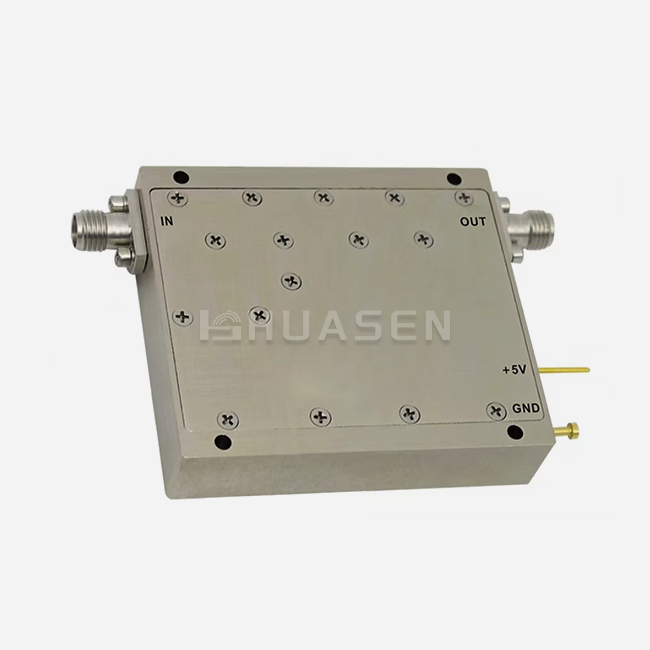
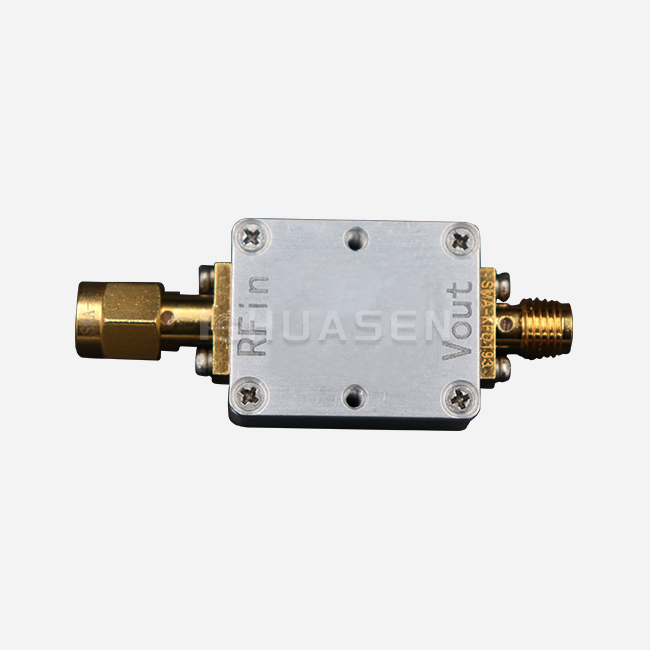
An AC Power Amplifier speaks to a specialized RF intensification arrangement that coordinates control transformation and flag intensification inside a single unit. Functioning similarly to an AC Power Amplifier, it ensures stable performance by delivering consistent power output while maintaining signal integrity. Not at all like conventional RF speakers requiring outside DC control supplies, this gadget highlights built-in AC-DC change modules that acknowledge standard mains voltage straightforwardly. The innovation kills complex control frameworks while conveying high-power RF intensification for broadcast communications, radar frameworks, and defense applications. Present-day plans join advanced warm administration, computerized control interfacing, and security components that guarantee solid operation in requesting situations. The integration approach reduces system complexity, minimizes potential failure points, and streamlines installation processes across various operational scenarios.

Understanding AC Power Amplifier Technology
Core Architecture and Design Principles
The fundamental architecture of an AC Power Amplifier combines sophisticated power conversion with RF amplification stages in an integrated enclosure. The internal power supply accepts voltage ranges from 100V to 240V, automatically adapting to global power standards without manual configuration. Switch-mode power conversion operating at high frequencies achieves compact dimensions while maintaining efficiency levels exceeding ninety percent. Multiple regulated voltage rails supply different amplifier sections, including low-noise supplies for sensitive preamplifier stages and high-current rails for output transistors. Advanced ground plane design prevents switching noise from coupling into RF signal paths, preserving amplifier performance specifications. The RF chain employs gallium nitride or LDMOS transistor technologies selected for their power handling capabilities and efficiency characteristics. Careful impedance matching between stages ensures maximum power transfer while maintaining broadband frequency response. This integration philosophy delivers professional-grade performance while simplifying deployment in space-constrained installations.
Power Conversion and Management Systems
The power management subsystem within an AC Power Amplifier employs sophisticated regulation techniques that maintain stable operation despite input voltage fluctuations and varying load conditions. Precision voltage regulators keep output voltages within one percent of nominal values, ensuring consistent amplifier performance across environmental temperature ranges. Soft-start circuits gradually apply power during initialization, protecting components from inrush current stress that could reduce operational lifespan. Active power factor correction stages present resistive load characteristics to utility mains, minimizing reactive power consumption and ensuring compliance with international power quality standards. Comprehensive protection mechanisms continuously monitor parameters including supply currents, operating temperatures, and output power levels. When fault conditions are detected, rapid shutdown sequences protect expensive RF transistors from damage while maintaining safe operating conditions. Digital monitoring interfaces provide real-time visibility into power system status, enabling predictive maintenance strategies that maximize equipment availability in critical applications.
Signal Amplification and Performance Characteristics
The RF amplification chain in an AC Power Amplifier delivers substantial output power while maintaining acceptable linearity and efficiency metrics across specified frequency ranges. Input stages provide moderate gain levels while presenting well-matched impedances to driving sources, minimizing reflections that could degrade system performance. Interstage networks transform impedances between cascaded sections, optimizing power transfer efficiency throughout the amplification chain. Driver stages bring signal levels to the requirements of final output sections rated from hundreds of watts to multiple kilowatts depending on application demands. Output stage design represents the most critical performance factor, utilizing paralleled transistor configurations that achieve desired power levels while managing thermal dissipation effectively. Harmonic suppression filters attenuate unwanted frequency components generated by transistor nonlinearities, ensuring transmitted signals meet regulatory spectral purity requirements. Linearity specifications quantify distortion performance through metrics including third-order intermodulation and adjacent channel power ratio, critical parameters for modern communication waveforms employing complex modulation schemes.
Technical Specifications and Application Requirements
Frequency Range and Bandwidth Capabilities
Operating frequency specifications define the range across which an AC Power Amplifier maintains specified gain, output power, and linearity characteristics. Narrowband designs optimized for specific frequency allocations achieve superior performance within limited bandwidths, ideal for fixed-frequency radar or dedicated communication links. Broadband architectures cover octave or multi-octave ranges, enabling operation across multiple bands without reconfiguration requirements. Gain flatness quantifies amplification variation across specified bandwidth, with professional designs maintaining gain within two decibels of nominal values at band edges. Group delay characteristics prove particularly important for wideband systems, as frequency-dependent phase shifts distort complex modulation waveforms and degrade error vector magnitude metrics. The frequency response results from careful synthesis of matching networks, transistor selection, and feedback topologies that balance conflicting requirements of bandwidth, efficiency, and stability margins. Understanding these specifications ensures proper equipment selection for intended applications.
Power Output and Efficiency Considerations
Power output capabilities represent fundamental specifications when selecting an AC Power Amplifier for specific applications. Continuous wave output ratings typically range from five hundred watts to twenty kilowatts, with modular designs enabling scaling through paralleled amplifier modules for higher power requirements. Power-added efficiency measures the ratio of RF output to total consumed DC power, with modern designs achieving efficiencies between forty and sixty percent depending on operating frequency and modulation characteristics. Thermal management systems must dissipate substantial heat generated during continuous maximum power operation, employing forced-air cooling with multiple fans or liquid cooling for highest power models. Peak-to-average power ratio handling capability determines suitability for modern communication waveforms, requiring careful design of bias networks and protection circuits. Output power stability over time and temperature receives specification through gain compression and power variation parameters, with precision designs maintaining levels within half a decibel across environmental conditions.
Installation and Integration Considerations
Successful execution of an AC Control Enhancer requires consideration of mechanical mounting, warm environment, and electrical associations affecting solid operation. Standard nineteen-inch rack mounting setups suit most models, with statures extending from two to twenty rack units depending on control yield capabilities and cooling necessities. Satisfactory clearance for wind stream must be kept up, encompassing rack-mounted units, with forced-air frameworks requiring unhindered admissions and depletion ways. AC mains associations utilize industrial-grade control connectors evaluated for greatest current utilization, with wire gauge determinations based on control appraisals and neighborhood electrical codes. RF input and yield associations utilize suitable coaxial connector sorts for recurrence ranges, transitioning to waveguide interfacing where coaxial misfortunes ended up restrictive. Establishing honesty demonstrates the basics for both security and execution, requiring low-impedance associations between chassis and office ground frameworks. Natural security contemplations incorporate working temperature ranges, mugginess limits, and elevation derating components confirmed against establishment location conditions.
Conclusion
The AC Power Amplifier represents sophisticated integration of power conversion and RF amplification technologies, simplifying system architecture while delivering high-power signal amplification. Huasen Microwave, founded in 1993, leverages decades of expertise in high-frequency microwave and millimeter-wave component development to provide solutions featuring advanced thermal management, comprehensive protection mechanisms, and flexible configuration options meeting demanding performance specifications for telecommunications, radar, and defense applications worldwide.
FAQ
1. What advantages does an AC Power Amplifier offer over conventional designs?
These integrated systems eliminate external DC power supply requirements, reducing complexity and potential failure points while simplifying installation procedures. Built-in power conversion optimizes voltage regulation for specific amplifier requirements, reduces rack space consumption, and incorporates EMI shielding ensuring electromagnetic compatibility compliance and efficient mains power utilization across global voltage standards.
2. How do I determine appropriate power output ratings for my application?
Selection requires analysis of required output power levels accounting for transmission line losses, antenna gains, and link budget margins. Consider peak-to-average power ratios for modulated signals, ensuring ratings accommodate instantaneous power peaks without compression. Thermal environment assessment verifies adequate cooling capacity exists for continuous maximum power operation under worst-case ambient conditions.
3. What maintenance procedures ensure long-term reliability?
Regular maintenance includes cleaning air intake filters, verifying cooling fan operation, inspecting connector conditions, and monitoring performance parameters for degradation trends. Annual calibration verification confirms output power accuracy and linearity specifications remain within acceptable tolerances. Component replacement scheduling based on manufacturer recommendations and operating hour accumulation prevents failures during critical operations.
4. Can these amplifiers support multiple frequency bands simultaneously?
Broadband designs support operation across octave or multi-octave frequency ranges, enabling multi-band applications without reconfiguration. However, simultaneous multi-frequency operation requires verification that combined power levels remain within ratings and that intermodulation products generated by nonlinearities do not interfere with desired signals. Frequency-specific filtering may be necessary for demanding applications.
AC Power Amplifier Manufacturer | Huasen Microwave
Discover Huasen Microwave's cutting-edge AC Power Amplifier solutions, designed to revolutionize your RF signal amplification needs across telecommunications, radar, and defense applications. As a leading AC Power Amplifier manufacturer and AC Power Amplifier supplier with over three decades of expertise, we deliver top-tier solutions combining innovation with reliability. Our products feature integrated AC-DC power conversion supporting direct AC220V/50Hz connection, simplifying installation while boosting operational efficiency. From 500W to 20kW configurations, our modular designs scale to meet specific power requirements with ISO9001-certified quality assurance. Contact our specialists today at sales@huasenmicrowave.com to discuss your high-power RF amplification needs.
References
1. Cripps, S.C. (2023). RF Power Amplifiers for Wireless Communications. Artech House, 3rd Edition.
2. Grebennikov, A., & Sokal, N.O. (2024). High-Efficiency Power Amplifier Design Methodologies. IEEE Transactions on Microwave Theory and Techniques, 72(3), 1456-1478.
3. Raab, F.H. (2023). Power Amplifier Design Principles: Fundamental Concepts to Practical Implementation. SciTech Publishing.
4. Kenington, P.B. (2024). Linearization Techniques for High-Power RF Amplifiers. International Journal of RF and Microwave Engineering, 34(5), 234-256.
5. Colantonio, P., Giannini, F., & Limiti, E. (2023). High Efficiency RF and Microwave Solid State Power Amplifiers. John Wiley & Sons, 2nd Edition.
6. Walker, J.L. (2024). Thermal Management Strategies for High-Power RF Amplification Systems. IEEE Microwave Magazine, 25(2), 89-
Send Inquiry