
What Is a Circularly Polarized Horn Antenna? A Beginner-Friendly Guide






2019-01-04 09:23:24
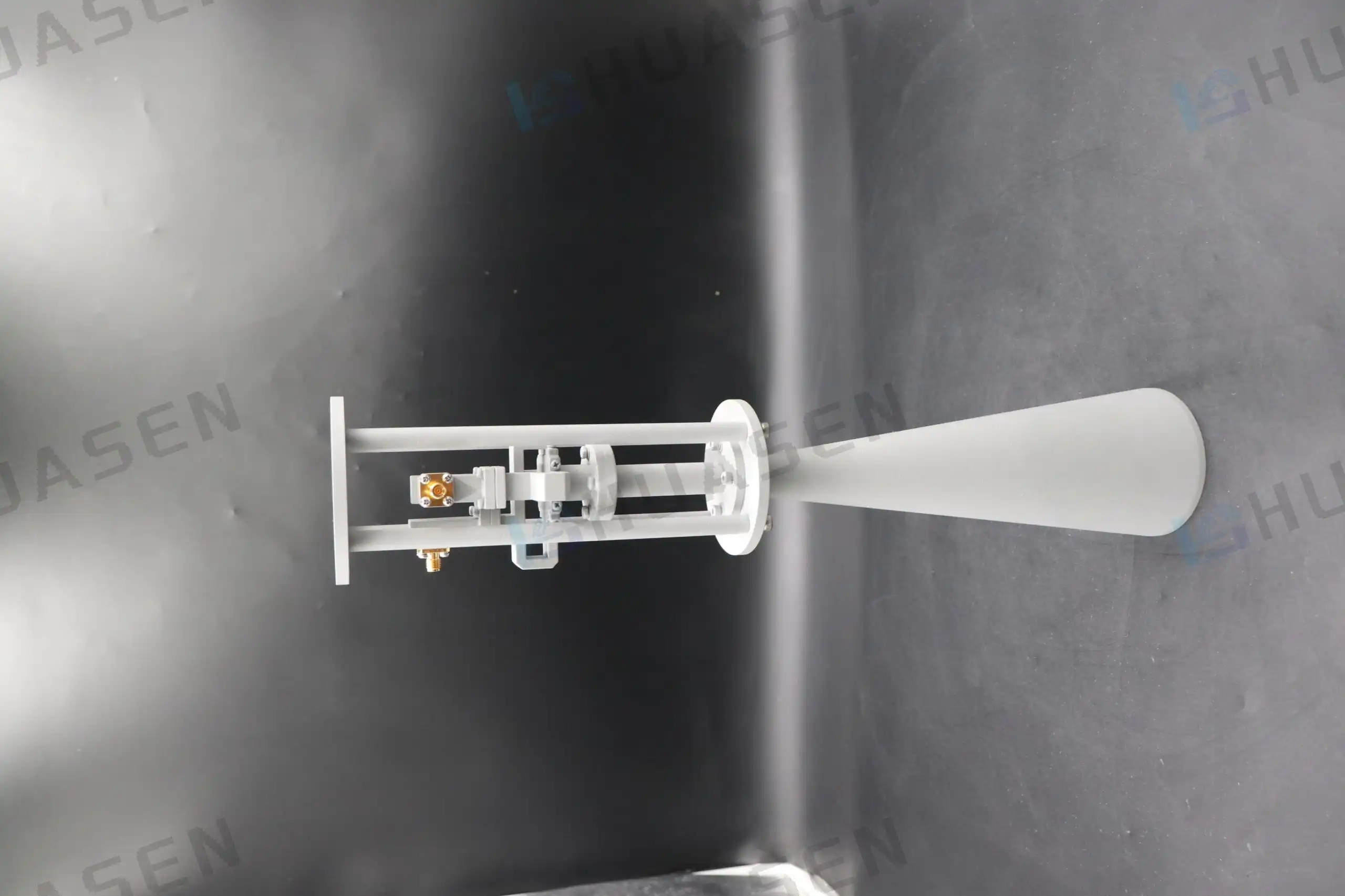
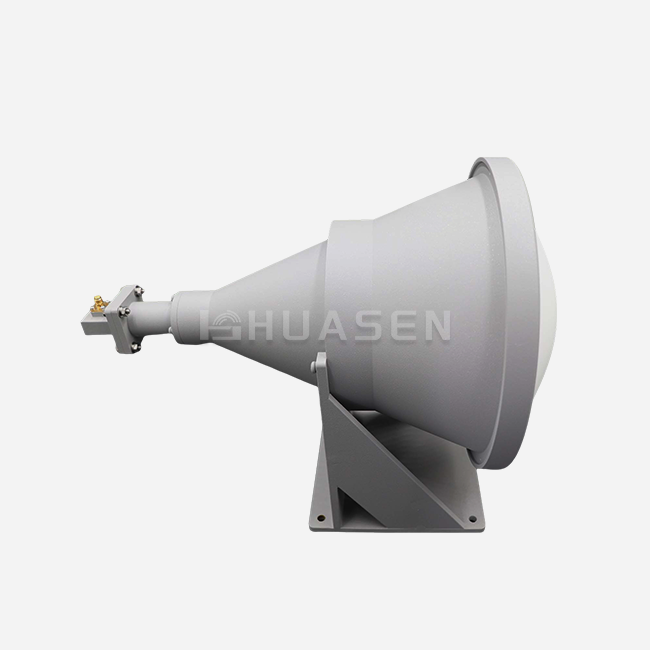
A Circularly Polarized Horn Radio wire (CPHA) is a specialized microwave gadget that emanates electromagnetic waves with circular polarization characteristics, combining the directional properties of horn receiving wires with rotational electric field vectors. This type of Circularly Polarized Horn Antenna is widely used in satellite communications, radar systems, and advanced wireless applications where polarization diversity and high efficiency are essential. This receiving wire sort utilizes advanced strategies such as linear-to-circular polarization converters and double direct polarization orthogonal excitation strategies to create waves where the electric field pivots persistently as the wave proliferates. CPHAs are fundamental in applications requiring polarization adaptability, counting disciple communications, radar frameworks, radio cosmology, and electromagnetic testing. Their capacity to keep up flag astuteness notwithstanding of transmitter or collector introduction makes them important for advanced remote frameworks where polarization jumbles seem tocause critical flag corruption and communication failures.
The Physics Behind Circular Polarization
Circular polarization occurs when two orthogonal linearly polarized electromagnetic field components of equal magnitude combine with a 90-degree phase difference, creating a rotating electric field vector that traces a helical path through space. A Circularly Polarized Horn Antenna achieves this phenomenon through carefully designed internal structures that transform linearly polarized waveguide modes into circularly polarized free-space radiation. The rotating field can be either right-hand circular polarization (RHCP) or left-hand circular polarization (LHCP), determined by the direction of rotation when viewing the wave approaching the observer. This polarization state offers significant advantages over linear polarization, particularly in mitigating Faraday rotation effects in ionospheric propagation and eliminating the need for precise antenna alignment in mobile communication scenarios. Modern Circularly Polarized Horn Antenna designs employ cone-shaped horn structures, broadband dual linear polarization synthesis techniques, or stepped diaphragm configurations to optimize performance across various frequency bands. The axial ratio, defined as the ratio between major and minor axes of the polarization ellipse, serves as the primary metric for circular polarization quality, with values approaching unity indicating ideal circular polarization characteristics.
Key Performance Parameters
The performance of a Circularly Polarized Horn Antenna is characterized by several critical specifications that determine its suitability for specific applications. Axial ratio represents the most crucial parameter, quantifying how closely the antenna achieves true circular polarization, with premium designs achieving values of 0.5dB or better across the operational bandwidth. Frequency range defines the operational spectrum, with modern designs covering from 0.5GHz to 110GHz depending on physical dimensions and internal structure configuration. Gain specifications typically range from 10dB to 25dB, with higher gains providing improved directivity and longer communication ranges at the expense of narrower beamwidths. Bandwidth performance varies significantly based on design approach, with narrowband implementations achieving fractional bandwidths of 5% or less for specialized applications, while wideband designs can reach 67% fractional bandwidth for multi-function systems. The voltage standing wave ratio (VSWR) indicates impedance matching quality at the antenna feed point, with values below 1.5:1 considered excellent for most applications. Radiation pattern characteristics, including beamwidth, sidelobe levels, and cross-polarization discrimination, significantly impact system performance in congested electromagnetic environments where interference rejection becomes critical for reliable operation.
Implementation Techniques
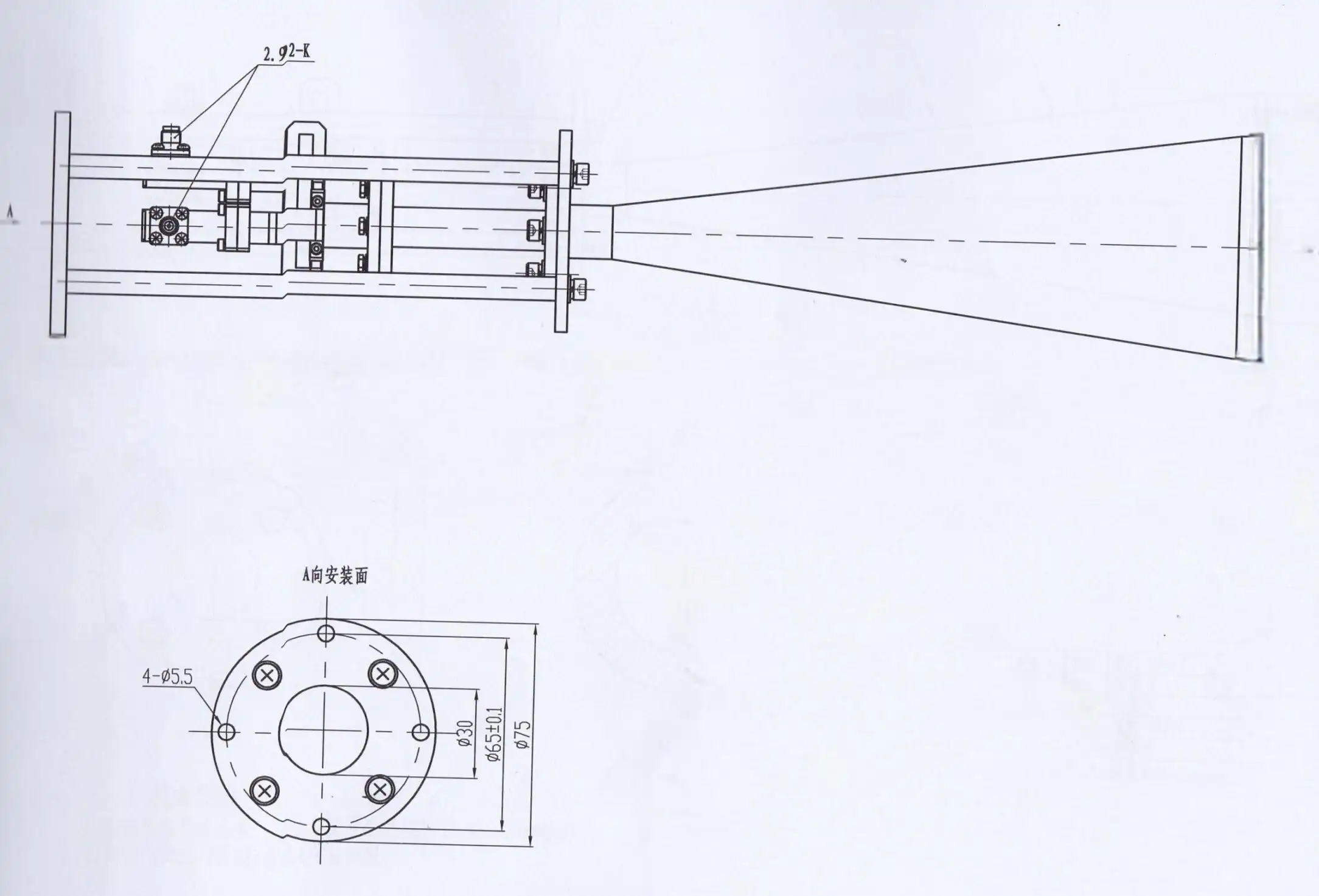
Circularly Polarized Horn Receiving wire plans utilize different specialized approaches to produce circular polarization from standard rectangular or circular waveguide bolsters. The linear-to-circular polarization converter strategy presents a quarter-wave stage delay between orthogonal field components utilizing dielectric plates, metallic irises, or folded structures situated inside the horn opening. Double straight polarization orthogonal excitation procedures nourish the radio wire with two opposite straight polarization signals having indistinguishable amplitudes but 90-degree stage balance, produced either through outside half-breed couplers or coordinate bolstering systems. Cone-shaped horn executions utilize rotationally symmetric geometries with extraordinary inside highlights that actually deliver circular polarization through mode change forms. Broadband double straight polarization engineered plans combine numerous frequency-dependent stage moving components to keep up circular polarization over expanded transfer speeds. Vented stomach sorts consolidate different cascaded areas with carefully calculated dimensional moves that dynamically change over direct modes into circular polarization states. Each approach presents unmistakable focal points with respect to transmission capacity, pivotal proportion execution, fabricating complexity, and taken-a-toll contemplations. Determination of the suitable usage depends on particular application prerequisites counting recurrence scope, polarization immaculateness needs, physical estimate limitations, and natural working conditions that the radio wire must withstand all through its operational lifetime.
Conclusion
Circularly Polarized Horn Antennas represent essential components in modern RF and microwave systems, offering polarization flexibility and robust performance across diverse applications. Understanding their operating principles, performance parameters, and implementation techniques enables engineers to select optimal solutions for satellite communications, radar, radio astronomy, and electromagnetic testing requirements. These specialized antennas continue advancing through innovative design approaches and precision manufacturing capabilities.
FAQ
1. What makes circular polarization advantageous over linear polarization?
Circular polarization eliminates the need for precise antenna alignment between transmitter and receiver, as the rotating electric field maintains consistent coupling regardless of orientation. This characteristic proves particularly valuable in mobile satellite communications and scenarios involving Faraday rotation, where linear polarization would experience significant signal fading. Additionally, circular polarization provides better multipath rejection in certain environments.
2. How does axial ratio affect antenna performance?
Axial ratio quantifies circular polarization purity, with lower values indicating better performance. An axial ratio of 0dB represents perfect circular polarization, while higher values indicate elliptical polarization. Values exceeding 3dB generally suggest inadequate circular polarization quality. Premium antennas achieve axial ratios of 0.5dB or better, ensuring minimal polarization mismatch losses and optimal signal transmission.
3. Can CPHAs operate across multiple frequency bands?
Wideband Circularly Polarized Horn Antenna designs can achieve fractional bandwidths up to 67%, covering significant frequency ranges within their operational spectrum. However, maintaining excellent axial ratio performance across very wide bandwidths presents engineering challenges. Narrowband designs typically deliver superior polarization purity but sacrifice frequency flexibility. Custom bandwidth specifications enable tailored solutions matching specific application requirements.
4. What applications benefit most from CPHAs?
Radio astronomy relies on CPHAs for detecting weak cosmic signals, while satellite communications use them for high-bandwidth data transmission with polarization diversity. Radar systems employ these antennas for weather monitoring and defense applications requiring polarization agility. Electromagnetic compatibility testing facilities utilize CPHAs for antenna characterization and interference measurements. Aerospace applications include telemetry and remote sensing where polarization stability is critical.
Circularly Polarized Horn Antenna Manufacturer | Huasen Microwave
As a trusted Circularly Polarized Horn Antenna supplier and experienced Circularly Polarized Horn Antenna manufacturer, Huasen Microwave Technology Co., Ltd. delivers cutting-edge solutions backed by over 30 years of expertise in RF and microwave technology. Our comprehensive product portfolio spans 0.5GHz to 110GHz with customizable gain, bandwidth, and connector options tailored to telecommunications, radar, aerospace, and defense applications. We combine advanced polarization technology, exceptional axial ratio performance, and rigorous quality control under ISO9001 certification to ensure reliable operation in demanding environments. Whether you need standard configurations or custom-engineered solutions, our technical team provides comprehensive support from specification development through installation and calibration. Contact us today at sales@huasenmicrowave.com to discuss your project requirements and discover how our premium Circularly Polarized Horn Antenna products can enhance your system performance and reliability.
References
1. Balanis, Constantine A. Antenna Theory: Analysis and Design, 4th Edition. John Wiley & Sons, 2016.
2. Stutzman, Warren L. and Thiele, Gary A. Antenna Theory and Design, 3rd Edition. John Wiley & Sons, 2012.
3. Love, A.W. Electromagnetic Horn Antennas. IEEE Press, 1976.
4. Clarricoats, P.J.B. and Olver, A.D. Corrugated Horns for Microwave Antennas. IEEE Press, 1984.
5. Kraus, John D. and Marhefka, Ronald J. Antennas for All Applications, 3rd Edition. McGraw-Hill, 2002.
6. Milligan, Thomas A. Modern Antenna Design, 2nd Edition. John Wiley & Sons, 2005.
Send Inquiry
Related Industry Knowledge
- What Are the Application Scenarios of Waveguide Flex in Radar Systems?
- When to Choose a Dual Channel vs. Single Channel Waveguide Rotary Joint?
- How to Pick the Right Waveguide Switch: Key Differences Between Electric and Manual Models
- How to Achieve Low Insertion Loss: Selection Tips for High Power Adapters
