
Why Waveguide Twist Improves Polarization Alignment?






2026-01-18 21:38:07
When microwave signals arrive at your receiver with mismatched polarization, you lose critical data and experience signal degradation. A Waveguide Twist solves this polarization misalignment challenge by providing controlled electromagnetic field rotation without changing signal direction. This precision component ensures your radar systems, satellite links, and telecommunications infrastructure maintain optimal signal integrity even when equipment orientations don't perfectly match.
Understanding Waveguide Twist Fundamentals and Polarization Control
Electromagnetic waves propagating through rectangular waveguides maintain specific polarization states determined by the electric and magnetic field orientations. In microwave and millimeter-wave systems, maintaining precise polarization alignment between transmitters, receivers, and antenna feeds is essential for maximizing signal quality and minimizing interference. When system components are physically oriented differently due to mechanical constraints, installation requirements, or space limitations, polarization mismatches occur naturally. The Waveguide Twist addresses this fundamental challenge through its unique structural design.
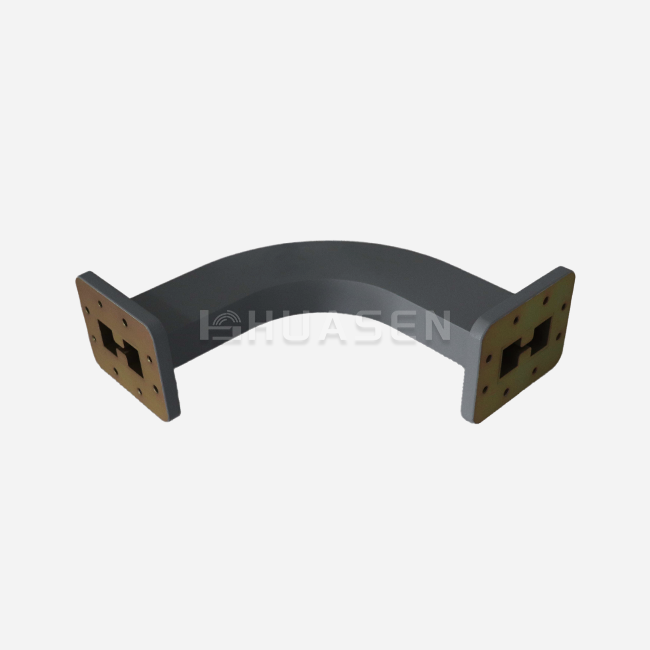
A Rectangular Waveguide Twist consists of a precisely engineered waveguide section that progressively rotates along its longitudinal axis. This gradual rotation transforms the electromagnetic field pattern inside the waveguide, effectively rotating the polarization of the propagating wave to match the required orientation at the output. Unlike abrupt transitions that cause reflections and signal loss, the smooth geometric transformation in a properly designed waveguide twist maintains impedance matching throughout the rotation process. The length of the twist section is typically designed as an odd multiple of the quarter guide wavelength to minimize reflections, with most implementations maintaining at least two guide wavelengths in total length for optimal performance.
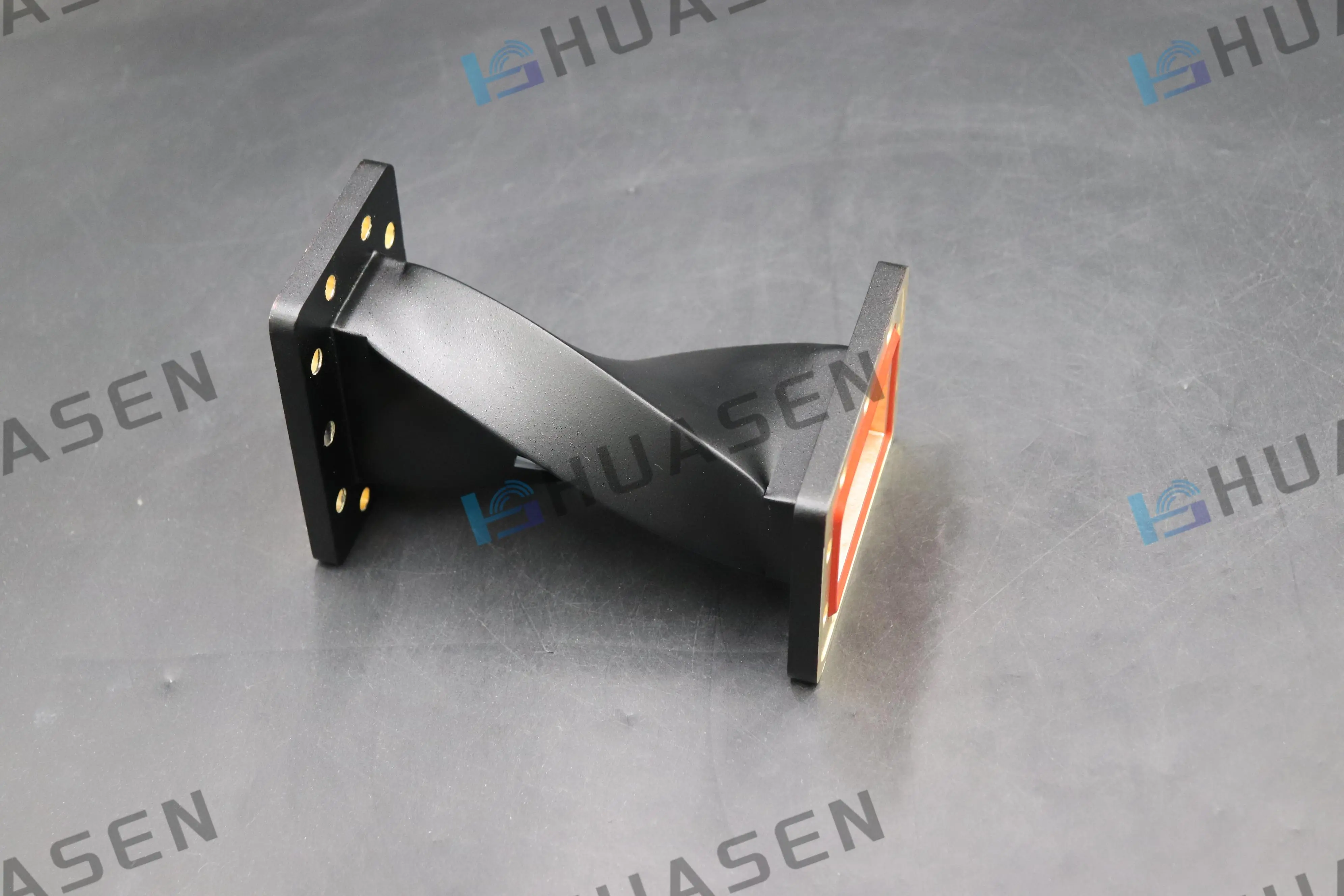
The physics underlying polarization rotation in waveguide twists relies on the fundamental relationship between waveguide geometry and field distribution. In rectangular waveguides operating in the dominant TE10 mode, the electric field is perpendicular to the broad wall of the waveguide cross-section. When the waveguide cross-section rotates gradually along the propagation axis, the electric field orientation follows this rotation, maintaining its perpendicular relationship to the broad wall throughout the twist. This mode evolution process allows complete polarization transformation while preserving signal energy and minimizing losses. Modern rectangular waveguide twist designs achieve voltage standing wave ratios as low as 1.1 to 1.15, demonstrating exceptional impedance matching across their operational frequency ranges.
Types of Waveguide Twist Configurations
Waveguide twist components are manufactured in two primary configurations that serve different system integration requirements. The Rectangular Left-Handed Twisted Waveguide (WLTA) rotates the electromagnetic field in a counter-clockwise direction when viewed along the direction of signal propagation, while the Rectangular Right-Handed Twisted Waveguide (WTA) provides clockwise rotation. This chirality distinction becomes critical in complex microwave systems where multiple polarization adjustments must be coordinated across different signal paths. Engineers select the appropriate handedness based on the specific geometric constraints of their installation and the cumulative polarization adjustments required throughout the signal chain.
Standard waveguide twists provide 90-degree polarization rotation, which accommodates the most common installation scenarios where antenna feeds or system components are oriented perpendicular to each other. However, modern microwave systems often require more nuanced polarization adjustments. Customized twist angles of 45 degrees, 60 degrees, or even arbitrary angles can be manufactured to address specific system geometries. These custom configurations prove especially valuable in retrofit situations where existing infrastructure must be integrated with new equipment having different polarization requirements. The ability to specify exact rotation angles eliminates the need for multiple cascaded components, reducing system complexity and minimizing cumulative insertion losses.
The waveguide structure itself maintains rectangular geometry throughout the twist, supporting both TE and TM mode field transmission, though the primary operating mode remains TE10 for most microwave applications. This rectangular configuration provides superior power handling capabilities compared to circular waveguides while maintaining mechanical rigidity and ease of fabrication. High-precision CNC machining ensures the internal surfaces remain smooth throughout the twist, minimizing surface roughness losses that could degrade performance at higher frequencies. Premium materials including copper and aluminum with optional silver or gold plating further reduce conductor losses while providing excellent corrosion resistance for long-term reliability.
How Waveguide Twist Achieves Superior Polarization Alignment?
The performance advantages of waveguide twists in polarization alignment stem from their ability to maintain precise electromagnetic field control throughout the rotation process. Unlike simple mechanical adaptors or lossy transition elements, a properly engineered waveguide twist preserves signal integrity while accomplishing the necessary polarization transformation. This capability proves essential in high-frequency millimeter-wave systems where even minor impedance discontinuities can cause significant signal degradation.
When electromagnetic energy enters a waveguide twist, the gradual geometric transition guides the field pattern through a controlled evolution. The electric field vector, which defines the polarization state, remains coherent throughout this transformation. This coherence preservation distinguishes waveguide twists from alternative polarization adjustment methods that might introduce phase distortions or mode coupling effects. In satellite communication earth stations, for instance, maintaining this field coherence directly translates to improved signal-to-noise ratios and reduced bit error rates in digital transmission systems.
The low VSWR characteristic of quality waveguide twists, typically 1.1 to 1.15 or better, indicates minimal reflection of signal energy back toward the source. These reflections, if present, would reduce the effective transmitted power and potentially cause interference patterns that degrade system performance. In radar applications operating with nanosecond pulse widths, even small reflections can create timing ambiguities that reduce target detection accuracy. The superior impedance matching achieved by precision-manufactured waveguide twists eliminates these concerns, enabling reliable operation in demanding military and aerospace applications where performance margins are tight.
Polarization Alignment in Complex System Architectures
Modern microwave systems frequently incorporate multiple polarization-dependent components including orthomode transducers, polarizers, and dual-polarized antennas. Coordinating the polarization states throughout such systems requires careful attention to the cumulative effects of all polarization-affecting elements. Waveguide twists serve as essential adjustment tools that allow system designers to achieve optimal polarization alignment despite mechanical constraints that would otherwise compromise performance.
Consider a satellite ground station where the antenna feed must interface with processing equipment located in a climate-controlled equipment shelter. The physical routing path from the antenna to the shelter may require the waveguide run to navigate around structural obstacles, change elevation, and transition between different mounting orientations. Without waveguide twists to compensate for these geometric necessities, the signal would arrive at the processing equipment with incorrect polarization, resulting in substantial signal loss and potential cross-polarization interference. Strategic placement of appropriately configured waveguide twists along the signal path maintains proper polarization alignment throughout, maximizing link performance and enabling full utilization of available channel capacity.
In dual-polarized communication systems that transmit independent data streams on orthogonal polarizations, maintaining precise polarization alignment becomes even more critical. Cross-polarization interference occurs when energy leaks between the nominally orthogonal polarization channels, creating crosstalk that limits the achievable isolation between channels. High-quality rectangular waveguide twist components minimize this cross-polarization by maintaining clean field patterns throughout the rotation process, achieving polarization purity levels that enable high-performance dual-polarized operation. This capability has become increasingly important in 5G infrastructure and mmWave communication systems where spectral efficiency demands maximum utilization of available polarization resources.
Applications Requiring Precise Waveguide Twist Integration
The telecommunications industry relies extensively on waveguide twist technology for base station antenna systems, particularly in the millimeter-wave frequencies allocated for 5G networks. These systems deploy massive MIMO antenna arrays with complex feed networks that must maintain precise polarization control across dozens or hundreds of individual antenna elements. Waveguide twists embedded within these feed networks provide the necessary polarization adjustments to ensure all elements radiate with coherent polarization states, maximizing beamforming effectiveness and overall system capacity. The compact form factor of modern waveguide twist designs enables their integration even in space-constrained antenna assemblies without compromising mechanical stability or electrical performance.
Military and civilian radar installations depend on waveguide twist components to maintain optimal polarization alignment between antenna feeds and signal processing equipment. Weather surveillance radars utilize dual-polarization capability to distinguish between different precipitation types, requiring exceptional polarization purity to accurately measure differential reflectivity and correlation coefficient parameters. The low insertion loss and high power handling capabilities of precision-manufactured waveguide twists ensure these critical meteorological measurements maintain their accuracy even during severe weather events when maximum radar sensitivity is most needed. Defense radar systems similarly leverage waveguide twist technology to achieve the polarization agility required for advanced target discrimination and electronic warfare applications.
Satellite communication systems represent another major application domain where waveguide twist performance directly impacts link availability and data throughput. Spacecraft payload configurations often necessitate feed horn orientations that don't align with the polarization requirements of the communication link. Waveguide twists integrated into the spacecraft feed assemblies resolve these orientation mismatches while maintaining the stringent mass and volume constraints characteristic of aerospace applications. On the ground segment, earth station installations employ waveguide twists to compensate for the varying polarization rotation angle that occurs as satellites appear at different positions in the sky relative to the ground station location. This compensation ensures consistent link performance across the full satellite visibility window.
Test and Measurement Equipment Integration
Laboratory test equipment for microwave and millimeter-wave characterization frequently incorporates waveguide twist components to enable flexible test configurations. Vector network analyzers, spectrum analyzers, and signal generators often require connection to devices under test with various flange orientations and polarization requirements. Waveguide twists allow test engineers to adapt their measurement setups without resorting to lossy adaptors or awkward cable routing that could introduce measurement errors. The excellent electrical characteristics of quality waveguide twists ensure measurement accuracy remains uncompromised even when multiple twists are cascaded to achieve complex orientations.
Medical imaging systems operating at millimeter-wave frequencies for security screening and diagnostic applications utilize waveguide twist technology to maintain proper polarization alignment in their antenna arrays. These systems must balance electromagnetic performance requirements with ergonomic considerations for patient comfort and operator access. Waveguide twists enable the necessary geometric flexibility in feed network routing while preserving the signal quality required for high-resolution imaging. The RoHS and REACH compliance of modern waveguide twist materials ensures these medical applications meet strict regulatory requirements for patient safety and environmental responsibility.
Manufacturing Excellence and Quality Assurance for Waveguide Twist Components
The production of high-performance waveguide twist components demands advanced manufacturing capabilities and rigorous quality control processes. Precision CNC machining forms the foundation of waveguide twist fabrication, where computer-controlled multi-axis mills create the complex three-dimensional geometry with tight tolerances essential for maintaining electrical performance.
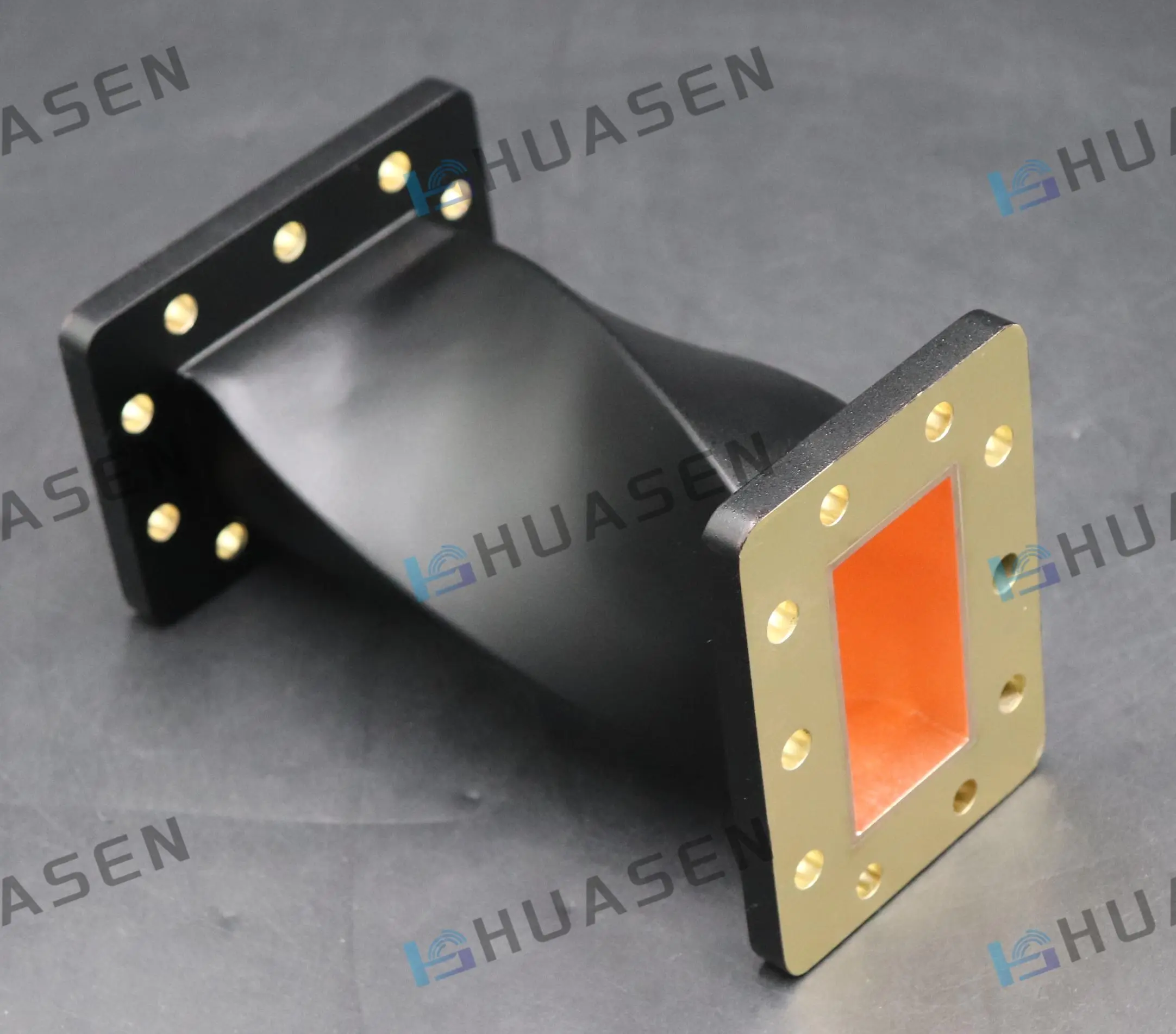
The gradual rotation profile must be executed with exceptional accuracy to prevent impedance discontinuities that would generate reflections and degrade VSWR. Surface finish quality receives particular attention, as any roughness or irregularities on the inner waveguide walls introduce additional losses through increased surface resistance and potential mode conversion effects.
Material selection significantly influences both electrical performance and mechanical durability. Copper offers excellent electrical conductivity for minimizing ohmic losses, while aluminum provides weight advantages critical in aerospace and portable applications. Surface treatments including silver and gold plating further reduce surface resistance while protecting against oxidation and corrosion that could degrade performance over time. The electroforming process represents an alternative fabrication approach for producing ultra-lightweight waveguide twist components, where metal is electrochemically deposited onto precision mandrels to create thin-walled structures ideal for weight-critical aerospace applications. These electroformed components maintain electrical performance comparable to traditionally machined parts while achieving dramatic weight reductions.
Quality inspection procedures verify dimensional accuracy and electrical performance before waveguide twist components are released for shipment. Coordinate measuring machines probe critical dimensions throughout the twist to confirm conformance with design specifications. Electrical testing using calibrated vector network analyzers characterizes insertion loss, return loss, and VSWR across the full operational frequency range. These measurements validate that each component meets or exceeds the specified performance criteria. Rigorous testing protocols following ISO 9001 certified processes ensure consistent quality and reliability that customers can depend on for their critical applications.
Customization Capabilities and Technical Support
Standard waveguide twist configurations address the majority of common application requirements, but complex system architectures often demand customized solutions. Manufacturers with comprehensive design and fabrication capabilities can accommodate non-standard lengths, twist angles, flange types, and frequency ranges tailored to specific customer requirements. This customization extends to specialized environmental protection features including pressurization interfaces for humid environments, thermal management provisions for high-power applications, and ruggedized construction for military and aerospace deployments. Collaborative engineering support helps customers optimize their waveguide twist specifications to balance performance requirements, cost considerations, and schedule constraints.
Installation guidance and compatibility information ensure successful system integration. Precise alignment markings indicate the correct orientation for installation, preventing errors that could result in incorrect polarization states. Standard flange options including UG, CPR, and WR series provide compatibility with industry-standard waveguide components and test equipment. Technical documentation supplied with each component includes mechanical drawings, electrical performance data, and handling precautions to protect the precision internal surfaces from damage during installation. Comprehensive warranty coverage and responsive technical support provide confidence that any questions or concerns will be addressed promptly by knowledgeable application engineers.
Conclusion
Waveguide Twist components deliver precise polarization alignment through controlled electromagnetic field rotation, enabling optimal performance in telecommunications, radar, satellite communications, and test equipment applications requiring reliable signal integrity.
Cooperate with Huasen Microwave Technology Co., Ltd.
Huasen Microwave Technology Co., Ltd., established in 1993, brings over 30 years of specialized expertise in manufacturing high-performance rectangular waveguide twist components and comprehensive microwave solutions. As a National High-Tech Enterprise certified under ISO 9001, we operate advanced production facilities spanning over 3,000 square meters with more than 200 skilled technicians and engineers dedicated to delivering superior quality. Our manufacturing capabilities include precision CNC machining, advanced electroforming processes, and rigorous testing in calibrated microwave anechoic chambers covering frequency ranges from 0.5GHz to 220GHz. We serve telecommunications, aerospace, defense, and research sectors worldwide with both standard and customized waveguide components engineered to exacting specifications.
Our rectangular waveguide twist products feature exceptional electrical performance with VSWR ≤1.15, available in both left-handed (WLTA) and right-handed (WTA) configurations with standard 90-degree rotation or custom angles. As a leading China Waveguide Twist factory, China Waveguide Twist supplier, and China Waveguide Twist manufacturer, we offer competitive Waveguide Twist wholesale pricing and Waveguide Twist for sale globally with Waveguide Twist price options meeting various budget requirements. Every High Quality Waveguide Twist component undergoes 100% inspection using our extensive test equipment including 40 vector network analyzers and specialized measurement systems ensuring consistent reliability. Our one-year warranty, comprehensive technical documentation, and responsive engineering support demonstrate our commitment to customer success. Contact us today at sales@huasenmicrowave.com to discuss your waveguide twist requirements and discover how our proven manufacturing excellence can enhance your system performance. Save this information for future reference when planning your next microwave component procurement.
References
1. Balanis, Constantine A. "Advanced Engineering Electromagnetics." Second Edition. Wiley, 2012.
2. Pozar, David M. "Microwave Engineering." Fourth Edition. Wiley, 2011.
3. Collin, Robert E. "Foundations for Microwave Engineering." Second Edition. IEEE Press, 2001.
4. Marcuvitz, Nathan. "Waveguide Handbook." Institution of Engineering and Technology, 1986.
5. Montgomery, C. G., Dicke, R. H., and Purcell, E. M. "Principles of Microwave Circuits." MIT Radiation Laboratory Series, Volume 8. McGraw-Hill, 1948.
Send Inquiry

Related Industry Knowledge
- How Does an Active Detector Work? Unveiling Its 4-Core Components & Signal Flow
- How Does a Waveguide Seal Window Achieve Air/Thermal Seal While Transmitting RF/Microwave Signals?
- What Are the Differences Between Manual and Automated Waveguide Elevating Platforms?
- What Are the Application Scenarios of Circular Waveguide to Coaxial Adapters in Satellite Communication Systems?
- How Does a Coplanar WG Perform in High-Speed Signal Transmission?
- How to Fabricate a High-Precision Mitered Bend Waveguide for Microwave/MMWave Applications?
- What Are the Application Scenarios of Waveguide Flex in Radar Systems?
- When to Choose a Dual Channel vs. Single Channel Waveguide Rotary Joint?
- What Is a Dual Polarized Yagi Antenna?
