
What Affects Crossguide Couplers’ Phase Stability? Factors to Control in System Design






2017-12-04 14:05:02
Phase stability in microwave systems represents a critical parameter directly influencing measurement accuracy, signal integrity, and overall system performance. Understanding the factors affecting phase stability in Crossguide Coupler implementations enables engineers to design robust systems capable of maintaining precise phase relationships across varying environmental conditions and operational scenarios. A Crossguide Coupler serves as a directional coupling device that samples electromagnetic energy from the main transmission path while maintaining specific phase relationships between coupled and through ports. Phase stability depends on multiple interrelated factors including thermal expansion effects, mechanical tolerances, dielectric material properties, frequency response characteristics, and electromagnetic field distribution within the coupling structure. Temperature-induced dimensional changes, humidity absorption, mechanical stress, and aging effects all contribute to phase drift that can compromise system accuracy in radar applications, communication testbeds, radio astronomy projects, and advanced physics research where phase coherence determines measurement validity and system functionality.
Thermal Effects and Temperature Compensation Strategies
Material Thermal Expansion and Dimensional Stability
Thermal expansion represents the primary physical mechanism affecting phase stability in Crossguide Coupler designs across operational temperature ranges. All conductive materials exhibit temperature-dependent dimensional changes characterized by their coefficient of thermal expansion, with copper displaying approximately 16.5 × 10^-6 per degree Celsius and aluminum showing 23.1 × 10^-6 per degree Celsius. These expansion coefficients translate to measurable dimensional changes in waveguide structures as ambient temperature fluctuates, directly altering the electrical length of signal paths and consequently shifting phase relationships. A Crossguide Coupler operating across a 50-degree Celsius temperature range experiences dimensional variations that can produce phase shifts exceeding several degrees at microwave frequencies, potentially compromising measurement accuracy in precision applications. The compact design and high mechanical strength of modern Crossguide Coupler implementations help minimize differential expansion between coupling elements, though careful material selection and structural design remain essential. Engineers must account for these thermal effects during system design, implementing temperature compensation algorithms or selecting materials with matched thermal expansion coefficients to maintain phase stability across the 20% waveguide bandwidth coverage.
Temperature Gradient Management and Heat Distribution
Non-uniform temperature distributions within Crossguide Coupler assemblies create differential expansion patterns that introduce unpredictable phase variations more problematic than uniform temperature changes. High-power microwave systems generate localized heating from resistive losses, establishing temperature gradients that vary with power level and duty cycle. The high power tolerance engineered into Crossguide Coupler designs enables operation in demanding applications, but sustained power handling creates thermal management challenges. Temperature gradients between the main waveguide path and coupling apertures produce asymmetric expansion affecting the electromagnetic coupling coefficient and phase transfer characteristics. Advanced thermal design incorporates heat sinking strategies, forced air cooling, or liquid cooling integration to maintain uniform temperature profiles. System designers must consider thermal time constants when Crossguide Coupler installations experience varying power levels, recognizing that phase stability degrades during thermal transients before steady-state conditions establish equilibrium.
Environmental Control and Thermal Stabilization Techniques
Laboratory environments supporting advanced physics research and radio astronomy projects typically implement environmental control systems maintaining stable temperature and humidity conditions that benefit Crossguide Coupler phase stability. Temperature-controlled enclosures housing critical microwave components reduce thermal variations to fractions of a degree, dramatically improving phase measurement repeatability. Field-deployed systems in aerospace and defense applications, radar installations, and 5G communication testbeds face more challenging thermal environments requiring robust stabilization strategies. Passive thermal stabilization employs high thermal mass construction and insulation to slow temperature response, while active stabilization uses thermoelectric coolers maintaining constant component temperatures regardless of ambient conditions. The adjustable coupling range from 20-60 dB available in Crossguide Coupler configurations enables system designers to optimize coupling strength, balancing measurement sensitivity against power handling and thermal loading considerations.
Mechanical Precision and Manufacturing Tolerances
Dimensional Accuracy and Coupling Aperture Geometry
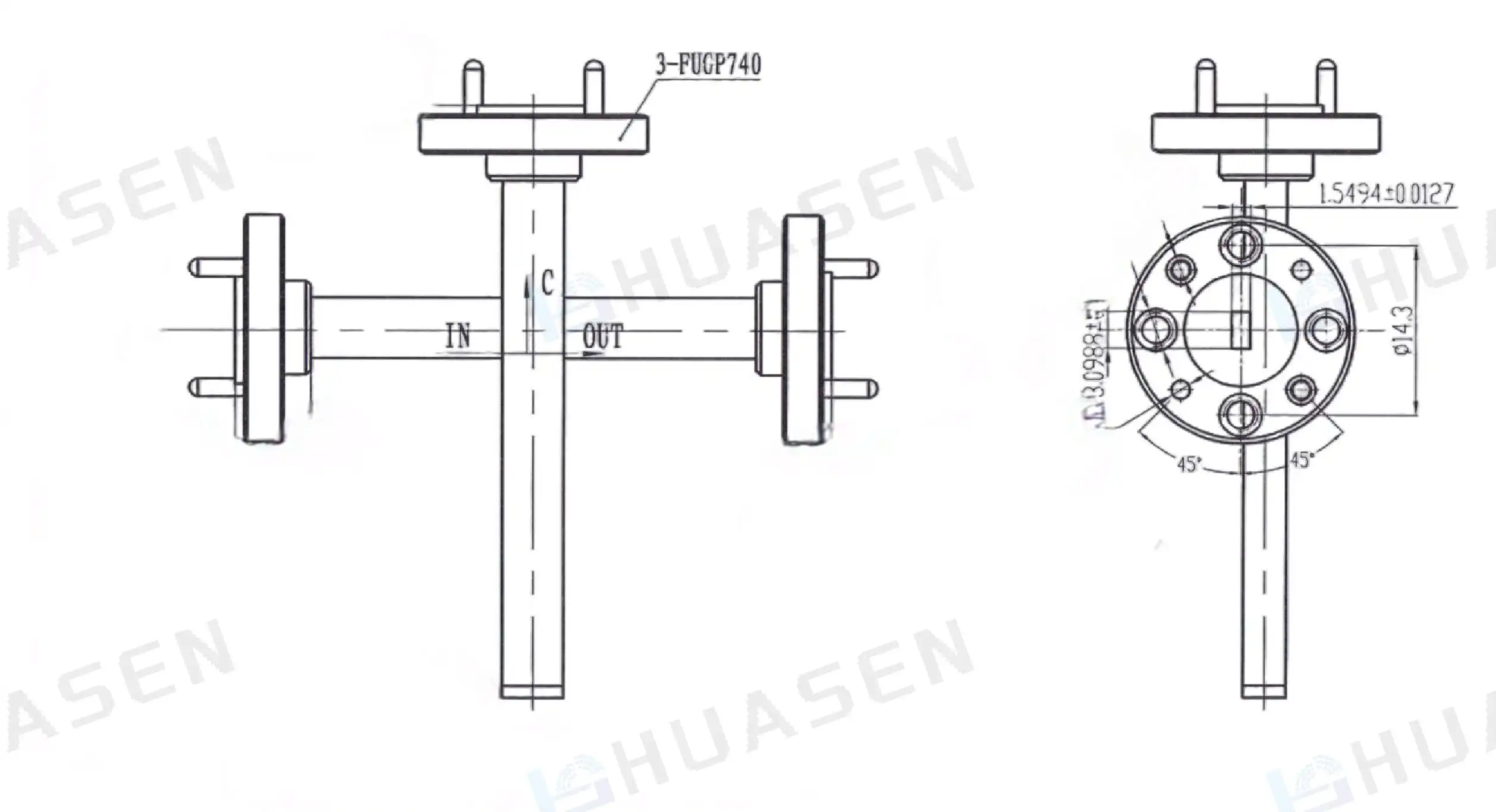
Manufacturing precision directly determines the achievable phase stability and frequency response accuracy in Crossguide Coupler production. The coupling mechanism relies on precise aperture dimensions, positioning, and orientation to establish the desired electromagnetic coupling coefficient and maintain specified directionality of 15-20 dB. Dimensional tolerances measured in micrometers become increasingly critical at higher microwave frequencies where wavelengths shrink proportionally and geometric errors represent larger electrical phase variations. Precision CNC machining capabilities enable the tight tolerances necessary for consistent Crossguide Coupler performance, achieving coupling accuracy of ±0.5 to ±1.0 dB across operational bandwidths. The coupling aperture geometry must maintain precise dimensions and smooth surface finishes to minimize perturbations affecting phase transfer characteristics. Even minor burrs or surface irregularities near coupling apertures introduce localized field distortions that manifest as phase instabilities, particularly when combined with environmental stress factors. Quality control protocols verify dimensional compliance at multiple production stages, employing coordinate measuring machines and optical inspection systems.
Mechanical Assembly Stability and Flange Connections
The mechanical integration of Crossguide Coupler assemblies into larger waveguide systems introduces potential phase instability sources through connection interfaces and mounting structures. Standard waveguide flanges provide industry-standard connection interfaces, but achieving repeatable phase performance requires attention to flange flatness, bolt torque specifications, and gasket compression. Micro-gaps at flange interfaces alter electromagnetic boundary conditions, introducing phase variations that change with mechanical stress, vibration, and thermal cycling. The compact design and small footprint characteristic of modern Crossguide Coupler implementations minimize structural compliance that could allow relative motion between components under vibration or shock loading. High mechanical strength construction resists deformation ensuring stable geometric relationships between coupling elements despite operational stresses. System designers must specify proper mounting configurations that constrain Crossguide Coupler assemblies against vibration-induced motion while accommodating thermal expansion without introducing mechanical stress.
Long-term Mechanical Stability and Stress Relaxation
Extended operational periods introduce gradual mechanical changes affecting Crossguide Coupler phase stability through stress relaxation, material creep, and fatigue accumulation. Bolted flange connections experience relaxation of initial preload over time, potentially allowing microscopic interface gaps to develop. Materials under sustained mechanical stress gradually deform through creep mechanisms, particularly relevant at elevated temperatures. The rigorous testing at each production stage during Crossguide Coupler manufacturer manufacturing validates initial performance, but long-term stability requires consideration of aging effects. High-quality copper and aluminum construction materials selected for fabrication exhibit excellent dimensional stability over decades of service when protected from corrosive environments. Periodic recalibration schedules account for potential long-term phase drift, with calibration intervals determined by application criticality.
Electromagnetic Design and Frequency Response Optimization
Coupling Mechanism and Field Distribution Control
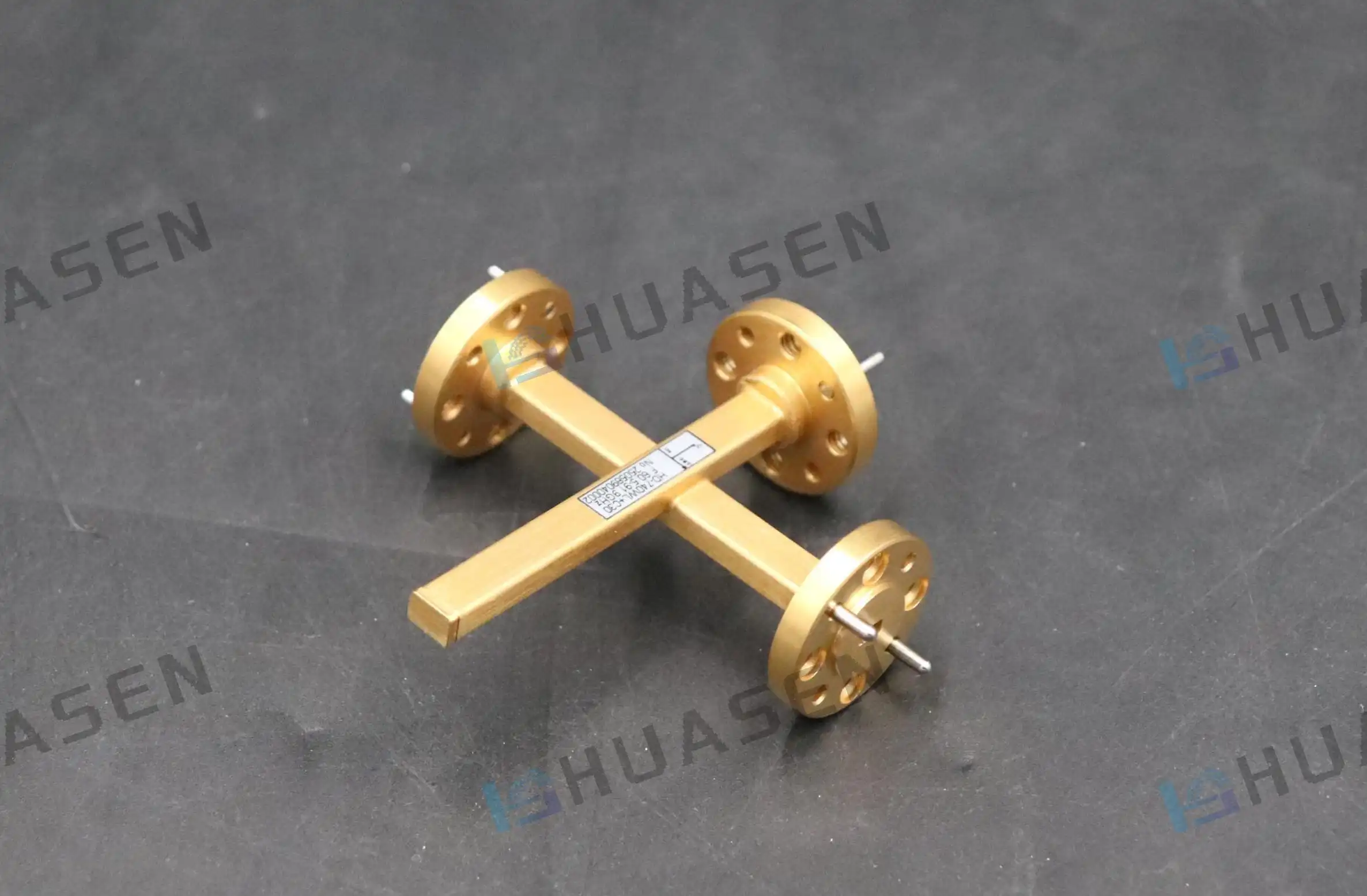
The electromagnetic coupling mechanism employed in Crossguide Coupler designs fundamentally determines both the coupling coefficient characteristics and phase transfer stability across operational bandwidths. Cross-polarized coupling between orthogonal waveguide sections enables directional energy sampling with superior isolation. The 20% waveguide bandwidth coverage achieved in quality Crossguide Coupler implementations represents a careful balance between coupling strength variation and phase linearity across the frequency range. Field distribution within the coupling region responds to frequency changes through wavelength-dependent mode patterns, introducing dispersion that manifests as frequency-dependent phase characteristics. The customizable performance options enabling adjustable coupling from 20-60 dB provide flexibility to optimize coupling strength for specific application requirements. Computer-aided electromagnetic simulation tools enable detailed analysis of field distributions and phase transfer characteristics before physical prototype fabrication.
Directionality and Port Isolation Optimization
The directionality specification of 15-20 dB quantifies the Crossguide Coupler's ability to discriminate between forward and reverse signal propagation, with superior directionality indicating better isolation between coupled and isolated ports. Phase stability benefits from high directionality because reduced crosstalk between ports minimizes interference that could introduce phase measurement errors. The strong anti-interference capability designed into Crossguide Coupler structures ensures reliable operation in electromagnetically noisy environments typical of radar systems and communication equipment installations. Manufacturing precision affects directionality performance since asymmetries in coupling apertures or structural imperfections degrade the balance between forward and reverse coupling paths. System integration considerations include maintaining good impedance matching at all Crossguide Coupler ports to prevent reflections that could compromise directionality and phase stability.
Frequency Response Accuracy and Phase Linearity
The frequency response accuracy specification of ±0.5 to ±1.0 dB indicates the coupling coefficient variation across the operational bandwidth, with tighter tolerances enabling more accurate power measurements and better phase stability. Phase linearity across frequency directly impacts system applications requiring consistent phase relationships, such as phased array radar development and advanced physics research involving coherent signal processing. Ideal Crossguide Coupler designs exhibit linear phase-versus-frequency characteristics corresponding to constant group delay. Deviations from linear phase response indicate dispersion that can distort modulated signals or introduce measurement errors. The versatile applications spanning radar systems, 5G communication testbeds, and aerospace environments benefit from customizable interfaces enabling optimization for specific frequency bands and phase requirements.
Conclusion
Stage soundness in Crossguide Coupler applications depends on controlling warm impacts, keeping up mechanical accuracy, and optimizing electromagnetic plan. Temperature administration, dimensional precision, and legitimate framework integration guarantee dependable stage execution over broadcast communications, radar, and investigate applications. Understanding these variables empowers engineers to plan vigorous frameworks assembly exacting stage steadiness necessities.
With more than thirty years of experience in high-frequency microwave components, Huasen Microwave Technology Co., Ltd. is a reputable Crossguide Coupler provider and a leading manufacturer. With a tunable coupling range of 20-60 dB, enhanced 15-20 dB directionality, and a coupling accuracy of ±0.5 to ±1.0 dB across 20% waveguide bandwidth, our Crossguide Coupler (WL+C) offers outstanding precision. Our products perform exceptionally well in radar systems, communication testbeds, and aerospace applications because to their small size and strong mechanical construction for rigorous research settings. Contact us at sales@huasenmicrowave.com to discuss your specific phase stability requirements.
References
1. Pozar, David M. Microwave Engineering, 4th Edition. John Wiley & Sons, 2012.
2. Collin, Robert E. Foundations for Microwave Engineering, 2nd Edition. IEEE Press, 2001.
3. Montgomery, C.G., Robert H. Dicke, and Edward M. Purcell. Principles of Microwave Circuits. MIT Radiation Laboratory Series, Dover Publications, 1948.
4. Ramo, Simon, John R. Whinnery, and Theodore Van Duzer. Fields and Waves in Communication Electronics, 3rd Edition. John Wiley & Sons, 1994.
5. Matthaei, George L., Leo Young, and E.M.T. Jones. Microwave Filters, Impedance-Matching Networks, and Coupling Structures. Artech House, 1980.
6. Rizzi, Peter A. Microwave Engineering: Passive Circuits. Prentice Hall, 1988.
Send Inquiry

Related Industry Knowledge
- How does a waveguide power divider achieve microwave signal division?
- What is a Waveguide Tube, and how does it differ from ordinary coaxial cables in signal transmission?
- Coaxial Load vs. Coaxial Attenuator: What’s the Difference?
- How to Use a Coaxial Directional Coupler for 5G Base Station Power Monitoring?
- Test Results Inaccurate? 5 Common Faults of Standard Gain Antennas & Quick Fixes
- What Are the Differences Between Manual and Automated Waveguide Elevating Platforms?
- How to Fabricate a High-Precision Mitered Bend Waveguide for Microwave/MMWave Applications?
- What Are the Application Scenarios of Waveguide Flex in Radar Systems?
- When to Choose a Dual Channel vs. Single Channel Waveguide Rotary Joint?
- What are the types and application scenarios of waveguide rotary joints?
