Test Results Inaccurate? 5 Common Faults of Standard Gain Antennas & Quick Fixes






2019-01-05 11:50:12
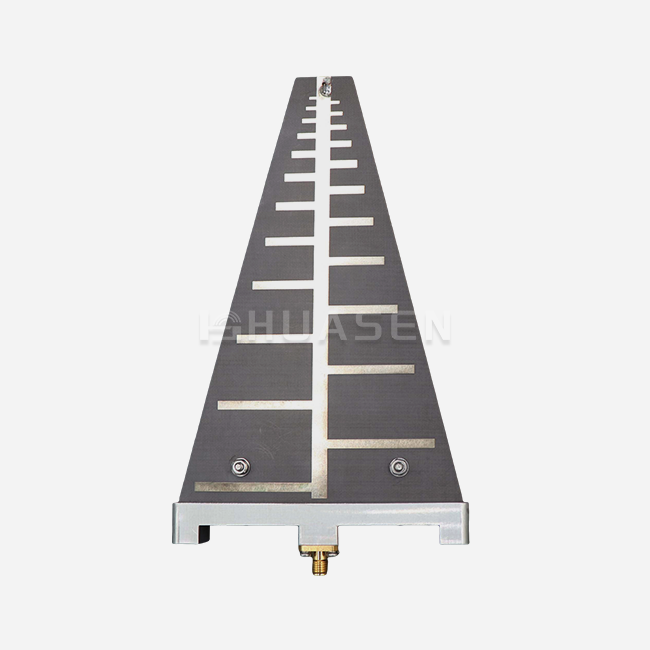
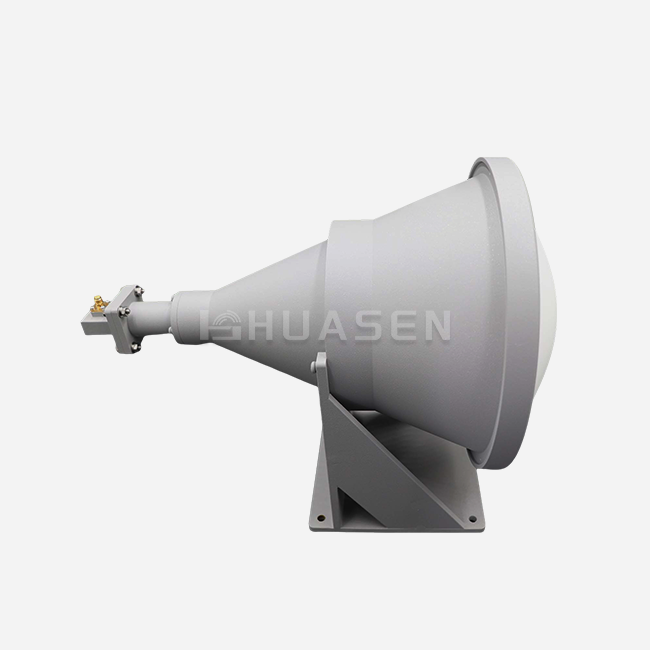
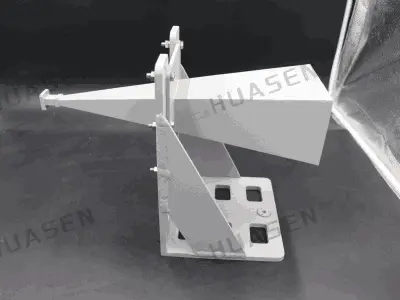
When estimation comes about from your Standard Pick up Radio wire suddenly veering off from anticipated values, distinguishing the root cause rapidly gets to be basic for keeping up testing precision and extending timelines. In such cases, a Standard Gain Antenna plays a crucial role in providing reliable reference performance, ensuring consistency and accuracy across measurement setups. Standard pickup receiving wires serve as exactness reference devices in receiving wire estimation frameworks, giving known pickupvalues regularly extending from 10 dB to 25 dB over frequencies crossing 30 MHz to 300 GHz. In any case, different variables, including natural conditions, mechanical harm, connector debasement, and calibration float, can compromise their execution, leading to estimation vulnerabilities that surpass the ensured ±0.5 dB precision detail. This comprehensive direct look at five predominant deficiencies that influence Standard Pick up Recieving wire execution gives down-to-earth investigative arrangements that engineers can actualize instantly to reestablish estimation unwavering quality and certainty in tests that come about over broadcast communications, radar, aviation, and defense applications.
Fault 1: Connector Interface Degradation and Contact Issues
Connector problems represent the most frequent cause of unexpected performance variations in Standard Gain Antenna systems, manifesting as intermittent signal loss, increased return loss, or gain measurement fluctuations that appear randomly during testing sequences. The coaxial input interfaces, whether integrated or separated configurations, experience mechanical wear from repeated mating cycles, causing contact resistance to increase and impedance mismatches to develop at the connector junction. Oxidation accumulates on connector surfaces exposed to atmospheric moisture and contaminants, creating resistive layers that attenuate signals and introduce frequency-dependent losses that distort the antenna's calibrated gain profile. Physical damage to connector pins, threading, or center conductors occurs during improper installation or forceful connection attempts, permanently altering the electrical characteristics and rendering calibration data invalid. Visual inspection should check for bent pins, damaged threads, debris accumulation, and discoloration indicating corrosion or overheating from excessive power levels. Quick fixes include cleaning connector interfaces with isopropyl alcohol and lint-free swabs, applying contact enhancement compounds designed for RF applications, and replacing damaged connectors with precision-matched replacements that maintain characteristic impedance throughout the transition. For waveguide input configurations compatible with BJ12-BJ2600 standards, inspecting flange flatness and gasket condition proves equally important, as gaps or contamination compromise the electrical continuity essential for accurate measurements. Regular maintenance schedules that include connector inspection and cleaning every few months prevent degradation from progressing to the point where measurement accuracy suffers noticeably.
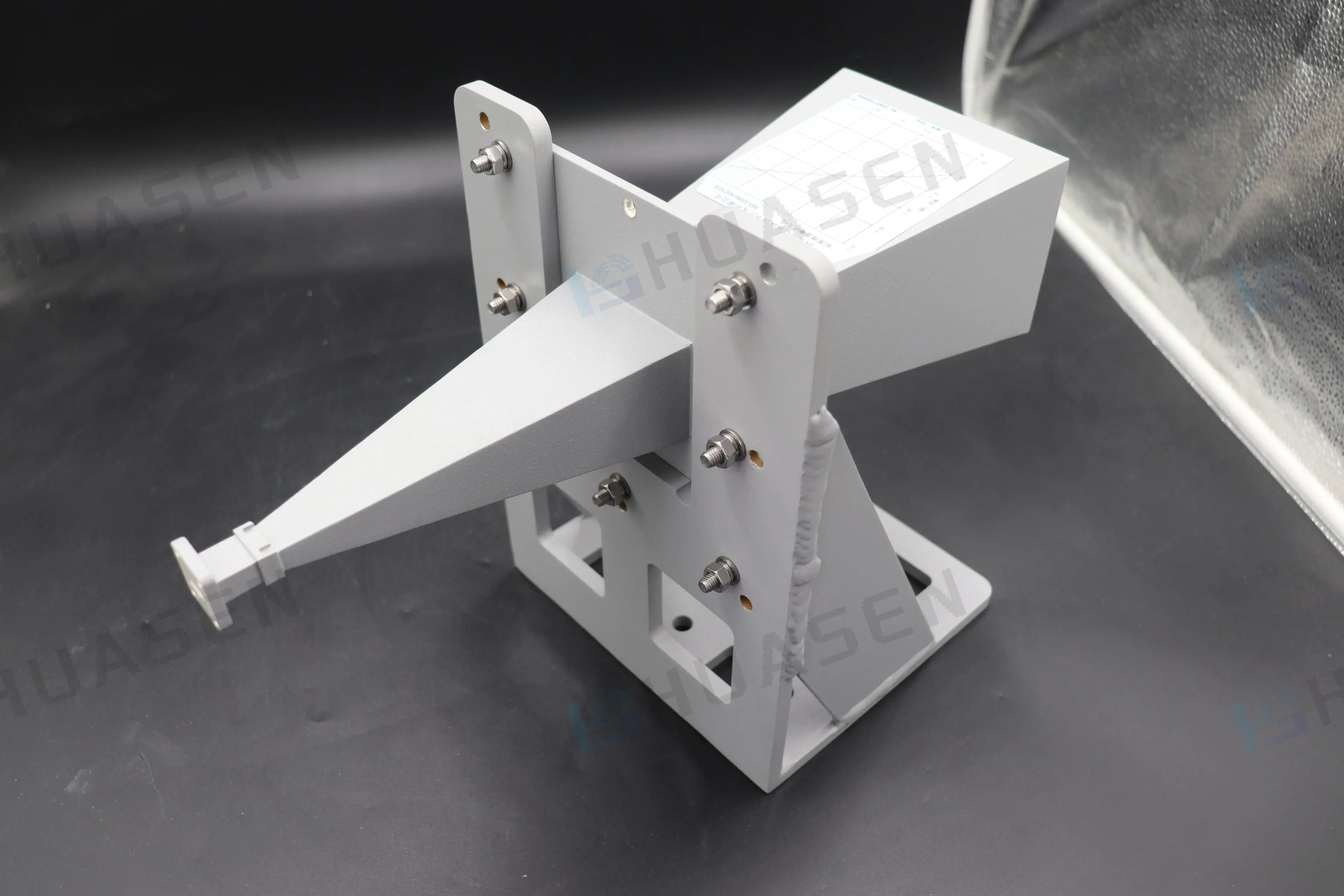
Fault 2: Physical Damage and Structural Deformation
Mechanical integrity directly impacts Standard Gain Antenna performance, as even minor deformations to radiating elements, feed structures, or housing components can significantly alter radiation patterns and gain characteristics beyond acceptable tolerances. Dents or bends in antenna elements change current distribution patterns, shifting resonant frequencies and creating impedance mismatches that reduce gain and increase VSWR across the operational bandwidth. Structural deformations resulting from drops, impacts, or improper handling stress materials beyond their elastic limits, permanently altering geometric relationships critical for maintaining calibrated performance specifications. Temperature cycling in harsh environments causes differential thermal expansion between dissimilar materials used in construction, potentially loosening mechanical joints or creating gaps that compromise electromagnetic performance. Manufacturing processes including aluminum arc welding for low-frequency variants, copper silver brazing for high-frequency designs, and precision machining for ultra-high frequency applications ensure initial structural integrity, but field use conditions can introduce damage requiring careful assessment. Troubleshooting begins with thorough visual inspection under adequate lighting, examining all surfaces for obvious damage including cracks, dents, loose components, or misaligned elements that indicate potential performance degradation. Quick fixes for minor issues include carefully straightening bent elements using appropriate tools while avoiding excessive force that could worsen damage, tightening loose hardware with calibrated torque tools to manufacturer specifications, and documenting all observations for correlation with measurement anomalies. Severe structural damage typically requires factory repair or replacement, as attempting field repairs on precision calibrated components risks introducing additional errors that compromise measurement validity.
Fault 3: Calibration Drift and Accuracy Degradation
Standard Gain Antennas rely on precise calibration data to serve as measurement references, but various factors cause calibrated characteristics to drift over time, gradually reducing measurement accuracy until performance exceeds the guaranteed ±0.5dB specification. Aging of materials alters electrical properties including conductivity and dielectric constants, slightly modifying impedance relationships and radiation efficiency compared to initial calibration conditions. Environmental exposure to temperature extremes, humidity, salt spray, and UV radiation accelerates material degradation processes, particularly affecting surface treatments and protective coatings that maintain optimal electrical properties. High-power testing scenarios subject antennas to thermal stress that can permanently change material characteristics, especially in solder joints or adhesive bonds where elevated temperatures approach material limits. Calibration drift manifests as systematic measurement errors that remain consistent across repeated tests, distinguishing it from intermittent faults caused by connector issues or environmental interference. Troubleshooting requires comparing recent measurements against historical baseline data to identify trends indicating gradual performance changes rather than sudden failures. Quick fixes include cross-checking measurements using alternate reference antennas to confirm whether observed discrepancies originate from the Standard Gain Antenna or other system components, adjusting measurement uncertainty budgets to account for potential drift when operating near calibration intervals, and implementing environmental controls including temperature stabilization and humidity management to minimize accelerated aging effects. Ultimate resolution requires recalibration by accredited laboratories using traceable standards, typically recommended annually for critical applications or following any event potentially affecting performance such as physical damage, exposure to excessive power levels, or operation outside specified environmental ranges.
Fault 4: Environmental Interference and Reflection Effects
Measurement environment characteristics significantly impact Standard Pickup. Receiving wire execution, as reflections from adjacent objects, ground planes, and auxiliary components make multipath proliferation that mutilates radiation designs and causes clear pickupvarieties irrelevant to real radio wire execution. Metallic surfaces, including hardware racks, dividers, and research facility furniture, reflect electromagnetic vitality back toward the receiving wire, making standing wave designs that present estimation mistakes shifting with recurrence and radio wire situating. Ground reflections especially influence vertically polarized estimations, as the reflected wave combines with the coordinate wave to deliver impedance designs showing nulls and crests at particular height points. Safeguarding fabric corruption in anechoic chambers diminishes viability at controlling reflections, continuously changing controlled estimation situations into semi-anechoic conditions where undesired engendering ways impact comes about. Cable steering and back structures in the near-field locale couple to receiving wire areas, presenting stacking impacts that adjust impedance and radiation characteristics compared to perfect free-space conditions. Investigating natural issues requires precise assessment of estimation setup geometry, recognizing potential reflection sources through physical assessment and computational modeling that predicts multipath commitments at test frequencies. Fast fixes incorporate repositioning the Standard. Pick up Receiving wire to minimize ground reflection impacts by altering mounting stature, agreeing to extend geometry calculations, introducing extra safeguard fabric to stifle distinguished reflection ways while keeping up satisfactory scope over significant recurrence groups, moving metallic objects and gear absent from the estimation range to diminish coupling and diffusing impacts, and executing time-domain gating strategies in vector arrange analyzer estimations to partition coordinate radio wire reactions from postponed reflections arriving from room boundaries or impediments. Accomplishing ideal estimation exactness frequently requires adjusting commonsense imperatives against perfect anechoic conditions, carefully archiving natural restrictions, and joining fitting instability components into last results.
Fault 5: Feed Network and Matching Circuit Problems
Internal feed structures and impedance matching networks within Standard Gain Antennas develop faults that compromise performance while remaining invisible during external visual inspection, requiring more sophisticated diagnostic techniques to identify and address. Solder joint failures in feed assemblies create intermittent connections exhibiting temperature-dependent resistance changes that modulate gain measurements as thermal conditions vary during testing. Matching network component degradation affects transformers, baluns, or reactive elements used to optimize impedance relationships between feed lines and radiating structures, introducing frequency-dependent mismatches that reduce gain and increase VSWR particularly at band edges. Dielectric substrate damage in printed circuit board feed networks causes localized changes in characteristic impedance and propagation velocity, creating reflections and insertion loss that alter the antenna's overall transfer function. Moisture ingress through damaged seals or coatings reaches internal components, causing corrosion and dielectric property changes that progressively degrade electrical performance over time. Diagnosing feed network issues requires return loss measurements to identify impedance mismatches, insertion loss characterization to detect excessive attenuation, and thermal imaging during operation to reveal abnormal heating patterns indicating resistive faults or excessive current concentrations. Quick fixes prove limited for internal component failures, but preventive measures include maintaining protective coatings and seals to prevent moisture ingress, operating within specified power limits to avoid thermal stress on critical junctions, and storing antennas in controlled environments with appropriate temperature and humidity levels between uses. When internal faults are confirmed through diagnostic measurements but external symptoms remain absent, professional repair services or factory replacement become necessary to restore calibrated performance specifications required for precision measurement applications.
Conclusion
Maintaining Standard Pickup Receiving wire exactness requires watchful consideration of connector conditions, auxiliary judgment, calibration legitimacy, natural components, and inner bolster arrangement wellbeing. By methodically tending to these five common blame categories through customary assessment, legitimate dealing, controlled working conditions, and opportune recalibration, engineers guarantee estimation of unwavering quality fundamental for broadcast communications, radar, aviation, and defense applications. Proactive support and inciteful investigation protect the accuracy of reference capabilities that make these radio wires irreplaceable estimation tools.
FAQ
1. How often should Standard Gain Antennas be recalibrated?
Recalibration intervals depend on usage intensity and application criticality. Most laboratories schedule annual recalibration for general-purpose measurements, ensuring performance remains within ±0.5dB accuracy specifications. High-precision applications or harsh operating environments may require semi-annual or quarterly calibration verification. Critical programs should implement interim performance checks between formal calibrations to detect drift early. Always recalibrate following physical damage, exposure to excessive power, or operation outside specified environmental ranges.
2. Can environmental conditions permanently damage these antennas?
Extreme environmental conditions can cause permanent damage affecting calibrated performance. Temperature cycling beyond specifications stresses material joints and connections, potentially causing mechanical failures. High humidity combined with salt exposure accelerates corrosion of metallic surfaces and connectors. UV radiation degrades protective coatings and plastic components over time. Proper storage in controlled environments and using protective covers during outdoor testing minimizes environmental damage risks and extends antenna service life.
3. What measurement uncertainty should be expected in field conditions?
Field measurement uncertainty typically exceeds laboratory specifications due to uncontrolled environmental factors. While antennas maintain ±0.5dB accuracy under calibration conditions, field uncertainties of ±1.0dB to ±2.0dB are common depending on setup quality and environmental control. Factors include ground reflections, nearby obstacles, temperature variations, and equipment positioning accuracy. Careful site selection, proper absorber usage, and documented measurement procedures help minimize field uncertainties while acknowledging inherent limitations compared to anechoic chamber testing.
4. Are connector type and quality important for maintaining accuracy?
Connector quality critically affects measurement accuracy, as precision RF connectors maintain characteristic impedance and minimize reflections essential for reliable results. Low-quality connectors introduce impedance discontinuities causing return loss degradation and insertion loss variations. Repeated mating cycles wear contact surfaces, gradually increasing connection resistance and introducing intermittent faults. Premium connectors with gold-plated contacts and precision machining provide superior durability and electrical performance. Regular connector inspection and timely replacement prevent avoidable measurement errors.
Standard Gain Antenna Manufacturer & Supplier | Huasen Microwave
As a leading Standard Gain Antenna manufacturer and trusted Standard Gain Antenna supplier, Huasen Microwave Technology Co., Ltd. leverages over 30 years of RF and microwave expertise to deliver precision reference antennas for demanding measurement applications. Our comprehensive product range covers 30MHz to 300GHz with customizable solutions extending to 3THz, offering gain options from 10dB to 25dB and guaranteed ±0.5dB accuracy backed by rigorous quality control under ISO9001 certification. We serve telecommunications companies, aerospace contractors, defense organizations, and test laboratories worldwide requiring reliable measurement references for antenna characterization, EMC testing, and wireless system development. Our advanced manufacturing processes including aluminum arc welding for low frequencies, copper silver brazing for high frequencies, and precision machining for millimeter-wave applications ensure consistent performance across diverse operating environments. Whether you need standard configurations with quick delivery from stock or custom-engineered solutions for specialized applications, our technical team provides comprehensive support from specification development through installation and ongoing calibration services. Contact us today at sales@huasenmicrowave.com to discuss your measurement requirements and discover how our Standard Gain Antenna solutions can enhance your testing accuracy and efficiency.
References
1. IEEE Standard 149-2021. "IEEE Recommended Practice for Antenna Measurements." Institute of Electrical and Electronics Engineers, 2021.
2. Balanis, Constantine A. Antenna Theory: Analysis and Design, 4th Edition. John Wiley & Sons, 2016.
3. Milligan, Thomas A. Modern Antenna Design, 2nd Edition. John Wiley & Sons, 2005.
4. Stutzman, Warren L. and Thiele, Gary A. Antenna Theory and Design, 3rd Edition. John Wiley & Sons, 2012.
5. Kraus, John D. and Marhefka, Ronald J. Antennas for All Applications, 3rd Edition. McGraw-Hill, 2002.
6. Hansen, Robert C. Phased Array Antennas, 2nd Edition. John Wiley & Sons, 2009.
Send Inquiry