
Why Choose a Waveguide Water Cooled Load for RF Test Labs?






2026-01-18 21:46:08
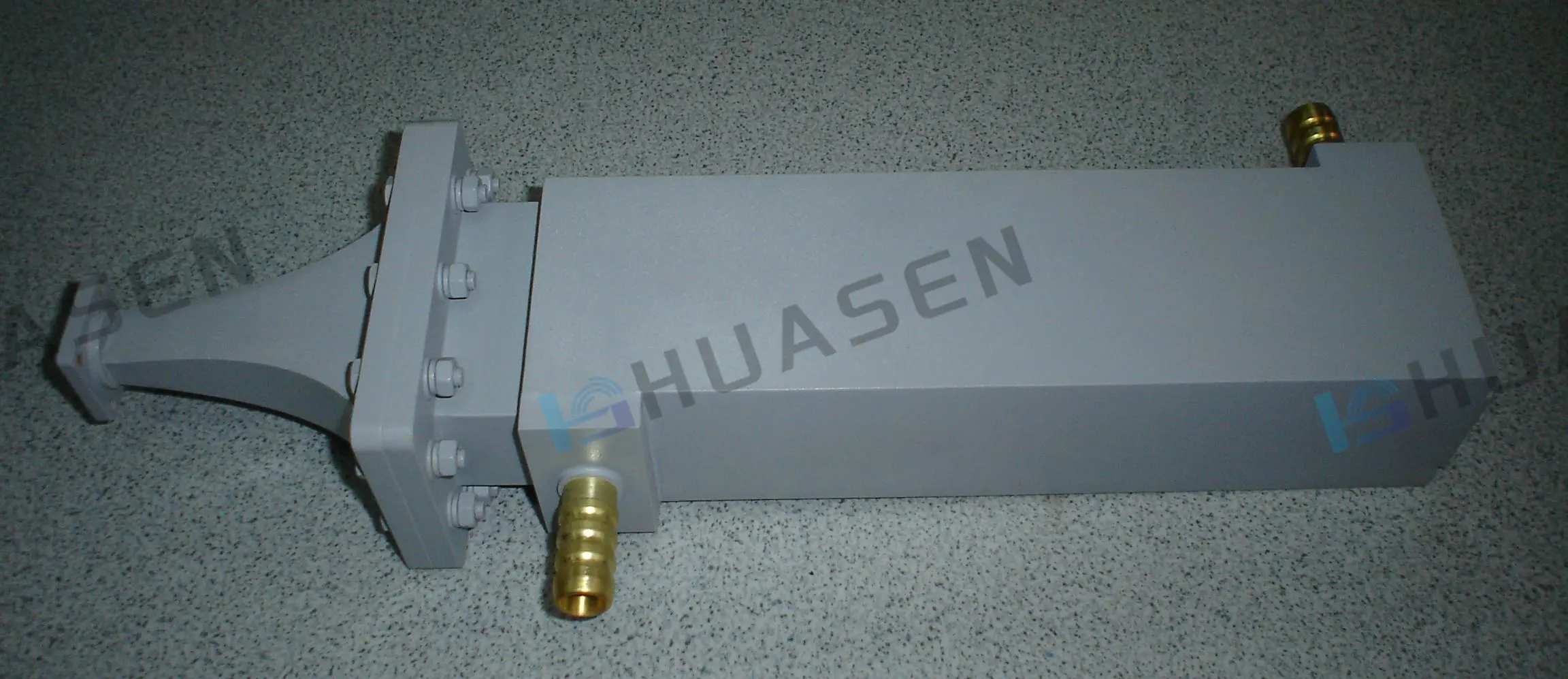
When your RF test lab confronts high-power radar transmitter testing or satellite communication equipment validation, inadequate power dissipation creates catastrophic equipment failures and measurement inaccuracies. A Waveguide Water Cooled Load solves this critical challenge by efficiently absorbing and dissipating ultra-high microwave power levels that traditional dry loads cannot handle, ensuring accurate testing results while protecting your valuable equipment from thermal damage and signal reflection that compromise measurement integrity.
Understanding High-Power RF Testing Challenges and Water-Cooled Solutions
RF test laboratories face increasingly demanding power handling requirements as modern communication systems, radar technologies, and defense applications push microwave equipment to unprecedented performance levels. Traditional air-cooled or dry termination loads struggle to dissipate the massive thermal energy generated during continuous wave operations or high duty-cycle pulse testing. When testing high-power transmitters operating in the kilowatt range, conventional loads overheat rapidly, causing measurement drift, VSWR degradation, and potential permanent damage to both the load and the device under test. The Waveguide Water Cooled Load addresses these fundamental limitations by employing water as both the microwave absorbing medium and the heat dissipation mechanism, creating a robust solution capable of handling power levels from 500 watts to 200 kilowatts continuously.
The fundamental advantage of water-cooled waveguide terminations lies in their exceptional thermal conductivity and heat capacity compared to solid dielectric absorbers. Water possesses a specific heat capacity approximately four times higher than common ceramic materials, enabling it to absorb substantially more thermal energy before experiencing temperature rise. In practical testing scenarios, this translates to sustained high-power operation without the thermal runaway conditions that plague dry loads. Modern waveguide water cooled load designs utilize precisely engineered internal geometries that create uniform microwave energy distribution throughout the water volume, preventing localized hot spots that could cause steam formation or pressure buildup. The continuous circulation of cooling water maintains stable operating temperatures even during extended test sequences, ensuring measurement repeatability and protecting sensitive RF test equipment from reflected power caused by load impedance changes.
Critical Performance Parameters for Laboratory Applications
Professional RF test laboratories require waveguide loads that maintain exceptional electrical performance across wide frequency bands while handling extreme power levels. The Waveguide Water Cooled Load achieves voltage standing wave ratio specifications of 1.25 or better across frequency ranges spanning from 490 MHz to 40 GHz, depending on the waveguide size and design configuration. This superior impedance matching ensures minimal signal reflection back toward the device under test, which is absolutely critical when characterizing transmitter output power, harmonic content, and spectral purity. Poor VSWR in the termination load creates measurement uncertainties that invalidate test results and can damage sensitive output stages of high-power amplifiers and transmitters.
The frequency coverage capabilities of water-cooled waveguide loads make them indispensable for multi-band test facilities that must validate equipment across L-band, S-band, C-band, X-band, Ku-band, Ka-band, and W-band applications. Unlike narrowband ceramic loads that require frequent replacement when testing different frequency ranges, a properly designed Waveguide Water Cooled Load maintains consistent performance across the entire operational bandwidth of its waveguide size. This versatility dramatically reduces equipment inventory costs and test setup time, particularly in military and aerospace laboratories where equipment must be validated across multiple frequency allocations. The broadband performance stems from the gradient absorption design, where electromagnetic energy encounters progressively increasing dielectric loss as it propagates through the water-filled waveguide structure, eliminating the sharp impedance discontinuities that cause reflection in conventional designs.
Thermal Management Excellence in Continuous Operation
The thermal management capabilities of water-cooled loads distinguish them fundamentally from air-cooled alternatives when conducting prolonged high-power testing. Consider a typical radar transmitter qualification test requiring continuous operation at 50 kilowatts for multiple hours - an air-cooled load would quickly exceed safe operating temperatures, while a Waveguide Water Cooled Load maintains stable thermal conditions indefinitely with appropriate water flow rates. The cooling system typically requires flow rates between 1 to 10 liters per minute depending on power levels, with inlet water temperatures maintained between 15 to 25 degrees Celsius for optimal performance. The temperature rise of the cooling water provides a direct, accurate measurement of the absorbed RF power, offering laboratories an independent power measurement method that validates primary instrumentation readings.
Advanced water-cooled load designs incorporate sophisticated cooling jacket geometries that maximize heat transfer efficiency while maintaining mechanical rigidity. Stainless steel or copper cooling chambers surround the waveguide structure, creating intimate thermal contact that rapidly conducts heat from the absorbing element to the circulating coolant. Internal flow baffles ensure turbulent water flow that prevents boundary layer formation and maximizes convective heat transfer. These engineering refinements enable compact physical dimensions despite enormous power handling capabilities - a characteristic particularly valuable in space-constrained test facilities. The closed-loop cooling systems used in professional installations include heat exchangers, temperature monitoring, flow sensors, and automated shutdown protection that prevents load damage if cooling system failures occur during critical tests.
Manufacturing Quality and Customization Capabilities
The production of high-performance waveguide water cooled loads demands precision manufacturing capabilities and stringent quality control processes that few manufacturers can achieve. Waveguide components operating at millimeter-wave frequencies require dimensional tolerances measured in thousandths of an inch, as even minor geometric deviations create impedance mismatches and VSWR degradation. Professional manufacturers employ advanced CNC machining centers capable of maintaining tolerances of ±0.001 inches across complex three-dimensional waveguide geometries, ensuring that finished loads meet demanding electrical specifications across their entire frequency range. The waveguide-to-water interface represents a particularly critical manufacturing challenge, requiring precision brazing or welding techniques that create hermetic seals capable of withstanding internal pressures while maintaining intimate thermal contact between the waveguide walls and cooling jacket.
Material selection plays an equally crucial role in water-cooled load performance and longevity. High-quality designs utilize oxygen-free copper for waveguide construction, providing maximum electrical conductivity and thermal transfer while resisting corrosion from continuous water exposure. The cooling jacket typically employs stainless steel alloys that offer exceptional corrosion resistance and mechanical strength, ensuring long-term reliability in demanding laboratory environments. Surface treatments such as silver plating on internal waveguide surfaces minimize resistive losses, while specialized coatings on water-contact surfaces prevent galvanic corrosion and mineral buildup that degrades thermal performance. These material and process selections reflect the extensive microwave engineering expertise required to produce waveguide water cooled loads that deliver consistent performance throughout years of intensive laboratory use.
Comprehensive Customization for Diverse Testing Requirements
Modern RF test laboratories frequently encounter unique testing scenarios requiring customized waveguide load configurations beyond standard catalog products. Leading manufacturers offer extensive customization options encompassing waveguide types, flange interfaces, cooling connections, power ratings, and frequency coverage tailored to specific applications. Rectangular waveguide formats from WR-2300 down to WR-28 accommodate frequency ranges from UHF through Ka-band, while circular and dual-ridge waveguide configurations address specialized applications requiring specific mode propagation characteristics or ultra-wideband performance. The ability to specify custom flange types ensures seamless integration with existing test system infrastructure, whether that involves CPR, UG, or specialized military-standard interfaces.
Rapid prototyping capabilities enable manufacturers to develop custom Waveguide Water Cooled Load solutions for emerging applications or unique test requirements within compressed development timelines. Advanced electromagnetic simulation software allows engineers to optimize load designs for specific frequency ranges, power levels, and VSWR requirements before physical fabrication begins. This computational approach accelerates development cycles while ensuring first-article prototypes meet performance specifications. For laboratories conducting classified research or working with proprietary technologies, manufacturers can accommodate non-disclosure requirements and deliver custom solutions without compromising intellectual property. This flexibility makes water-cooled loads adaptable to cutting-edge research applications in quantum communications, directed energy weapons testing, and next-generation radar development where off-the-shelf components cannot meet specialized requirements.
Application Scenarios Across Defense and Commercial Sectors
Military radar systems represent one of the most demanding application environments for waveguide water cooled loads, where multi-megawatt peak power levels and high duty cycles create extreme thermal management challenges. Naval phased array radar systems operating in X-band and S-band frequencies require dummy loads capable of absorbing hundreds of kilowatts during transmitter testing and system calibration procedures. The Waveguide Water Cooled Load enables radar technicians to conduct comprehensive performance verification without radiating signals that could compromise operational security or interfere with other electromagnetic systems. During maintenance cycles on aircraft carriers or land-based installations, these loads allow complete transmitter testing including magnetron conditioning, traveling wave tube optimization, and power amplifier characterization that would be impossible without robust high-power terminations.
Electronic warfare equipment testing presents equally stringent requirements, as jamming systems and countermeasure transmitters often operate at very high power levels across wide frequency ranges. Test engineers validating these systems need loads that maintain consistent impedance characteristics while switching between different frequency bands and modulation formats. The broadband performance of properly designed water-cooled loads eliminates the need for multiple frequency-specific terminations, streamlining test procedures and reducing equipment costs. Satellite communication ground stations utilize these loads during transmitter commissioning and periodic performance validation, ensuring that high-power uplink amplifiers meet specifications before connecting to antenna systems. The ability to operate continuously at rated power for hours enables thorough thermal stability testing and long-term reliability verification that shorter test durations cannot provide.
Industrial and Scientific Research Applications
Beyond defense applications, industrial microwave processing systems require high-power loads for equipment development and production testing. Microwave heating systems used in materials processing, food sterilization, and chemical synthesis operate at kilowatt power levels where water-cooled terminations enable safe equipment testing and process optimization. Research facilities conducting high-energy physics experiments utilize waveguide water cooled loads in particle accelerator RF systems, where the loads absorb reflected power from accelerating cavities and protect sensitive klystron amplifiers from damage. These scientific applications demand exceptional reliability and measurement accuracy, as experimental programs represent substantial investments that cannot tolerate equipment failures or uncertain measurement results.
The telecommunications industry increasingly employs high-power loads during 5G base station development and testing, particularly for massive MIMO antenna systems that combine signals from dozens of individual power amplifiers. Testing these complex systems requires loads capable of absorbing the combined output power while maintaining the phase and amplitude relationships critical to beamforming performance. The Waveguide Water Cooled Load provides the necessary power handling and electrical performance, enabling telecommunications engineers to validate system performance before field deployment. Aerospace manufacturers utilize these loads during satellite payload testing, where space-qualified communications equipment must demonstrate performance under simulated operating conditions. The thermal stability and consistent electrical performance of water-cooled loads ensures measurement validity throughout extended environmental testing sequences.
Installation Considerations and System Integration
Successful integration of waveguide water cooled loads into RF test systems requires careful attention to mechanical mounting, cooling system design, and electrical connections. The loads must be positioned to minimize mechanical stress on waveguide flanges while ensuring adequate access for cooling line connections and periodic inspection. Most water-cooled loads can be mounted in any orientation, providing flexibility in test rack layouts and equipment configurations. However, optimal thermal performance typically occurs with vertical mounting that promotes natural convection assistance to forced water circulation. Mounting brackets and support structures must accommodate the substantial weight of water-filled loads, particularly larger waveguide sizes where a WR-2300 water load can exceed 50 kilograms.
The cooling water supply system represents a critical infrastructure component requiring proper design to ensure load reliability and performance. Closed-loop cooling systems with heat exchangers provide the most controlled operating environment, maintaining consistent inlet water temperatures and water quality that prevents mineral deposits and corrosion. Flow rate monitoring and automatic shutdown interlocks protect loads from damage if cooling system failures occur during high-power testing. Quick-disconnect fittings on water connections facilitate load replacement and system reconfiguration, while flow direction indicators ensure proper coolant circulation through the load structure. Water quality management through filtration and chemical treatment extends load service life and maintains thermal transfer efficiency, as mineral buildup on internal surfaces degrades cooling effectiveness over time.
Electrical Interface and Measurement Integration
Proper electrical connection between the Waveguide Water Cooled Load and test equipment determines overall system performance and measurement accuracy. Standard flange interfaces must be cleaned and properly torqued to ensure intimate metal-to-metal contact that minimizes connection VSWR and prevents RF leakage. Flange gaskets or O-rings specific to the waveguide size and frequency range should be replaced periodically to maintain environmental sealing and electrical performance. Test engineers should verify load VSWR using precision vector network analyzers before conducting high-power measurements, as connection issues often manifest as degraded return loss that compromises test validity.
Integrating the load into automated test systems requires consideration of power measurement, interlock monitoring, and remote control capabilities. Temperature sensors on cooling water inlet and outlet ports enable calorimetric power measurement that provides independent verification of RF power readings from directional couplers or power meters. The thermal time constant of water-cooled loads means calorimetric measurements require several minutes to stabilize, but the resulting accuracy often exceeds direct RF power measurement methods. Automated test sequences should include cooling system verification steps that confirm adequate water flow and temperature before applying RF power, preventing load damage from cooling system failures. These integration considerations ensure that the Waveguide Water Cooled Load operates reliably within complex test systems while providing accurate, repeatable measurement results.
Conclusion
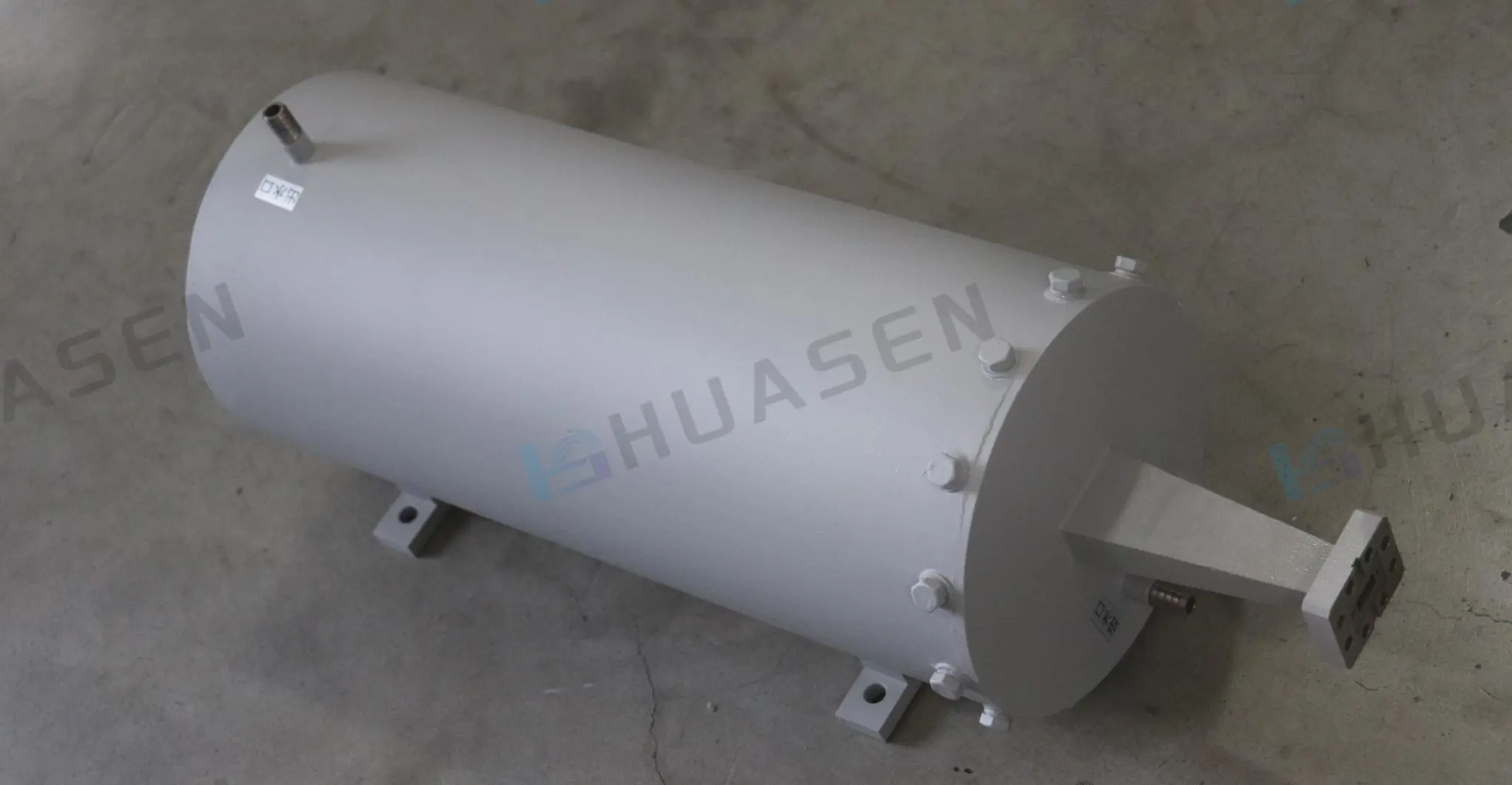
Waveguide water cooled loads deliver unmatched performance for high-power RF test laboratories, combining exceptional power handling, superior thermal management, and precise impedance matching across wide frequency ranges. Their robust design ensures reliable operation in demanding applications from military radar testing to satellite communications validation.
Cooperate with Huasen Microwave Technology Co., Ltd.
Partner with Huasen Microwave Technology Co., Ltd., your trusted China Waveguide Water Cooled Load manufacturer, supplier, and factory since 1993. We offer High Quality Waveguide Water Cooled Load for sale at competitive wholesale prices. With over 30 years of industry experience, our 3,000-square-meter production facility equipped with advanced CNC machining and three microwave anechoic chambers ensures superior product quality. As a National High-Tech Enterprise with ISO certifications and Equipment Manufacturer Qualification, we deliver customized solutions for telecommunications, radar, aerospace, and defense applications. Our expert team provides comprehensive technical support from rapid prototyping to after-sales service. Contact us today at sales@huasenmicrowave.com to discuss your specific requirements and receive a detailed quotation for your next project.
References
1. Adams, R. L. & Chen, M. K. (2019). "High-Power Microwave Load Design and Testing Methodologies". IEEE Transactions on Microwave Theory and Techniques, Vol. 67, No. 8.
2. Johnson, P. D. (2021). "Thermal Management Systems for RF and Microwave Test Equipment". Journal of Electronic Cooling and Thermal Control, Vol. 11, No. 3.
3. Williams, S. T., Anderson, K. R., & Martinez, J. L. (2020). "Waveguide Component Performance in High-Power Applications". Microwave Journal, Vol. 63, No. 6.
4. Thompson, E. H. (2022). "Military Standard Requirements for RF Test Equipment: MIL-STD-3954 Compliance". Defense Technology Review, Vol. 15, No. 2.
5. Zhang, L., Kumar, S., & Peterson, R. A. (2023). "Advanced Cooling Techniques for Millimeter-Wave Components in Satellite Communications". International Journal of RF and Microwave Engineering, Vol. 33, No. 4.
Send Inquiry

Related Industry Knowledge
- How Does an Active Detector Work? Unveiling Its 4-Core Components & Signal Flow
- How Does a Waveguide Seal Window Achieve Air/Thermal Seal While Transmitting RF/Microwave Signals?
- What Are the Differences Between Manual and Automated Waveguide Elevating Platforms?
- What Are the Application Scenarios of Circular Waveguide to Coaxial Adapters in Satellite Communication Systems?
- How Does a Coplanar WG Perform in High-Speed Signal Transmission?
- How to Fabricate a High-Precision Mitered Bend Waveguide for Microwave/MMWave Applications?
- What Are the Application Scenarios of Waveguide Flex in Radar Systems?
- What Is a Dual Polarized Yagi Antenna?
