How to Use a Coaxial Fixed Attenuator in RF Testing (With Common Mistakes to Avoid






2019-01-30 14:36:01
In RF testing situations, accomplishing precise estimations requires appropriate flag administration and control. A Coaxial Fixed Attenuator serves as a fundamental component for decreasing flag plentifulness while keeping up impedance coordination over the estimation chain. This exactness gadget guarantees that touchy test hardware remains insured from intemperate control levels while empowering engineers to build up reference levels for calibration purposes. Understanding the adjusted execution strategies and dodging common pitfalls can altogether progress estimation and unwavering quality in broadcast communications, radar frameworks, and microwave applications.
Understanding the Role of Coaxial Fixed Attenuators in RF Measurements
Basic Operating Principles and Signal Control Functions
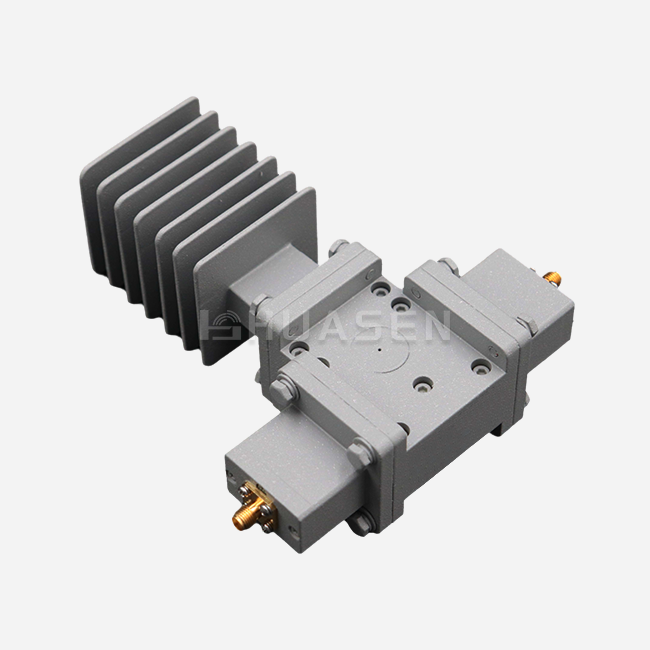
The fundamental operation of a Coaxial Fixed Attenuator involves dissipating a predetermined amount of RF energy as heat while allowing the remaining signal to pass through with minimal distortion. These components utilize resistive networks configured in T-pad or Pi-pad arrangements, maintaining consistent 50-ohm impedance throughout the signal path. The attenuation value, ranging from 3 dB to 50 dB in professional-grade units, remains constant across the specified frequency range, typically from DC to 18 GHz. The resistive elements are manufactured using advanced thin-film technology, ensuring precise attenuation values with minimal tolerance deviation. During operation, the device prevents impedance mismatches that would otherwise cause standing waves and measurement errors, while simultaneously protecting downstream equipment from damage caused by excessive input power.
Critical Parameters Affecting Measurement Accuracy
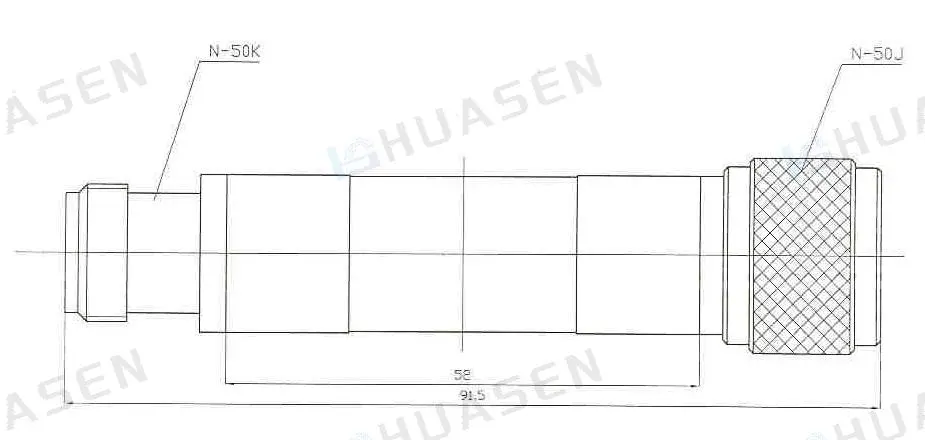
When selecting a Coaxial Fixed Attenuator for testing applications, several technical specifications directly impact measurement quality. Power handling capacity represents one of the most critical parameters, with professional units offering ratings from 1W to 500W depending on construction materials and thermal management design. Insertion loss flatness across the operating frequency range determines performance consistency, with superior designs maintaining variation within ±0.5 dB. Return loss specifications indicate impedance matching quality, with values exceeding 20 dB considered excellent for precision measurements. Connector types such as N-type and SMA interfaces must be compatible with existing test equipment to ensure reliable connections. Understanding these parameters enables engineers to select appropriate models that meet specific testing requirements without compromising measurement integrity.
Application Scenarios in Modern RF Testing
Coaxial Fixed Attenuators find extensive use across diverse testing scenarios. In 5G infrastructure deployment, these components enable accurate characterization of base station transmitters by reducing output power to levels suitable for spectrum analyzers. Satellite communication ground stations employ them for receiver sensitivity testing, where signal levels must be precisely controlled. Radar equipment manufacturers integrate these attenuators into production test fixtures, ensuring consistent measurement conditions during quality assurance procedures. Laboratory environments use them to create calibrated reference signals, while military communications equipment undergoes rigorous testing protocols that demand repeatable signal conditions, making these components essential for compliance verification.
Proper Installation and Connection Procedures
Pre-Installation Verification and Equipment Preparation
Before connecting any Coaxial Fixed Attenuator into an RF test setup, thorough inspection and preparation procedures minimize the risk of equipment damage. Begin by visually examining the attenuator for any physical damage to connector interfaces, checking for bent pins, damaged threads, or contamination. Use compressed air or approved cleaning solutions to remove debris from connector interfaces. Verify that the attenuator's specifications match testing requirements, including adequate power handling capacity, appropriate frequency range coverage, and correct attenuation value. Calculate expected power levels at each point in the measurement chain to ensure the device will not be subjected to excessive power. Prepare the workspace with appropriate tools, including calibrated torque wrenches for connector tightening, as over-tightening can damage precision interfaces while under-tightening leads to poor electrical contact.
Step-by-Step Connection Methodology
Executing proper connection procedures ensures optimal performance and longevity. Start by powering down all instruments in the signal chain to prevent transient currents during connection. Carefully align the attenuator's input connector with the signal source, ensuring straight-line engagement without cross-threading. Apply the manufacturer-recommended torque specification using a calibrated torque wrench, typically between 12 to 15 inch-pounds for SMA connectors and 15 to 18 inch-pounds for N-type interfaces. For high-power applications, allow adequate spacing around the Coaxial Fixed Attenuator for heat dissipation, as thermal management becomes critical when operating near maximum power ratings. Implement proper grounding techniques by ensuring the attenuator housing makes solid electrical contact with the test fixture or equipment chassis.
Post-Installation Verification Testing
After completing the physical installation, systematic verification procedures confirm correct operation before proceeding with critical measurements. Measure the actual attenuation value using a calibrated vector network analyzer or power meter, comparing results against manufacturer specifications to identify any deviations. Conduct return loss measurements at both ports to verify proper impedance matching. Perform frequency sweep measurements across the intended operating range to confirm flat attenuation response. Monitor the Coaxial Fixed Attenuator temperature during initial power application, particularly for high-power testing scenarios, ensuring thermal performance remains within acceptable limits.
Common Mistakes and How to Avoid Them?
Power Handling Errors and Thermal Management Failures
One of the most frequent and damaging mistakes involves exceeding the power handling capacity of a Coaxial Fixed Attenuator, resulting in permanent damage to internal resistive elements. Engineers sometimes miscalculate actual power levels, particularly when dealing with pulsed signals where peak power can dramatically exceed average power measurements. Another common error involves inadequate thermal management in high-power applications, where insufficient airflow allows junction temperatures to exceed safe operating limits. To avoid these issues, always maintain a safety margin of at least 20-30% below rated power specifications, implement forced air cooling for sustained high-power applications, and regularly monitor housing temperatures during critical testing procedures.
Impedance Mismatch and Connection Quality Issues
Improper connector mating represents another prevalent source of measurement errors. Over-tightening connectors crushes precision contact surfaces, creating intermittent connections and degraded electrical performance. Conversely, under-tightening leaves gaps that introduce impedance discontinuities and allow RF leakage. Cross-threading during connector engagement damages precision threads and misaligns center conductors. Contamination from dust, oils, or oxidation on connector surfaces increases contact resistance and degrades high-frequency performance. To prevent these problems, implement strict connector maintenance protocols including regular cleaning with approved solvents, periodic inspection for wear detection, and mandatory use of torque wrenches calibrated to manufacturer specifications when installing any Coaxial Fixed Attenuator.
Calibration Neglect and Measurement System Errors
Failing to appropriately account for Coaxial Settled Attenuator characteristics amid estimation framework calibration presents precise blunders. Numerous engineers inaccurately expect that the ostensible constriction esteem checked on the gadget lodging absolutely speaks to real execution, overlooking resilience determinations and frequency-dependent varieties. Dismissing the incorporation of the attenuator inside the calibration reference plane amid vector-organized analyzer estimations makes numerical mistakes. To keep up estimation astuteness, continuously confirm genuine execution utilizing calibrated gear some time recently for basic estimations, incorporate these gadgets inside the estimation framework calibration at whatever point conceivable, and build up intermittent confirmation plans that guarantee continued exactness all through the device's operational lifetime.
Conclusion
Proper utilization of Coaxial Settled Attenuators in RF testing requires a comprehensive understanding of working standards, fastidious establishment strategies, and mindfulness of common execution blunders. These exactness components ensure touchy gear, empowering exact estimations over broadcast communications, aviation, and defense applications. By taking after orderly confirmation conventions and maintaining a strategic distance from visit botches, engineers can accomplish dependable, repeatable estimations that meet rigid industry requirements.
FAQ
1. What attenuation value should I choose for spectrum analyzer protection?
Select attenuation based on your signal source output power and the spectrum analyzer's maximum safe input level, typically -10 dBm. A 20 dB Coaxial Fixed Attenuator provides adequate protection for most applications while maintaining sufficient signal-to-noise ratio. For high-power transmitter testing, cascade multiple attenuators to achieve required reduction, ensuring each device operates within its power rating.
2. How often should I verify my attenuator's performance?
Implement verification schedules based on usage intensity and measurement criticality. For laboratory reference standards, annual calibration against traceable standards ensures continued accuracy. High-power applications require more frequent checks, potentially quarterly, as thermal stress accelerates aging. After any suspected overload event, immediate verification prevents continued use of compromised Coaxial Fixed Attenuator devices.
3. Can I use attenuators in bidirectional signal paths?
Most Coaxial Fixed Attenuators exhibit symmetrical performance regardless of signal direction, making them suitable for bidirectional applications. However, verify manufacturer specifications confirm bidirectional operation. Power handling capacity applies equally in both directions, but combined power from simultaneous bidirectional signals requires careful analysis to prevent thermal overload.
4. What causes attenuation value to change over time?
Several factors contribute to performance drift. Thermal cycling causes microscopic changes in resistive film structures, particularly when devices repeatedly approach maximum power ratings. Connector wear from frequent mating cycles degrades contact quality. Environmental exposure to humidity or temperature extremes accelerates aging. Manufacturing quality significantly influences long-term stability, with premium Coaxial Fixed Attenuator devices using advanced materials that minimize drift.
Premium Coaxial Fixed Attenuator Solutions | Huasen Microwave Manufacturer & Supplier
At Huasen Microwave Technology Co., Ltd., we're proud to be a leading Coaxial Fixed Attenuator manufacturer and supplier with over 30 years of experience in the RF and microwave industry. Our commitment to precision engineering has made us the trusted choice for professionals in telecommunications, aerospace, and defense sectors worldwide. As an established Coaxial Fixed Attenuator supplier, we offer comprehensive technical support, rapid delivery, and competitive pricing. Connect with our engineering team today to discuss your specific requirements. Contact us at sales@huasenmicrowave.com for detailed specifications, custom quotations, or technical consultation.
References
1. Pozar, D. M. (2011). Microwave Engineering (4th ed.). John Wiley & Sons, Inc.
2. Rizzi, P. A. (1988). Microwave Engineering: Passive Circuits. Prentice Hall International Editions.
3. Collin, R. E. (2001). Foundations for Microwave Engineering (2nd ed.). IEEE Press Series on Electromagnetic Wave Theory.
4. Vendelin, G. D., Pavio, A. M., & Rohde, U. L. (2005). Microwave Circuit Design Using Linear and Nonlinear Techniques. John Wiley & Sons.
5. Bahl, I. J. (2009). Fundamentals of RF and Microwave Transistor Amplifiers. John Wiley & Sons, Inc.
6. Edwards, T. C., & Steer, M. B. (2016). Foundations of Interconnect and Microstrip Design (3rd ed.). John Wiley & Sons Ltd.
Send Inquiry