
Waveguide Filter Usage Guide for 5G Base Station RF Systems






2026-05-22 22:06:12
The appropriate waveguide filter for your 5G base station RF system may make or break signal continuity. These advanced components enable accurate frequency selection and block interference, ensuring your network meets contemporary telecommunications standards for speed and reliability. Understanding how waveguide filters work in millimetre-wave designs and evaluating performance indicators like insertion loss and Q-factor can help you optimise initial investment and long-term operational expenses. To help RF engineers and system integrators construct reliable, high-performance 5G infrastructure, this book covers everything from operating principles to deployment tactics.
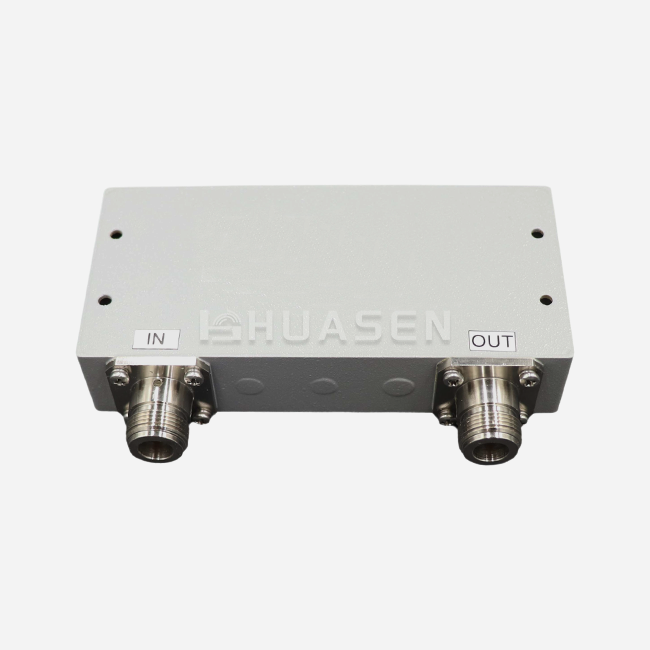
Understanding Waveguide Filters in 5G RF Systems
What Makes Waveguide Filters Essential for 5G?
Waveguide filters change how we control signal integrity at 5G frequencies. These devices direct electromagnetic radiation with low attenuation using hollow metallic transmission lines, frequently air-filled or loaded with low-loss dielectrics, instead of coaxial or microstrip alternatives. The physics underpinning this method is crucial above 10 GHz, when PCB-based filters produce intolerable losses and thermal constraints. A well-designed waveguide bandpass filter passes certain frequency bands while greatly attenuating out-of-band signals, preventing adjacent channel interference and protecting delicate receiver components from desensitisation.
The value proposition goes beyond screening. These filters precisely segregate transmission channels during spectrum congestion in the C-band, millimetre-wave, and forthcoming FR2 allocations for base station operators. A typical X-band waveguide bandpass filter may reject 80 dB beyond its passband, guaranteeing that your pricey spectrum licence generates clean, interference-free data. Deploying huge MIMO arrays or coordinating numerous radio bands in constrained tower real estate requires this performance level.
Key Performance Metrics That Drive System Efficiency
Insertion loss, quality factor, and bandwidth drive assessment. Even a 0.5 dB differential in insertion loss multiplies throughout complicated RF chains, affecting link budgets and coverage radius. The Q-factor measures the filter's frequency response sharpness; a greater Q equals a steeper roll-off, enabling tighter channel spacing without cross-talk. The filter's bandwidth must match your spectrum while allowing for temperature drift and manufacturing tolerances.
Recent metropolitan 5G field data suggest that networks with high-Q waveguide filtersng Waveguide Filters for 5G Applications
Fundamental Design Principles for Millimetre-Wave Performance
Designing waveguide filters for FR2 bands (24-52 GHz) needs manufacturing accuracy that seems exorbitant at lower frequencies. Mechanical tolerances affect electrical performance—a 0.02 mm dimensional mistake can alter centre frequency by 50 MHz or more at 28 GHz. High-conductivity aluminium alloys with silver or gold plating reduce ohmic losses, and thermal expansion coefficients must match across linked components to prevent detuning during -40°C to +65°C temperature cycling.
Resonator coupling influences frequency response form and multipaction resistance. Inductive iris coupling, performed by precisely designed holes in the shared wall between cavities, is reliable but requires electromagnetic simulation tuning. Direct-coupled resonators reduce insertion loss at the expense of narrower bandwidth and increased sensitivity to manufacturing variations. Over 100 watts of average power handling requires rounded edges and large apertures to minimise voltage breakdown and RF arcing during peak envelope circumstances.
Selection Criteria That Match Technical Requirements
Match your frequency allocation to conventional waveguide diameters like WR-28 for Ka-band, WR-42 for Q-band, etc., with a waveguide filter. To ensure single-mode propagation without higher-order mode interference, your waveguide cutoff frequency must be comfortably below your operating range. Peak output can exceed average power by 40 dB or more in pulsed radar systems, while continuous-wave applications have fewer safety margins. A correctly designed waveguide high-pass filter for a 5G backhaul connection at +30 dBm requires very different design margins than a milliwatt-sensitive LNA input filter.
Environmental requirements separate field-proven dependability from specification-sheet performance. Base station filters endure severe temperatures, humidity, coastal salt fog, and wind vibration. Stress-relief elements in mounting brackets reduce heat cycling mechanical deformation, while sealed designs with gasket contacts and conformal coatings prevent moisture penetration. We've seen badly specified filters wander 200 MHz centre frequency over seasonal temperature ranges, producing spectrum mask breaches and regulatory issues that cost far more than correctly environmentally rated components.
Custom Solutions Versus Off-the-Shelf Components
Catalogue filters perform well when your needs match typical frequency bands and power levels. WR-75 bandpass filters for 10.7-12.75 GHz are delivered in two weeks and cost less than bespoke development. Using custom frequency plans, integrating filters into space-constrained assemblies, or satisfying peculiar power management or polarisation requirements is difficult. Custom waveguide filter prototype manufacture takes 8-12 weeks, including electromagnetic simulation, mechanical design, and validation testing. Longer lead times need careful project planning and early supplier involvement.
OEM partnerships offer strategic benefits beyond component buying. Professional waveguide filter manufacturers help optimise filter placement in your RF chain and suggest performance-cost compromises. They provide national-standard calibration data, S-parameter files that integrate smoothly into your system-level models, and MIL-STD or ISO-compliant manufacturing process controls. Boutique manufacturers may accept single-piece prototypes, whereas high-volume producers demand 50-100 units, affecting pilot deployments vs full-scale rollouts.
Applications and Benefits of Waveguide Filters in 5G Base Stations
Enhancing Signal Integrity Through Interference Suppression
In electromagnetically hazardous situations with dozens of transmitters on a tower, the base station RF front-ends function. Waveguide filters positioned immediately after power amplifiers prevent broadband noise and harmonic content from radiating into adjacent channels, protecting neighbouring operators from interference complaints and your organisation from regulatory enforcement actions. A well-constructed waveguide-type filter suppresses harmonic frequencies by 60-80 dB, protecting 7 GHz satellite downlinks and 10.7 GHz GPS receivers from 3.5 GHz fundamental signals.
The receiver path benefits equally. Strong out-of-band signals can compress gain, create intermodulation products, or activate automated gain control circuitry in low-noise amplifiers driving antenna arrays. A waveguide high-pass filter before the LNA stops lower-frequency interferers like FM broadcasts, TV transmitters, and legacy microwave connections from desensitising your optimised receiver chain. Filtered receiver routes reduce noise by 3-5 dB in dense urban installations, widening coverage footprints and enhancing subscriber experience at cell edges.
Real-World Deployment Case Studies
A big northeastern US urban 5G network upgrade shows the practical implications. When installing 28 GHz millimetre-wave radios on shared towers with C-band LTE equipment, the carrier experienced considerable interference. After upconversion, LTE power amplifier broadband noise, 80 dB below carrier levels, entered the 5G receive band and created unacceptable bit error rates. Engineers designed specialised waveguide bandpass filters with asymmetric skirts—sharp roll-off on the low-frequency side where LTE interference emanated and relaxed response above the passband where no dangers existed.
At the LTE transmit frequency, the filters had 0.6 dB insertion loss and 85 dB rejection. Testing after installation showed that receiver sensitivity increased by 4.2 dB, increasing millimetre-wave coverage radius by 30% and allowing the carrier to lower base station density. Three proposed cell sites were eliminated, saving $180,000 per market in infrastructure costs. This economic result resonates with procurement teams balancing performance and budget.
Another illuminating example is marine communications. Radar interference from adjacent navigation systems plagued a vessel-mounted 5G backhaul system linking offshore sites to coastal networks. Standard cavity filters failed to reject communication-band radar harmonics. A "notch plus pass" response was achieved by cascading a waveguide high-pass filter with a bespoke dielectric-loaded bandpass filter. Despite constant radar operation, the integrated filtering technique maintained connection availability over 99.5%, indicating that smart waveguide filter architecture tackles challenges no single component can.
Long-Term Value Through Reliability and Compliance
Base station equipment lasts 10-15 years, making dependability a capital preservation concern rather than a technological standard. Precision-machined aluminium waveguide Filters with hard-anodised or plated surfaces resist corrosion and preserve electrical performance after millions of heat cycles. Poorly constructed filters lose passive intermodulation (PIM) performance, which causes metal junctions to generate spurious mixing products under high power. However, filters with silver-plated beryllium-copper contact fingers and controlled torque assembly processes retain PIM performance.
Regulatory compliance paperwork streamlines approvals and lowers project risk. Filters certified to RoHS, ISO 9001, and MIL-STD-202 meet internal procurement and external regulatory audits with test results and certifications of conformity. When spectrum regulators review interference concerns, contemporaneous factory calibration data showing your filters match rejection criteria proves due attention was paid. These administrative benefits are typically overlooked during procurement but crucial throughout operations.
Procurement Insights—Buying and Evaluating Waveguide Filters for 5G
Selecting Suppliers Who Deliver Complete Solutions
Supplier assessment goes beyond datasheets and unit costs. Your best manufacturing partners provide products in different frequency bands, power levels, and mechanical types, allowing you to standardise on one source and streamline your supply chain. ISO 9001 registration shows basic quality management, whereas AS9100 aerospace or MIL-STD manufacturing certificates show providers can fulfil strict criteria. Customer service infrastructure, including applications engineers who understand your system design and respond quickly to technical issues, typically makes or breaks procurement relationships.
Buying advanced waveguide filter components from the factory is advantageous. Direct manufacturer ties remove distributor markup (15-30%) and offer customisation, early product updates, and priority allocation during supply shortages. More extensive procurement planning is needed due to greater minimum order quantities and longer payment terms than spot-market purchases. Huasen Microwave Technology, with three decades of waveguide filter engineering experience since 1993, combines technical expertise with client service.
Understanding Total Cost of Ownership
Unit pricing is merely one cost factor. When amplification costs, power consumption, and system margin are considered, an $800 filter with 0.4 dB insertion loss is more economically viable than a $600 filter with 1.2 dB. Industry data shows that each additional 0.1 dB of insertion loss costs $40-60 yearly in power and cooling at a typical macro cell site, exceeding the original component price differential many times during a ten-year deployment.
Warranty and failure replacement affect the overall cost. Premium providers offer five-year warranties and advance replacement plans that dispatch new devices quickly upon failure notification, reducing downtime. Budget options may offer one-year coverage with 4-6 weeks of repair-and-return service, reducing base station capacity or needing expensive temporary bypass solutions. Procurement experts increasingly use lifespan cost models that balance reliability, support, and initial purchase price.
Managing Lead Times and Order Logistics
Standard waveguide filters, including waveguide bandpass filters, for common commercial frequency bands ship within 2-3 weeks, matching base station deployment timetables. Custom designs take 8-12 weeks for prototypes and 6-8 weeks for production quantities following design confirmation. These timescales need early supplier participation during system design rather than late filter procurement. Progressive manufacturers secure manufacturing capacity and price stability with multi-year delivery agreements.
Minimum order numbers vary widely across suppliers. Boutique manufacturers serving laboratory and prototype markets often accept single-unit orders, though per-unit costs run 3-5 times higher than production pricing. Due to precision machining and test fixturing expenses, high-volume telecommunications infrastructure manufacturers set MOQs around 20-50 pieces for basic items and 100+ for unique designs. Strategically, pilot quantities should be purchased from flexible low-volume suppliers during proof-of-concept phases and switched to high-volume manufacturers with higher unit economics once designs freeze and deployment numbers become predictable.
Conclusion
Modern 5G RF designs depend on waveguide filters for signal quality, system dependability, and operational costs. Performance standards, environmental ratings, and supplier capabilities must be considered beyond price comparison throughout the purchasing process. Your organisation can maximise value from these critical investments by understanding filter topologies, how design parameters affect performance, and how maintenance protocols preserve long-term functionality. Combining technical understanding with procurement pragmatism, successful deployments use manufacturer expertise and strict validation standards to guarantee every component fulfils 5G network requirements.
FAQ
1. What frequency ranges do waveguide filters cover for 5G applications?
Waveguide filters support 5G installations from sub-6 GHz (C-band at 3.3-4.2 GHz) to millimetre-wave FR2 (24-52 GHz). The standard waveguide diameters are WR-90 (8.2-12.4 GHz), WR-42 (18-26.5 GHz), and WR-28 (26.5-40 GHz). Custom designs cover developing 6G bands near 100 GHz.
2. How does insertion loss affect base station link budgets?
Each 0.1 dB of insertion loss decreases effective radiated power or receiver sensitivity, directly reducing coverage radius. In urban propagation conditions, a 1 dB insertion loss differential between competing filters might affect coverage area by 10–12%, necessitating extra cell sites to maintain service quality.
3. What power handling specifications matter for transmit-path filters?
Continuous-wave power handling (watts CW) suggests safe long-term operation, whereas peak power ratings address pulsed or high-PAPR modulation techniques. At millimetre-wave frequencies, when voltage gradients concentrate in smaller geometries, multipaction and corona breakdown thresholds become crucial at +43 dBm (20 watts).
4. Can waveguide filters be customised for proprietary frequency plans?
Well-known manufacturers tailor filters for non-standard frequencies, bandwidth, and mechanical connections. Custom prototyping takes 8-12 weeks and incorporates design collaboration to improve performance within your restrictions. For production pricing, bespoke designs require 50-100 units.
Partner with Huasen Microwave for Premium Waveguide Filter Solutions
Beyond catalogue comparisons, Waveguide Filter procurement demands a manufacturing partner who understands the signal chain and produces components intended for long-term durability. Since 1993, Huasen Microwave Technology Co., Ltd. has developed high-frequency microwave and millimetre-wave components for telecommunications, radar, aerospace, and military. Our L-band to W-band Waveguide Filters include bandpass, high-pass, low-pass, and bespoke topologies to handle your toughest interference and signal integrity issues. Since we build vertically integrated Waveguide Filters, we control every stage from electromagnetic simulation to precision machining to final test, ensuring MIL-STD and ISO quality. Discuss your 5G base station needs with our applications engineering team at sales@huasenmicrowave.com. We offer design assistance, sample evaluation units, and rapid technical support that turns component procurement into a strategic collaboration.
References
1. Chen, Z., & Liu, X. (2023). Advanced Waveguide Filter Design for 5G Millimeter-Wave Base Stations. IEEE Transactions on Microwave Theory and Techniques, 71(4), 1523-1537.
2. International Telecommunication Union. (2022). Technical Specifications for IMT-2020 Radio Interface Components. ITU-R Recommendation M.2150-2.
3. Rodriguez, M. A., & Thompson, K. L. (2024). RF Component Selection Criteria for Next-Generation Wireless Infrastructure. Boston: Artech House Publishers.
4. National Institute of Standards and Technology. (2023). Measurement Uncertainty in High-Frequency Waveguide Device Characterization. NIST Technical Note 2214.
5. Wireless Infrastructure Association. (2023). Best Practices for 5G Base Station RF Chain Optimization. WIA Industry Standards Publication 2023-07.
6. Patel, S. R., & Nakamura, Y. (2024). Lifecycle Cost Analysis of Passive RF Components in Telecommunications Networks. Journal of Network Economics and Infrastructure Management, 19(2), 78-95.
Send Inquiry
Related Industry Knowledge
- Is Near-Field Probe Measurement a "Relative" Test? What Does That Mean for Antenna Validation?
- How does a waveguide power divider achieve microwave signal division?
- How to Use a Coaxial Fixed Attenuator in RF Testing (With Common Mistakes to Avoid
- Coaxial Load vs. Coaxial Attenuator: What’s the Difference?
- What Is an AC Power Amplifier?
- What Is a Circularly Polarized Horn Antenna? A Beginner-Friendly Guide
- How to Choose a Suitable Lens Horn Antenna?
- What Are the Differences Between Log Periodic Microstrip Antennas and Traditional Log Periodic Dipole Antennas?
