What Are the Differences Between Log Periodic Microstrip Antennas and Traditional Log Periodic Dipole Antennas?






2018-12-07 16:31:00
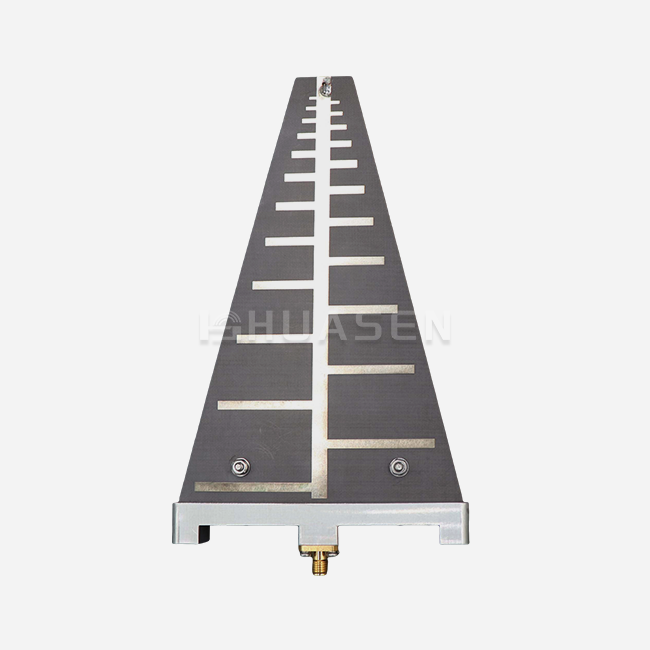
Log Intermittent Microstrip Radio wires (LPMAs) and Conventional Log Intermittent Dipole Radio wires (LPDAs) are both broadband directional radio wires, but they vary essentially in plan, execution, and applications. LPMAs, like those advertised by Huasen Microwave, utilize a planar microstrip structure, whereas LPDAs utilize a three-dimensional course of action of dipole components. This principal contrast leads to particular characteristics in terms of transfer speed, pick up, measure, and integration capabilities. LPMAs offer a more compact and low-profile plan, making them perfect for applications where space is at a premium. They ordinarily give a recurrence run from 400 MHz to 18,000 MHz, with picks up of 5-9 dB and movable beamwidths between 35° and 125°. In differentiate, conventional LPDAs regularly offer more extensive transmission capacity but at the taken a toll of bigger physical measurements. The Log Periodic Microstrip Antenna Recieving wire plan permits for simpler integration with printed circuit sheets and microwave coordinates circuits, making them especially appropriate for advanced communication frameworks, flag checking, and electronic fighting applications.
Bandwidth, gain, and polarization comparison
Frequency Range and Bandwidth
LPMAs and LPDAs both offer wideband performance, but their specific capabilities differ. Log Periodic Microstrip Antennas typically cover frequencies from VHF to Ku-band (400 MHz to 18 GHz), making them versatile for various applications. Traditional LPDAs can sometimes achieve even broader bandwidth, potentially extending from HF to UHF bands. However, the trade-off for this extended range is often increased size and complexity.
Gain Characteristics
In terms of pick up, LPMAs by and large give direct picks up in the extend of 5-9 dB, which is appropriate for numerous applications requiring directional execution. LPDAs, on the other hand, can accomplish higher picks up, particularly at lower frequencies, due to their three-dimensional structure. This makes LPDAs especially compelling for long-range communications and high-power transmission scenarios.
Polarization Flexibility
Polarization is another area where these antenna types diverge. LPMAs typically offer linear polarization, with the possibility of dual-polarization designs for enhanced versatility. Traditional LPDAs inherently provide linear polarization but can be modified to achieve circular polarization through specific element arrangements. This flexibility in polarization can be crucial for applications such as satellite communications and radar systems.

Fabrication, size, and integration advantages of microstrip version
Compact Design and Low Profile
One of the most significant advantages of Log Periodic Microstrip Antennas is their compact size and low profile. With minimum dimensions as small as 75x118 mm, these antennas are significantly more space-efficient than their traditional counterparts. This compactness is achieved through the use of microstrip technology, which allows for the creation of antenna elements on a single planar surface.
Ease of Fabrication
LPMAs advantage from easier and more cost-effective creation forms. They can be fabricated utilizing standard printed circuit board (PCB) methods, counting exactness carving and photolithography. This not as it were diminishes generation costs but too permits for high-volume fabricating with reliable quality. In differentiate, LPDAs require more complex get together forms, including the exact situating of numerous dipole components in a three-dimensional space.
Integration Capabilities
The planar nature of LPMAs makes them exceptionally well-suited for integration with other microwave components and circuits. This seamless integration capability is particularly valuable in modern communication systems, where space is at a premium, and compact, multi-functional designs are highly desirable. LPMAs can be directly incorporated into PCBs or even integrated into the packaging of RF modules, offering significant advantages in terms of system miniaturization and performance optimization.
Trade-offs: efficiency, loss, pattern stability
Efficiency Considerations
While Log Periodic Microstrip Antennas offer numerous advantages, they do come with certain trade-offs in terms of efficiency. The use of dielectric substrates in microstrip designs can introduce losses, particularly at higher frequencies. This can result in slightly lower overall efficiency compared to air-based LPDAs. However, advancements in materials science and careful design optimization have significantly mitigated these efficiency losses in modern LPMAs.
Loss Mechanisms
LPMAs are subject to additional loss mechanisms not present in traditional LPDAs. These include dielectric losses in the substrate material and conductor losses in the thin metallic layers. At higher frequencies, surface wave excitation can also contribute to reduced efficiency. LPDAs, with their air-based structure, generally exhibit lower losses, especially at lower frequencies. However, they may suffer from increased losses at higher frequencies due to their larger physical size and potential for unwanted radiation from feed lines.
Pattern Stability Across Frequency
Pattern stability across the operational bandwidth is crucial for many applications. LPMAs typically exhibit good pattern stability, especially when properly designed with considerations for edge effects and surface wave propagation. Traditional LPDAs often provide excellent pattern stability across their operational bandwidth, which is one of their key strengths. However, the pattern stability of LPMAs has improved significantly with advanced design techniques and simulation tools, narrowing the gap between the two antenna types in this aspect.
Environmental Durability
In terms of environmental durability, LPMAs have a distinct advantage. Their planar structure and the possibility of encapsulation make them more resistant to environmental factors such as wind, rain, and dust. This inherent robustness makes LPMAs particularly suitable for outdoor applications in harsh environments. Traditional LPDAs, with their exposed elements, may require additional protective measures to achieve similar levels of durability.

Conclusion
The choice between Log Periodic Microstrip Antennas and Traditional Log Periodic Dipole Antennas depends on the specific requirements of your application. LPMAs offer significant advantages in terms of size, integration, and manufacturability, making them ideal for modern, space-constrained systems. However, LPDAs still hold their ground in applications requiring extremely wide bandwidth or high gain at lower frequencies.
At Huasen Microwave Technology Co., Ltd., we specialize in developing cutting-edge Log Periodic Microstrip Antennas that leverage the latest advancements in microwave technology. Our products are designed to meet the demanding requirements of industries such as telecommunications, radar, aerospace, and defense. With our extensive experience and commitment to innovation, we can provide customized solutions that optimize performance while meeting your specific size and integration constraints.
If you're looking for high-performance, reliable RF and microwave solutions that push the boundaries of what's possible, we invite you to reach out to our team of experts. Contact us at sales@huasenmicrowave.com to discuss how our Log Periodic Microstrip Antennas can elevate your next project to new heights of performance and efficiency. As a trusted Log Periodic Microstrip Antenna supplier, we are committed to delivering innovative solutions that meet the stringent demands of modern communication systems.
References
1. Johnson, R. C., & Jasik, H. (1984). Antenna Engineering Handbook. McGraw-Hill Book Company.
2. Balanis, C. A. (2005). Antenna Theory: Analysis and Design. Wiley-Interscience.
3. Garg, R., Bhartia, P., Bahl, I., & Ittipiboon, A. (2001). Microstrip Antenna Design Handbook. Artech House.
4. Pozar, D. M. (2011). Microwave Engineering. John Wiley & Sons.
5. Stutzman, W. L., & Thiele, G. A. (2012). Antenna Theory and Design. John Wiley & Sons.
6. Carver, K. R., & Mink, J. W. (1981). Microstrip antenna technology. IEEE Transactions on Antennas and Propagation, 29(1), 2-24.
Send Inquiry