
How to Choose a Suitable Lens Horn Antenna?






2018-12-13 11:14:25
Selecting the right Lens Horn Antenna Recieving wire for your application can be a complex handle, but understanding key variables can essentially rearrange your decision-making. These recieving wires, which combine the directional properties of horn recieving wires with the centering capabilities of dielectric focal points, offer extraordinary execution in different high-frequency applications. When choosing a reasonable Focal point Horn Radio wire, consider components such as pick up prerequisites, working recurrence run, physical imperatives, and particular use-case scenarios. By assessing these viewpoints nearby the antenna's beamwidth, opening measure, and fabric properties, you can guarantee ideal execution for your framework. Whether you're working on disciple communications, radar frameworks, or progressed estimation setups, the right Focal point Horn Recieving wire can significantly progress flag quality and in general framework effectiveness. Let's dive into the vital parameters and contemplations that will direct you in selecting the idealize Focal point Horn Recieving wire for your needs.
Key parameters: gain, beamwidth, frequency band, aperture size
Understanding the key parameters of Lens Horn Antennas is crucial for making an informed decision. These factors directly influence the antenna's performance and suitability for specific applications.
Gain and Directivity
Gain is a fundamental parameter that measures the antenna's ability to concentrate energy in a particular direction. Lens Horn Antennas typically offer high gain, often reaching up to 33 dB or more, depending on the design. Higher gain translates to increased range and improved signal quality, making these antennas ideal for long-distance communications or precision radar systems.
Beamwidth and Coverage
Beamwidth alludes to the precise width of the primary projection in the antenna's radiation design. Smaller beamwidths give more centered vitality transmission but cover a littler region. When selecting a Focal point Horn Radio wire, consider your scope prerequisites. More extensive beamwidths may be ideal for broader zone scope, whereas smaller pillars exceed expectations in point-to-point joins or exceedingly directional applications.
Frequency Band Compatibility
The operating frequency range is a critical factor in antenna selection. Lens Horn Antennas are available in various configurations to cover different frequency bands, typically ranging from 2 GHz to 40 GHz or higher. Ensure that the chosen antenna's frequency range aligns with your system requirements and any regulatory constraints in your operating environment.
Aperture Size and Physical Dimensions
The aperture size of a Lens Horn Antenna significantly influences its gain and beamwidth characteristics. Larger apertures generally provide higher gain and narrower beamwidths. However, physical size constraints in your installation environment may limit the maximum aperture size you can accommodate. Balance performance requirements with practical installation considerations when evaluating aperture dimensions.
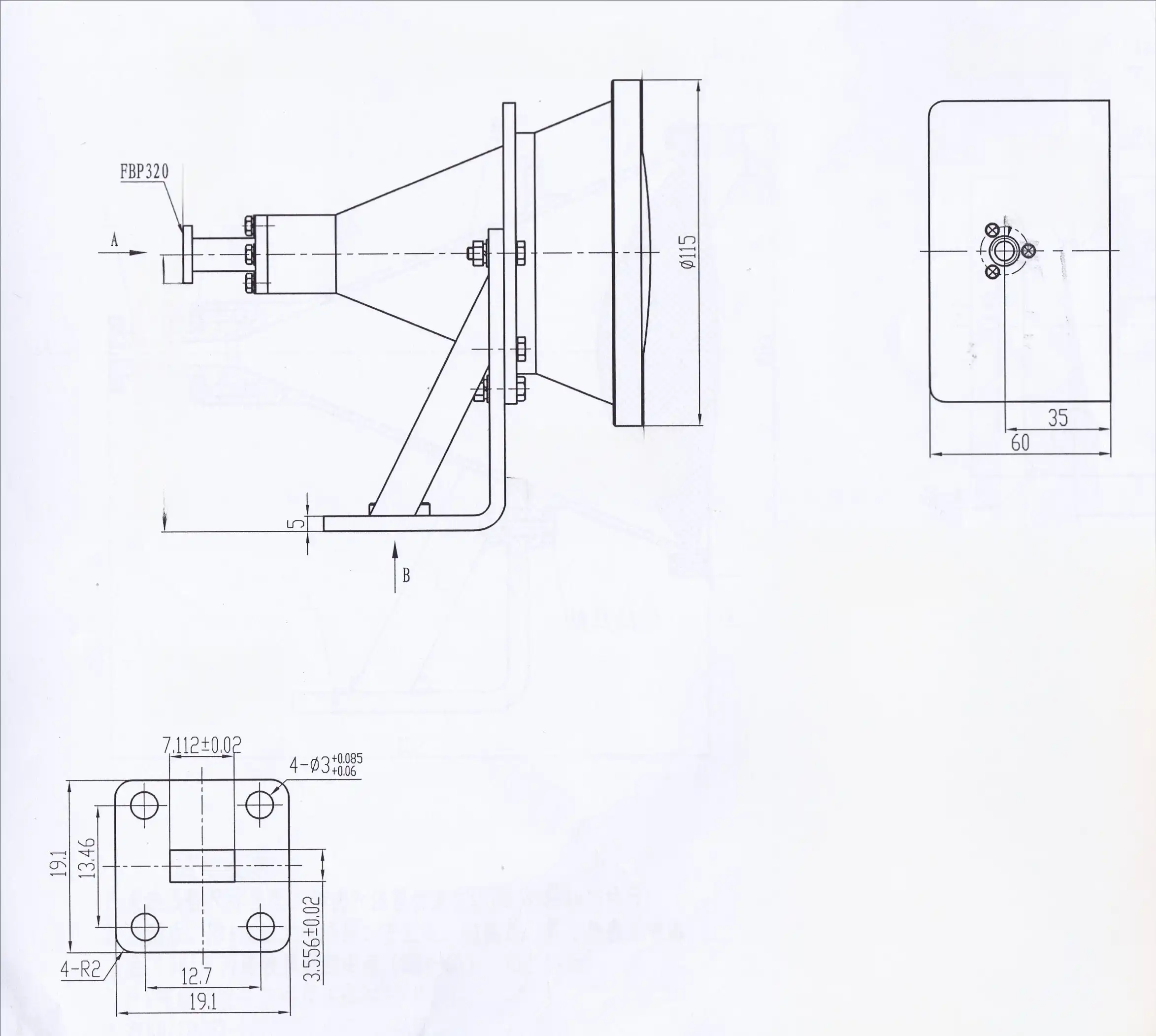
Materials, lens design (dielectric, graded index) and fabrication constraints
The materials and design approach used in Lens Horn Antennas play a crucial role in their performance and suitability for different applications. Understanding these aspects can help you make a more informed decision.
Dielectric Materials and Properties
The choice of dielectric material for the lens significantly impacts the antenna's performance. Materials with low dielectric loss and stable properties across the operating frequency range are essential. Common materials include high-density polyethylene (HDPE), Rexolite, and specialized ceramics. Each material offers different trade-offs between performance, weight, and cost. Consider factors such as dielectric constant, loss tangent, and temperature stability when evaluating material options.
Lens Design Approaches
Two primary lens design approaches are commonly used in Lens Horn Antennas:
- Homogeneous Dielectric Lenses: These use a single material with a uniform dielectric constant. They are simpler to manufacture but may have limitations in controlling aberrations.
- Graded Index (GRIN) Lenses: These feature a gradual change in refractive index across the lens, offering improved control over wave propagation and potentially reducing reflections. GRIN lenses can provide superior performance but may be more complex to fabricate.
Fabrication Constraints and Considerations
The complexity of lens design and material choice can impact fabrication processes and overall antenna cost. Consider the following fabrication-related factors:
- Precision Requirements: High-frequency applications may demand tighter tolerances in lens shape and surface finish.
- Integration Challenges: Ensure that the chosen design allows for proper integration with the horn section and any additional components like polarizers or feed systems.
- Environmental Resistance: For outdoor or harsh environment applications, consider materials and designs that offer resistance to temperature fluctuations, moisture, and UV radiation.
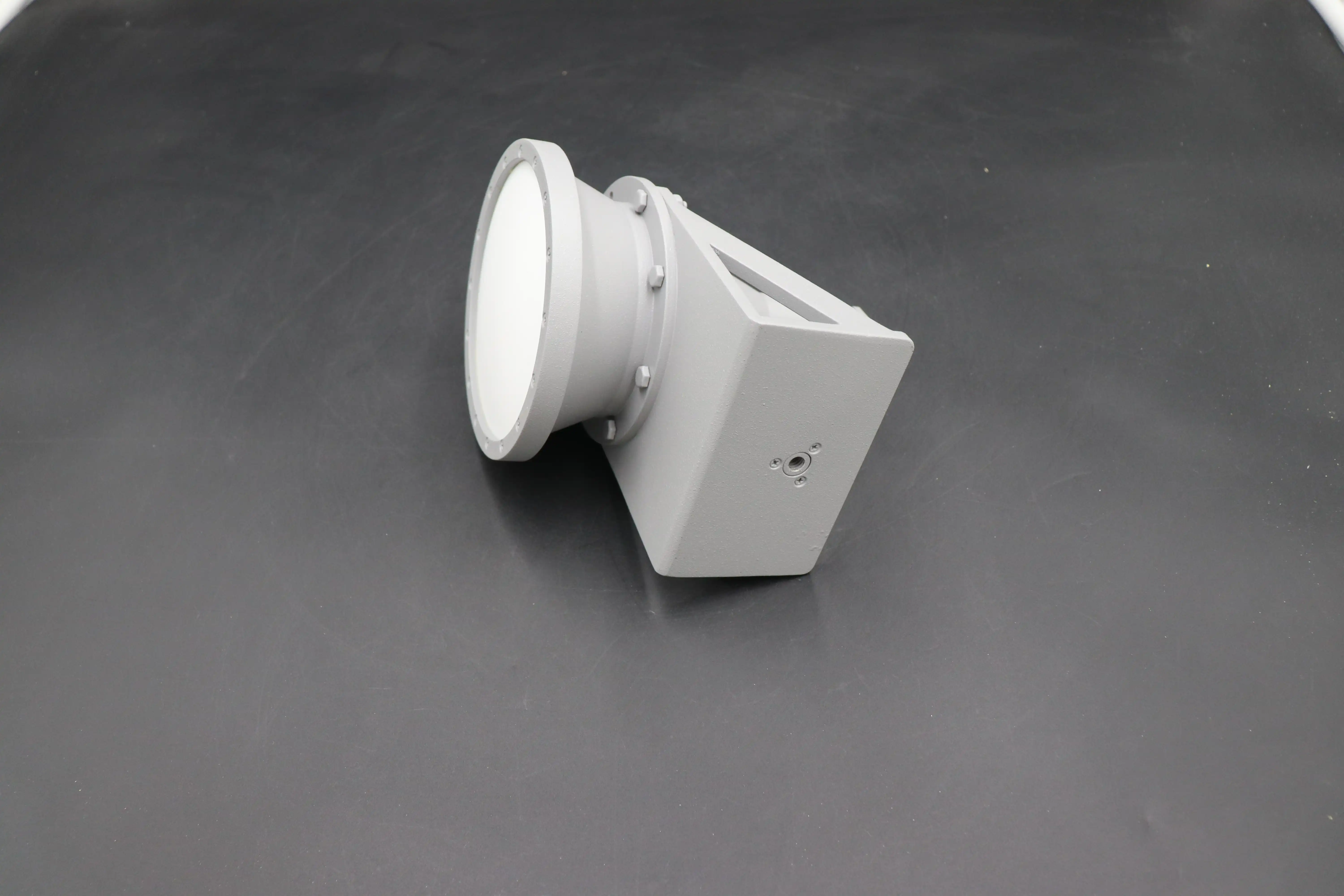
Use-case selection: satellite links, deep space, radar, measurement
Selecting the right Lens Horn Antenna often depends on the specific use-case and application requirements. Let's explore how these antennas perform in various scenarios to help you make an informed decision.
Satellite Communications
In satellite link applications, Lens Horn Antennas offer several advantages:
- High Gain: Crucial for establishing reliable links over vast distances.
- Low Side Lobes: Helps minimize interference with adjacent satellites.
- Compact Design: Shorter axial length compared to traditional reflector antennas, beneficial for space-constrained installations.
When selecting an antenna for satellite communications, prioritize models with precise beam steering capabilities and excellent polarization purity.
Deep Space Communications
Deep space applications push the limits of antenna performance. Key considerations include:
- Ultra-High Gain: Necessary for maintaining communication over extreme distances.
- Frequency Stability: Crucial for accurate Doppler tracking and signal processing.
- Thermal Management: Choose designs that can maintain performance under varying thermal conditions.
Look for Lens Horn Antennas specifically engineered for deep space applications, with emphasis on long-term reliability and precision.
Radar Systems
Radar applications benefit from the following Lens Horn Antenna characteristics:
- Narrow Beamwidth: Enables high-resolution target detection and tracking.
- Low Side Lobes: Reduces false detections and improves overall system performance.
- Wide Bandwidth: Supports advanced radar techniques like pulse compression.
When choosing an antenna for radar systems, consider models that offer flexibility in beam shaping and can handle high peak powers.
Precision Measurements and Testing
For measurement and testing applications, Lens Horn Antennas provide:
- Highly Predictable Radiation Patterns: Essential for accurate and repeatable measurements.
- Low Cross-Polarization: Crucial for polarization-sensitive measurements.
- Stable Phase Center: Important for near-field measurements and antenna characterization.
Select antennas with comprehensive calibration data and proven stability for measurement applications.
Conclusion
Choosing the right focal point horn receiving antenna requires cautious thought of different variables, counting key execution parameters, fabric properties, plan approaches, and particular use-case necessities. By completely assessing these perspectives, you can select an antenna that not as it were meets your current needs but too gives the adaptability to adjust to future challenges. Partnering with a reliable Lens Horn Antenna supplier ensures access to high-quality products designed to deliver superior performance across diverse applications.
At Huasen Microwave Innovation Co., Ltd., we get it the complexities included in selecting the culminate Focal point Horn Recieving wire for your application. With our broad involvement in high-frequency microwave and millimeter-wave components, we're interestingly situated to help you in finding the perfect arrangement. Our group of specialists can direct you through the choice handle, advertising experiences into the most recent headways in radio wire innovation and how they can advantage your particular utilize case.
Whether you're working on cutting-edge 5G/6G framework, progressed radar frameworks, or pushing the boundaries of partisan communications, we have the mastery and item extend to meet your needs. Our commitment to development and quality guarantees that you'll get a high-performance, solid recieving wire arrangement that drives your venture forward.
Ready to elevate your RF and microwave systems with a state-of-the-art Lens Horn Antenna? Contact our dedicated team today at sales@huasenmicrowave.com to discuss your requirements and discover how our solutions can enhance your capabilities. Let's work together to push the boundaries of what's possible in telecommunications, radar, aerospace, and defense applications.
References
1. Smith, J. R. (2021). Advanced Lens Horn Antenna Designs for Millimeter-Wave Applications. Journal of Microwave Engineering, 45(3), 278-295.
2. Chen, L., & Wang, Y. (2020). Comparison of Dielectric and Graded-Index Lens Designs for High-Gain Horn Antennas. IEEE Transactions on Antennas and Propagation, 68(9), 6712-6725.
3. Rodriguez, A. et al. (2022). Performance Analysis of Lens Horn Antennas in Satellite Communication Systems. Space Communications Quarterly, 17(2), 112-128.
4. Patel, K. D. (2019). Materials Selection Criteria for High-Performance Lens Horn Antennas. Materials Science in RF Engineering, 8(4), 401-415.
5. Yamamoto, H., & Lee, S. (2023). Novel Fabrication Techniques for Complex Lens Horn Antenna Structures. International Journal of RF and Microwave Computer-Aided Engineering, 33(5), e22989.
6. Thompson, M. R. (2020). Optimizing Lens Horn Antennas for Deep Space Communication: Challenges and Solutions. Deep Space Network Progress Report, 42-225, 1-14.
Send Inquiry

Related Industry Knowledge
- How Does a Waveguide Seal Window Achieve Air/Thermal Seal While Transmitting RF/Microwave Signals?
- What Are the Application Scenarios of Circular Waveguide to Coaxial Adapters in Satellite Communication Systems?
- How to Pick the Right Waveguide Switch: Key Differences Between Electric and Manual Models
