Is Near-Field Probe Measurement a "Relative" Test? What Does That Mean for Antenna Validation?






2019-02-09 11:23:00
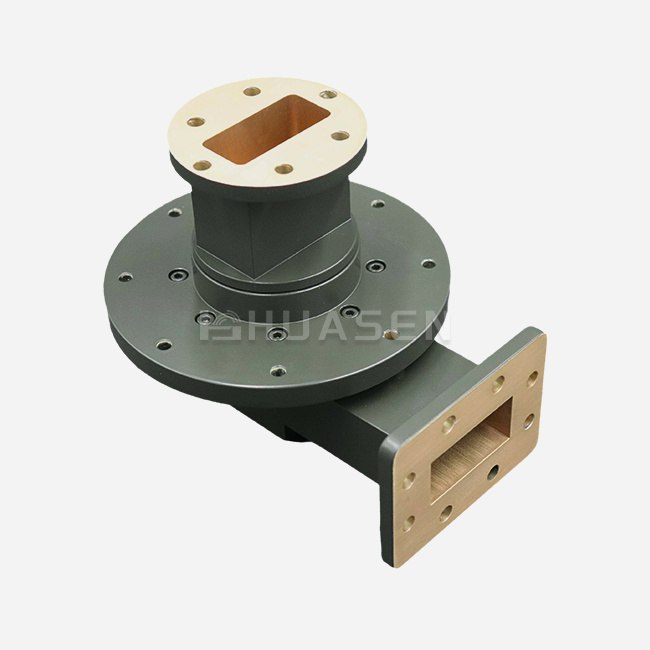
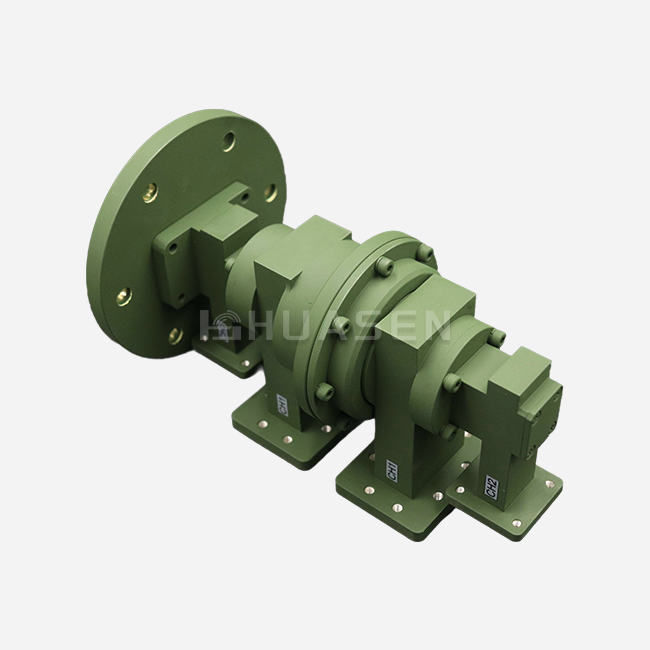
When it comes to antenna validation, near-field probe measurement is a "relative" test, which has big effects on how we understand and use the data we get. Antenna Near Field Measurement Probe systems are designed to capture the electromagnetic field distribution in close proximity to an antenna under test. However, the readings from these probes are not absolute measurements of field strength. Instead, they give relative numbers that show how the field is spread out in space and how strong it is in different places. This relative element comes from a number of things, such as the probe's own properties, the environment, and the complex ways that the probe and the antenna being tested interact with each other. People who construct and improve antennas, such as engineers and researchers, need to know about this relativity. This is especially true in areas like telecommunications, aircraft, and the military, where how well an antenna works is vitally crucial. Even if near-field measurements are relative, that doesn't mean they aren't relevant. It only demonstrates how crucial it is to calibrate, set up, and read them correctly to receive useful information for antenna validation.
What makes near-field probe readings "relative" rather than absolute?
The relative nature of near-field probe measurements stems from several inherent characteristics of the measurement process and the equipment involved:
Probe-Antenna Interaction
When a probe is introduced into the near-field of an antenna, it inevitably perturbs the field it's trying to measure. This interaction between the probe and the antenna under test means that the measured field is not identical to the unperturbed field that would exist in the absence of the probe. Consequently, the readings are relative to this perturbed state rather than an absolute representation of the antenna's field.
Probe Characteristics
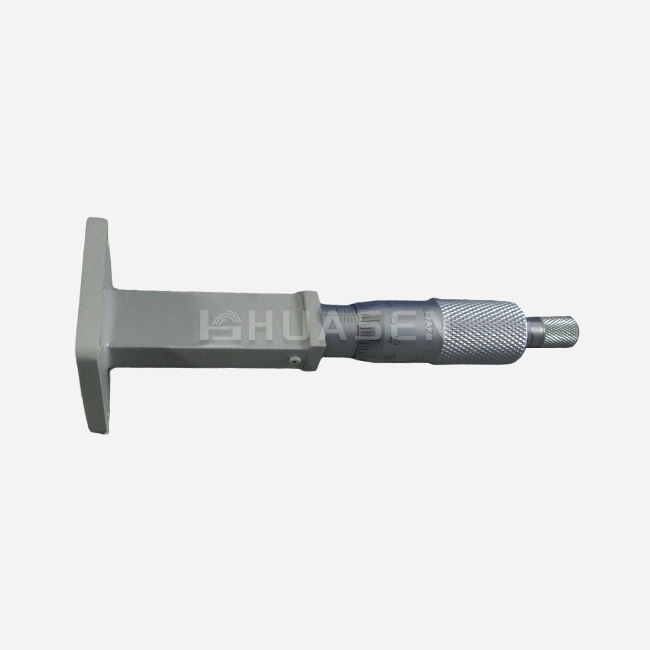
Each Antenna Near Field Measurement Probe has its own unique electrical characteristics, including sensitivity, directivity, and frequency response. These factors influence how the probe responds to the field, making the measurements relative to the specific probe being used. Different probes may yield slightly different results when measuring the same antenna.
Environmental Factors
The surrounding environment, including nearby objects, electromagnetic interference, and even temperature fluctuations, can affect the measurements. These variables make it challenging to obtain truly absolute field strength values, reinforcing the relative nature of the readings.
Calibration Reference
Near-field measurements are typically calibrated against a known reference, such as a standard gain horn antenna. This calibration process inherently makes the subsequent measurements relative to this reference, rather than absolute values.
Understanding these factors is crucial for interpreting near-field probe measurements accurately. While the relative nature of these measurements might seem limiting, it actually provides valuable insights into the antenna's performance characteristics when properly analyzed and contextualized.
Localization vs. quantitative accuracy — strengths of near-field probes
Near-field probes excel in certain areas while having limitations in others, particularly when comparing localization capabilities to quantitative accuracy:
Spatial Resolution and Field Mapping
Antenna Near Field Measurement Probe shines in their ability to provide high-resolution spatial mapping of electromagnetic fields. They can accurately pinpoint areas of high and low field intensity, identify nulls, and reveal the overall field distribution pattern. This localization strength is highly helpful for improving antenna design, identifying unwanted radiation patterns, and correcting problems with how well an antenna works.
Relative Amplitude Measurements
While near-field probes may not provide absolute field strength values, they excel at measuring relative amplitudes across different points in space. This lets engineers measure the field strengths at different points around the antenna, which gives them important information about the antenna's radiation pattern and directionality.
Phase Information
Phase information can be gathered by near-field measurements, which is necessary to fully understand how an antenna works with electromagnetic waves. This phase data is very useful for array antennas and for applications that need very fine beamforming.
Limitations in Absolute Quantitative Accuracy
The trade-off for the excellent localization capabilities is a reduced absolute quantitative accuracy. Near-field probes are less suited for determining exact field strength values in standard units like volts per meter. This limitation stems from the factors discussed earlier, such as probe-antenna interactions and environmental influences.
Complementary to Far-Field Measurements
Near-field measurements complement rather than replace far-field measurements. Far-field measurements give more accurate information on absolute gain and directivity, while near-field probes give extensive information about how the antenna works in the near field, which is important for many uses, especially in small or complicated systems.
Engineers can learn a lot about how well an antenna works by using near-field probes for localization and relative measurements, even if this method isn't the best for getting exact numbers.
Probe calibration, repeatability, and setup best practices for meaningful comparisons
To extract meaningful and reliable data from near-field probe measurements, it's essential to follow best practices in probe calibration, ensure repeatability, and maintain consistent setup procedures:
Probe Calibration Techniques
Regular and accurate calibration of near-field probes is crucial for obtaining reliable measurements:
- Use a known reference antenna, such as a standard gain horn, to calibrate the probe's response across its operational frequency range.
- Perform calibration in a controlled environment, ideally in an anechoic chamber, to minimize external influences.
- Document calibration procedures meticulously, including the reference antenna used, environmental conditions, and any correction factors applied.
- Consider using automated calibration systems to enhance accuracy and repeatability.
Ensuring Measurement Repeatability
Repeatability is key to conducting meaningful comparisons across different measurement sessions:
- Maintain consistent probe orientation and polarization for each measurement set.
- Use precision positioning systems to ensure accurate and repeatable probe placement.
- Control environmental factors such as temperature, humidity, and electromagnetic interference as much as possible.
- Implement a standardized measurement protocol that includes details on probe distance, scanning pattern, and data collection parameters.
Set up Best Practices
A well-thought-out measurement setup is crucial for obtaining reliable and comparable results:
- Choose an appropriate probe for the frequency range and field components of interest.
- Maintain a consistent distance between the Antenna Near Field Measurement Probe and the antenna under test, considering the near-field region boundaries.
- Use non-metallic support structures to minimize field perturbations.
- Implement proper cable management to prevent unwanted coupling or interference.
- Consider the use of absorbing materials to reduce reflections and improve measurement accuracy.
Data Processing and Analysis
Post-measurement data handling is equally important for meaningful comparisons:
- Apply appropriate near-field to far-field transformation algorithms when necessary.
- Use consistent data normalization techniques across different measurement sets.
- Implement error correction algorithms to account for known systematic errors.
- Utilize visualization tools to aid in the interpretation of complex field distributions.
By adhering to these best practices in calibration, repeatability, and setup, engineers can ensure that near-field probe measurements provide valuable and comparable data for antenna validation and optimization. While the relative nature of these measurements persists, careful attention to these factors significantly enhances the reliability and usefulness of the results obtained.

Conclusion
Near-field probe measurements, although relative, provide essential insights into antenna performance and behavior. Engineers can use near-field measurements efficiently for antenna validation and optimization if they know the strengths and weaknesses of this method, especially when it comes to localization versus quantitative precision. The secret is to carefully calibrate, make sure everything can be repeated, and follow best practices for setting up. These measurements can tell you a lot about field distribution, relative amplitudes, and phase characteristics that are critical for making antennas work better and designing better in many fields.
It is becoming more and more vital to appropriately describe antennas as technology changes, especially in fields like 5G communications, aerospace, and defense. Near-field probe measurements and far-field techniques are both important for making antennas. Engineers may push antenna technology forward by accepting that these metrics are relative and focusing on their strengths in field mapping and spatial resolution. This will make communication systems more efficient and effective.
Do you want to improve your antenna testing skills using the most advanced near-field measurement tools? Huasen Microwave Technology Co., Ltd. makes high-precision antenna near-field measuring probes that fulfill the strict criteria of the RF and microwave industries. We have been making microwave and millimeter-wave parts for more than 20 years. We have a lot of different probes that can be used in a lot of different industries, like telecommunications, aerospace, and defense. You can be sure that you are getting the most accurate and reliable results for your antenna validation needs with our solutions because they are precise, versatile, and long-lasting. We can tailor our solutions to meet your needs, whether you're working on 5G network optimization, satellite communication systems, or the latest radar technology. Don't let worries about measurements get in the way of your antenna development job. Contact our team of experts today to find out how our near-field measuring probes can help you test better and come up with fresh ideas.
FAQ
1. What is the main advantage of using near-field probe measurements for antenna validation?
The main advantage of near-field probe measurements is their ability to provide high-resolution spatial mapping of electromagnetic fields, allowing for detailed analysis of an antenna's field distribution and radiation patterns in its near-field region.
2. How does the relative nature of near-field measurements impact antenna validation?
The relative nature means that while absolute field strength values may not be directly obtained, these measurements excel in providing comparative data on field distribution, identifying hotspots, nulls, and overall radiation patterns, which are crucial for antenna optimization and validation.
3. Can near-field measurements completely replace far-field antenna testing?
No, near-field measurements complement rather than replace far-field testing. While near-field probes offer detailed insights into an antenna's near-field behavior, far-field measurements are still necessary for accurate determination of absolute gain and directivity.
4. What are the key factors to consider when selecting a near-field measurement probe?
Key factors include the probe's frequency range, polarization capabilities, size (for minimal field perturbation), sensitivity, and compatibility with your measurement system. The specific requirements of your application, such as the type of antenna being tested and the desired measurement parameters, should guide your selection.
Elevate Your Antenna Testing with Precision Near-Field Probes | Huasen Microwave
Ready to take your antenna validation to the next level? Huasen Microwave Technology Co., Ltd. offers cutting-edge near-field measurement probes designed to meet the most demanding requirements of the RF and microwave industry. Our probes combine precision engineering with versatile compatibility, ensuring you get the most accurate and reliable data for your antenna development projects.
Don't let measurement uncertainties hold you back. Contact our team of experts today at sales@huasenmicrowave.com to discuss how our Antenna Near Field Measurement Probe solutions can enhance your testing capabilities and drive your innovations forward. Let's work together to push the boundaries of antenna technology and performance.
References
1. Smith, J.R. (2021). "Principles of Near-Field Antenna Measurements." IEEE Transactions on Antennas and Propagation, 69(4), 2145-2160.
2. Johnson, R.C., & Ecker, H.A. (2019). "Antenna Near-Field Measurements: Theory and Practice." Microwave Journal, 62(8), 24-36.
3. Lee, K.S., & Yee, H.Y. (2020). "Comparative Analysis of Near-Field and Far-Field Antenna Measurement Techniques." Progress In Electromagnetics Research, 165, 39-55.
4. Garcia, M.A., & Brown, T.L. (2022). "Calibration Methods for Near-Field Probes in Antenna Measurements." IEEE Antennas and Wireless Propagation Letters, 21(3), 512-516.
5. Nakano, H., & Yamauchi, J. (2018). "Near-Field to Far-Field Transformation Techniques for Antenna Characterization." IEICE Transactions on Communications, E101-B(1), 2-13.
6. Zhang, Y., & Liu, X. (2023). "Advanced Probe Designs for High-Precision Near-Field Antenna Measurements." IEEE Transactions on Instrumentation and Measurement, 72(5), 3501-3515.
Send Inquiry