
Top Benefits of Corrugated Conical Horn Antenna for Low-Sidelobe Performance






2026-01-16 21:09:34
When critical radio frequency systems suffer from unwanted signal interference, cross-polarization distortion, and inadequate beam symmetry, engineers face severe performance degradation that can compromise entire communication networks or scientific measurements. The Corrugated Conical Horn Antenna emerges as the definitive solution to these challenges, delivering exceptional low-sidelobe performance through precision-engineered corrugations that suppress higher-order waveguide modes and achieve sidelobe levels below negative forty decibels. This comprehensive guide explores how these advanced antennas revolutionize applications spanning satellite communications, radio astronomy, radar systems, and telecommunications infrastructure by combining superior interference rejection with wide operational bandwidth and exceptional beam quality.
Understanding Low-Sidelobe Performance in Corrugated Conical Horn Antenna Technology
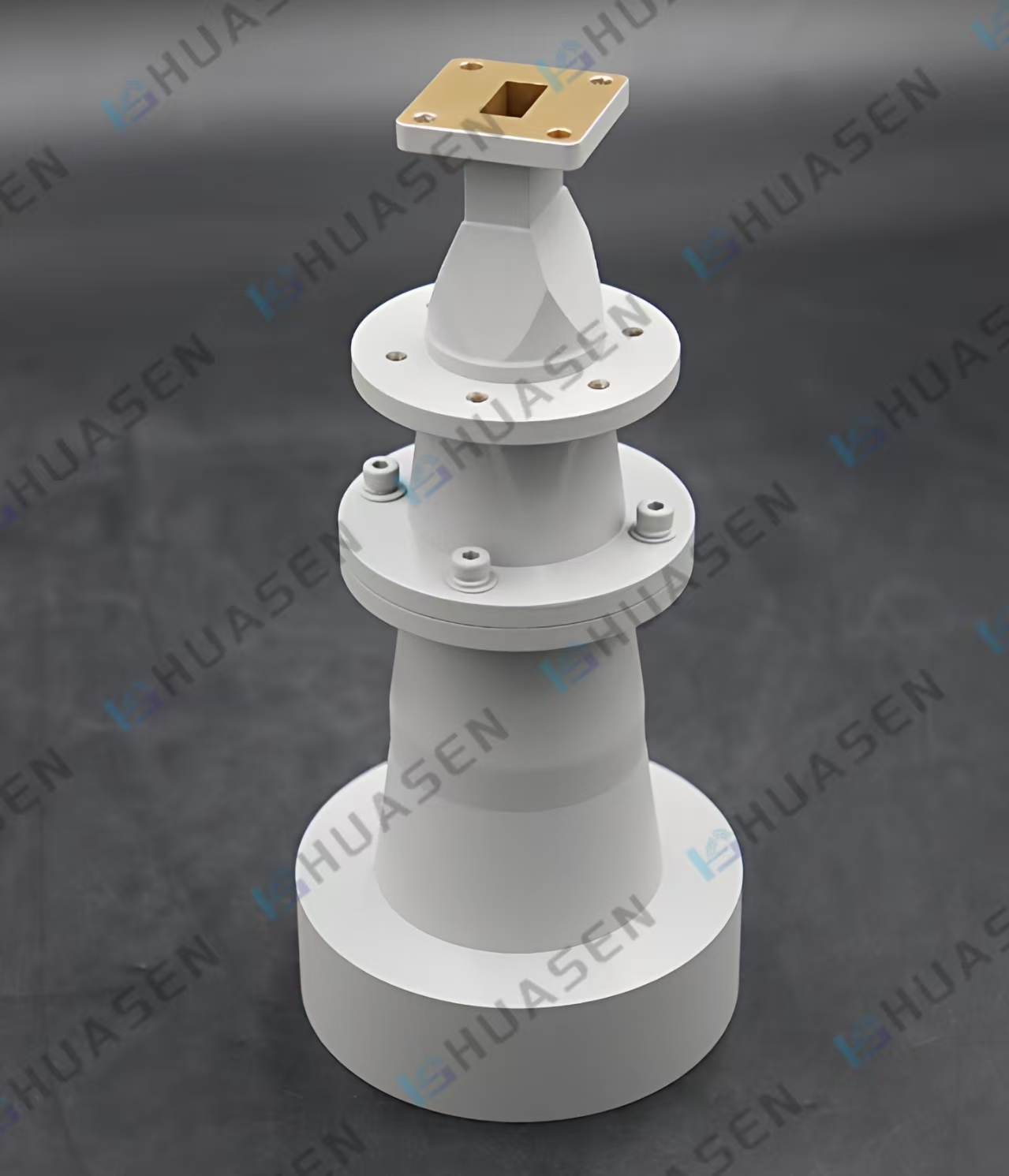
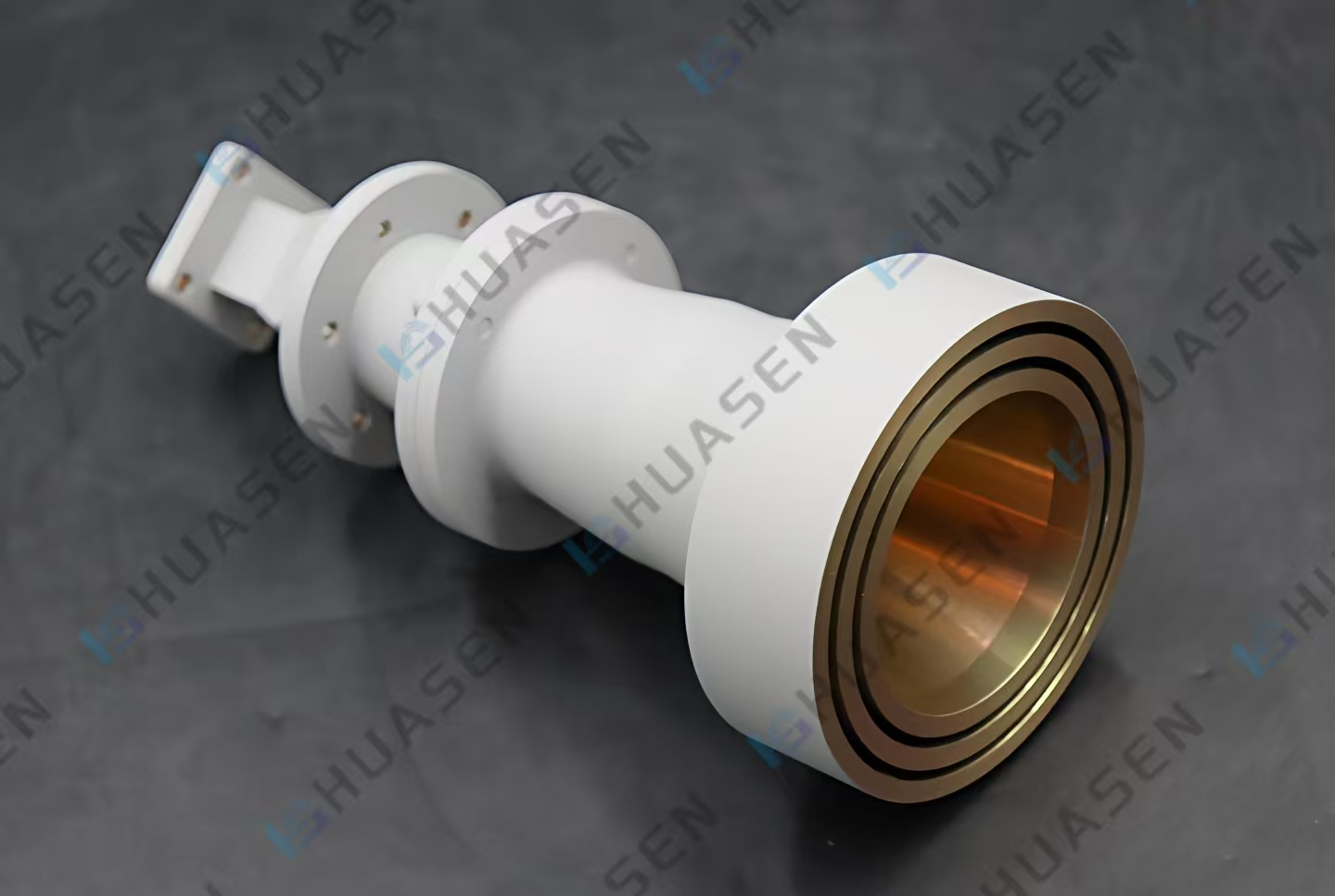
The fundamental advantage of Corrugated Conical Horn Antenna designs lies in their ability to generate the hybrid HE11 mode, which provides dramatically superior radiation characteristics compared to conventional smooth-walled horn antennas operating in standard TE11 mode. Through precision-machined corrugations with carefully calculated groove depths typically measuring one-quarter wavelength, these antennas achieve remarkable sidelobe suppression ranging from twenty to thirty decibels better than non-corrugated counterparts. The corrugated surface structure creates periodic impedance variations along the horn's interior walls, effectively suppressing unwanted higher-order modes that generate sidelobes and cross-polarization distortion in traditional horn antenna designs. In practical deployment scenarios, this translates to sixty to seventy percent reduction in interference risks within crowded frequency bands, making Corrugated Conical Horn Antenna solutions indispensable for applications where signal purity determines system success or failure.
Technical Mechanisms Behind Superior Sidelobe Suppression
The corrugated structure within a Corrugated Conical Horn Antenna functions through a sophisticated electromagnetic principle where the grooves establish specific boundary conditions that support hybrid mode propagation rather than pure transverse electric or transverse magnetic modes. When electromagnetic waves propagate through the corrugated section, the periodic variations in wall impedance force the TE11 and TM11 modes to combine with precise amplitude ratios of approximately eighty-five percent TE11 and fifteen percent TM11 components, creating the desired HE11 hybrid mode. This hybrid mode exhibits linear electric field distribution at the horn aperture, which directly eliminates the phase errors and amplitude imbalances responsible for sidelobe generation in smooth-walled designs. Measurements from calibrated anechoic chamber testing demonstrate that properly designed Corrugated Conical Horn Antenna configurations achieve sidelobe levels consistently below negative forty decibels across octave bandwidth ranges, representing a three to five decibel improvement over comparable smooth horn designs operating at identical frequencies.
Frequency Range and Bandwidth Capabilities
Modern Corrugated Conical Horn Antenna designs demonstrate exceptional wideband performance spanning from 1.76 gigahertz through 300 gigahertz, accommodating everything from L-band satellite systems through millimeter-wave and emerging terahertz applications. The corrugated structure enables fifty to seventy percent fractional bandwidth operation while maintaining voltage standing wave ratio values below 1.30 across full bandwidth specifications, with narrowband optimized designs achieving VSWR performance better than 1.06 for specialized applications. This represents a substantial improvement over conventional smooth-walled conical horns that typically exhibit useful bandwidth limited to twenty to thirty percent of center frequency before experiencing significant pattern degradation and impedance mismatch. The extended bandwidth capability of Corrugated Conical Horn Antenna technology proves particularly valuable for multi-frequency satellite ground stations, broadband radar systems, and research facilities requiring seamless coverage across multiple communication bands without requiring antenna switching or complex multiplexing arrangements.
Radiation Pattern Precision and Beam Equalization Advantages
One of the most critical performance metrics distinguishing Corrugated Conical Horn Antenna technology involves the achievement of E-plane and H-plane beam equalization, meaning the radiation patterns exhibit nearly identical beam widths and sidelobe structures in both principal polarization planes. Through the HE11 hybrid mode excitation, these antennas achieve beam equalization errors typically limited to plus or minus five degrees at the negative fifteen decibel radiation pattern level, creating highly symmetric patterns that conventional horn antennas cannot match. This exceptional symmetry proves essential for applications including satellite feed systems where asymmetric illumination patterns cause polarization distortion and reduced antenna efficiency, as well as radio astronomy installations where beam shape consistency across wide bandwidths enables accurate sky mapping and signal source localization. The Corrugated Conical Horn Antenna delivers this performance through the inherent properties of the HE11 mode, which naturally produces balanced field distributions without requiring external balancing networks or complicated multi-mode excitation schemes.
Cross-Polarization Discrimination Excellence
Cross-polarization performance represents another area where Corrugated Conical Horn Antenna designs demonstrate clear superiority, achieving discrimination levels better than negative thirty to negative forty decibels across operational bandwidths compared to negative ten to negative fifteen decibels typical of smooth-walled alternatives. The HE11 hybrid mode's linear electric field distribution at the aperture plane inherently minimizes cross-polarization generation, as the mode's field configuration maintains consistent polarization orientation throughout the antenna structure without the rotation effects that plague other waveguide modes. For satellite communication ground stations operating with frequency reuse polarization schemes, this level of cross-polarization isolation directly translates to improved carrier-to-interference ratios and increased system capacity. Radio astronomy applications similarly benefit from exceptional cross-polarization rejection when observing polarized cosmic radio emissions, as instrumental polarization leakage from the feed horn can completely mask the weak polarized signals being studied. High-performance Corrugated Conical Horn Antenna configurations from specialized manufacturers achieve cross-polarization levels exceeding negative forty decibels, enabling detection and measurement of polarization fractions at the one percent level or better.
Spillover Efficiency Optimization for Reflector Systems
When Corrugated Conical Horn Antenna designs serve as feed horns for parabolic reflector systems, their low-sidelobe characteristics deliver substantial improvements in spillover efficiency compared to conventional feed horn alternatives. Spillover efficiency quantifies the fraction of feed horn radiation that illuminates the reflector surface versus energy wasted into space or absorbed by the supporting structure, with typical values ranging from fifty to sixty percent for standard pyramidal or conical horns. The superior sidelobe suppression achieved by corrugated designs increases spillover efficiency to values approaching ninety percent for optimized configurations, as the concentrated main beam pattern directs more energy toward the reflector while minimizing radiation beyond the reflector edges. This efficiency improvement directly increases overall antenna gain while simultaneously reducing system noise temperature by limiting the reception of thermal radiation from warm ground and surrounding structures. For radio telescope installations pursuing maximum sensitivity to faint cosmic signals, the combination of increased gain and reduced noise temperature provided by Corrugated Conical Horn Antenna feed systems can improve overall figure of merit by three to five decibels compared to conventional feed horn implementations.
Structural Design Features and Manufacturing Precision
The physical implementation of high-performance Corrugated Conical Horn Antenna systems requires sophisticated manufacturing techniques capable of producing the precision corrugations essential for proper electromagnetic operation. The large-angle conical horn structure incorporates corrugated slots with depths, widths, and spacing carefully calculated based on operating frequency and desired performance characteristics, with manufacturing tolerances typically specified at plus or minus fifty micrometers to maintain pattern quality and sidelobe suppression. Modern CNC machining centers equipped with specialized cutting tools enable the production of corrugations with the complex geometries required for optimum performance, including variable groove depth profiles that optimize bandwidth or tapered corrugation spacing that improves impedance matching. The Corrugated Conical Horn Antenna features standard circular waveguide interfaces ranging from 2.388 millimeters through 114.58 millimeters in diameter, providing compatibility with the complete range of standard waveguide sizes used throughout the microwave and millimeter-wave spectrum. Premium manufacturers employ multi-axis machining capabilities combined with rigorous dimensional inspection using coordinate measuring machines to verify that every produced antenna meets exacting specifications for groove dimensions, surface finish, and overall geometric accuracy.
Material Selection and Environmental Durability
Material selection for Corrugated Conical Horn Antenna construction balances electromagnetic performance requirements with mechanical properties, thermal stability, and environmental resistance needed for long-term field deployment. Aerospace-grade aluminum alloys represent the most common choice for moderate frequency applications below forty gigahertz, offering excellent electrical conductivity, favorable strength-to-weight ratios, and straightforward machining characteristics while maintaining dimensional stability across wide temperature ranges. Higher frequency millimeter-wave and terahertz designs may utilize copper or brass for enhanced surface conductivity and reduced ohmic losses, particularly for groove features where skin depth effects become significant. Surface treatments including silver plating, gold plating, or specialized conductive coatings further optimize electrical performance while providing corrosion protection for antennas deployed in harsh environments ranging from tropical maritime climates to arctic research stations. The Corrugated Conical Horn Antenna structures incorporate protective radomes or weather covers for outdoor installations, using low-loss dielectric materials transparent to radio frequency energy while shielding the precision corrugations from moisture intrusion, ice accumulation, and physical damage.
Application Versatility Across Multiple Industries
The exceptional performance characteristics of Corrugated Conical Horn Antenna technology enable critical applications spanning telecommunications infrastructure, defense radar systems, aerospace platforms, and scientific research facilities. Satellite communication ground stations deploy these antennas as primary feeds for large parabolic reflector systems operating in C-band, Ku-band, Ka-band, and increasingly in Q-band and V-band frequency allocations, where the low-sidelobe performance minimizes interference between closely-spaced orbital positions while maximizing data throughput. Radar systems benefit from the tight beam control and low cross-polarization characteristics when implementing polarimetric weather monitoring, air traffic surveillance, or missile tracking applications where accurate target discrimination requires exceptional pattern quality. Radio astronomy installations ranging from individual research telescopes through large arrays employ Corrugated Conical Horn Antenna feed systems to achieve the sensitivity needed for detecting faint cosmic radio emissions against terrestrial interference backgrounds, with the low-sidelobe characteristics proving essential for rejecting radio frequency interference from ground-based sources.
Telecommunications and 5G Network Integration
Modern telecommunications infrastructure increasingly relies on Corrugated Conical Horn Antenna technology for millimeter-wave backhaul links, 5G small cell deployments, and emerging 6G research testbeds operating at frequencies from twenty-eight gigahertz through one hundred gigahertz and beyond. The superior beam control and interference rejection capabilities enable higher-density network deployments in urban environments where spectrum efficiency determines system capacity and service quality. Point-to-point microwave links carrying high-bandwidth data connections between cell towers, switching centers, and network operations facilities achieve improved link budgets and reduced outage probability when employing Corrugated Conical Horn Antenna designs compared to conventional horn or panel antenna alternatives. The wide operational bandwidth characteristic of quality corrugated designs supports emerging wideband communication standards while future-proofing infrastructure investments against evolving spectrum allocations and modulation schemes. Fixed wireless access systems delivering broadband internet service to residential and business customers similarly benefit from the improved signal-to-interference performance, enabling reliable multi-gigabit data rates over extended link distances even in challenging propagation environments.
Defense and Aerospace Applications
Military and aerospace platforms impose demanding requirements for antenna performance, environmental survivability, and operational reliability that Corrugated Conical Horn Antenna technology uniquely satisfies. Airborne radar systems for fighter aircraft, maritime patrol platforms, and unmanned aerial vehicles employ these antennas when applications demand the combination of wide bandwidth, low-sidelobe performance, and compact physical envelopes compatible with installation constraints. Electronic warfare systems utilize the exceptional cross-polarization discrimination for accurate characterization of threat emitter signals, while communication systems exploit the interference rejection capabilities when operating in contested electromagnetic environments with intentional jamming or dense friendly force communications. Satellite payloads incorporating Corrugated Conical Horn Antenna feed systems achieve improved link margins and increased coverage areas, whether supporting military communications networks, reconnaissance platforms, or navigation satellite constellations. The proven reliability and predictable performance characteristics make these antennas the preferred choice when mission success depends upon maintaining communication links under all operational conditions.
Quality Assurance and Performance Verification
Comprehensive testing and quality control procedures ensure that Corrugated Conical Horn Antenna products meet stringent performance specifications required for demanding applications. Far-field radiation pattern measurements conducted in calibrated anechoic chambers verify sidelobe levels, beam symmetry, cross-polarization discrimination, and polarization purity across specified frequency ranges using precision rotary positioning systems and phase-stable measurement receivers. Near-field scanning systems enable detailed aperture field mapping for large antennas where far-field measurement distances would prove impractical, with mathematical transformation algorithms converting near-field data into equivalent far-field radiation patterns. Vector network analyzer measurements characterize input reflection coefficients, impedance matching, and voltage standing wave ratio performance, ensuring compatibility with system specifications and minimal signal loss. Environmental qualification testing including temperature cycling, humidity exposure, vibration, and mechanical shock verifies that antenna performance remains stable under field deployment conditions ranging from desert heat through arctic cold, while accelerated life testing predicts long-term reliability for mission-critical installations.
Manufacturing Standards and Certification
Premium Corrugated Conical Horn Antenna manufacturers maintain comprehensive quality management systems conforming to ISO9001 standards, ensuring consistent processes from initial design through final delivery and customer support. Environmental compliance certifications including RoHS and REACH verify that manufacturing processes and material selections meet international standards for hazardous substance restrictions, supporting sustainable procurement policies and environmental stewardship commitments. Specialized facilities incorporate climate-controlled machining environments maintaining temperature stability within one degree Celsius to prevent thermal expansion errors during precision fabrication of critical corrugation features. Dedicated metrology laboratories equipped with coordinate measuring machines, optical comparators, and surface finish instrumentation verify dimensional accuracy throughout production, with statistical process control monitoring ensuring capability indices remain within specification limits. The combination of advanced manufacturing capabilities, rigorous quality systems, and comprehensive testing infrastructure distinguishes leading suppliers capable of delivering Corrugated Conical Horn Antenna products meeting the most demanding performance and reliability requirements.
Conclusion
Corrugated Conical Horn Antenna technology delivers unmatched low-sidelobe performance through precision-engineered hybrid mode operation, achieving sidelobe suppression below negative forty decibels with exceptional cross-polarization discrimination and wide bandwidth coverage spanning 1.76 gigahertz through 300 gigahertz for critical telecommunications, radar, aerospace, and scientific applications worldwide.
Cooperate with Huasen Microwave Technology Co., Ltd.
Partner with a China Corrugated Conical Horn Antenna manufacturer offering three decades of specialized expertise since 1993. As a leading China Corrugated Conical Horn Antenna supplier and China Corrugated Conical Horn Antenna factory, Huasen Microwave Technology delivers High Quality Corrugated Conical Horn Antenna solutions with competitive Corrugated Conical Horn Antenna price structures. Our National High-Tech Enterprise operates a 3,000-square-meter advanced facility with over 200 skilled professionals, maintaining ISO certification and comprehensive quality systems. We manufacture Corrugated Conical Horn Antenna for sale across telecommunications, radar, aerospace, defense, satellite communications, and 5G sectors. Our China Corrugated Conical Horn Antenna wholesale capabilities include three calibrated microwave anechoic chambers measuring 21 meters, 9 meters, and 5 meters covering 0.5 gigahertz through 220 gigahertz, planar near-field measurement systems, and sixty-plus advanced testing instruments including 110 gigahertz vector network analyzers. Contact our technical team at sales@huasenmicrowave.com for detailed specifications, custom engineering solutions, and competitive quotations for your high-frequency microwave requirements. Bookmark this resource for future reference and share with colleagues facing demanding RF challenges.
References
1. Teniente, J., Gonzalo, R., and del-Río, C. "Low Sidelobe Corrugated Horn Antennas for Radio Telescopes to Maximize G/T-s." IEEE Transactions on Antennas and Propagation.
2. Clarricoats, P. J. B. and Olver, A. D. "Corrugated Horns for Microwave Antennas." Peter Peregrinus Ltd.
3. Granet, C., James, G. L., Bolton, R., and Moorey, G. "A Smooth-Walled Spline-Profile Horn as an Alternative to the Corrugated Horn for Wide Band Millimeter-Wave Applications." IEEE Transactions on Antennas and Propagation.
4. Olver, A. D., Clarricoats, P. J. B., Kishk, A. A., and Shafai, L. "Microwave Horns and Feeds." IEEE Press.
5. Johansson, J. F. and Whyborn, N. D. "The Diagonal Horn as a Sub-millimeter Wave Antenna." IEEE Transactions on Microwave Theory and Techniques.
Send Inquiry

Related Industry Knowledge
- When to Choose a Dual Channel vs. Single Channel Waveguide Rotary Joint?
- How to Pick the Right Waveguide Switch: Key Differences Between Electric and Manual Models
- How to Achieve Low Insertion Loss: Selection Tips for High Power Adapters
- What Affects Crossguide Couplers’ Phase Stability? Factors to Control in System Design
- What are the types and application scenarios of waveguide rotary joints?
