How to Achieve Low Insertion Loss: Selection Tips for High Power Adapters






2017-12-08 11:03:00
Achieving minimal insertion loss in high-power RF systems requires meticulous attention to adapter selection, interface design, and material specifications. The transition between waveguide and coaxial transmission lines presents inherent challenges demanding precision engineering to maintain signal integrity while handling substantial power levels. A High Power Waveguide to Coaxial Adapter serves as the critical interface component, bridging two fundamentally different transmission technologies while preserving electromagnetic wave characteristics across wide frequency ranges. Selection criteria must balance multiple performance parameters including VSWR, power handling capacity, frequency response, mechanical precision, and environmental durability. Understanding how material choices, surface treatments, connector configurations, and manufacturing tolerances impact insertion loss enables engineers to optimize system performance for telecommunications infrastructure, radar installations, satellite communications, and aerospace applications where signal degradation directly affects operational capabilities.
Material Selection and Surface Treatment Impact
Conductor Material Properties and Electrical Performance
The foundational material choice for a High Power Waveguide to Coaxial Adapter fundamentally determines its electrical characteristics, power handling capability, and long-term reliability. Copper offers superior electrical conductivity at approximately 5.96 × 10^7 S/m, making it preferred for applications demanding absolute minimum insertion loss across operational frequency spectrums. The skin effect at microwave and millimeter-wave frequencies concentrates current flow within thin surface layers, making surface quality paramount to performance. Aluminum presents an attractive alternative with conductivity of 3.77 × 10^7 S/m, offering significant weight reduction advantages critical for aerospace and mobile platform installations. While aluminum exhibits slightly higher resistive losses compared to copper, precision manufacturing techniques and appropriate surface treatments effectively compensate for this differential. Selection between copper and aluminum for High Power Waveguide to Coaxial Adapter construction requires comprehensive evaluation of application-specific priorities including insertion loss targets, power handling requirements, environmental conditions, weight constraints, and thermal management. Both materials accommodate frequency ranges from 0.3 GHz to 110 GHz, spanning sub-6GHz 5G infrastructure, mmWave communications, and satellite frequency bands.

Surface Treatment Technologies and Conductivity Enhancement
Surface treatment methodologies applied to High Power Waveguide to Coaxial Adapter components dramatically influence both electrical performance and environmental durability. Silver plating represents the gold standard for conductivity enhancement, with pure silver exhibiting the highest electrical conductivity at 6.30 × 10^7 S/m. Silver-plated surfaces reduce skin effect losses, directly translating to lower insertion loss values typically below 0.5 dB across operational bandwidths. Plating thickness must exceed multiple skin depths at the lowest operational frequency. Gold plating offers exceptional corrosion resistance and contact stability, making it indispensable for High Power Waveguide to Coaxial Adapter installations exposed to harsh environmental conditions including maritime atmospheres, tropical humidity, or corrosive industrial environments. While gold conductivity slightly trails silver, its superior oxidation resistance ensures stable long-term performance without degradation from surface contamination. Oxidation treatment for aluminum adapters creates a protective layer preventing further corrosion while maintaining adequate electrical performance. Selection among silver plating, gold plating, or oxidation treatment depends on balancing initial cost against lifecycle reliability requirements.
Thermal Management and Power Handling Considerations
Power handling capacity in High Power Waveguide to Coaxial Adapter designs directly correlates with thermal dissipation capabilities under continuous operation. Average power handling up to 5000W demands robust thermal design incorporating adequate conductor cross-sections and efficient heat spreading geometries. Even minimized insertion loss of 0.5 dB or below converts transmitted power fractions into heat within the adapter structure. At kilowatt power levels, this dissipation generates significant temperature rises requiring careful thermal analysis. Copper's superior thermal conductivity of 401 W/m·K compared to aluminum's 237 W/m·K provides enhanced heat spreading, potentially enabling higher continuous power ratings. High Power Waveguide to Coaxial Adapter installations in satellite communication systems frequently encounter continuous power levels exceeding 1kW, necessitating comprehensive thermal modeling. Precision-engineered interfaces minimize contact resistance at connection points, reducing localized heating that could compromise long-term reliability.
Interface Design and Impedance Matching Techniques
Waveguide-to-Coaxial Transition Geometry Optimization
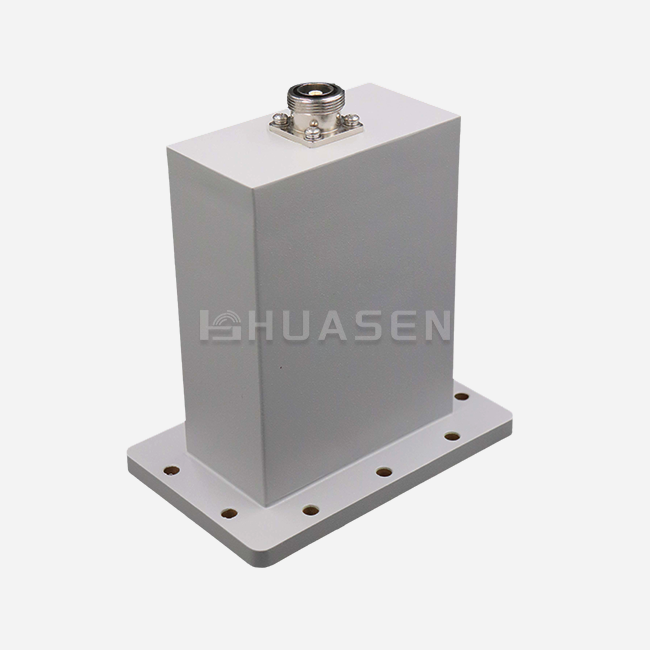
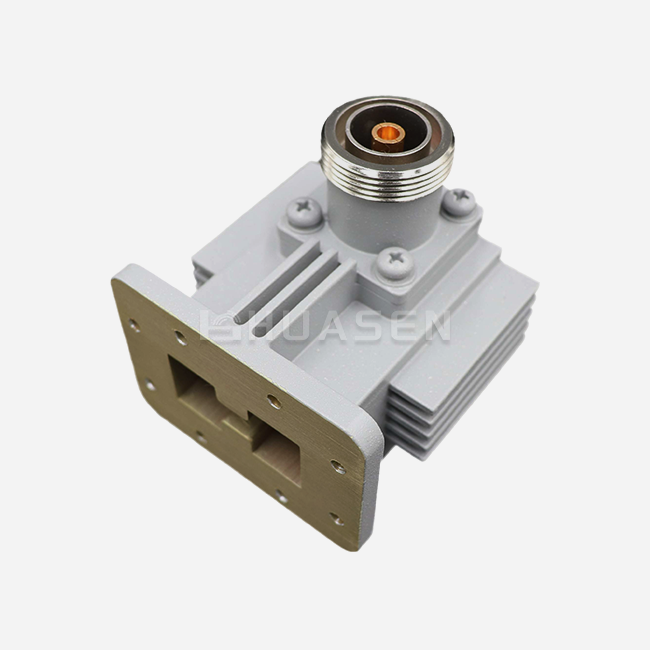
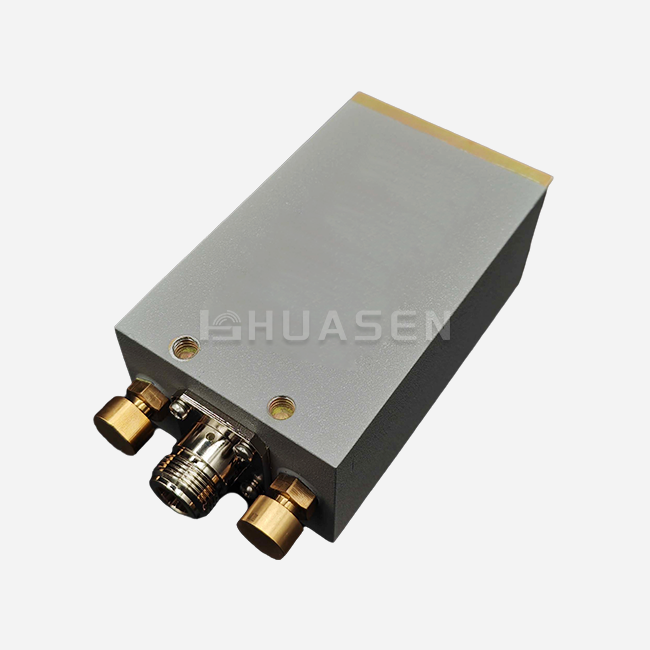
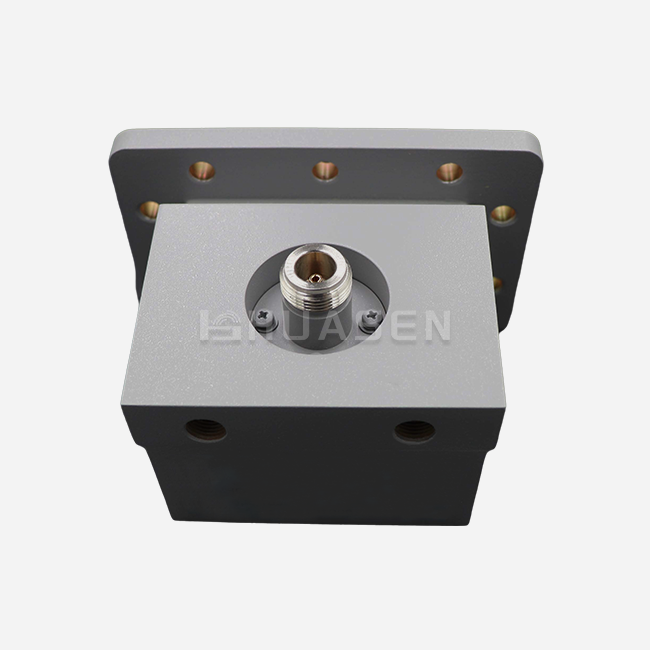
The electromagnetic transition from waveguide to coaxial transmission line represents the most critical design element affecting insertion loss in High Power Waveguide to Coaxial Adapter implementations. Waveguide propagation modes must transform smoothly into TEM mode characteristic of coaxial transmission without generating higher-order modes or excessive reflections. Probe insertion depth, position, and geometric profile determine coupling efficiency and frequency response. End Launch (WECA) configurations position the coaxial probe perpendicular to the waveguide broad wall, offering compact form factors. Right Angle (WCA) designs orient the coaxial connector parallel to the waveguide axis, providing mechanical advantages for certain architectures. Both configurations achieve low VSWR values below 1.5:1 across operational bandwidths when properly designed. The High Power Waveguide to Coaxial Adapter transition must maintain characteristic impedance matching throughout the transformation region, typically transitioning from waveguide impedance around 500 ohms to standard 50-ohm coaxial impedance.
Connector Interface Specifications and Compatibility
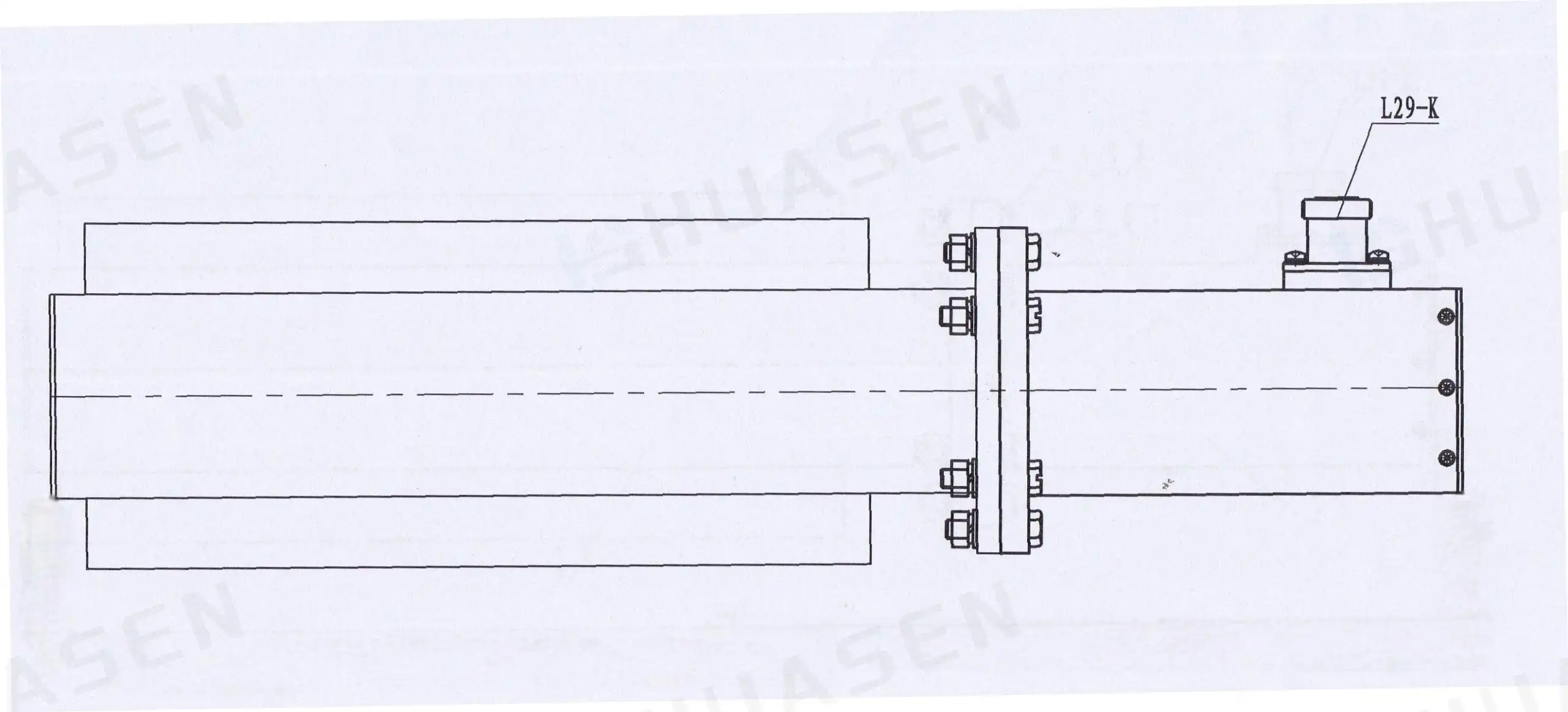
Connector selection for the coaxial interface significantly impacts system integration, power handling, and frequency performance. The adapter supports seven connector types including 1'5/8-K, L29-K, and N-K configurations, each optimized for specific frequency ranges and power levels. Large format connectors like 1'5/8-K accommodate the highest power levels due to increased conductor dimensions and improved thermal dissipation. L29-K connectors provide excellent performance through microwave frequencies while maintaining robust mechanical construction. N-type connectors offer proven reliability and moderate power handling across frequency ranges extending into lower millimeter-wave bands. Precision-machined connector interfaces ensure perfect mechanical fit with mating components, minimizing air gaps or misalignments that would increase VSWR and insertion loss. The High Power Waveguide to Coaxial Adapter interface dimensions must maintain tight tolerances typically within micrometers to preserve electrical performance at millimeter-wave frequencies.
VSWR Optimization and Reflection Minimization
Voltage Standing Wave Ratio represents a fundamental performance metric quantifying impedance matching quality throughout High Power Waveguide to Coaxial Adapter structures. VSWR values below 1.5:1 indicate excellent matching with minimal reflections, translating directly to low insertion loss and maximum power transfer efficiency. A 1.5:1 VSWR corresponds to approximately 14 dB return loss. Achieving low VSWR across wide frequency ranges demands careful attention to every impedance discontinuity throughout the transition structure. Computer-aided electromagnetic simulation tools enable optimization of probe geometry, matching sections, and dielectric interfaces before prototype fabrication. High Power Waveguide to Coaxial Adapter designs undergo rigorous testing across operational frequency ranges, measuring VSWR and insertion loss at multiple frequency points to verify performance specifications.
Frequency Range Considerations and Application Matching
Sub-6GHz 5G Infrastructure Requirements
Telecommunications infrastructure supporting sub-6GHz 5G networks imposes specific requirements on High Power Waveguide to Coaxial Adapter performance characteristics. Frequency bands including 3.5 GHz and 4.9 GHz demand adapters with consistent insertion loss below 0.3 dB and VSWR under 1.3:1 to maintain link budgets. Base station installations frequently employ waveguide distribution networks requiring reliable adapter interfaces capable of handling average power levels up to several hundred watts. The wide frequency coverage from 0.3 GHz to 110 GHz in modern High Power Waveguide to Coaxial Adapter designs ensures compatibility with current 5G deployments while providing upgrade paths for future millimeter-wave expansion. Environmental durability becomes paramount for outdoor base station installations exposed to temperature extremes over multi-decade service lifetimes. Corrosion-resistant materials and treatments ensure stable electrical performance despite harsh environmental exposure.
Millimeter-Wave and Satellite Communication Bands
Applications extending into millimeter-wave frequencies including Ka-band satellite communications demand exceptional manufacturing precision in High Power Waveguide to Coaxial Adapter construction. Wavelengths measuring single millimeters at frequencies approaching 110 GHz mean dimensional tolerances must be controlled to micrometer levels. Surface roughness becomes increasingly significant as frequency rises, with skin depth shrinking proportionally. Satellite ground station installations require adapters handling continuous power levels exceeding 1kW while maintaining insertion loss below 0.5 dB across multi-GHz bandwidths. End Launch and Right Angle configurations offer system designers flexibility in optimizing feed network layouts.
Radar and Aerospace System Integration
Defense radar systems and aerospace platforms impose the most demanding requirements on High Power Waveguide to Coaxial Adapter specifications, combining high power handling, extreme environmental conditions, and rigorous reliability standards. Phased array radar systems may require hundreds of adapter interfaces throughout feed networks, making individual component insertion loss critically important. Military specifications often mandate extensive qualification testing including thermal cycling, vibration, shock, and humidity exposure. High Power Waveguide to Coaxial Adapter installations in aircraft or space vehicles must withstand extreme temperature ranges from -55°C to +125°C while maintaining electrical performance specifications.
Conclusion
Accomplishing negligible inclusion misfortune in high-power frameworks requests cautious High Power Waveguide to Coaxial Adapter choice considering fabric properties, surface medicines, interface plans, and recurrence prerequisites. Exactness fabricating, impedance coordinating optimization, and fitting connector choices guarantee solid execution over broadcast communications, radar, and aviation applications.
High Power Waveguide to Coaxial Adapter manufacturer and trusted High Power Waveguide to Coaxial Adapter provider Huasen Microwave Technology Co., Ltd. has been providing top-notch RF solutions for over 30 years. Our adapters can handle frequencies from 0.3 GHz to 110 GHz, can handle up to 5000W of power, keep VSWR below 1.5:1, and have insertion loss below 0.5 dB. Our products work great in radar, telecommunications, and aircraft because they come in End Launch (WECA) and Right Angle (WCA) configurations and seven different types of connectors. Email us at sales@huasenmicrowave.com to talk about your unique needs and find out how our precision-engineered solutions can help your RF system work better.
References
1. Pozar, David M. Microwave Engineering, 4th Edition. John Wiley & Sons, 2012.
2. Collin, Robert E. Foundations for Microwave Engineering, 2nd Edition. IEEE Press, 2001.
3. Ramo, Simon, John R. Whinnery, and Theodore Van Duzer. Fields and Waves in Communication Electronics, 3rd Edition. John Wiley & Sons, 1994.
4. Rizzi, Peter A. Microwave Engineering: Passive Circuits. Prentice Hall, 1988.
5. Saad, Theodore S. Microwave Engineers' Handbook, Volumes 1-2. Artech House Publishers, 1971.
6. Marcuvitz, Nathan. Waveguide Handbook. MIT Radiation Laboratory Series, Dover Publications, 1986.
Send Inquiry

Related Industry Knowledge
- What is a Waveguide Tube, and how does it differ from ordinary coaxial cables in signal transmission?
- What is the working principle of a waveguide sliding short?
- How Does a UWB LNA Amplify Wideband Signals Without Adding Noise?
- Why Can Broadband Double Ridged Horn Antennas Cover Ultra-Wide Frequencies?
- What Are the Differences Between Log Periodic Microstrip Antennas and Traditional Log Periodic Dipole Antennas?
- What Are the Application Scenarios of Circular Waveguide to Coaxial Adapters in Satellite Communication Systems?
- How Does a Coplanar WG Perform in High-Speed Signal Transmission?
- How to Fabricate a High-Precision Mitered Bend Waveguide for Microwave/MMWave Applications?
- How to Achieve Low Insertion Loss: Selection Tips for High Power Adapters
- What Affects Crossguide Couplers’ Phase Stability? Factors to Control in System Design