Features of High-Performance Circular Horn Antenna






2026-01-27 22:03:11
In today's demanding microwave communication landscape, engineers face critical challenges in achieving reliable signal transmission across ultra-wide frequency ranges while maintaining polarization purity and exceptional gain stability. Whether you're struggling with signal degradation in satellite ground stations, dealing with multipath interference in radar systems, or searching for antennas that can handle both linear and circular polarization without performance compromise, understanding the features of high-performance Circular Horn Antenna solutions becomes essential. These precision-engineered components transform theoretical electromagnetic principles into practical, mission-critical performance, offering the versatility and reliability that modern telecommunications, aerospace, and defense applications demand.

Understanding Circular Horn Antenna Technology and Core Performance Characteristics
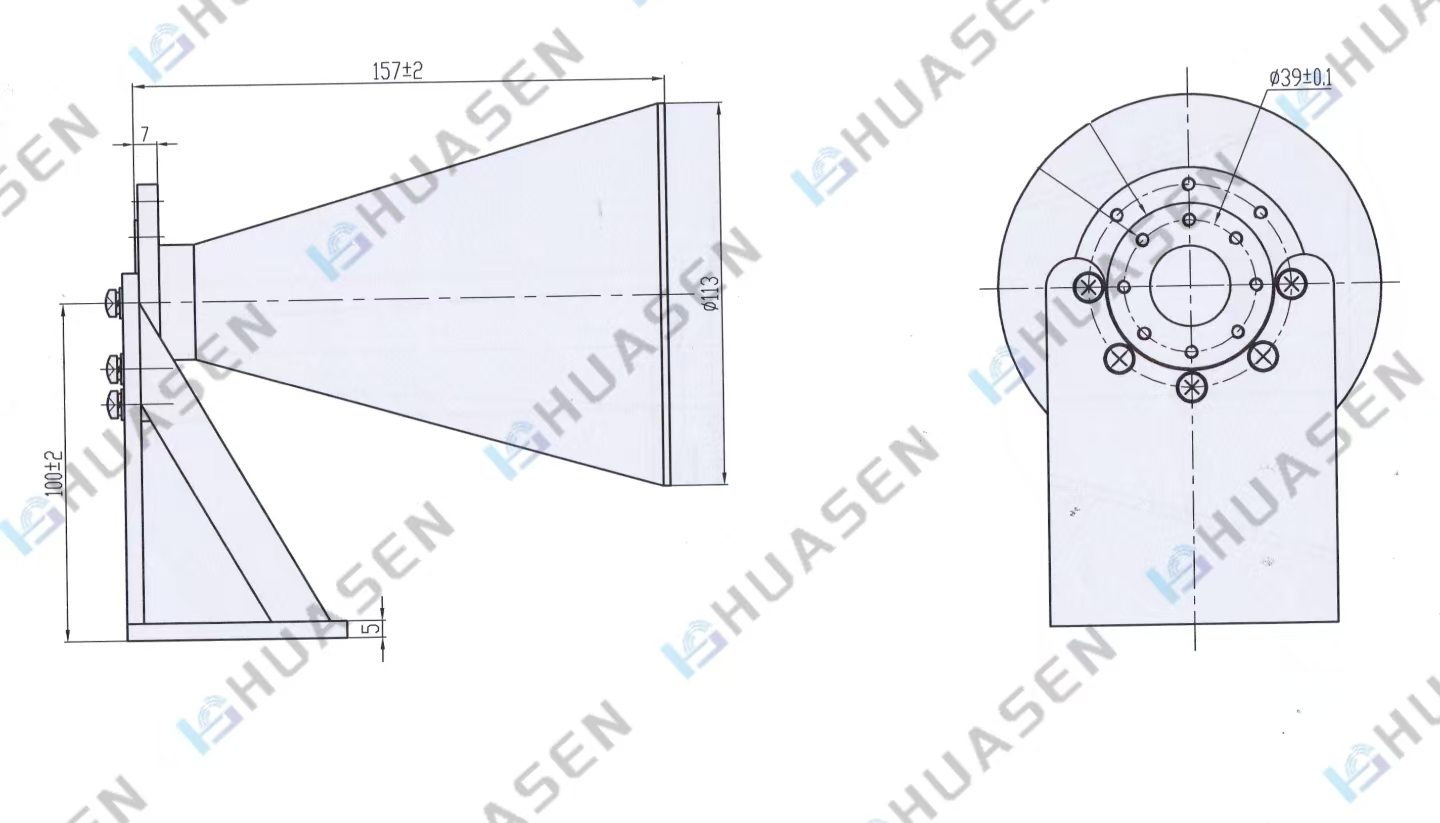
The Circular Horn Antenna represents a sophisticated evolution in microwave antenna design, combining conical geometry with advanced electromagnetic wave propagation principles to deliver superior performance across diverse operating conditions. At its fundamental level, this antenna type utilizes a gradual flaring transition from a circular waveguide feed to free space, creating an impedance-matching structure that minimizes signal reflections while maximizing radiation efficiency. The conical shape produces rotationally symmetric radiation patterns, ensuring consistent beamwidth characteristics in all azimuthal directions regardless of antenna orientation. This geometric symmetry proves invaluable for applications involving mechanical scanning or situations where polarization orientation may vary during operation, eliminating the asymmetric beam patterns common in pyramidal horn designs.
High-performance Circular Horn Antenna systems achieve exceptional frequency coverage spanning from 1.76 GHz to 400 GHz, with operating bandwidths typically ranging from 20% to 40% of the center frequency. This remarkable frequency versatility enables a single antenna design to serve multiple applications across L-band, S-band, C-band, X-band, KU-band, Ka-band, and W-band spectrum allocations. The wide bandwidth capability stems from careful optimization of the flare angle and aperture diameter, which must be precisely engineered to balance directivity requirements against phase error accumulation across the operational frequency range. Manufacturing precision becomes critical at millimeter-wave frequencies, where dimensional tolerances measured in micrometers directly impact electrical performance and polarization purity.
Advanced Polarization Flexibility for Diverse Application Requirements
One of the most compelling features distinguishing high-performance Circular Horn Antenna solutions is their flexible polarization capability. The basic configuration supports linear polarization through standard circular waveguide coupling, providing straightforward implementation for applications requiring single-polarization operation. However, when combined with a circular polarizer component, these antennas seamlessly achieve circular polarization, enabling them to serve satellite communication systems that rely on circular polarization to mitigate Faraday rotation effects in ionospheric propagation. Advanced variants incorporate dual circular polarization capabilities through specialized feeding arrangements such as the dual circular polarization variant-stepped septum type configuration, which maintains compact size while achieving axial ratio specifications of 1.5 dB or better across the operational bandwidth.
The polarization versatility extends beyond simple linear-to-circular conversion. Modern Circular Horn Antenna designs can accommodate orthomode transducers for simultaneous reception of both right-hand and left-hand circular polarization signals, effectively doubling spectrum utilization in satellite ground station applications. This dual-polarization capability proves essential for maximizing data throughput in congested orbital slots where frequency reuse through polarization isolation becomes necessary. The exceptionally low cross-polarization levels achieved through precise geometric control and surface finish optimization ensure that polarization purity remains high across the entire operating bandwidth, preventing signal degradation that could compromise link reliability in mission-critical communication scenarios.
Manufacturing Excellence and Precision Engineering Processes
The production of high-performance Circular Horn Antenna components demands manufacturing capabilities that combine traditional precision machining with advanced electroforming techniques. Electroforming processes enable the creation of ultra-precise internal dimensions and surface finishes that minimize ohmic losses at high microwave frequencies. This electrochemical deposition method produces seamless, uniform wall thickness throughout the flared section, eliminating the mechanical stress points and surface irregularities that can arise from conventional machining operations. The resulting antenna structures exhibit superior electrical performance with consistent impedance characteristics and minimal internal reflections across wide frequency ranges.
Integral machining represents an alternative manufacturing approach particularly suited for larger aperture Circular Horn Antenna designs operating at lower microwave frequencies. Advanced CNC milling and turning equipment enables the production of complete antenna assemblies from single metal billets, ensuring structural integrity and dimensional accuracy throughout the component. The machining workshop capabilities include EDM, slow wire cutting, and medium-speed wire cutting technologies that achieve the precise geometric tolerances required for optimal electromagnetic performance. For millimeter-wave applications where wavelengths measure in millimeters, coordinate measuring machines and image measuring instruments verify that dimensional specifications fall within acceptable tolerance bands, ensuring that every manufactured unit meets stringent electrical performance requirements.
Material Selection and Environmental Protection Features
High-quality material selection forms the foundation of reliable Circular Horn Antenna performance across demanding environmental conditions. Aluminum alloys offer an ideal balance of electrical conductivity, mechanical strength, and weight optimization, making them the preferred choice for most applications. The excellent machinability of aluminum enables complex geometric features while maintaining the tight tolerances necessary for millimeter-wave operation. Copper construction provides even higher conductivity for applications requiring absolute minimum insertion loss, though at the cost of increased weight and higher manufacturing complexity. Both material choices undergo specialized surface treatments including PTFE coatings that provide weather-resistant protection against moisture ingress, UV degradation, and chemical exposure in harsh outdoor environments.
The manufacturing process incorporates multiple quality control checkpoints ensuring consistent performance across production runs. RoHS testers verify material compliance with environmental regulations, while temperature shock test chambers and alternating humidity and heat test chambers subject completed antennas to accelerated aging protocols that simulate years of field deployment. Vibration test benches confirm mechanical robustness under transportation and installation stresses, ensuring structural integrity remains intact when subjected to wind loading and mechanical vibration in operational environments. This comprehensive testing regime, combined with ISO9001 certified manufacturing processes, guarantees that every Circular Horn Antenna leaving the production facility meets both electrical specifications and environmental durability requirements.

Exceptional Gain Performance and Interface Compatibility
High-performance Circular Horn Antenna designs achieve gain specifications ranging from 13 dB to 24 dB depending on aperture size, flare angle, and operating frequency. This gain range provides sufficient directivity for most communication and radar applications while maintaining manageable physical dimensions suitable for practical deployment scenarios. The relationship between aperture diameter and gain follows fundamental electromagnetic principles, with larger apertures producing higher directivity at the expense of increased size and weight. Customizable gain options enable engineers to optimize antenna specifications for specific application requirements, balancing directivity needs against installation constraints and cost considerations. Extended-length designs can achieve even higher gain levels when application requirements justify the increased physical dimensions and associated installation complexity.
Interface compatibility represents another critical feature enabling seamless system integration. Circular Horn Antenna products accommodate circular waveguide inputs spanning inner diameters from Φ0.7 mm for millimeter-wave applications to Φ114.58 mm for lower microwave frequency bands. Standard waveguide flanges ensure compatibility with existing infrastructure, while custom flange configurations can be engineered to meet specialized mounting requirements. The waveguide interface transition must maintain low VSWR across the operational bandwidth to prevent reflected power that could damage transmitter components or degrade receiver sensitivity. Precision-machined flange surfaces with appropriate gasket provisions ensure reliable RF sealing that prevents signal leakage and maintains specified electrical performance throughout the system lifecycle.
Comprehensive Testing Capabilities Ensuring Verified Performance
Rigorous antenna testing forms an essential component of the development and production process, validating that manufactured units meet their specified electrical characteristics across all operating conditions. Microwave anechoic chamber facilities enable far-field radiation pattern measurements that characterize antenna directivity, beamwidth, sidelobe levels, and polarization purity. Multiple chamber sizes accommodate different frequency ranges and measurement distances, with the largest chambers supporting far-field testing at frequencies from 0.5 GHz extending through millimeter-wave bands to 220 GHz. Two-dimensional turntable systems enable automated pattern measurements across complete azimuth and elevation angular ranges, capturing detailed radiation characteristics that verify compliance with design specifications.
Planar near-field measurement systems provide alternative testing methodologies particularly valuable for large-aperture antennas where far-field distance requirements become impractical. The scanning frame with effective travel dimensions of 9 meters by 6 meters supports antenna under test configurations while probe sensors map the electromagnetic field distribution across the measurement plane. Advanced signal processing transforms the near-field data into equivalent far-field radiation patterns, providing comprehensive antenna characterization without requiring enormous test facilities. Vector network analyzers enable precise measurement of return loss, insertion loss, and phase characteristics, while spectrum analyzers verify spurious emission levels and harmonic content. This extensive instrumentation suite, calibrated by recognized metrology laboratories, ensures measurement accuracy and traceability to international standards.
Diverse Application Domains and System Integration
The versatility of Circular Horn Antenna technology enables deployment across an impressive range of application domains. In satellite communication systems, these antennas serve as primary radiating elements for ground station installations, providing the high gain and low noise temperature required for reliable reception of weak signals from distant spacecraft. The circular polarization capability proves essential for mitigating Faraday rotation effects while the wide bandwidth supports multiple frequency allocations within the satellite communication bands. Radar systems benefit from the precise beam control and low sidelobe characteristics that minimize clutter interference and improve target detection capabilities. Defense applications leverage the polarization flexibility for electronic warfare scenarios where adaptive polarization provides strategic advantages in signal interception and jamming operations.
The expanding 5G and emerging 6G infrastructure development creates substantial demand for high-performance antenna solutions capable of supporting millimeter-wave spectrum allocations. Circular Horn Antenna technology provides the gain, bandwidth, and polarization control necessary for base station implementations while compact designs enable dense urban installations where physical space remains limited. Aerospace signal processing applications require antennas with stable electrical characteristics across temperature extremes and mechanical vibration environments, making the robust construction and proven reliability of properly manufactured Circular Horn Antenna components essential for mission success. RF testing and measurement laboratories utilize precision horn antennas as calibrated gain standards for antenna range operations and as known-impedance reference loads for network analyzer calibration procedures.
Installation Flexibility and System Compatibility Considerations
Modern Circular Horn Antenna designs incorporate mounting provisions that simplify installation while ensuring mechanical stability throughout the operational lifetime. Standard mounting flange configurations enable direct attachment to antenna positioner systems, waveguide routing assemblies, and structural support frameworks. The compact form factor of advanced designs proves particularly valuable for space-constrained installations where multiple antennas must coexist in limited physical volumes. Lightweight construction utilizing aluminum alloys minimizes structural loading requirements, reducing tower reinforcement costs and enabling installations on structures with limited load-bearing capacity. Weather-resistant finishes protect against environmental degradation, maintaining both electrical performance and aesthetic appearance through years of outdoor exposure.
System integration extends beyond mechanical mounting to encompass electromagnetic compatibility with adjacent equipment and infrastructure. The low sidelobe characteristics inherent in well-designed Circular Horn Antenna configurations minimize interference with nearby communication systems, enabling dense frequency reuse in congested spectrum environments. Compatibility with MIMO and phased array architectures enables these antennas to serve as radiating elements in more complex antenna systems that exploit spatial diversity for capacity enhancement. Adaptability to existing waveguide infrastructure through standard interface dimensions ensures that antenna upgrades can proceed without requiring complete system redesign, protecting previous infrastructure investments while enabling performance improvements through antenna technology advancement.
Conclusion
High-performance Circular Horn Antenna solutions deliver the exceptional frequency coverage, polarization versatility, gain performance, and manufacturing precision required for demanding microwave and millimeter-wave applications across telecommunications, aerospace, defense, and research domains.
Cooperate with Huasen Microwave Technology Co., Ltd.
Partner with Huasen Microwave Technology Co., Ltd., your trusted China Circular Horn Antenna factory, China Circular Horn Antenna supplier, and China Circular Horn Antenna manufacturer offering premium China Circular Horn Antenna wholesale solutions. Established in 1993 as a National High-Tech Enterprise, Huasen brings over 30 years of expertise in developing high-frequency microwave and millimeter-wave components. Our 3,000-square-meter R&D and production center houses advanced CNC machining equipment, electroforming facilities, and three calibrated microwave anechoic chambers supporting frequencies from 0.5 GHz to 220 GHz. With over 200 skilled employees, ISO three-system certification, and comprehensive testing capabilities including 40 vector network analyzers and planar near-field measurement systems, we deliver High Quality Circular Horn Antenna products with competitive Circular Horn Antenna price points. Our extensive product portfolio serves aviation, aerospace, satellite communications, 5G infrastructure, and defense sectors worldwide. Whether you need standard Circular Horn Antenna for sale or customized solutions tailored to your specifications, our experienced engineering team ensures optimal performance for your mission-critical applications. Contact us today at sales@huasenmicrowave.com to discuss your requirements and discover how our proven manufacturing excellence and technical expertise can advance your projects with reliable, high-performance microwave solutions.
References
1. Balanis, Constantine A., "Antenna Theory: Analysis and Design," Fourth Edition, Wiley-Interscience, 2016
2. Olver, A.D., Clarricoats, P.J.B., Kishk, A.A., and Shafai, L., "Microwave Horns and Feeds," IEEE Press, Institution of Electrical Engineers, 1994
3. Kraus, John D. and Marhefka, Ronald J., "Antennas: For All Applications," Third Edition, McGraw-Hill Education, 2002
4. Rudge, A.W., Milne, K., Olver, A.D., and Knight, P., "The Handbook of Antenna Design, Volume 1," Peter Peregrinus Ltd., Institution of Electrical Engineers, 1982
5. Milligan, Thomas A., "Modern Antenna Design," Second Edition, IEEE Press, Wiley-Interscience, 2005
Send Inquiry