How to optimize the performance of a Rectangular to Circular Waveguide Transition?






2019-02-13 08:47:12
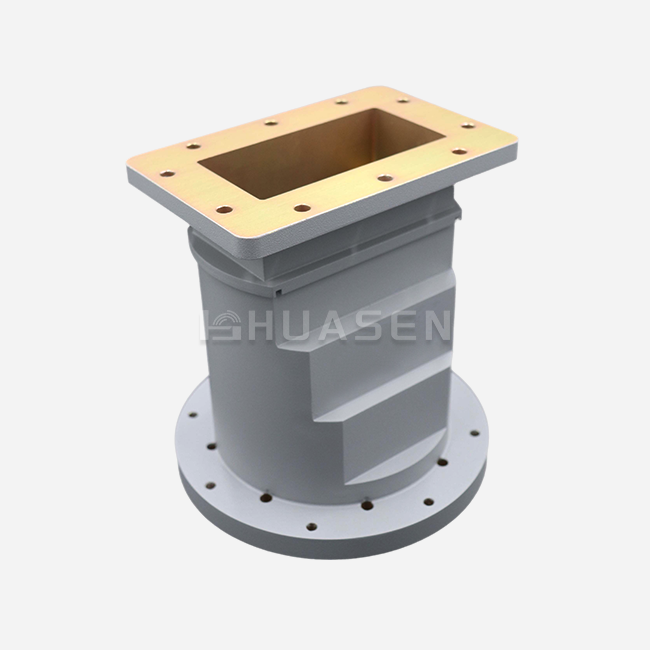
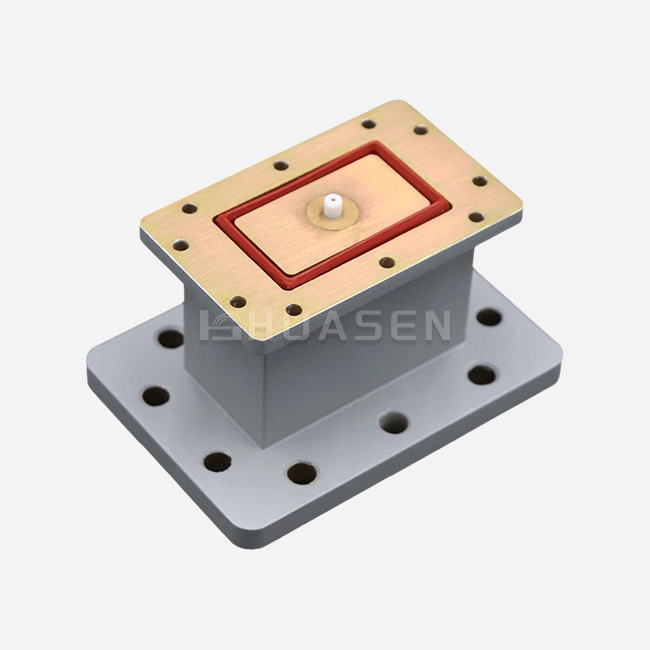
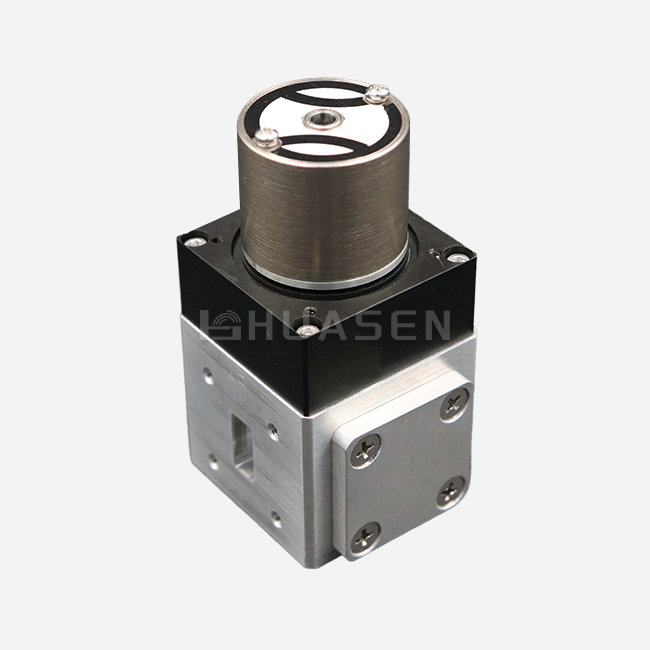
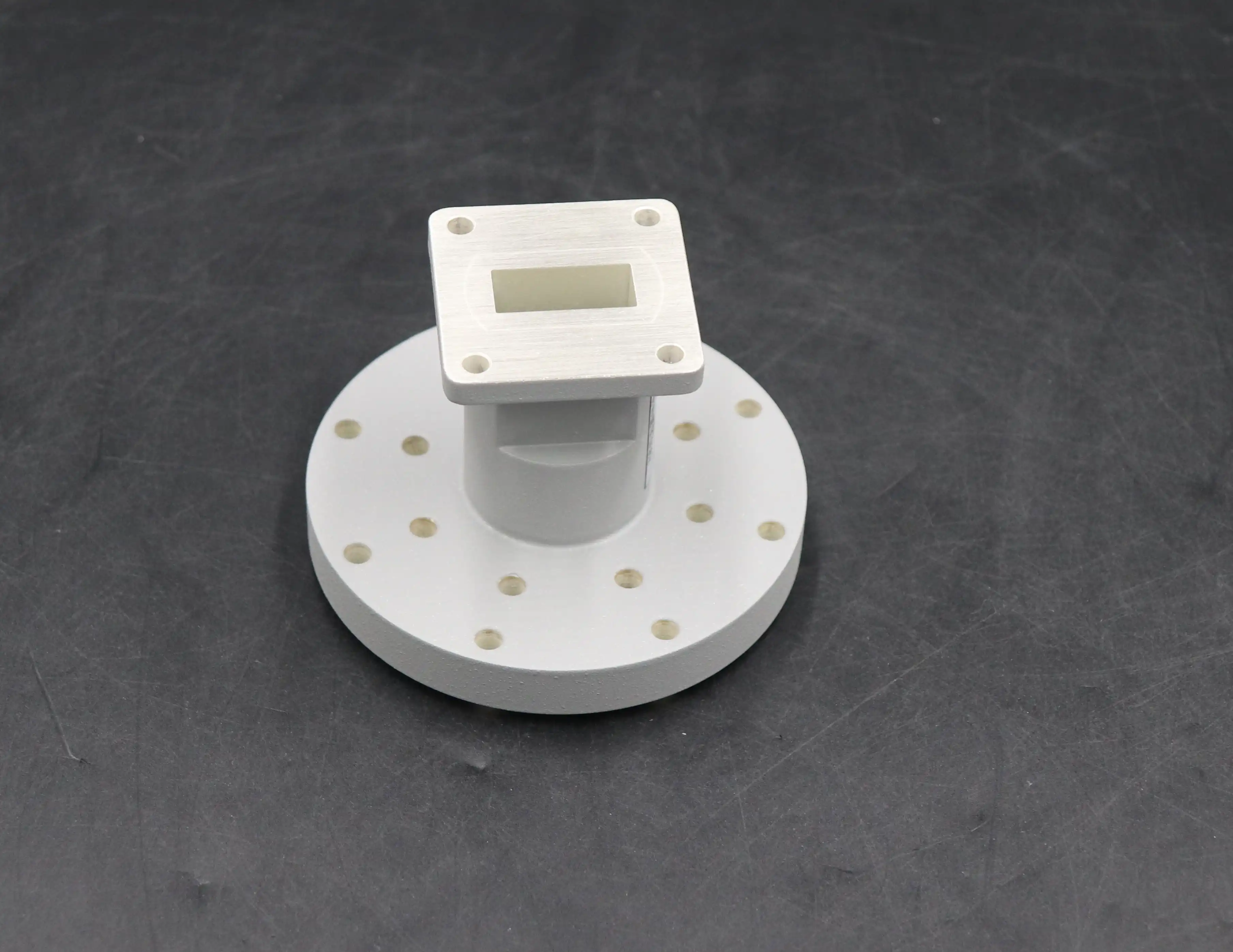
The Rectangular to Circular Waveguide Transition is an important part of current RF and microwave systems because it makes it simple to switch signals between waveguide parts that have various cross-sectional shapes. To obtain the most performance out of a Rectangular to Circular Waveguide Transition, you need to pay special attention to a variety of design parameters, the accuracy of the manufacturing process, and the needs of the application. Engineers and procurement professionals in the defense, aerospace, telecommunications, and radar industries need to know these crucial optimization strategies when choosing or designing these products. With the right optimization, there is low insertion loss, good impedance matching, and steady performance over a wide range of frequencies.
Design and Engineering Considerations
Understanding Mode Conversion Efficiency
The fundamental principle behind any effective Rectangular to Circular Waveguide Transition lies in efficient mode conversion. The component must reliably convert the TE10 mode from rectangular waveguides into the TE11 mode within circular waveguides while minimizing energy loss and maintaining signal integrity. This conversion process demands precise geometric specifications where the transition taper must be carefully calculated based on the specific frequency band of operation. Engineers must consider the wavelength characteristics at both the operational frequency and potential harmonic frequencies. The design geometry has a direct effect on how easily electromagnetic fields switch between the two ways they can travel. To forecast how well something will work before it is made, you need advanced computational modeling and electromagnetic simulation capabilities. When optimizing a Rectangular to Circular Waveguide Transition, designers should evaluate multiple taper profiles—linear, exponential, and Chebyshev designs each offer distinct advantages depending on frequency range and bandwidth requirements. The choice between these profiles significantly influences the standing wave ratio (VSWR) and insertion loss characteristics across the operating bandwidth.
Impedance Matching and VSWR Optimization
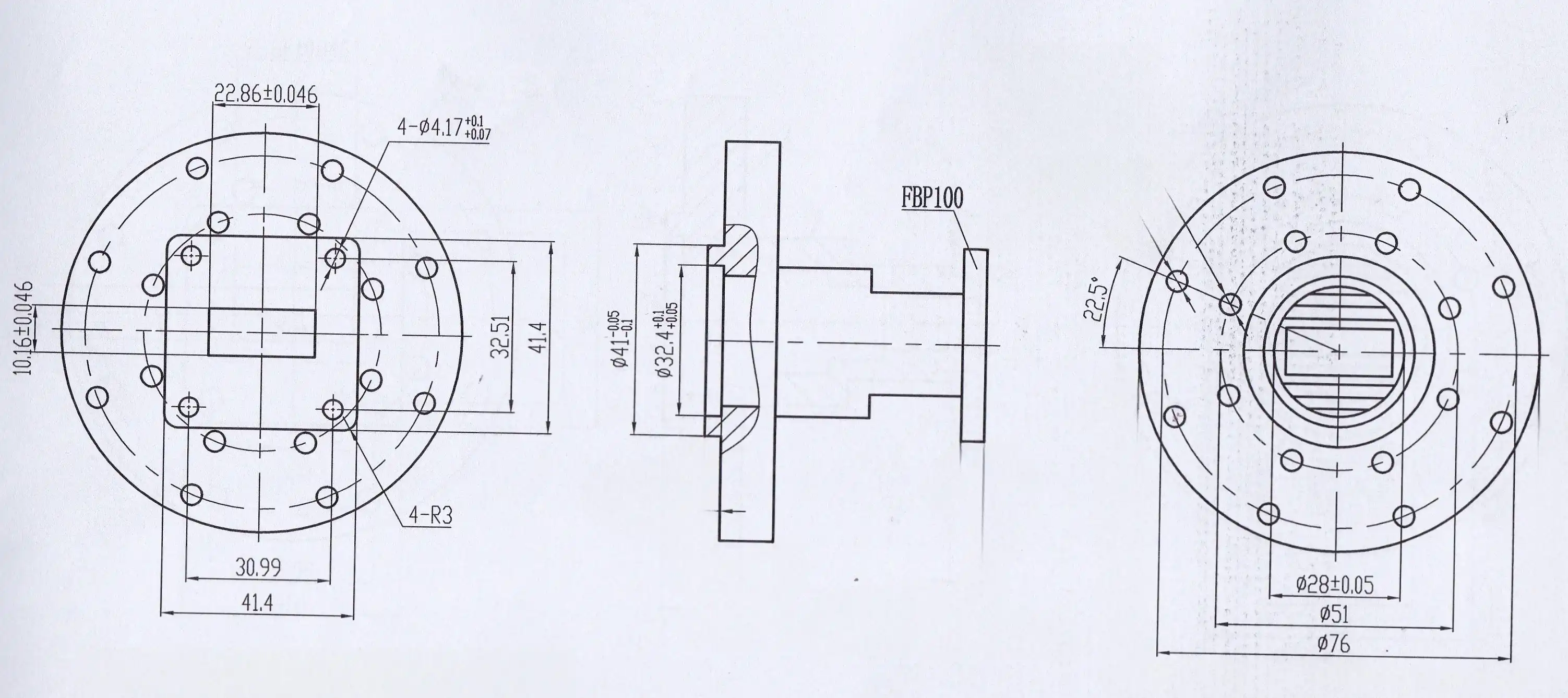
Achieving optimal impedance matching is critical for minimizing signal reflections and maximizing power transfer through the Rectangular to Circular Waveguide Transition. The characteristic impedance must transition smoothly between the rectangular and circular waveguide sections to prevent discontinuities that cause reflections. High-quality Rectangular to Circular Waveguide Transition components typically achieve VSWR values of 1.1 or better, meaning that 99% of incident power is transmitted while only 1% reflects back. This performance level requires meticulous attention to dimensional tolerances, with many precision manufacturers maintaining tolerances within ±0.01 mm. The internal surface finish also plays a significant role—smoother surfaces reduce ohmic losses and improve overall transmission efficiency. Engineers designing or selecting these components should understand that achieving consistently low VSWR across wide frequency ranges requires advanced manufacturing techniques and rigorous quality control protocols. The relationship between transition length, taper profile, and achievable VSWR is complex and must be optimized through either electromagnetic simulation or empirical testing.
Material Selection and Manufacturing Standards
The material composition of a Rectangular to Circular Waveguide Transition directly impacts its performance characteristics and operational reliability. Oxygen-free copper offers superior electrical conductivity, enabling lower insertion loss and better VSWR performance, making it ideal for high-frequency applications requiring maximum efficiency. Aluminum alloys provide excellent cost-effectiveness while maintaining acceptable performance for many applications, particularly in lower-frequency bands. Premium surface treatments further enhance performance—silver plating reduces surface roughness and ohmic losses, while PEEK coatings offer protection in corrosive environments. Manufacturing precision determines whether the component's theoretical performance translates to real-world results. CNC machining with computer-controlled tolerance verification ensures that each Rectangular to Circular Waveguide Transition meets stringent specifications. One-hundred percent RF testing during manufacturing catches defects before components reach customers, guaranteeing consistent performance.
Performance Optimization Across Frequency Ranges
Low-Frequency Band Applications and Extended Designs
For applications operating in lower frequency bands, Rectangular to Circular Waveguide Transition components typically feature extended lengths ranging from 200 to 920 millimeters. These longer designs provide gradually tapering transitions that reduce impedance discontinuities and minimize reflection coefficients. The extended length allows the electromagnetic field patterns to evolve more gradually within the transition region, reducing mode conversion losses and optimizing bandwidth performance. Low-frequency Rectangular to Circular Waveguide Transition designs must account for skin effect considerations and ensure that surface quality meets specifications throughout the internal taper geometry. The longer physical design also provides mechanical stability and reduces stress concentrations at connection points. Applications in satellite communication systems, weather radar installations, and ground-based transmission systems typically benefit from these extended low-frequency designs. Engineers selecting components for such applications should verify that the Rectangular to Circular Waveguide Transition incorporates appropriate flange configurations—CPR, UG, ANSI, and DIN standards ensure compatibility with existing system infrastructure. Environmental sealing considerations become increasingly important for outdoor or harsh-environment applications.
High-Frequency Performance and Compact Designs
High-frequency Rectangular to Circular Waveguide Transition components typically operate across extended frequency ranges extending to 112 GHz or beyond, requiring compact designs with lengths between 50 and 160 millimeters. Shorter transition geometries present greater engineering challenges because the electromagnetic field must convert more abruptly between modes while still maintaining low VSWR and acceptable insertion loss. Advanced manufacturing techniques, including precision CNC machining and specialized heat-treatment processes, enable these compact high-frequency transitions to achieve performance specifications that would be impossible with conventional manufacturing. The Rectangular to Circular Waveguide Transition at millimeter-wave frequencies demands exceptional dimensional accuracy because any deviation becomes significant relative to wavelength. Five-G and Six-G network infrastructure, aerospace testing equipment, and military surveillance applications typically employ these high-frequency components. Thermal management becomes increasingly important at higher frequencies because insertion loss generates localized heating that can affect performance stability. Proper thermal design and appropriate material selection ensure reliable long-term operation without performance degradation.
Broadband Optimization Strategies
Designing a rectangular-to-circular waveguide Transition that maintains excellent performance across wide frequency ranges requires sophisticated optimization approaches. Some designs employ stepped or multi-section tapers that provide optimized impedance characteristics across multiple frequency bands. The Rectangular to Circular Waveguide Transition's bandwidth performance depends on a careful balance between transition length, taper profile smoothness, and internal geometric precision. Manufacturers conducting frequency sweep measurements verify that VSWR remains consistently low throughout the intended operating bandwidth. Advanced electromagnetic simulation software enables engineers to model and optimize Rectangular to Circular Waveguide Transition performance across entire frequency bands before committing to manufacturing tooling. Some applications benefit from custom designs optimized for specific frequency bands rather than broad-spectrum components. Understanding the application's actual frequency requirements allows engineers to select appropriately optimized components rather than over-specifying bandwidth.
System Integration and Application Optimization
Installation Compatibility and System Integration
Successful Rectangular to Circular Waveguide Transition performance depends fundamentally on proper installation and seamless integration with existing waveguide systems. Standard flange interfaces ensure that the Rectangular to Circular Waveguide Transition connects securely with compatible waveguide runs, transmission lines, and RF components. Precision alignment is essential because even slight misalignment causes impedance discontinuities and reflections. Many manufacturers supply optional mounting brackets and alignment tools specifically designed to facilitate proper installation and maintain precise positioning throughout equipment operation. The Rectangular to Circular Waveguide Transition must be installed with attention to polarization alignment and mechanical support that prevents vibration-induced movement. Environmental sealing using appropriate gaskets and protective coatings ensures that components remain protected from contamination, moisture, and corrosive atmospheres. Engineers should specify components with EIA and international standard compatibility to ensure long-term interchangeability and support availability. Proper documentation and technical support from experienced manufacturers significantly ease system integration processes.
Quality Assurance and Performance Verification
Rigorous quality control protocols distinguish premium Rectangular to Circular Waveguide Transition components from mediocre alternatives. One-hundred percent RF testing of each component manufactured ensures that performance specifications are met before delivery to customers. Electromagnetic reflection testing measures VSWR directly across the operating frequency range, providing objective verification of insertion loss and impedance matching performance. ISO 9001 certification demonstrates a manufacturer's commitment to consistent quality standards and continuous process improvement. RoHS and REACH compliance ensures that products meet environmental and health regulations required across diverse markets. Comprehensive documentation, including test certificates and dimensional drawings, provides traceability and enables customers to verify performance claims independently. When selecting a Rectangular to Circular Waveguide Transition manufacturer, customers should evaluate quality certifications, testing protocols, and warranty terms as indicators of reliability and confidence in component performance.
Conclusion
Optimizing Rectangular to Circular Waveguide Transition performance requires systematic attention to design principles, manufacturing precision, and application-specific requirements. Huasen Microwave Technology Co., Ltd., founded in 1993, specializes in high-frequency microwave and millimeter-wave components, delivering premium-quality solutions engineered for demanding telecommunications, radar, aerospace, and defense applications. Proper component selection and installation ensure exceptional RF performance and system reliability across diverse operating environments and frequency ranges.
FAQ
1. What is the typical VSWR range for high-quality Rectangular to Circular Waveguide Transition components?
Premium Rectangular to Circular Waveguide Transition components achieve standing wave ratios of 1.1 or better across their operating frequency ranges. This exceptional performance indicates that approximately 99% of incident RF power transmits successfully while only minimal power reflects back into the source. VSWR of 1.1 represents excellent impedance matching and ensures minimal signal degradation in critical RF systems requiring maximum efficiency and reliability.
2. How does material composition affect Rectangular to Circular Waveguide Transition performance?
Material selection significantly impacts the performance characteristics and operational reliability of Rectangular to Circular Waveguide Transition components. Oxygen-free copper provides superior electrical conductivity and lower insertion loss, ideal for high-frequency applications, while aluminum alloys offer cost-effective solutions for many applications. Premium surface treatments, including silver plating, further enhance performance by reducing ohmic losses and improving overall transmission efficiency.
3. What frequency ranges can modern Rectangular to Circular Waveguide Transition designs cover?
Contemporary Rectangular to Circular Waveguide Transition designs accommodate extensive frequency ranges from 1.30 GHz through 112 GHz and beyond. Low-frequency applications employ extended transition designs optimized for broader bandwidth performance, while high-frequency components utilize compact designs incorporating advanced manufacturing techniques. This versatility enables engineers to select appropriate components for virtually all microwave and millimeter-wave applications.
4. How important is dimensional precision in Rectangular to Circular Waveguide Transition manufacturing?
Dimensional precision is absolutely critical for achieving specified performance in Rectangular to Circular Waveguide Transition components. Manufacturers typically maintain tolerances within ±0.01 millimeters, with surface finish and internal geometry precision directly affecting impedance matching and insertion loss characteristics. One-hundred percent RF testing during manufacturing verifies that each component meets performance specifications before customer delivery.
Premium Rectangular to Circular Waveguide Transition Supplier | Huasen Microwave
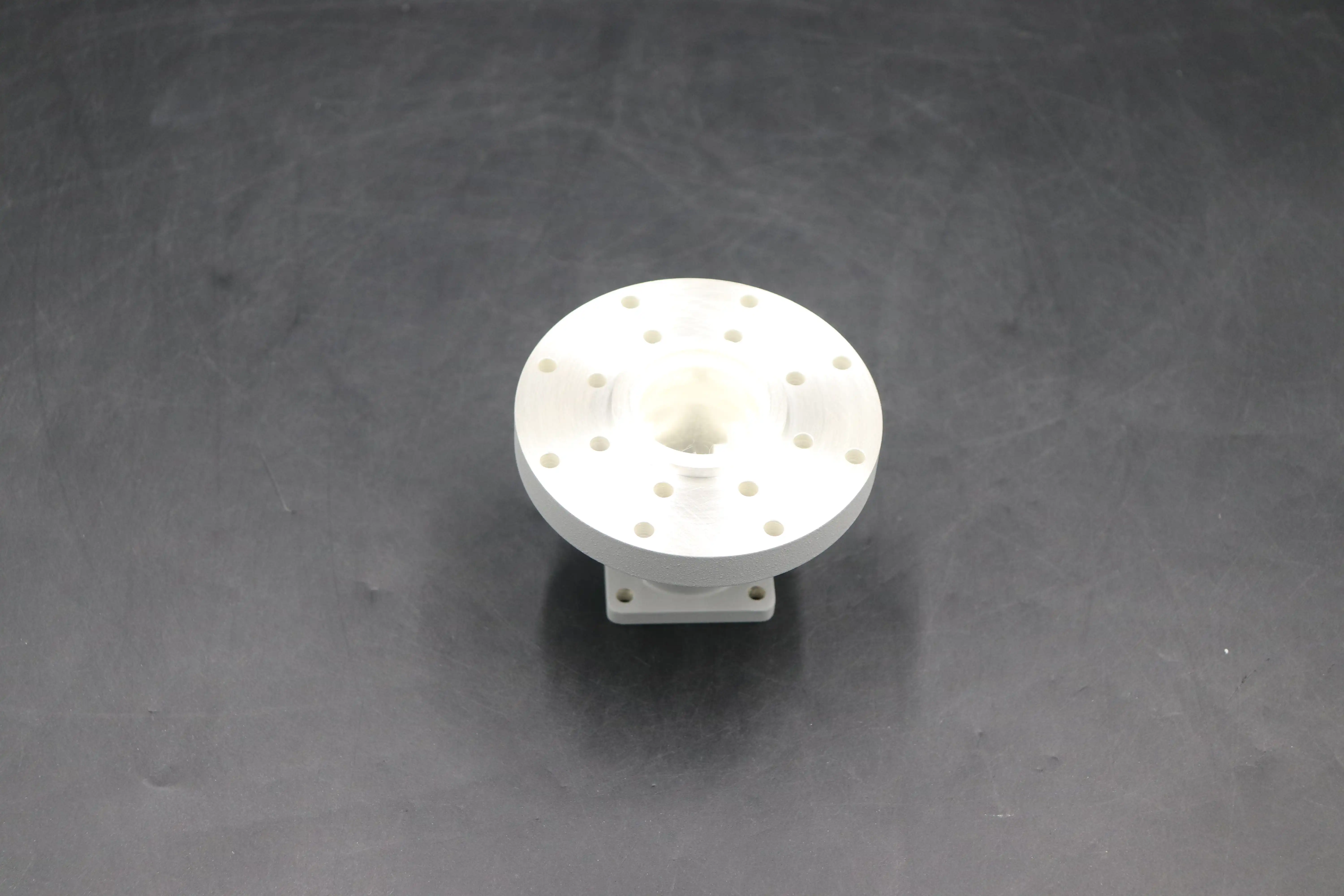
Huasen Microwave Technology Co., Ltd. stands as a leading manufacturer and supplier of high-quality Rectangular to Circular Waveguide Transition components, bringing over thirty years of proven industry expertise in RF and microwave solutions. Our engineering team specializes in delivering cutting-edge Rectangular to Circular Waveguide Transition designs that consistently achieve exceptional performance, durability, and compatibility across demanding applications in telecommunications, radar, aerospace, and defense sectors. Every Rectangular to Circular Waveguide Transition we manufacture undergoes rigorous quality testing and precision engineering to ensure reliable operation in your most critical systems. Whether you require standard catalog solutions or custom-engineered configurations optimized for your specific frequency ranges and performance requirements, our experienced team is ready to assist. As a trusted Rectangular to Circular Waveguide Transition manufacturer, we pride ourselves on delivering components that exceed expectations while maintaining the highest standards of quality, reliability, and customer service. Contact our sales team today to discuss your specific requirements and discover why Huasen Microwave serves as the preferred Rectangular to Circular Waveguide Transition supplier for leading organizations worldwide. Reach out to sales@huasenmicrowave.com and let our expertise support your success.
References
1. Collin, R. E. (2011). Foundations for Microwave Engineering (2nd ed.). IEEE Press.
2. Montgomery, C. G., Dicke, R. H., & Purcell, E. M. (2013). Principles of Microwave Circuits. Dover Publications.
3. Pozar, D. M. (2011). Microwave Engineering (4th ed.). John Wiley & Sons.
4. Cheng, D. K. (2013). Fundamentals of Engineering Electromagnetics. Addison-Wesley Publishing.
5. Yariv, A., & Yeh, P. (2006). Photonics: Optical Electronics in Modern Communications. Oxford University Press.
6. Marcuvitz, N. (2017). Waveguide Handbook. Dover Publications.
Send Inquiry