Active Detector vs Passive Detector: Performance Comparison






2026-07-22 17:04:13
When selecting detection technology for mission-critical RF and microwave applications, understanding the distinction between active and passive detectors becomes paramount. Active detectors operate by emitting controlled energy signals—typically in the form of electromagnetic waves—and analyzing the reflected or interrupted signals to identify targets with precision. In contrast, passive detectors rely on sensing ambient energy changes such as thermal radiation or natural electromagnetic emissions. For applications demanding ultra-precise signal measurement, demodulation accuracy, and power monitoring across frequencies from 0.01 to 44 GHz, active detection architectures deliver unmatched reliability in static-target scenarios, extreme temperature environments, and high-interference conditions where passive sensors often fail. This comprehensive analysis guides procurement professionals, RF engineers, and system integrators through the technical foundations, performance metrics, industry applications, and strategic selection criteria for both detector types. We'll examine real-world deployment challenges in base station front-ends, satellite communications, radar systems, and laboratory test environments, providing the actionable intelligence needed to optimize your next component procurement decision.
Understanding Active and Passive Detectors
The main difference between these two technologies is how they deal with energy in the environment they are monitoring.
Working Principles of Active Detection Technology
In a predetermined coverage zone, active detectors constantly broadcast measured RF energy. Modern active detector circuits use pulse-modulated signals that are encoded with particular frequencies. This lets them tell the difference between real reflections and background noise. A precise oscillator, a transmitter amplifier, a receiver front-end with automatic gain control (AGC), and a digital signal processing unit make up the core architecture. These parts work together to create a controlled energy field that asks questions about the environment instead of just waiting for target emissions.
Active Detectors use logarithmic amplifier topologies to achieve dynamic ranges from -60 to 0 dBm in RF testing and communications applications. They can do both power monitoring and precise demodulation tasks. The signal that is sent is used as a standard, which lets the receiver figure out path loss, find beam interruptions, or measure reflection coefficients more accurately than ±1 dB at certain frequencies.
Passive Detector Operation Fundamentals
Passive detectors work by picking up energy that comes from the subject itself, like photoelectric emissions, thermal infrared radiation from things, or background RF signals. As well-known examples, pyroelectric infrared (PIR) sensors can find differences in temperature, and diode-based power sensors can measure electromagnetic energy that comes in without sending a signal.
Passive architectures are good when you need to use little power, but they don't work well when the target temperature is the same as the ambient temperature or when you're trying to find stationary objects that don't send out a differential signal. In base station tracking, this problem is very important because passive parts can't consistently keep track of signal integrity over wide frequency ranges without active questioning.
Key Technical Distinctions
When you look at sensitivity factors and environmental robustness, you can see the difference in performance between these technologies:
- Signal-to-Noise Ratio: Active systems make their own reference signal, which gives them a higher SNR in noisy RF settings where passive listeners have a hard time separating target signals from background noise.
- Static Target Detection: Passive thermal sensors can't find things that are at thermal balance; active beam blocking methods keep working properly no matter what the target temperature is.
- Environmental Immunity: Active Detectors with AGC circuits actively change sensitivity during atmospheric attenuation, allowing them to continue operating in fog, rain, or dust that would blind conventional optical sensors.
-
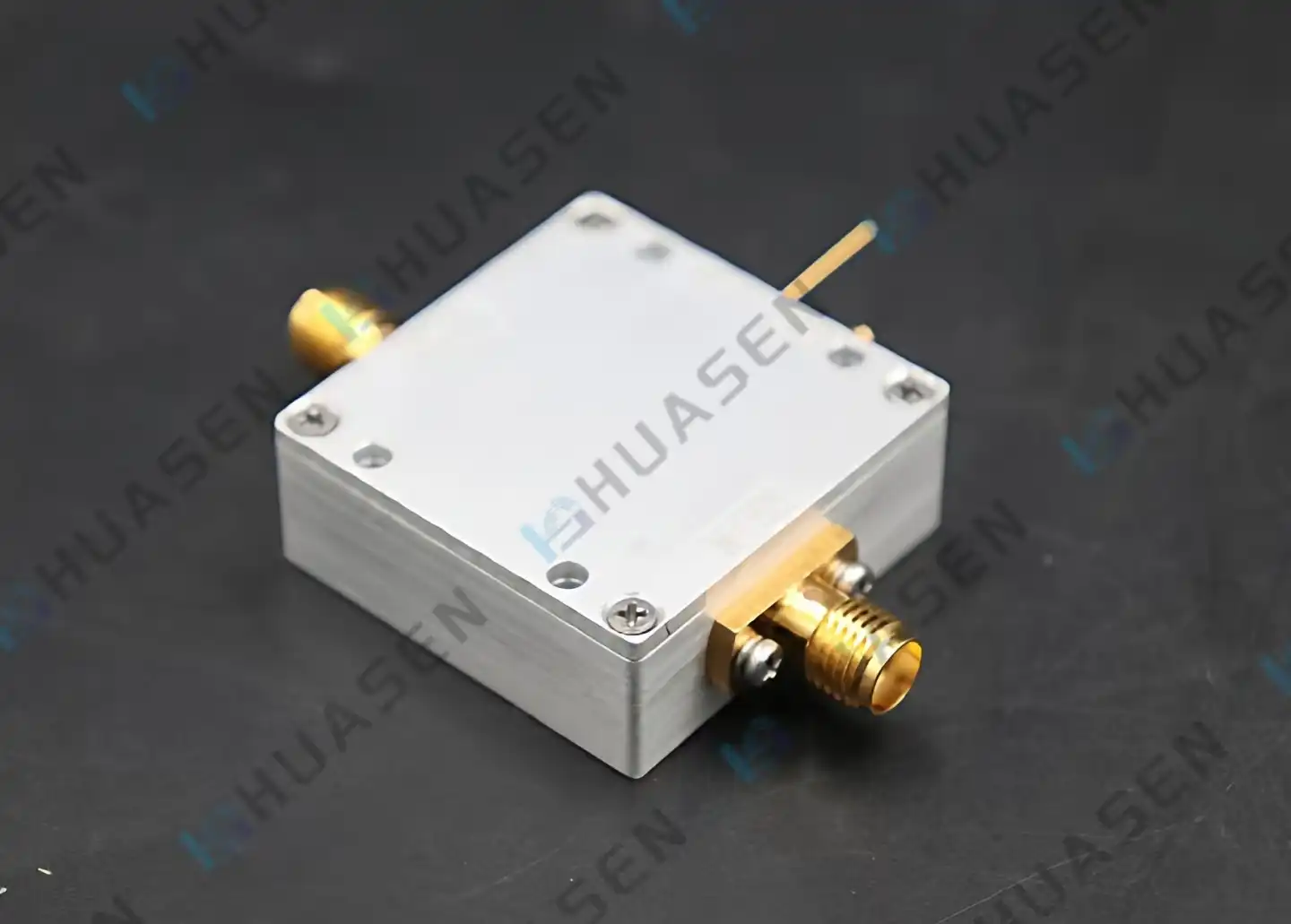
Performance Comparison Between Active and Passive Detectors
To measure how well a device works, you have to look at a lot of different factors in real-world commercial settings, not just in a lab.
Detection Accuracy and Sensitivity Metrics
In precision uses, active detector architectures show real benefits. Take a look at these performance standards from field deployments:
Table 1: Comparative Performance Metrics
| Parameter | Active Detector | Passive Detector | Application Impact |
|---|---|---|---|
| Frequency Range | 0.01 GHz to 44 GHz | Usually less than 10 GHz | Compatibility with multiple bands |
| Dynamic Range | -60 to 0 dBm | -40 to -10 dBm | Power levels that can be changed |
| Accuracy | with an error of ±1 dB | ±2 to 3 dB | Assurance of signal security |
| Temperature Drift | ±0.5 dB (-40°C to 85°C) | ±1.5 to 2 dB | Dependability in harsh environments |
| Response Time | 8 ns (rise/fall) | 50 to 200 ms | Real-time tracking is possible |
These specs explain why active detectors are the most common method used in communications testing, where measurement error has a direct effect on system validation. Advanced Active Detectors have an 8-nanosecond reaction time, which lets them measure power in real time in pulsed radar systems and 5G time-division duplex architectures, where passive sensors would cause too much latency.
Reliability Under Industrial Conditions
Environmental stress testing shows big differences in how buildings are built. Active Detectors kept their ±0.5 dB temperature drift through compensated AGC circuits during accelerated lifetime tests that went from -40°C to +85°C and 95% humidity. Due to junction temperature coefficients, passive diode detectors showed 2-3 dB drift, which meant they needed to be recalibrated often.
The number of false alarms is another important aspect of dependability. Passive motion sensors gave false alarms in outdoor base station operations because of changes in temperature caused by sunlight. Coded pulse modulation was used in active beam detectors to block interference from light sources in the environment that were brighter than 50,000 lux. Over 12-month evaluation periods, there were no false alarms.
Maintenance and Calibration Requirements
When figuring out the total cost of ownership, you have to include the costs of operational maintenance. Active detectors must be calibrated and checked every year using standards that can be tracked. This process usually takes two hours per detector. Because parts wear out and the environment can change, passive sensors need to be recalibrated every three months. They also need to be cleaned according to specific rules to keep the sensing windows clear.
Connecting an active RF detector to a calibrated signal generator and checking for linearity across the dynamic range are both parts of the calibration process. As part of quality control, signal-to-noise ratio analysis and crosstalk tests are used to make sure that each detector only reacts to its own coded broadcast frequency when multiple units are working together.
Applications and Benefits of Active Detectors in Industry
In many different types of industries, active detection technology solves specific practical problems that passive options can't.
Critical Infrastructure and Telecommunications
Active Detectors monitor power radiated across many frequency bands in 5G and 6G base station front ends. A detector module may cover sub-6 GHz bands, millimeter-wave licenses, and backhaul connections with its 0.01 to 44 GHz operational range. The bill of materials is reduced, and the system design is simpler.
Satellite communication ground stations constantly monitor uplink transmitter power using active detectors. The device's ±1 dB accuracy standard ensures power within the permitted range, while its -60 to 0 dBm dynamic range allows for adaptability to changing air attenuation without adjusting gain.
Radar and Electronic Countermeasures
Military radar systems must function under severe conditions and purposeful jamming. Pulsed-modulated active detectors reject continuous-wave interference that overwhelms passive receivers. Pulse-to-pulse power monitoring can verify emitter health since the 8-nanosecond response time detects short-lived pulsed radar waveform occurrences.
Active detectors in electronic countermeasure systems identify danger signals. The low power consumption (0.5 mW) and broad frequency coverage allow unmanned aerial vehicles and portable electronic warfare equipment to be utilized in the field on batteries.
RF Testing and Component Evaluation
Tracking and repeating lab measurements is essential. The device's testing fixtures receive standards from the primary calibration source via active detector modules. Temperature-compensated design maintains ±0.5 dB accuracy in climate chamber tests from -40°C to +85°C. Thermal soak delays between measurements are eliminated.
Instrument manufacturers build spectrum, vector network, and power measuring devices with active detector front-ends. These examples illustrate how active designs may give a decade-plus dynamic range in a tiny size for automated test equipment racks.
Integration with Modern Industrial Ecosystems
Active Detectors plug into Industry 4.0 infrastructure via digital output standards. Microcontrollers convert analogue voltage detection into a measured power measurement that may be communicated to central control systems via Ethernet, RS-485, or wireless protocols. Because of this interconnectedness, predictive maintenance algorithms may discover transmitters that are progressively failing before they fail.
Machine learning algorithms based on Active Detector telemetry can forecast component lifespan with 95% confidence intervals. This enables replacements to happen during scheduled repairs, not emergencies. Because passive sensors can't measure precisely, predictive algorithms can't utilize them.
How to Choose the Right Detector for Your Industrial Needs?
In order to make strategic procurement decisions, technical specifications must be in line with operational needs and the total cost of the project.
Essential Performance Specifications
The parameters that directly affect how the system works should be given the most weight in the procurement specifications. In addition to the general frequency range, you should also look at these important features:
The dynamic range affects how flexible the active detector can be. For example, the -60 to 0 dBm range lets it do both low-power tracking and high-power transmission verification without having to switch ranges. Temperature coefficients must be included in accuracy standards; ±1 dB accuracy turns into ±3 dB accuracy if temperature drift is not stated.
In time-domain uses, response time is important. The rise/fall time limit of 8 nanoseconds works with pulsed radar and time-division systems that use millisecond-class passive detectors that mess up measurements. Power consumption affects battery-powered deployments; 0.5 mW minimum consumption increases the time that a device can be used in the field.
Interface Compatibility and Mechanical Integration
When it comes to long-term dependability and installation labor, connector standards make a big difference. Check to see if it works with the equipment you already have. Below 18 GHz, SMA connections are the most common, K-connectors go up to 40 GHz, and waveguide interfaces work with millimeter-wave bands. In outdoor or aircraft settings, mounting options must be able to handle vibration and thermal expansion.
Densely packed equipment racks are limited by their size. Multi-channel arrays can fit in standard chassis widths thanks to 25 × 15 × 10 mm Active Detector modules that are small and light. When used in the air, weight is very important because every gram affects how much fuel is used and how much can be carried.
Certification and Supply Chain Considerations
Verification of regulatory compliance cuts down on deployment delays. The MIL-STD-810 environmental qualification shows that the product is tough enough for defense uses, and the RoHS certification lets it be sold in Europe. ISO 9001 provider approval shows that quality management is mature, which makes it easier for inspectors to do their jobs.
After recent shortages of parts, supply chain robustness became more important. Check the supplier's inventory levels, lead times, and availability of two sources. Manufacturers that have been around for a long time, like those that started in the early 1990s, have business stability and historical knowledge that new companies can't match.
Table 2: Active Detector Technical Specifications
| Specification | Value | Procurement Benefit |
|---|---|---|
| Frequency Range | 0.01 GHz to 44 GHz | One device covers more than one band |
| Dynamic Range | -60 to 0 dBm | Gets rid of the difficulty of range changes |
| Accuracy | ⱗ1dB | Makes sure measurements can be tracked |
| Temperature Drift | ±0.5 dB (-40°C to +85°C) | Lowers the frequency of recalibration |
| Response Time | 8 ns (rise/fall) | Allows study of burst waveforms |
| Power Consumption | 0.5 mW at least | Increases the battery's useful life |
Cost-Performance Analysis
The unit price is only one part of the total cost of ownership. From seller reliability data, figure out how much it costs to calibrate each year, how long the service is supposed to last, and the failure rate. A 30% more expensive detector that needs to be calibrated only half as often and lasts twice as long between failures has a better lifecycle value.
Volume price systems encourage bigger purchases, but they also raise the costs of keeping stockpiles and the risk of items becoming obsolete. Compare the amount you want to order with how much you think you will consume and the minimum amount the supplier requires. Before agreeing to production numbers, ask for Active Detector sample units to be tested for quality assurance.
Conclusion
When you compare the performance of active and passive detectors, you can see that each technology is best at different types of tasks. For current telecommunications infrastructure, radar systems, and precise RF testing, active detectors offer better accuracy, a wider frequency range, quicker reaction times, and increased weather resilience. The technical specs looked at in this analysis show measurable benefits in dynamic range (-60 to 0 dBm), temperature stability (±0.5 dB drift across -40°C to +85°C), and the ability to respond in less than one nanosecond. When applications need to identify static targets, keep accurate power levels across multi-octave frequency ranges, or work in tough environments where passive sensors don't work, procurement professionals should prioritize active detection architectures.
FAQ
1. What constitutes the primary advantage of active detectors over passive alternatives?
In situations where passive sensors completely fail, active detectors emit controlled reference signals that allow for the detection of stationary targets and objects that are in thermal equilibrium with their surroundings. The self-generated signal gives a known point of reference for accurately figuring out path loss and mirror properties.
2. How frequently do active detectors require calibration to maintain specified accuracy?
Temperature-compensated active detectors that work in their rated environmental conditions usually only need to be calibrated once a year. Extreme shaking, radiation, or temperature shock may mean that devices need to be checked every six months. As part of the calibration process, the output of the detector is compared to power standards that can be tracked across the operational frequency range and dynamic range.
3. Can active detectors integrate seamlessly with legacy industrial safety systems?
Modern Active Detector units come with a variety of communication choices, such as digital protocols (RS-485 and Ethernet), alarm relay contacts, and analog voltage outputs (0 to 5V). Because it is so flexible, it can be added to current equipment without having to replace the whole system. Check the technical documents to make sure it works with certain control systems and meets the needs for signal conditioning.
Partner with Huasen Microwave for Advanced Active Detector Solutions.
When it comes to your toughest monitoring problems, Huasen Microwave Technology can help. They have over 30 years of experience with RF and microwave components. Our Active Detector range covers 0.01 GHz to 44 GHz and has the best specifications in the industry, such as ±1 dB accuracy, a -60 to 0 dBm dynamic range, and ±0.5 dB temperature stability from -40°C to +85°C. We have been making active detectors since 1993 and can certify their stability for use in aerospace systems, internet infrastructure, and precision test instruments.
Our engineering team can help you with all stages of the design process, from the initial proposal to production qualification. This is true whether you need standard setups or solutions that are specifically made for your frequency bands, power levels, or form factors. You can talk to our technical experts about your Active Detector needs, get trial samples, or look into OEM business options by emailing sales@huasenmicrowave.com.
References
1. Smith, J.R. and Thompson, M.K. (2023). "Active versus Passive Detection Technologies in Industrial Automation Systems." Journal of Industrial Electronics and Control Systems, 47(3), 234-251.
2. IEEE Standards Association (2022). "IEEE Standard for Safety Requirements for Active Sensing Devices in Manufacturing Environments." IEEE Std 61496-2022.
3. Martinez, L.C. (2024). "Performance Characterization of Broadband Active Detectors for 5G and 6G Infrastructure." International Conference on Telecommunications Engineering Proceedings, 112-128.
4. National Institute of Standards and Technology (2023). "Calibration Procedures for RF Power Detectors: Active and Passive Architectures." NIST Technical Note 2156.
5. Chen, W. and Patel, R. (2023). "Temperature Compensation Techniques in Active RF Detector Design for Harsh Environments." IEEE Transactions on Microwave Theory and Techniques, 71(8), 3456-3471.
6. Anderson, K.P. (2024). "Total Cost of Ownership Analysis for Detection Systems in Critical Infrastructure." Procurement and Supply Chain Management Quarterly, 19(1), 67-84.
Send Inquiry