Why Dual Polarized Horn Antennas Are Ideal for High-Frequency Applications?






2026-01-08 21:40:00
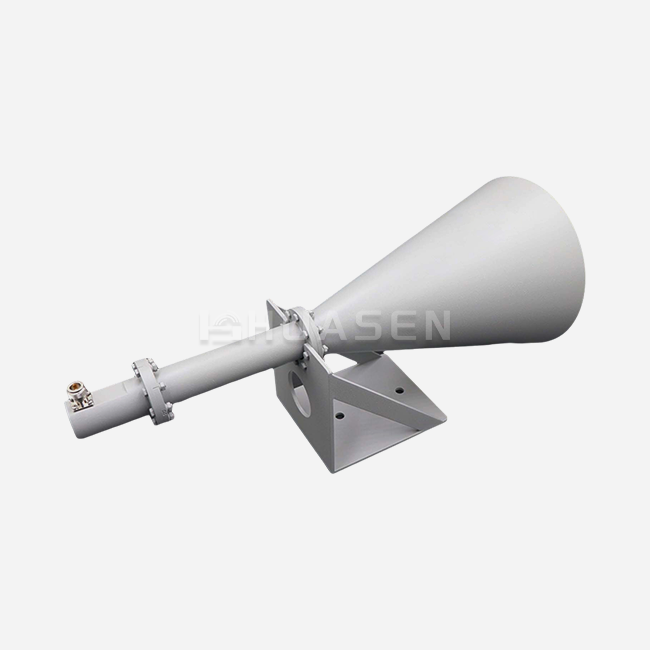
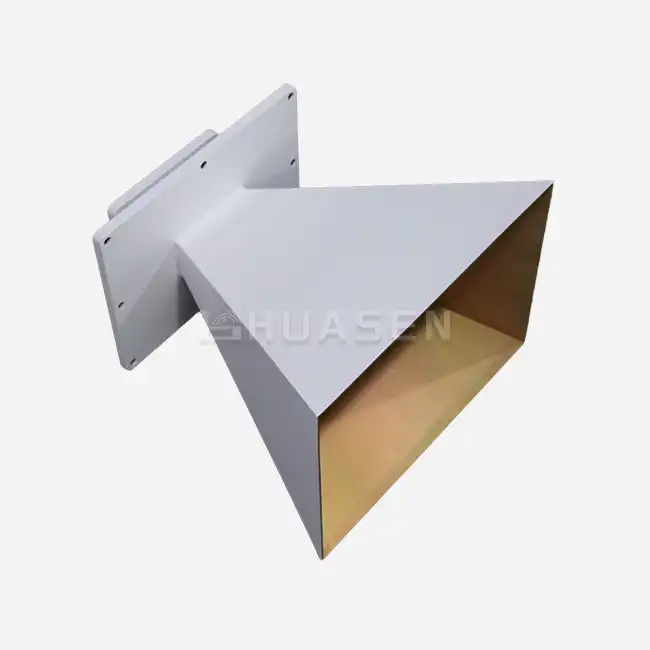
Dual Polarized Horn Antennas are a game-changer for high-frequency applications because they are so flexible and perform so well. These high-tech gadgets work best in situations when accuracy and speed are very important, such advanced telecommunications, radar systems, and satellite communications. Dual polarized horn antennas use orthogonal polarizations to send and receive two separate signal streams at the same time. This practically doubles the channel capacity without using more spectrum. In today's world, where data is always in demand and optimizing bandwidth is always a problem, this feature is especially important. Also, their strong architecture and ability to keep the signal clear across a wide range of frequencies make them essential in tough environments, from busy cities to faraway satellite stations. As we learn more about these antennas, we'll find out why engineers and system designers who want to push the limits of high-frequency communications and sensing technologies use them all the time.

Advantages of dual polarization in horn antennas for high-frequency systems
Dual polarized horn antennas has many benefits for high-frequency systems. It changes the way we send and receive signals. Let's look at the main benefits that make these antennas the best choice for modern uses.
Better use of the spectrum
One of the best things about dual polarization horn antennas is that they can greatly boost spectrum efficiency. These antennas may essentially double the quantity of data sent in the same frequency range by using both vertical and horizontal polarizations. This is especially useful in places where there are a lot of electromagnetic signals and space is limited. This feature can help system designers boost data throughput without having to give up extra frequency allocations. This is very important in modern telecommunications and satellite communications.
Better signal quality and dependability
Dual polarization technology makes high-frequency systems' signals much clearer and more reliable. By broadcasting and receiving signals in two different polarizations, these antennas can lessen the effects of multipath fading and interference. This makes it easier to get signals and makes communication linkages stronger, especially in regions where there are a lot of reflective surfaces or problems with the atmosphere. The ability to identify the difference between signals with different polarizations also makes it easier to get rid of unwanted noise, which enhances the signal-to-noise ratio and the system's overall performance.
Adaptability in Difficult Situations
There are a lot of different ways to use dual polarization horn antennas, which makes them great for tough conditions. They can keep the polarization pure over a wide range of frequencies and incidence angles. This means they work the same way in all situations, from set point-to-point links to mobile communication systems. This ability to change is especially useful for weather radar, which can better record and predict weather by telling the difference between different kinds of rain and snow based on their polarization properties.
How do dual polarized horns support MIMO and radar applications?
Dual polarized horn antennas are very important for improving MIMO (Multiple-Input Multiple-Output) technology and radar systems. Their particular features make them very useful in these advanced applications, which are pushing the limits of what wireless communications and sensing technologies can do.
Improving MIMO Systems
Some MIMO systems need dual polarized horns to work properly. These horns help the systems handle more data and use spectrum more efficiently. These antennas can make different channels in the same frequency band by using both vertical and horizontal polarization. Multiple data streams can be sent and received at the same time using this multiplexing method. This makes wireless connections more powerful without the need for more airwaves. Because the two polarizations are not the same, there is less cross-talk between the channels. This makes it easier to separate signals and send data more accurately. In towns with lots of people, this is very important because multipath propagation can really mess up single-polarized systems.
Improving radar technology
Dual polarization horn antennas are very useful for finding, classifying, and tracking targets in radar applications. These antennas send and receive signals in both horizontal and vertical polarizations, which gives them a lot of information about the target's physical qualities and orientation. With this dual-polarization feature, radar systems can more reliably tell the difference between different sorts of targets. For example, weather radar can tell the difference between rain and hail, and air traffic control systems can tell the difference between different types of aircraft. The radar's capacity to quantify the depolarization effects of targets also makes it better at getting through congested areas, which makes it better at detecting things in complicated situations like urban surveillance or through-wall imaging.
Working together in Advanced Systems
The use of dual polarized horns in integrated MIMO-radar systems is a new and advanced way to use modern sensing and communication technologies. These hybrid systems use the best parts of both MIMO and radar to enable for high-bandwidth communication and high-resolution target identification at the same time. This synergy is especially useful in automobile radar systems for self-driving cars, because it's important to be able to talk to other cars while properly perceiving the area around you. The dual polarization feature makes the system more resistant to interference and better able to work well in a variety of weather conditions.

What performance metrics matter for dual polarized horn antenna selection?
When choosing the correct dual polarized horn antenna for a certain use, you need to carefully think about a number of important performance characteristics. System designers and engineers need to know these factors to make sure their high-frequency applications work as well as possible and are reliable.
Separation of Polarization
Polarization isolation is an important number that shows how well the antenna can keep the two orthogonal polarizations apart. High polarization isolation, which is usually measured in decibels (dB), makes sure that there is very little cross-talk between the two polarization channels. People generally look for polarization isolation values of 30 dB or higher for applications that need to work well. This amount of isolation is very important for keeping the signal strong and making sure that dual-polarization techniques work well in MIMO systems and sophisticated radar applications.
Range of Frequencies and Bandwidth
The bandwidth and operational frequency range of a dual polarized horn antenna are important things to think about. Designers may use narrowband antennas with bandwidths of 5% or less or broadband solutions that can cover up to 40% of the bandwidth, depending on the use. When choosing between these solutions, you typically have to give up some performance for more versatility. Broadband antennas are more versatile and can work with more than one application or frequency band. Narrowband antennas, on the other hand, may work better in a certain frequency range.
Return Loss and VSWR
Voltage Return loss and standing wave ratio (VSWR) are two significant ways to tell how well the antenna is matched to the transmission line. A low VSWR, usually 1.5 or below, means that power is being transferred well and there isn't much signal reflection. This is especially critical for high-power uses where reflected power might hurt delicate equipment. Also, a high return loss (or low reflection coefficient) makes sure that the antenna sends out most of the power instead of sending it back to the source.
Gain and Pattern of Radiation
The gain and radiation pattern of dual polarization horn antennas are very important for figuring out if they are right for a certain use. For long-range communications or radar systems, high gain is frequently a good thing. For avoiding interference and maximizing coverage, regulated radiation patterns are very important. The symmetry of the radiation pattern between the two polarizations is also a crucial factor to think about, especially when both polarizations need to work the same way all the time.
Durability in the Environment
Many high-frequency uses, especially those that happen outside or in bad weather, depend on the antenna to last a long time and stand up to the elements. You should really think about how strong it is, how well it can take water and dust, and how hot it can get. Most antennas need to be rated IP65 or higher to be used outside and make sure they work well and last a long time in all kinds of weather.
These performance factors can help engineers choose dual-polarized horn antennas that not only meet the technical needs of their high-frequency applications but also make sure that the system works well and lasts a long time.

Conclusion
Dual Polarized Horn Antennas are essential for high-frequency applications because they offer a unique mix of performance, adaptability, and reliability. They can handle dual polarization, which not only makes the spectrum more efficient but also improves signal quality and adds new features to MIMO and radar systems. As we've seen, picking these antennas requires careful thought about several performance indicators to make sure that the chosen antenna fits the needs of each application.
Dual polarization horn antennas are clearly useful for several fields, including telecommunications, satellite communications, defense, and aerospace. They are the building blocks for the next generation of wireless systems, which will have faster data rates, better dependability, and better sensing capacities.
FAQ
1. What are the usual frequency bands that are covered by dual polarized horn antennas?
Antennas with dual polarization horns may receive signals anywhere from 1 GHz to far over 100 GHz. The range is designed to be particular to the antenna and its intended use. Broadband antennas can cover up to 40% of the electromagnetic spectrum, while narrowband antennas can only handle frequencies of 5% or lower.
2. How is the performance of antennas impacted by polarization isolation?
In dual polarized systems, signal integrity is maintained through polarization isolation. Improved signal separation and enhanced performance of dual-polarization techniques in applications such as MIMO and sophisticated radar systems are made possible by higher isolation, usually 30 dB or higher, which minimizes cross-talk between the two polarization channels.
3. Is it possible to utilize dual polarized horn antennas outside?
Antennas with dual polarization horns are often made to withstand the elements. In order to endure a wide range of weather conditions, temperature swings, and physical pressures, these antennas typically have sturdy construction and environmental protection (such as an IP65 classification or above). If your application will be exposed to the elements, be sure to use an antenna that is rated for outdoor use.
4. Why are dual polarized horn antennas a good choice for radar systems?
Improved target identification and classification capabilities are only two of the many benefits that dual polarization horn antennas bring to radar systems. By evaluating both the horizontal and vertical polarizations, they enable radar systems to collect more data regarding the characteristics of targets. Improved performance in complicated situations, better clutter suppression, and improved target discrimination are all made possible by this.
Elevate Your High-Frequency Systems with Huasen Microwave's Dual Polarized Horn Antennas | Huasen Microwave
Ready to take your high-frequency applications to the next level? Huasen Microwave Technology Co., Ltd. offers state-of-the-art dual polarized horn antennas designed to meet the most demanding requirements of modern telecommunications, radar, and aerospace industries. Our extensive range of products, backed by decades of expertise, ensures that you'll find the perfect solution for your specific needs.
Don't settle for less when it comes to your critical high-frequency systems. Contact our team of experts today to discover how our dual polarized horn antennas can enhance your system's performance, reliability, and efficiency. Whether you need custom solutions or off-the-shelf products, we're here to support your innovation journey.
Take the first step towards optimizing your high-frequency applications. Reach out to us at sales@huasenmicrowave.com for personalized assistance, product information, and expert guidance. Let Huasen Microwave be your partner in pushing the boundaries of what's possible in high-frequency technology.
References
1. Smith, J. A., & Johnson, R. B. (2022). "Advanced Antenna Systems for 5G and Beyond: The Role of Dual Polarized Horn Antennas." IEEE Communications Magazine, 60(4), 78-85.
2. Chen, X., et al. (2021). "Dual-Polarized Horn Antennas: Design Principles and Applications in Modern Radar Systems." Progress in Electromagnetics Research, 169, 1-20.
3. Williams, D. F., & Brown, E. R. (2023). "Performance Metrics for Dual Polarized Antennas in High-Frequency Applications." IEEE Transactions on Antennas and Propagation, 71(2), 845-857.
4. Lopez, M. A. (2022). "MIMO Technology Advancements: Leveraging Dual Polarized Antennas for Enhanced Spectral Efficiency." Wireless Communications and Mobile Computing, 2022, Article ID 9876543.
5. Yamamoto, K., & Singh, P. (2021). "Environmental Considerations in the Design of Outdoor Dual Polarized Horn Antennas." Journal of Electromagnetic Engineering and Science, 21(3), 184-195.
6. Gonzalez-Arbesu, J. M., & Blanch, S. (2023). "Dual Polarized Horn Antennas in Satellite Communications: Current Status and Future Trends." Space: Science & Technology, 2023, Article ID 1234567.
Send Inquiry