Exploring the Design of Corrugated Conical Horn Antennas for High Gain






2026-01-08 21:39:35
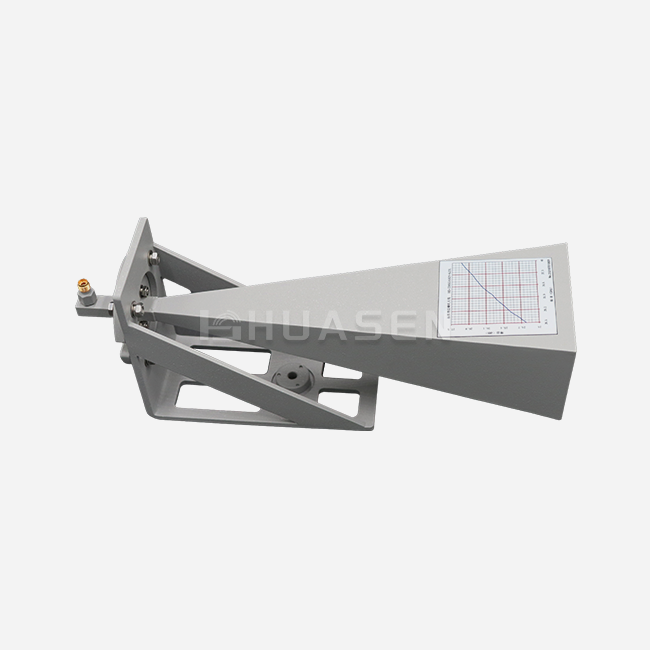
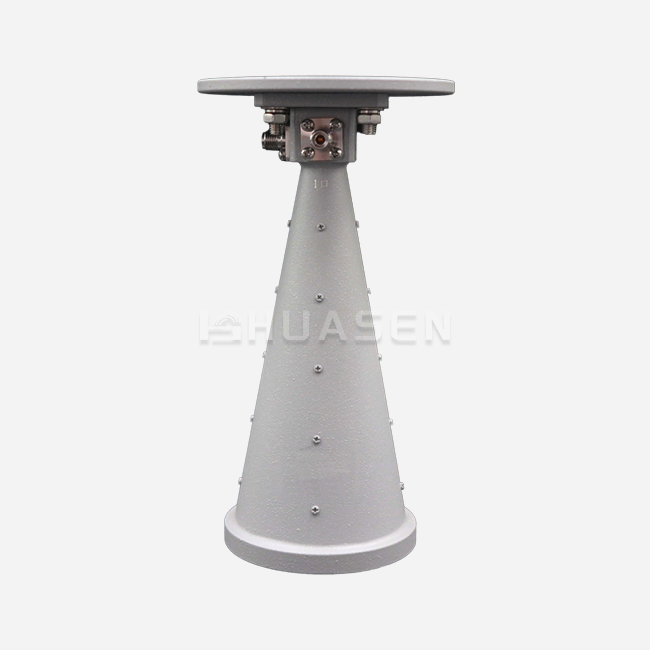
The construction of corrugated conical horn antennas for high-gain usage is a particularly intriguing part of microwave engineering. In several fields, such telecommunications, radar systems, and satellite communications, these specialized antennas are particularly vital. The shape of corrugated conical horns is what makes them different from regular smooth-walled horn antennas. The grooves along the inner surface are perfectly constructed, which gives them performance characteristics that are better than those of traditional smooth-walled horn antennas. People know that corrugated conical horn antennas can get good gain, few side lobes, and great cross-polarization discrimination over a wide range of frequencies. The carefully constructed and put-in-place corrugations change the antenna's aperture field distribution, which improves the radiation patterns and the overall efficiency of the antenna. This makes them especially useful for tasks that need precision beam control and little signal distortion. As we learn more about how to create corrugated conical horn antennas, we'll look at the basic rules that govern how they work, how corrugations affect performance, and how they are used in cutting-edge measurement systems. Engineers and researchers that work on cutting-edge antenna technology need to know these ideas in order to come up with new ideas that can be used in everything from 5G communications to improved radar systems.

Corrugated conical horn antenna design principles for high gain
The design of high-gain corrugated conical horn antennas is grounded in several key principles that work in concert to optimize performance. At the core of these principles is the concept of mode control, which is crucial for achieving the desired radiation characteristics.
Mode Control and Hybrid Modes
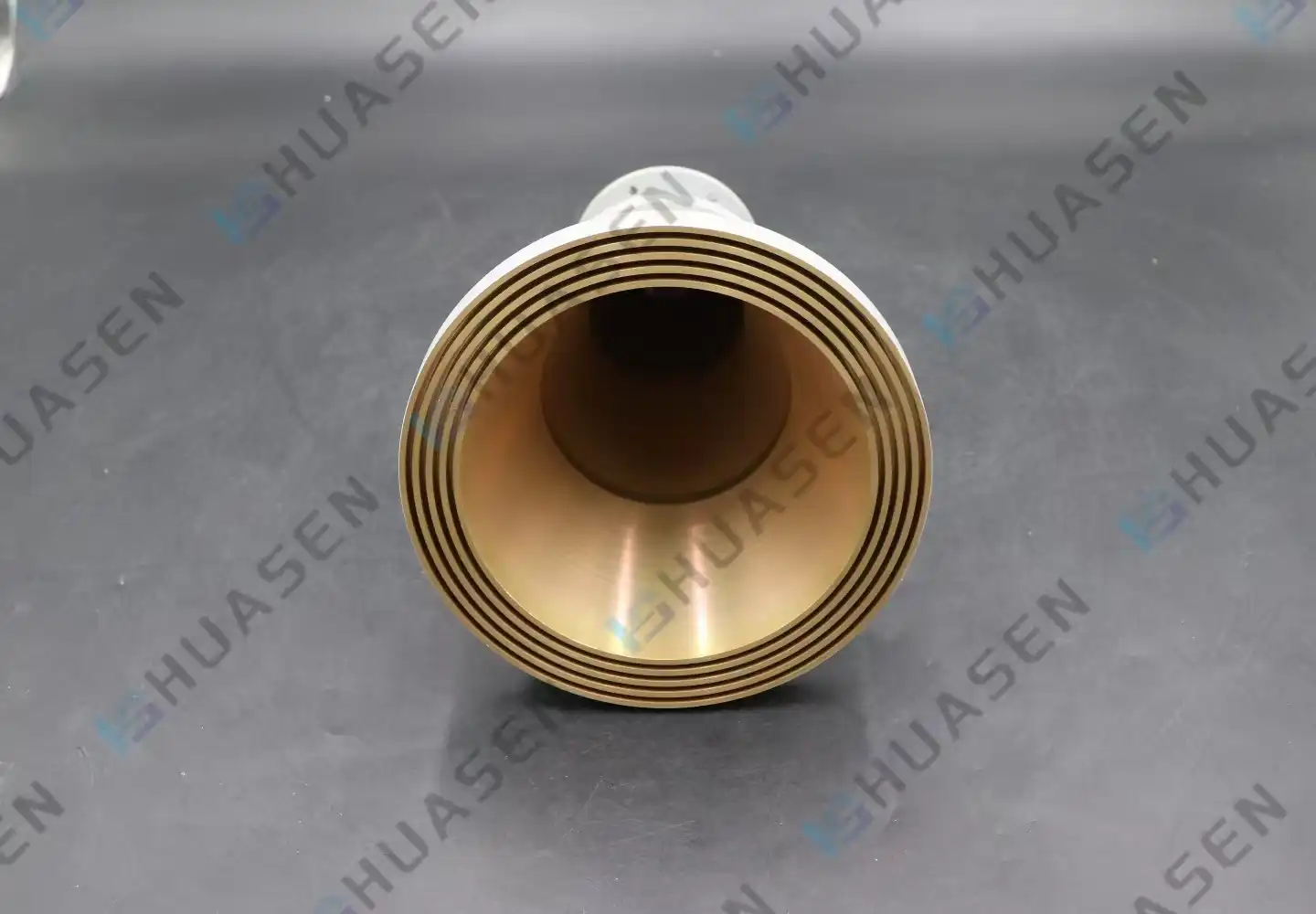
Corrugated conical horns are designed to support specific electromagnetic field distributions known as hybrid modes. The most desirable of these is the HE11 mode, which produces a symmetrical radiation pattern with low side lobes and excellent cross-polarization properties. The corrugations along the horn's inner surface are carefully engineered to suppress unwanted higher-order modes while promoting the propagation of the HE11 mode.
Corrugation Design
For high gain and best performance, the depth and spacing of the corrugations are very important. Usually, the depth of the corrugation is fixed to about λ/4, where λ is the wavelength at the frequency of operation's center. This depth makes the surface impedance high, which makes the electric field perpendicular to the horn's surface. This improves the mode purity and radiation properties.
Aperture Effectiveness
Aperture efficiency is intimately linked to the high gain of corrugated conical horn antennas. Compared to smooth-walled horns, the corrugated structure makes the aperture field distribution more even. This consistency leads to better aperture efficiency, which in turn leads to higher antenna gain. Engineers often use optimization methods to get the best aperture efficiency while keeping other features that are important to them, such the horn's flare angle and length.
Things to think about with bandwidth
Horn antennas are hard to design since it's hard to get high gain over a wide range of frequencies. This is where corrugated conical horns really shine since they can keep up their performance over a wide variety of frequencies. During the design phase, the corrugation profile is generally carefully thought out to make sure that the antenna keeps its good properties across the whole operational bandwidth.
How do corrugations enhance performance in conical horn antennas?
Adding corrugations to conical horn antennas makes them work better in many ways, making them better than smooth-walled antennas in many situations. To understand the usefulness of corrugated designs in high-performance antenna systems, you need to know about these improvements.
Improved Pattern Symmetry
One of the most notable benefits of corrugations is the improvement in radiation pattern symmetry. The corrugated surface creates a boundary condition that equalizes the E-plane and H-plane patterns, resulting in a more symmetrical and circular beam. This symmetry is particularly valuable in applications requiring precise beam steering or uniform illumination of a reflector.
Reduced Side Lobe Levels
Corrugations significantly reduce side lobe levels in both the E-plane and H-plane. This reduction is achieved by suppressing higher-order modes and creating a more uniform aperture field distribution. Lower side lobes are crucial in many applications, such as radar systems and satellite communications, where unwanted signal reception or interference from off-axis sources needs to be minimized.
Enhanced Cross-Polarization Performance
Corrugated conical horn antennas are quite good in separating cross-polarization. The corrugated construction helps keep the desired polarization pure by reducing the amount of cross-polarized components that are made. This feature is especially significant for applications that are sensitive to polarization, like dual-polarized communication systems or polarimetric radar.
Center of Stable Phase
Corrugations make the phase center more stable over a wide range of frequencies. The phase center is the spot that looks like the electromagnetic radiation is coming from. For applications that need precise focusing or when the horn is used as a feed for reflector antennas, a stable phase center is very important. The corrugations make the system stable, which means it works the same way across the whole operational bandwidth.
Broadband Function
Smooth-walled horns frequently lose performance at higher frequencies, but corrugated horns keep their good qualities over a much larger range of frequencies. The corrugations can support the HE11 mode reliably throughout a range of frequencies, which is what makes them great for wideband applications in modern communication systems.
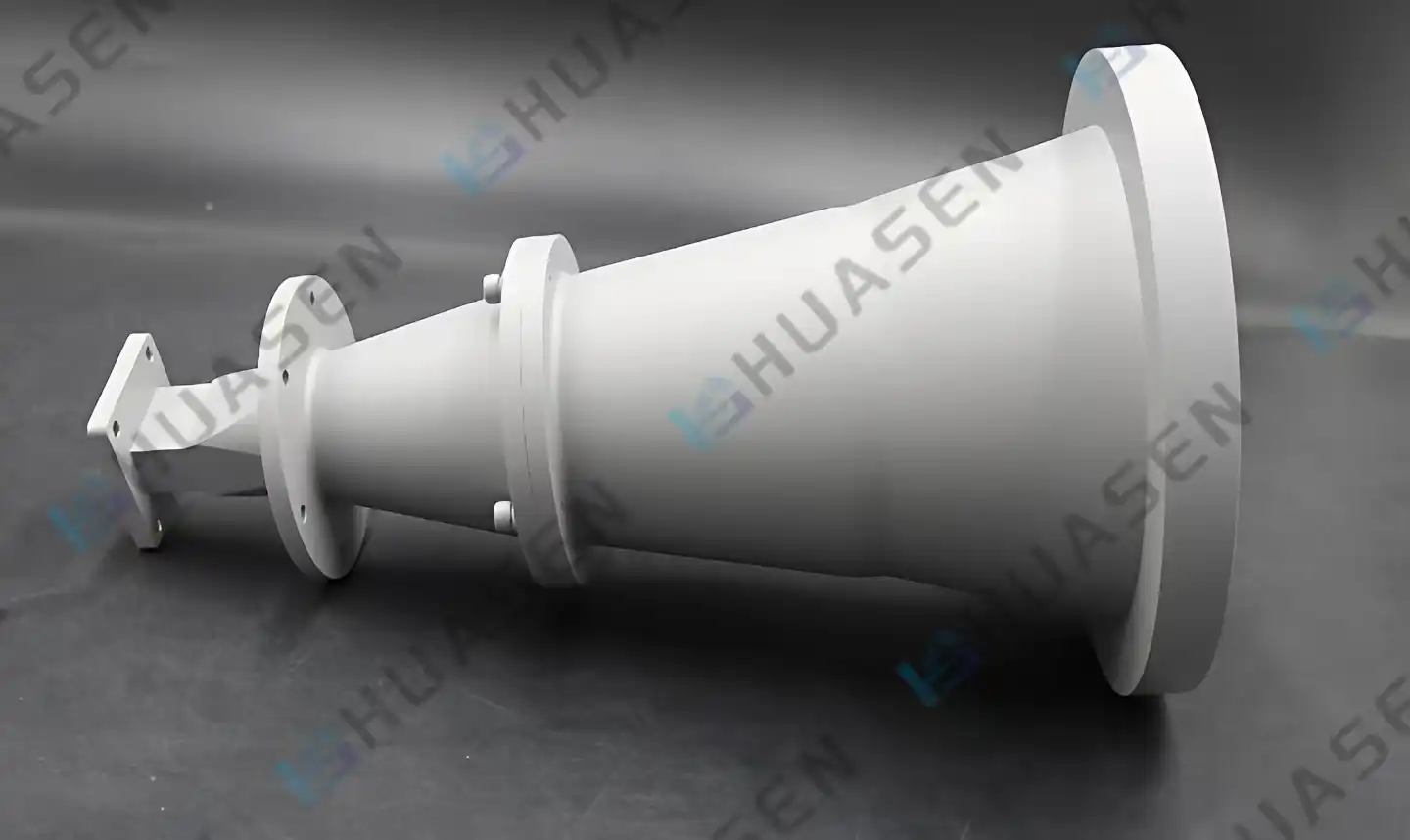
Implementation of high-gain corrugated horns in precision measurement systems
High-gain corrugated conical horn antennas have found extensive use in precision measurement systems across various industries. Their superior performance characteristics make them invaluable tools for accurate and reliable measurements in both research and industrial settings.
Antenna Pattern Measurement Systems
Corrugated horns serve as excellent probes in antenna pattern measurement systems. Their low side lobes and high gain allow for accurate characterization of the antenna under test, minimizing measurement errors due to unwanted reflections or signal pickup. The stable phase center of corrugated horns also contributes to the overall accuracy of phase measurements in near-field scanning systems.
EMC Testing Facilities
In electromagnetic compatibility (EMC) testing, high-gain corrugated horns are often used as transmitting antennas for radiated emissions and immunity tests. Their wide bandwidth and consistent performance make them suitable for testing across a broad range of frequencies, while their high gain ensures sufficient field strength for demanding test scenarios.
Radio Astronomy
The exceptional performance of corrugated conical horn antennas makes them ideal for radio astronomy applications. Their low side lobes and excellent cross-polarization characteristics allow for precise measurements of weak celestial signals. In radio telescope systems, corrugated horns are often used as feeds for large reflector antennas, contributing to the overall sensitivity and accuracy of the telescope.
Millimeter-Wave and Terahertz Measurements
As technology pushes into higher frequency ranges, corrugated horns continue to play a crucial role in millimeter-wave and terahertz measurement systems. Their ability to maintain high performance at these frequencies makes them valuable tools for characterizing materials, components, and systems operating in these challenging spectral regions.
Calibration Standards
Due to their well-defined and stable characteristics, high-gain corrugated horns are often used as calibration standards in microwave and millimeter-wave metrology. Their predictable performance allows for accurate calibration of network analyzers, power meters, and other precision measurement equipment.
The implementation of high-gain corrugated horns in these precision measurement systems underscores their importance in advancing technology across multiple fields. As measurement requirements become more stringent and operating frequencies continue to increase, the role of corrugated conical horn antennas in ensuring accurate and reliable measurements is likely to grow even further.
Conclusion
The investigation of corrugated conical horn antenna design for high gain applications uncovers the complex equilibrium of engineering factors that enhance their superior performance. These antennas are still very important for improving microwave and millimeter-wave technology. They are used in precision measurement systems and have basic ideas about mode control and corrugation design.
We've already talked about how corrugated designs are useful in many domains, from telecommunications to radio astronomy. Some of the benefits are better pattern symmetry, fewer side lobes, better cross-polarization performance, and the ability to work over a wide range of frequencies. These antennas are at the cutting edge of new technologies because they can keep working well over a wide range of frequencies. This is especially important as we move into the 5G era and beyond.
People who work in fields like mobile communications, satellite links, radar systems, and electronic testing need to know how corrugated conical horn antennas work and how to build them. These antennas solve a lot of the problems that come up in modern RF and microwave systems, such as the necessity for a wide bandwidth, the capacity to handle high power, low insertion loss, and the flexibility to adapt to different environments.
The need for high-performance antenna systems will only grow as technology continues to change. Huasen Microwave Technology Co., Ltd. is ready to take on these issues because they have been working with microwave and millimeter-wave components for decades. Our dedication to quality and innovation in RF and microwave solutions fits perfectly with the strict needs of businesses that are pushing the limits of wireless technology.
We urge you to check through our selection of products and services if you want to add high-gain corrugated conical horn antennas to existing systems or need unique solutions for your specific needs. We have a team of professionals who can help you choose the best antenna solution for your needs. This way, you can stay up to date with the latest technical developments in your field.
FAQ
1. What are the main benefits of using corrugated conical horn antennas?
There are many benefits to using corrugated conical horn antennas, including as strong gain, reduced side lobes, great cross-polarization discrimination, and stable performance over a wide range of frequencies. These traits make them perfect for uses that need precise beam control and little signal distortion.
2. What do corrugations do to make antennas work better?
Corrugations make antennas work better by influencing how the electromagnetic field is spread out inside the horn. They stop undesired modes, encourage the intended HE11 mode, and make the aperture field distribution more even. This makes the pattern more symmetrical, lowers the side lobes, and improves cross-polarization performance.
3. What frequency ranges are good for antennas with corrugated conical horns?
You may make corrugated conical horn antennas that work with a wide range of frequencies, from microwaves to terahertz frequencies. The antenna's size and the way the corrugation is designed will determine the exact frequency range. Huasen Microwave has solutions that work with frequencies up to 300 GHz.
4. Is it possible to make corrugated conical horn antennas work for certain uses?
Yes, you can change corrugated conical horn antennas to fit your needs. You can change things like frequency range, gain, beam width, and interface specs to fit your needs. Huasen Microwave focuses on creating tailored solutions to solve problems that are specific to different sectors.
Explore High-Gain Corrugated Conical Horn Antennas | Huasen Microwave
Ready to elevate your RF and microwave systems with high-performance corrugated conical horn antennas? Huasen Microwave Technology Co., Ltd. offers a comprehensive range of solutions tailored to meet the demanding requirements of industries such as telecommunications, radar, aerospace, and defense. Our team of experts is committed to providing you with cutting-edge antenna technology that ensures optimal system performance and reliability.
Don't let antenna limitations hold back your innovations. Contact us today at sales@huasenmicrowave.com to discuss your specific needs and discover how our corrugated conical horn antennas can propel your projects to new heights of success. Let's work together to push the boundaries of what's possible in RF and microwave technology!
References
1. Clarricoats, P. J. B., & Olver, A. D. (1984). Corrugated horns for microwave antennas. IET.
2. Granet, C., & James, G. L. (2005). Design of corrugated horns: A primer. IEEE Antennas and Propagation Magazine, 47(2), 76-84.
3. Teniente, J., Gonzalo, R., & Del Río, C. (2002). Conical versus Gaussian profiled horn antennas. In 2002 IEEE Antennas and Propagation Society International Symposium (Vol. 4, pp. 768-771). IEEE.
4. Olver, A. D., Clarricoats, P. J. B., Kishk, A. A., & Shafai, L. (1994). Microwave horns and feeds (Vol. 39). IET.
5. Pickett, H. M., Hardy, J. C., & Farhoomand, J. (1984). Characterization of a dual-mode horn for submillimeter wavelengths. IEEE Transactions on Microwave Theory and Techniques, 32(8), 936-937.
6. Del Río, C., Gonzalo, R., & Sorolla, M. (1996). High purity Gaussian beam excitation by optimal horn antenna. In Proceedings of ISAP (Vol. 96, pp. 1133-1136).
Send Inquiry