Why Is a Power Amplifier Critical in Communication Systems?






2026-07-01 23:33:16
A Power Amplifier is an important part of modern communication systems because it raises weak signals to levels that allow them to be sent over long distances without damaging the data. These gadgets take low-power radio frequency (RF) signals from transmitters and boost them to the right output levels. This lets antennas send out strong electromagnetic waves over cellphone networks, satellite links, radar systems, and television channels. Base stations would have trouble keeping up with coverage without reliable amplification, satellite ground stations would not be able to talk to orbiting assets, and military radar systems would not be able to find targets far away. Power Amplifiers are essential for achieving operational range, signal clarity, and system reliability across a wide range of communication platforms.
Understanding Power Amplifiers in Communication Systems
Low-level electrical signals are transformed into high-power outputs by Power Amplifiers, which can travel long distances or get through tough conditions. RF uses usually use GaN (Gallium Nitride) or GaAs (Gallium Arsenide) semiconductors in their transistor-based circuits, which change DC power sources into amplified versions of the waveforms that come in.
Operating Principles and Amplifier Classes
Based on the needs of the application, different amplifier types combine economy, linearity, and thermal performance. Class A amplifiers operate constantly, providing excellent linearity while releasing a lot of heat. This makes them suitable for low-power uses where distortion needs to be kept to a minimum. Class AB designs make some sacrifices in linearity in order to be more efficient. They do this by setting up transistors in push-pull setups, which lower standby current while still keeping signal quality good enough for cellular base stations. Class C amplifiers work best when they handle less than half of the signal cycle. This makes them perfect for FM broadcasts, where distortion tolerance is higher. Pulse-width modulation is used in modern Class D switching amplifiers to get efficiencies of more than 90%. However, switching noise limits their use in high-frequency communications.
Solid-State Versus Tube Technologies
Solid-state amplifiers are the most common type of system today because they have a small size, last a long time, and don't get damaged by vibrations, all of which are important for mobile base stations and flying platforms. When compared to their vacuum tube predecessors, which needed regular cathode replacements and high-voltage power sources, these devices don't need nearly as much upkeep. But old tube amplifiers are still used in high-power broadcast emitters because they can handle voltage spikes and give linear performance at kilowatt levels. This is why they are so complicated to operate. When deciding between these technologies, system integrators have to think about how reliable they need to be and how much power they need to output.
Impact of Frequency Response and Noise Figure
How well an amplifier handles sounds across its working bandwidth is shown by its frequency response. Communication systems that use more than one frequency band, like 5G networks that use both sub-6 GHz and millimetre-wave spectrums at the same time, need amplifiers with flat gain to keep the signal from getting distorted. Noise figure tells you how much an amplifier lowers the signal-to-noise ratio while it's working. In satellite uplinks, where every decibel counts, lower noise numbers keep weak signals alive. To avoid expensive performance gaps, procurement teams should make sure that these specs match up with link budget estimates.
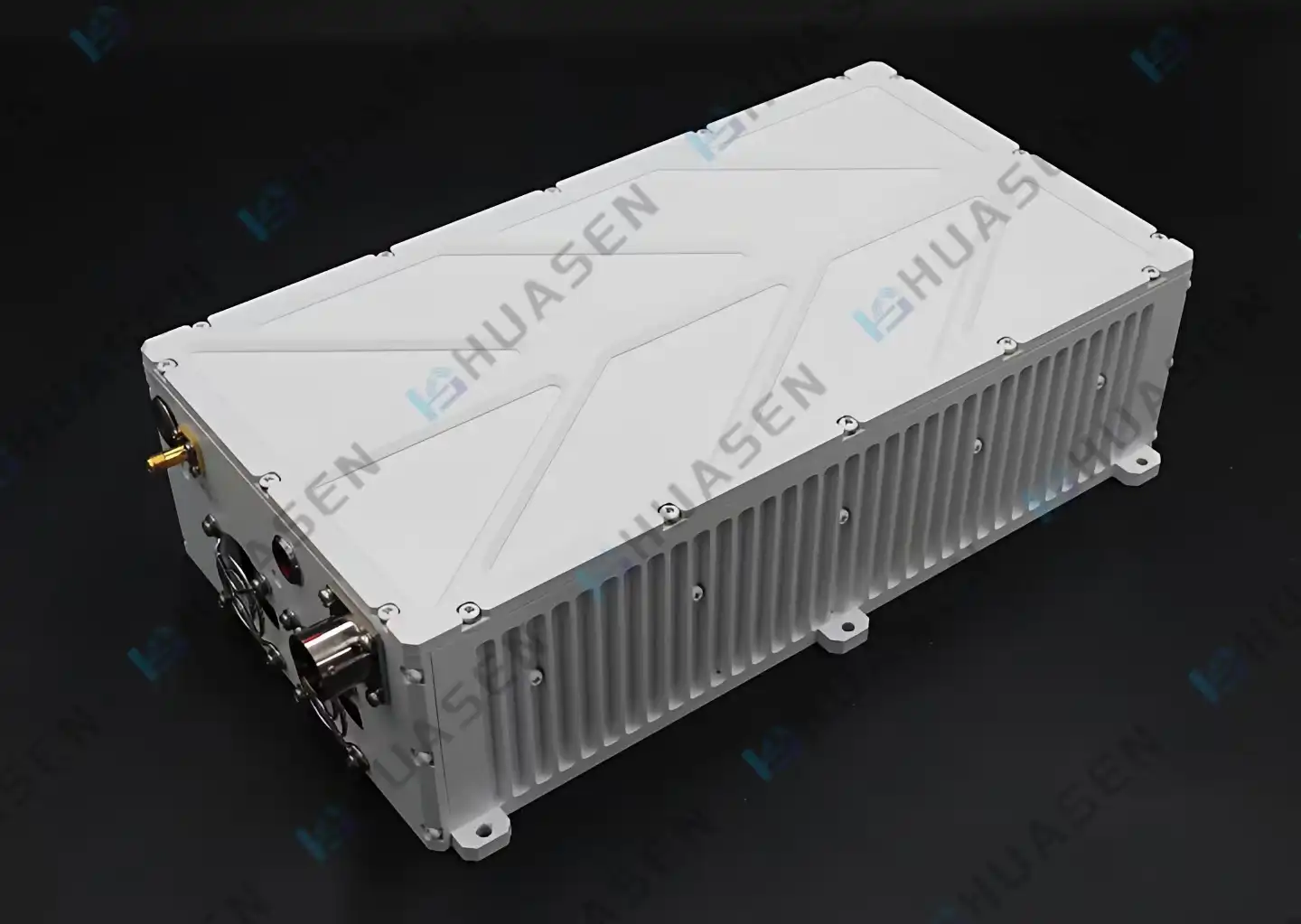
Why Power Amplifiers Are Essential in Communication Systems
The function of amplifiers is directly related to how well wireless connectivity works. These parts are what base stations use to send messages across covering cells and make up for the path loss that happens when electromagnetic waves travel over long distances. High-Power Amplifiers are used by satellite ground stations to make up for the huge amount of free-space loss that happens when signals move over 35,000 kilometres during geostationary communications.
Maintaining Signal Integrity and Extending Coverage
Amplifiers need to make signals stronger without adding nonlinear distortion that messes up modified data. Third-order intermodulation products, which are unwanted frequencies that are made when multiple carriers pass through nonlinear stages, can mess up channels next to them, which is against the rules for emission masks. Careful bias control and feedback systems in high-quality RF amplifiers keep linearity, which makes sure that transmitted waves accurately copy input signals. This accuracy is very important in crowded cities where base stations handle dozens of links from users at the same time, and each one needs clear spectral separation.
Coverage depends on getting enough Effective Isotropic Radiated Power (EIRP), which can be found by multiplying the output of the amplifier by the gain of the antenna. Maritime communication systems are a good example of this idea. For ship-to-shore radios to stay connected beyond sight range, they need amplifiers that give 25 to 100 watts of power. In the same way, radar systems send pulses of kilowatts through antennas to find planes hundreds of miles away. The detecting range is directly related to the amplifier's top power.
Adaptability Across Diverse Technologies
There are many types of protocols used in modern communication networks, such as LTE, 5G NR, Wi-Fi 6E, and private links. Each one needs its own frequency bands and power levels. Multi-standard base stations can serve both older and newer users without having to swap out hardware because they have wideband boosters that cover 0.7 to 6 GHz. Adaptability also includes weather conditions. Ruggedized amps can work in temperatures ranging from -40°C to +85°C, which is important for military bases in the desert or research stations in the Arctic where regular electronics fail.
Distinguishing RF Power Amplifiers from Audio Amplifiers
Even though both audio and RF amplifiers boost data, they work in very different ways. With impedance-matched speaker loads, audio devices can handle frequencies up to 20 kHz and focus on harmonic distortion measures that humans can hear. RF amplifiers control frequencies from megahertz to gigahertz and work with antenna impedances (usually 50 ohms) while keeping phase uniformity to protect digital modulation methods like OFDM and QAM. Audio amps don't have the bandwidth, impedance matching, or shielding that are needed for wireless transmission, so procurement teams have to define RF-grade devices for communication uses.
Evaluating Power Amplifiers for Procurement in B2B Communication Projects
Technical specs, price, and supply chain issues all need to be taken into account when choosing amps. To make sure that the device meets the needs of the system, engineers have to make sure that it will work well in the long run and that the seller will support it. Power Amplifiers remain the primary focus for technical and commercial evaluation during this process.
Key Technical and Commercial Criteria
Power output, measured in watts or decibels, is still the most important standard. It must be higher than the link budget needs, leaving enough room for degradation due to age and environmental factors. Operating costs and the difficulty of thermal management are directly affected by efficiency. For example, a base station amplifier that uses 1 kilowatt of power and is only 40% efficient loses 600 watts of heat, which means it needs expensive cooling systems. In transmitter applications, where the same device switches between send and receive modes, noise figure changes how sensitive the receiver is. Connector standards (N-type, SMA, 2.92mm), power sources (24V DC, 48V DC), and control interfaces (analogue, Ethernet, SNMP) are all included in compatibility.
Mean Time Between Failures (MTBF) (rf power amplifier) is a reliability measure that is often given in terms of hundreds of thousands of hours for mission-critical systems. As required by MIL-STD-810 or a similar standard, vendors should provide accelerated life testing data that shows how well their products work when exposed to temperature changes, humidity, and voltage fluctuations.
Comparing Amplifier Classes and Technologies
Cellular infrastructure is mostly made up of Class AB solid-state amplifiers, which balance 50–65% efficiency with enough uniformity for complex modulation forms. Their ability to predict their temperature makes cooling systems easier, and advances in semiconductors keep making the power economy better. Class C designs work well for narrowband tasks like FM transmission, where higher distortion is balanced by 70–85% efficiency. Class D switching designs are used in some software-defined radios, but they can't be used in standard RF chains because of strict emission rules.
Communication system designers give RF experts the most weight when looking at makers other than well-known audio names like Yamaha and Crown. GaN-on-SiC transistor companies offer better power density and bandwidth than older LDMOS designs. This is important for 5G huge MIMO arrays, where tower room is limited, and hundreds of amplifiers need to fit.
Sourcing Strategies and Vendor Selection
When normal catalogue goods don't work with system architectures, direct communication with makers can help with customization options like frequency tuning, mounting bracket changes, or built-in filtering. Distributors make it easier to get a lot of different brands, speed up the development process, and combine operations. Managers in charge of buying things should make sure that sellers keep their ISO 9001 certification, offer calibration tracking according to ISO/IEC 17025 standards, and agree to multi-year price deals that keep the total cost of ownership stable.
How to Choose the Right Power Amplifier for Your Communication System
To match amplifiers to uses, you need to carefully look at how they will be used, any technology limitations, and the need for future expansion. A thorough selection process lowers the chances of performance gaps or becoming obsolete too soon. Selecting the right Power Amplifier requires a systematic analysis of operational scenarios and technical constraints.
Segmenting Requirements by Application
Professional radio networks that work with public safety agencies need ruggedized amplifiers that can turn on instantly and can handle voltage spikes from car electrical systems. Satellite ground ports prefer very linear amplifiers that won't cause spectral regrowth, which is against ITU rules and can mess up orbital slots next to it. Low-power, high-efficiency designs help industrial IoT hubs work better in solar-powered rural locations by reducing battery drain. Size, power use, and environmental tolerance are limited in different ways by each situation.
Critical Specifications and Performance Parameters
Gain tells you how much an amplifier boosts the sounds that go into it. In communication uses, gain is usually between 30 and 60 dB. Uneven amplification that messes up wideband signals can't happen when the gain is flat across the working band. All channels in the system design must be covered by the frequency response. For example, a 5G base station that covers the n77 and n78 bands needs constant amplification from 3.3 to 3.8 GHz. Spectral purity is measured by linearity measures like the Adjacent Channel Power Ratio (ACPR). Cellular systems have tighter limits (-45 dBc typical) than point-to-point microwave links.
Impedance matching makes sure that the amplifier outputs and antenna inputs send as much power as possible. Mismatches make standing waves that send power back into amps, which makes them boil and work less efficiently. The specs should make sure that the VSWR stays below 1.5:1 across all operating frequencies. The temperature design has to take the environment into account. For example, outdoor amps on towers get heated by the sun and lose heat internally, so they need heat sinks or forced-air cooling that is rated for the worst-case situation.
Ensuring Long-Term Reliability and System Integration
Components must work well with the system that is already in place. The RF Coaxial Adapters from Huasen Microwave make this easier by converting between connector types like N-type, SMA, and 2.92mm. This lets amplifiers and old cables join without signal degradation. These adapters cover a wide range of frequencies with low insertion loss and very little VSWR, so the signal stays the same as the interface changes. This kind of compatibility makes installation easier and lets you change parts of the system without having to update the whole thing.
Adding amplifier units to meet rising traffic needs is a more cost-effective way to increase capacity than rebuilding whole systems. Future-proofing also includes software-defined features. For example, amplifiers with digitally adjustable gain and online tracking through SNMP allow adaptive power control that improves coverage while reducing interference. This is important as networks move toward smart, self-organizing designs.
Best Practices and Common Pitfalls in Deploying Power Amplifiers
When you install and set up an amplifier correctly (RF power amplifier), it lasts longer and works better. But when you make common mistakes, it breaks down early or doesn't work as well as it should. Rework that costs a lot of money can be avoided by learning from release mistakes. Proper configuration of the Power Amplifier is essential for maintaining system integrity.
Instructions for Setting Up and Installing
Amplifiers need to have enough air flow—minimum gaps around heat sinks keep heat from building up and speeding up the breakdown of semiconductors. Mounting orientations should be done the way the maker tells you to; setups that are upside down may trap heat or damage connector seals. Power source lines need to be able to handle high current loads without voltage drops. This usually means using special feeders with the right gauge cable. Single-point grounds should be used for grounding so that ground loops don't form and cause noise or lightning surges.
Calibration during placement checks the correctness and cleanliness of the output power. Technicians should use spectrum analyzers to measure ACPR to make sure that amplifiers meet emission standards when they are actually loaded. By keeping track of standard performance, you can look at trends. For example, slow loss of gain indicates that a component is about to fail, which lets you do preventative maintenance before an outage happens.
How to Avoid Technical Mistakes
When gain estimates are done wrong, there is either not enough coverage or too much power, which is against the rules. When engineers make link budgets, they have to take into account antenna gains, connection losses, and wire losses. Receivers lose their sensitivity when noise factors are underestimated, and range performance is poor when amplifiers are cascaded without taking the total noise figure into account. When amplifiers and filters don't have the same frequency response, passband ripple happens and messes up modulated signals. This is especially true in systems with more than one carrier, where changes in group delay can mess up phase relationships.
Load mismatches can happen when amplifiers don't have enough security. If an antenna disconnects or gets damaged, it creates high VSWR conditions that reflect power back into the output stages, which could kill transistors within milliseconds. Good amplifiers have features that shut them down automatically when they reach certain temperatures or levels of reflected power. This protects investments when something goes wrong.
Lessons from Real-World Deployments
A regional phone company setting up 5G infrastructure first chose amps based only on their peak power specs, ignoring their thermal reserves. Temperatures in the summer caused frequent thermal shutdowns that hurt service quality until operators installed better cooling systems after the fact. This cost could have been avoided if thermal modelling had been used during the initial purchase process. On the other hand, a marine operator that worked with responsive providers got custom-tuned amplifiers that worked best with their narrow-band VHF channels. This led to 20% better efficiency, which increased the battery life of autonomous buoys.
These cases show how important it is to carefully review specifications and work together with vendors. Integrity problems can be found early on by testing amplifiers in real-world settings before they are widely used. Keeping in touch with technically skilled sellers gives you access to application engineering help that generic dealers can't provide.
Conclusion
In conclusion, Power Amplifiers continue to be essential to the success of communication systems because they directly affect coverage range, signal quality, and network stability. Procurement and engineering teams can build strong systems by understanding amplifier classes, making sure technology specs are in line with application needs, and using best deployment practices. It's becoming more and more important to choose amplifiers that balance efficiency, linearity, and environmental protection as 5G networks get denser and satellite systems grow. Organizations can meet changing communication challenges while keeping the total cost of ownership low and ensuring long-term operational success across a wide range of deployment scenarios by working with experienced manufacturers who offer customization, proven reliability, and full technical support.
FAQ
1. What distinguishes power amplifiers from preamplifiers in communication systems?
Preamplifiers raise weak signals from antennas—usually just a few microvolts—to levels that receivers can process. They do this by prioritizing low noise levels to keep signal-to-noise ratios high. Power Amplifiers work at the transmission stages, converting milliwatt-level data from exciters to the watts or kilowatts required for antenna radiation. Preamplifiers can handle microwatts with little noise added, but Power Amplifiers can handle high currents and heat loads and are designed to maximize output power rather than sensitivity.
2. How does noise figure affect overall communication quality?
Noise figure tells you how much an amplifier lowers the signal-to-noise ratio while it's working. If the noise number is 3 dB, it means that the amplifier adds noise that is equal to halving the quality of the original signal. In receive chains, too much noise makes it harder to pick up weak signals. For example, satellite systems that don't handle front-end noise well can't lock on to transponders that are far away. Transmit amplifiers also add noise by amplifying heat emissions, which could affect channels next to them. Keeping noise levels low along signal routes protects link margins, which lets people communicate over longer distances or in difficult propagation circumstances.
3. What considerations apply when selecting amplifiers for multi-band radio systems?
For multi-band uses, wideband amplifiers with flat gain across all operating frequencies are needed to keep the power from being spread out unevenly across the channels. Intermodulation performance is very important because nonlinearities create unwanted mixing products when several bands pass at the same time, which could mess up receive frequencies. Thermal control needs to take into account how much power is lost from using multiple bands at the same time. Broadband antennas and matched networks must be compatible for power to be transferred efficiently across frequency bands. Because propagation characteristics change a lot between VHF and microwave frequencies, a careful link budget study for each band shows that the margins are enough.
Partner with Huasen Microwave for Reliable Communication Solutions
To get better performance from your communication system, you need to do more than just pick amplifiers from datasheets. You need to work with makers who understand your operational problems and can offer tried-and-true answers. Huasen Microwave Technology Co., Ltd. has been working with RF and microwaves for more than 30 years and helps research institutions, system developers, and equipment makers all over the world. Our wide range of products includes high-frequency parts made for tough conditions, like 5G base stations and aircraft radar platforms.
In addition to our Power Amplifier options, our RF Coaxial Adapters support N-type, SMA, and 2.92mm connection conversions with wide frequency coverage and low insertion loss. This makes sure that systems work smoothly together by keeping signals intact across complex infrastructures. Whether you're looking for trusted parts from a well-known Power Amplifier provider or need custom solutions for unique uses, our engineering team can help you with your needs, taking into account things like bandwidth, temperature, and certification. Get in touch with sales@huasenmicrowave.com to talk about the details of your project and get personalized quotes. Our quotes are backed by strict quality control, compliance with international standards, and quick technical support that turns buying problems into competitive advantages.
References
1. Cripps, S. C. (2006). RF Power Amplifiers for Wireless Communications (2nd ed.). Artech House.
2. Kenington, P. B. (2000). High-Linearity RF Amplifier Design. Artech House Publishers.
3. Razavi, B. (2012). RF Microelectronics (2nd ed.). Prentice Hall.
4. Grebennikov, A., Sokal, N. O., & Franco, M. J. (2012). Switchmode RF and Microwave Power Amplifiers. Academic Press.
5. Pozar, D. M. (2011). Microwave Engineering (4th ed.). Wiley.
6. Colantonio, P., Giannini, F., & Limiti, E. (2009). High Efficiency RF and Microwave Solid State Power Amplifiers. Wiley.
Send Inquiry