
What Factors Influence Antenna Mounting Stability?






2026-07-01 23:33:20
Signal quality, system uptime, and long-term running costs are all directly impacted by Antenna Mounting stability in telecommunications, radar, and satellite communications. There are many interconnected factors that affect how well a mounting works: the material's strength and resistance to corrosion make it last in harsh environments; the structure's load-bearing capacity and adjustment mechanisms make it work in a variety of installation situations; environmental factors like wind loads, temperature changes, and salt exposure test the material's integrity; and precise installation methods keep the mounting from misaligning and breaking. Procurement teams can choose Antenna Mounting options that keep RF performance consistent while reducing the need for upkeep in mission-critical apps by knowing about these factors.
Understanding the Core Factors Affecting Antenna Mounting Stability
To get a solid mounting system, you need to look at how the materials, placement location, structural engineering, and assembly methods all work together to keep the antenna in place when things go wrong in the real world.
Material Selection and Durability Specifications
The makeup of the materials determines how long the fixing will last. Marine-grade stainless steel (304/316 metals) and high-tensile steel are the best materials for resisting mechanical stress and rust. Hot-dip galvanisation that meets ASTM A123 standards gives zinc coats that are thicker than 85 microns and keep metal from rusting for 30 years or more. Aluminium metals are lighter options for situations where weight is important, but they need to be treated with anodising in places where they will rust. Material approvals show that the product meets MIL-STD and ISO standards, which means that it will work reliably in temperatures ranging from -40°C to +85°C.
Structural Design and Load-Bearing Engineering
Mounting parts have to be able to handle estimated wind loads, ice buildup, and dynamic movements without affecting the alignment of the antenna. Designs that follow TIA-222-H take into account the Effective Projected Area (EPA) and wind speeds that are high enough to cause death. L-type and I-type bracket designs spread loads in different ways. L-brackets work best when placed on the wall and need to be offset, while I-type structures support pole installations evenly. Precision threaded hardware and adjustable elevation mechanisms let you tilt the screen from 0 to 15 degrees without adding play or looseness, which makes the signal beam less accurate over time.
Environmental Challenges and Weatherproofing Strategies
Salt spray attacks coastal sites with chloride, so they need 316 stainless steel parts and isolation plugs to stop galvanic rusting between metals that are not the same. Temperature cycling makes things expand and contract, so thermal stability is very important in desert or cold operations. UV-resistant EPDM rubber isolators keep materials from breaking down and reduce vibrations. Sealants that work with both metal surfaces and RF-transparent radome materials keep water out, which hurts the performance of connectors. Mobile platforms on planes, drones, or ships add dynamic loads that need lock washers and nylon-insert lock nuts to keep hardware from coming loose from the constant shaking.
Installation Methodology and Assembly Precision
When torque specs are correct, neither under-tightening (which lets the part move) nor over-tightening (which damages the threads or wears out the material) can happen. Stainless steel threads have anti-seize chemicals that keep them from galling during installation and future upkeep. Universal fit across a wide range of infrastructure is based on the limits for dimensions that affect the spacing of mounting holes and the suitability of pipe diameters. Before putting the system into the field, interference problems are found during pre-assembly fit-up testing. Azimuth alignment tools make sure that the original positioning is correct, which cuts down on starting time and gets rid of the need for multiple signal optimisation steps that add time to projects.
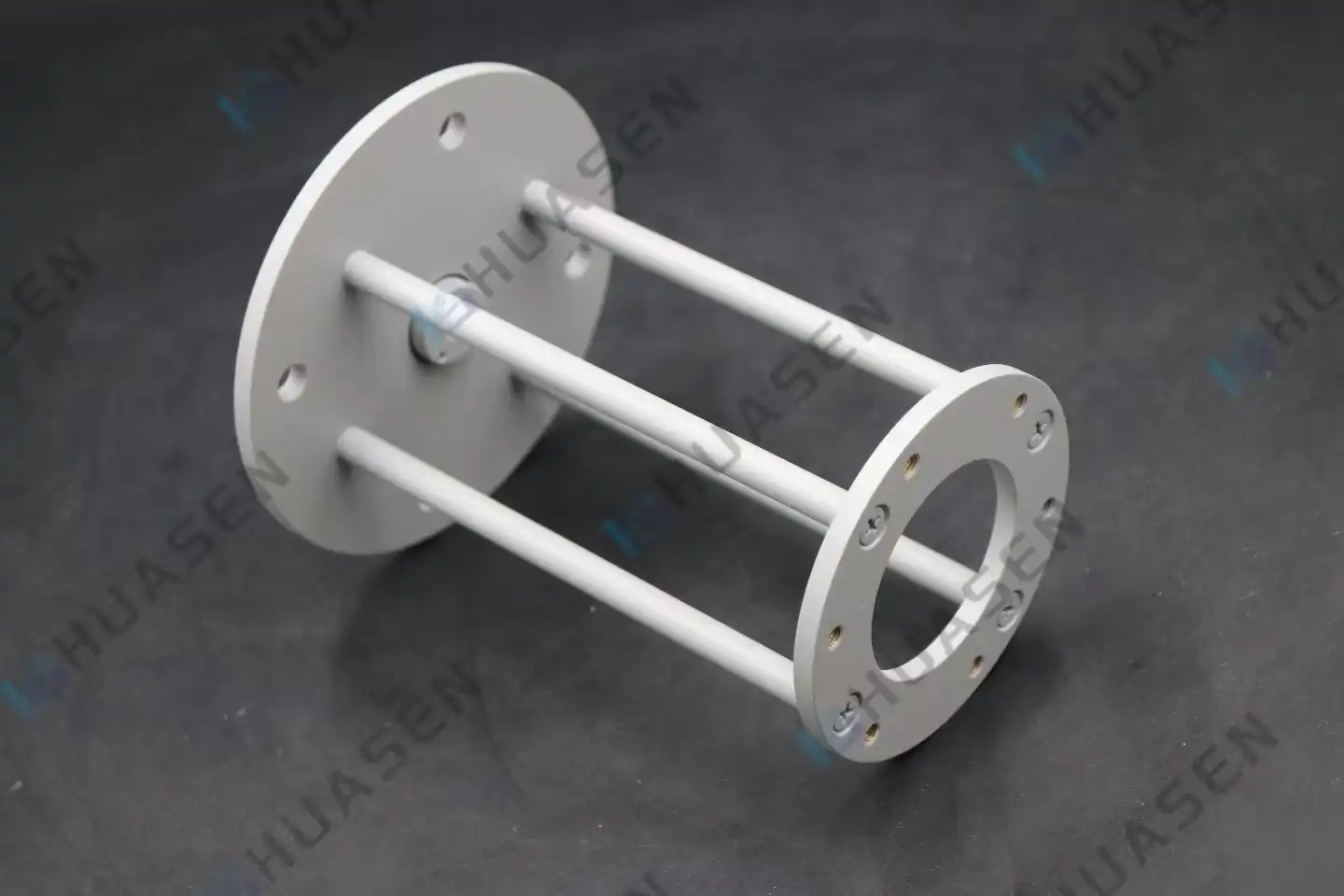
Key Technical Guidelines to Optimise Antenna Mounting Stability
By turning engineering requirements into real installation factors, you can be sure that mounting systems will work as expected for the whole time they are in use.
Height and Tilt Angle Optimisation
Both RF transmission and structure loads are affected by Antenna Mounting height. Elevation makes wind exposure much worse, so braces and anchors need to be stronger. Clearance from shiny objects stops multipath interference, which lowers the strength of the signal. Adjusting the tilt angle fixes the problem of earth curves in long-distance point-to-point links and makes the beam spread better in cellular uses. Huasen Microwave's mounting parts allow free elevation adjustment across their entire working range. This means that system changes can be made without having to replace any hardware. Adjustment precision is important—one-degree steps allow accurate beam guiding in microwave backhaul, where a two-degree misalignment can cut link margin by several dB.
Corrosion Prevention and Material Protection
In harsh settings, protective coats make it possible to go longer between repairs. Putting powder coating on top of galvanised steel makes it even more resistant to chemicals and water. When used in marine settings, protective zinc anodes keep metal mounting parts from being damaged by cathodic action. Thread solutions with zinc or copper particles fill in tiny holes that would otherwise hold water. Hardware grade verification makes sure that nuts meet the requirements of A325 or Grade 8.8 and have been tested for hydrogen embrittlement. This stops high-tension links that hold antennas that handle kilowatt-level RF power from breaking down over time.
Professional Installation Tooling Requirements
To do a good job of installing something, you need to use an accurate torque wrench and the manufacturer's recommended gripping forces. Magnetic pull-off gauges make sure that the thickness of the galvanisation is higher than the minimum standards before it is accepted. Dye-penetrant screening shows flaws in welds that can't be seen with the naked eye. Digital inclinometers and spirit levels make sure that the vertical and horizontal alignment is within the acceptable range. Thread gauges measure the depth to which fasteners connect with each other. This stops setups where thread contact isn't sufficient, which could lead to a single point failure. Traceability is set up for warranty claims and regulatory checks with documentation like pictures of the installation, records of the torque applied, and measures of the alignment.
Comparing Popular Antenna Mounts and Hardware for Robust Stability
Depending on the purpose, load capacity, balancing adjustability, and installation difficulty, different mounting architectures are used.
Fixed Versus Adjustable Mount Trade-offs
Fixed mounts are the most rigid and cost the least per installation, so they are good for long-term uses where the antenna direction doesn't change often. They get rid of the parts that could break during adjustments, which cuts down on installation time. Adjustable bolts can be used for system upgrades, yearly adjustments, or installs where the exact alignment needs to be checked after the mechanical installation. The range of adjustments must be appropriate for the job; too many options add extra complexity to the mechanism, which lowers its long-term stability. Huasen Microwave designs allow for both polarisation and height adjustment in small packages, which lets field changes happen without taking the whole thing apart.
Industry-Recognised Mounting Solutions
Established providers (antenna mounting bracket) have a track record of doing a good job in a wide range of situations. Heavy-duty sector mounts that can handle 20–40 square feet of EPA values for Massive MIMO panels are needed for telecommunications infrastructure. For antenna pattern readings to be accurate in the lab, the position must be exact and repeatable. Mobile communication platforms need quick-release features that let them be quickly put back into use. By comparing specs, you can see how well load rates, adjustment ranges, and material grades meet the needs of the job. Cost-effective mounting kits that can be bought in bulk strike a mix between high-quality materials and efficient production, providing stability without charging high prices that drive up project costs.
Customisation Capabilities for Specialised Requirements
Store-bought options can't handle all kinds of building situations. Custom brackets can work with pipe sizes that aren't standard, odd structure connections, or places with limited room. Huasen Microwave can customise sizes from very small to very big, changing L-type and I-type designs to fit the needs of each client. Some modifications that can be made are special coatings for chemical processing environments, stronger load lines for high-power radar applications, or built-in wire management that makes the installation less cluttered. To make sure that engineering analysis leads to safe designs, custom solutions need thorough specification paperwork that lists things like loading conditions, dimensional limits, and environmental exposure classification.
Procurement Best Practices: How to Source Stable Antenna Mounts for Your Projects
Strategic buying makes sure that technical performance, supply chain stability, and total cost of ownership are all balanced over the duration of a project.
Quality Verification and Certification Requirements
Certifications that prove manufacturing quality systems are valid are the first step in evaluating a supplier. An ISO 9001 registration shows that the process is being controlled, and material approvals show that the alloy makeup can be tracked back to mill test results. Test results from a third party on load capacity, corrosion resistance, and temperature cycle go beyond what the maker says and provide independent confirmation. The length of the warranty shows how confident the company is in the product's long-term performance; full coverage that includes installation issues and material problems shows that the design is strong. Sample evaluation programs let you test them in real-world settings before committing to large orders. This lowers the risk of rollout for important infrastructure projects.
Volume Pricing and Supply Chain Considerations
Tiered pricing systems that reward order quantities are good for large-scale operations. Blanket purchase deals lock in prices for long periods of time, which protects budgets from changes in the prices of goods. Assessing suppliers' ability makes sure that production meets project deadlines without sacrificing quality in the name of speed. For phased launches, inventory management services lower the cost of storing. Spreading out manufacturing and stocking areas across the country cuts down on wait times and freight costs for projects with multiple sites in different regions. Huasen Microwave has been in business since 1993 and can continue to meet the production needs of both small prototypes for system testing and large volumes for network-wide rollouts.
Technical Support and Integration Services
Support after the sale sets one provider apart from others that are only competing on technical specs. Design support helps choose mounting options that work with the antenna's specs and the building's limitations. Field mistakes that lead to warranty claims and project delays can be avoided with installation training. Documentation for system integration is helped by calibration data files that list dimensional limits and material qualities. When unexpected site conditions mean that different installation methods need to be used, responsive technical advice can help. With these services, providers become project partners, sharing risk and making sure the project runs smoothly, which leads to long-term business ties.
Case Studies and Real-World Applications Demonstrating Mounting Stability
By looking at systems that are already in place (antenna mounting bracket), we can see how the theoretical standards translate into operational success in the real world.
Telecommunications Infrastructure in High-Wind Regions
For base stations to be put in hurricane-prone coastal areas, the fixing designs must be tested for Category 5 wind speeds. More bolts and a bigger connection size on reinforced brackets spread loads over a larger area of the structure. Integrating guy wires gives a backup support that stops a catastrophic failure even if the main fixing hardware gives way. After a storm, check the record of how things worked, confirming design ideas and finding ways to make things better. Extreme weather events don't affect projects that use TIA-222-H compliant mounting kits because the antennas stay aligned. This keeps the networks from going down, which could affect emergency contacts.
Mobile Platform Installations
RV and marine uses have dynamic loading from moving vehicles and tools. Mounting solutions have dampening parts that keep antennas from being affected by high-frequency movements while keeping the connection rigid at lower frequencies, which stops the antennas from swaying. With quick-disconnect devices, you can store things while you're travelling, which lowers aerodynamic drag and the risk of a crash. Compact designs take up less space when they are installed in places that are limited in space. Materials that don't rust can be exposed to road chemicals or salt spray for a long time. Performance validation includes testing on a shaking table that simulates years of use, which finds possible failure modes before the product is put into use in the field.
Laboratory and Research Environments
Microwave labs need mounting kits that can support consistent positioning for characterising antennas and checking how well they work with other parts of the system. During pattern readings, small steps can be made possible by precision adjustment mechanisms. In sensitive test settings, measurement mistakes can't happen with materials that aren't magnetic. The sturdy construction means that it can be moved around a lot without losing its alignment accuracy. Huasen Microwave's laboratory-grade mounting assemblies help research institutions and component makers make sure that products meet standards. They do this by giving consistent measurements that are important for product development and regulatory compliance testing.
Conclusion
Material science, structural engineering, environmental protection, and precise installation all work together to ensure antenna mounting stability. When these factors are taken into account in the procurement process, mounting solutions are found that keep RF performance high over the long term of their use. The choice of material takes into account things like rust and mechanical stress that are unique to deployment settings. The designs of structures take into account the loads that they will be under while also allowing for the necessary adjustments. The way the system is installed stops common failure types that could make it less reliable. By buying from manufacturers who offer customisation, expert support, and proven performance in the field, you can build relationships that will help the project succeed from the planning stages to its long-term use.
FAQ
1. What fixing height gives the best signal performance?
The mounting height is a balance between the needs for RF propagation and the needs of the structure. Cellular base stations usually put antennas 30 to 50 meters above the ground to get the coverage they need while keeping tower loads in check. Point-to-point microwave links need more than 60% of the first Fresnel zone to be clear at the middle point of the link. This usually means that towers need to be taller than 100 meters. Inside, distributed radio systems are mounted at a height of 3 to 4 meters from the roof. For each application, propagation modelling is used to find the lowest height needed for coverage, and then structure analysis is used to make sure that the mounting hardware can handle external loads at that height.
2. When should adjustable mounts replace fixed installations?
When things need to be re-optimised on a regular basis, adjustable mounts are helpful. When the number of subscribers changes, cellular networks change the tilt angles to adjust coverage. Earth stations that are part of satellites follow changing targets or change orbital spots. Radiation patterns at different azimuth and slope angles can be described by testing settings. Fixed mounts are best for fixed placements where the antenna orientation doesn't change, and mechanical security is more important than the ability to move the mount. Cost-conscious deployments tend to choose stable mounts when adjusting them wouldn't help operations much.
3. What are the most important safety measures to take during installation?
For high placements, fall protection equipment is the most important safety item. When tools are properly tethered, dropped items don't hurt people on the ground or damage equipment. De-energising RF systems before getting close to antennas keeps radiation from going over safe limits for workers. Torque limits keep links from breaking severely when they are overloaded. Structural load estimates show that the current infrastructure can handle the weight of the tower and the wind. Electrical connections and grounding keep things safe during repair work and protect against damage caused by lightning.
Partner with Huasen Microwave for Superior Antenna Mounting Solutions
Huasen Microwave makes mounting kits with great care that meet the specific needs of defence, aerospace, and telecommunications uses. Our L-type and I-type bracket designs can hold a lot of weight in small spaces and allow for polarisation and height change in setups of all sizes. Standard designs can be changed to fit specific needs by customising them to work with different frequency bands, power levels, and weather conditions. We know how mechanical steadiness affects system performance because we are an Antenna Mounting assembly maker with over 30 years of experience in RF components. Email our engineering team at sales@huasenmicrowave.com to talk about buying in bulk, technical details, and unique solutions that fit the needs of your rollout. Our full support, from the initial design advice to installation help, makes sure that the mounting is stable, which protects your infrastructure investment and keeps operations running smoothly.
References
1. Telecommunications Industry Association, "TIA-222-H: Structural Standard for Antenna Supporting Structures and Antennas," Arlington, VA, 2018.
2. American Society for Testing and Materials, "ASTM A123/A123M-17: Standard Specification for Zinc (Hot-Dip Galvanised) Coatings on Iron and Steel Products," West Conshohocken, PA, 2017.
3. Smith, J.R. and Thompson, L.K., "Environmental Durability of Telecommunications Infrastructure: Material Selection and Corrosion Prevention," Journal of Infrastructure Systems, Vol. 28, No. 3, 2022, pp. 145-162.
4. Chen, W., "Wind Load Analysis for Antenna Mounting Structures in Coastal Regions," Structural Engineering International, Vol. 31, No. 2, 2021, pp. 220-235.
5. Miller, D.A., "Best Practices for RF Antenna Installation: Mechanical Stability and Electrical Performance," IEEE Antennas and Propagation Magazine, Vol. 63, No. 5, 2021, pp. 89-103.
6. European Telecommunications Standards Institute, "ETSI EN 300 019-2-4: Environmental Engineering (EE); Environmental Conditions and Environmental Tests for Telecommunications Equipment; Part 2-4: Specification of Environmental Tests," Sophia Antipolis, France, 2020.
Send Inquiry
You may like
