Key Factors Affecting Directivity Coupler Performance at High Frequencies






2026-03-30 22:38:35
Directivity Coupler performance at high frequencies hinges on multiple critical factors that determine measurement accuracy and signal integrity. These passive RF components face unique challenges as operational frequencies increase, including material properties degradation, parasitic effects amplification, and thermal stability concerns. Understanding these factors enables engineers to select optimal couplers for demanding applications such as 5G base stations, satellite communications, and high-power radar systems where precise signal sampling and exceptional isolation are paramount.
Understanding Directivity Couplers and Their Performance at High Frequencies
RF engineers rely on directivity couplers as fundamental building blocks for signal monitoring and power measurement in sophisticated transmission systems. These precision-engineered components extract a controlled fraction of electromagnetic energy flowing in one direction while maintaining exceptional isolation from reverse signals, making them indispensable for applications requiring accurate forward and reflected power measurements.
Operational Principles and Technical Architecture
A directivity coupler works by coupling electromagnetic waves between the main and secondary transmission routes. Depending on the frequency needs, it can use either distributed element designs or lumped element designs. The coupling mechanism uses controlled electromagnetic field interactions to sample signal power without significantly interfering with the main transmission path. This allows coupling factors to range from 6dB to 40dB. The device architecture has four ports: an input port, an output port, a coupled port, and an isolated port. When energy comes in through the input port, most of it goes to the output port, but a certain amount links to the coupled port. When the system works right, the isolated port doesn't get much power; in good implementations, the isolation number is over 20dB. This setup makes it possible to precisely watch power going both ways, which is needed for VSWR measurements and amplifier protection circuits.
Critical Performance Specifications
Engineers test directivity couplers using a few important factors that have a direct effect on how well the system works. Directivity is a measure of how well the coupler can tell the difference between forward and reverse signals. It can be anywhere from 15dB to 40dB, based on how complex the design is. Higher values for directivity allow for more accurate readings in places where there are a lot of load reflections. Insertion loss measures how much power is lost in the main gearbox path, and the best designs get values below 0.5dB when coupling loss is taken into account. Return loss must stay low at all ports to stop unwanted echoes that could make measurements less accurate. The consistency of measurements is based on frequency response flatness across the operational bandwidth, and the device's power handling skills tell us how much power it can handle without losing performance.
High-Frequency Application Environments
These days, wireless networks need couplers that work very well across wider and wider bandwidths. For 5G base station designs, couplers that work from sub-6GHz to millimeter-wave frequencies and keep working well across multiple octaves are needed. These parts are used in satellite communication systems to protect antennas from VSWR and monitor uplink power. If measurements are off, it could damage equipment or cause service interruptions. Couplers have to work even better in aerospace and defence applications, where they have to stay in spec even when there are big changes in temperature, mechanical stress, and electromagnetic interference. Couplers are used as standards to calibrate vector network analysers and make accurate RF measurements. They are used in test and measurement applications that need the best levels of performance.
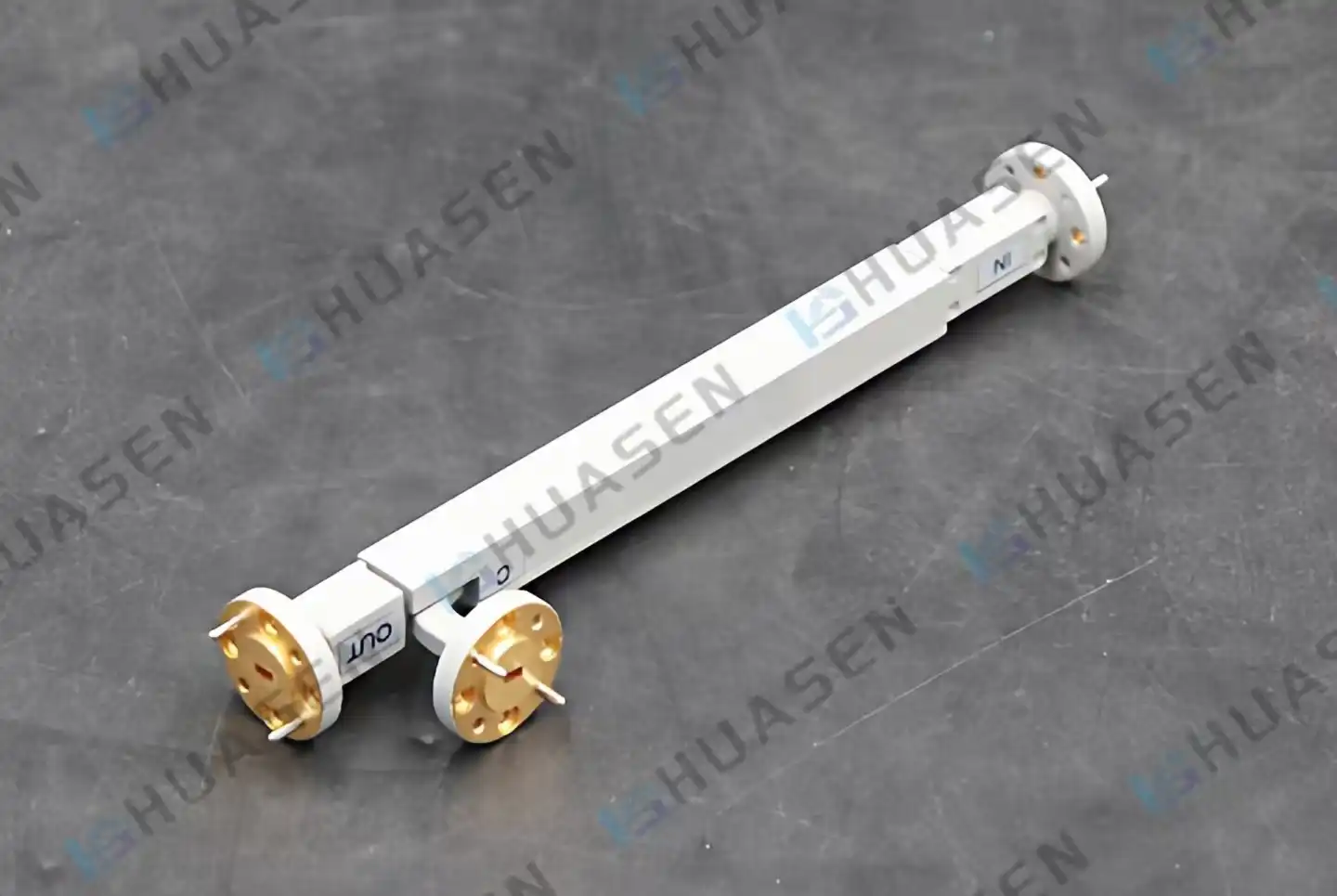
Key Factors Affecting Directivity Coupler Performance at High Frequencies
Understanding the factors that influence coupler performance at elevated frequencies enables informed selection decisions and optimal system integration. These considerations become increasingly critical as operating frequencies approach the millimeter-wave spectrum, where traditional design approaches may prove inadequate.
Material Properties and Substrate Considerations
The dielectric and thermal qualities of the substrate material have a big effect on how well it works at high frequencies. When the temperature changes, low-loss dielectric materials like PTFE-based substrates or ceramic compositions keep the electrical properties fixed while reducing signal loss. The loss vector and dielectric constant have a direct effect on the accuracy of coupling and the frequency response. Changes in these parameters lead to measurement errors. Conductor materials need to be carefully thought out to minimise skin effects and ensure long-term dependability. Copper that has been silver-plated is very good at conducting electricity, while copper that has been gold-plated is much better at resisting rust in outdoor settings. Through current crowding effects, surface roughness affects high-frequency losses. To get the best performance, industrial processes must be very precise. Matching the thermal expansion coefficients of different materials stops mechanical stress that could change how the materials couple over temperature changes. This is especially important to think about for applications in space, where temperature changes are frequent.
Manufacturing Tolerances and Design Precision
Manufacturing precision directly correlates with coupler performance consistency and repeatability. Dimensional tolerances in coupling gap spacing, conductor width, and substrate thickness affect coupling factor accuracy and frequency response. Modern precision manufacturing techniques enable tolerances measured in micrometers, essential for maintaining specifications across production quantities. The coupling mechanism design significantly influences directivity performance. Distributed coupling approaches using multiple coupling holes or interdigitated structures can achieve superior directivity compared to the single-point directivity of a directional coupler coupling design. Symmetry in mechanical construction ensures consistent electromagnetic field distributions that contribute to high directivity values. Quality control procedures during manufacturing verify that each device meets stringent specifications before delivery. These procedures include network analyzer testing across the full frequency range, power handling verification, and environmental stress screening to identify potential reliability issues.
Environmental Factors and Installation Quality
Environmental conditions significantly impact coupler performance and long-term reliability. Temperature variations affect material properties and mechanical dimensions, potentially shifting coupling factors and frequency response. Thermal cycling can introduce mechanical stress, leading to bond wire failures or substrate cracking, particularly in high-power applications. Humidity and contamination exposure can degrade surface conductivity and introduce unwanted loss mechanisms. Proper environmental sealing protects internal components while maintaining electrical performance specifications. Vibration and shock resistance become critical for mobile applications such as aircraft and vehicle-mounted systems. Installation practices directly influence operational performance. Proper grounding techniques minimize interference and ensure stable operation, while connector quality and torque specifications prevent signal degradation. Cable routing and shielding considerations protect against external interference that could compromise measurement accuracy.
Signal Integrity Challenges at High Frequencies
As operational frequencies increase, parasitic effects that are negligible at lower frequencies become performance-limiting factors. Parasitic capacitances and inductances associated with bond wires, package connections, and substrate interfaces can significantly alter coupling characteristics and frequency response. Phase variations across the operational bandwidth affect time-domain performance and limit the device's suitability for pulse applications. Minimizing phase distortion requires careful attention to electrical length matching and dispersion characteristics of the transmission medium. Signal attenuation increases with frequency due to conductor losses, dielectric losses, and radiation effects. Advanced design techniques such as stripline configurations and ground plane optimization help minimize these losses while maintaining compact form factors suitable for modern equipment integration.
How to Test and Evaluate Directivity Couplers for High-Frequency Use
Comprehensive testing protocols ensure that directivity couplers meet application requirements and maintain specifications throughout their operational life. Professional evaluation techniques enable comparison between different suppliers and verification of performance claims under realistic operating conditions.
Laboratory Testing Methodologies
Vector network analyzer measurements form the foundation of coupler characterization, providing detailed information about scattering parameters across the full frequency range. Calibrated test setups using precision standards enable accurate measurements of directivity, insertion loss, return loss, and isolation. The measurement setup requires careful attention to connector repeatability and cable stability to achieve reliable results. Power handling testing verifies the device's ability to operate at specified power levels without performance degradation or physical damage. This evaluation includes both continuous wave and pulsed power testing to simulate realistic operating conditions. Thermal imaging during high-power testing identifies potential hot spots that could affect reliability. Environmental testing validates performance under temperature extremes, humidity exposure, and mechanical stress conditions. These tests ensure the device maintains specifications throughout its intended operating environment and provide confidence for long-term deployment in challenging applications.
Performance Parameter Interpretation
Understanding test results enables informed decisions about device suitability for specific applications. Directivity measurements indicate the coupler's ability to distinguish between forward and reverse signals, with higher values providing better measurement accuracy in systems with significant load reflections. The measurement frequency response reveals bandwidth limitations and identifies potential resonances that could affect system stability. Insertion loss data quantifies the impact on the main signal path transmission, with lower values preferred for high-performance applications. Return loss measurements at all ports indicate potential reflection sources that could compromise system performance. Phase tracking between coupled and main ports affects time-domain applications and system synchronization requirements. Temperature coefficient data reveals how specifications change with environmental conditions, enabling the prediction of performance variations in real-world installations. This information guides temperature compensation strategies and helps establish operating margins for reliable system operation.
Cross-Supplier Comparison Strategies
Evaluating multiple suppliers requires standardized test procedures and consistent measurement conditions to enable meaningful comparisons. Performance specification differences may reflect different design approaches or manufacturing capabilities rather than fundamental quality differences. Understanding these distinctions helps identify the most suitable supplier for specific application requirements. Cost-performance analysis considers not only the initial purchase price but also long-term reliability and support factors. Suppliers with comprehensive technical support and customization capabilities often provide better value for complex applications requiring specialized solutions. Lead time consistency and supply chain stability become important factors for production planning and inventory management.
Comparison and Selection Guide: Finding the Best Directivity Coupler for High-Frequency Applications
Selecting optimal couplers requires understanding the trade-offs between the directivity of a directional coupler, different design approaches, and matching device capabilities to application requirements. The selection process involves evaluating technical specifications, supplier capabilities, and total cost of ownership factors that impact project success.
Coupler Type Comparison
Different coupler architectures offer distinct advantages for specific applications and frequency ranges. Coaxial directional couplers provide excellent broadband performance and high power handling capabilities, making them suitable for base station and high-power applications. Their robust mechanical construction ensures reliable operation in demanding environments while standard connector interfaces simplify system integration. Waveguide couplers excel in high-frequency applications where maximum directivity and power handling are required. These devices achieve superior isolation and can handle kilowatt power levels common in radar and satellite communication systems. The larger physical size may limit applicability in space-constrained installations, but it provides unmatched electrical performance. Hybrid couplers and power dividers serve different functions but share similar performance characteristics with directivity couplers. Understanding these differences helps avoid specification mismatches that could compromise system performance or create unnecessary cost burdens.
Critical Selection Criteria
The main selection factor is frequency range compatibility, which makes sure the device stays in specs across the needed bandwidth. Broadband designs make it easier to keep track of inventory and give you more options for using multiple bands, while narrowband-optimized devices might work better in certain frequency ranges. Power handling needs to take into account both average and peak power, and safety margins are needed to keep damage from happening when power goes out of range. Environmental requirements must match the expected working conditions, such as the temperature range, the amount of humidity, and the level of mechanical stress. Mechanical factors include size limitations, mounting needs, and the ability of the connector to work with other parts of the system. Standard interface standards make it easier to buy things and cut down on the need for custom adapters, which can be expensive and cause problems.
Supplier Evaluation and Procurement
Leading suppliers have different strengths when it comes to the range of products they offer, their technical support, and their ability to make changes to orders. Established companies with a wide range of products offer complete solutions and application support. Specialised manufacturers may provide better performance in certain frequency ranges or applications. The ability to create custom solutions is important for uses that have specific needs that standard products can't meet. Suppliers who can design and make their own products can offer customised solutions with shorter lead times and better cost control than third-party development deals. Samples and evaluation programs let customers try out the products before committing to large purchases. Good suppliers offer a lot of test data and application help to make sure that the system works well and is integrated correctly.
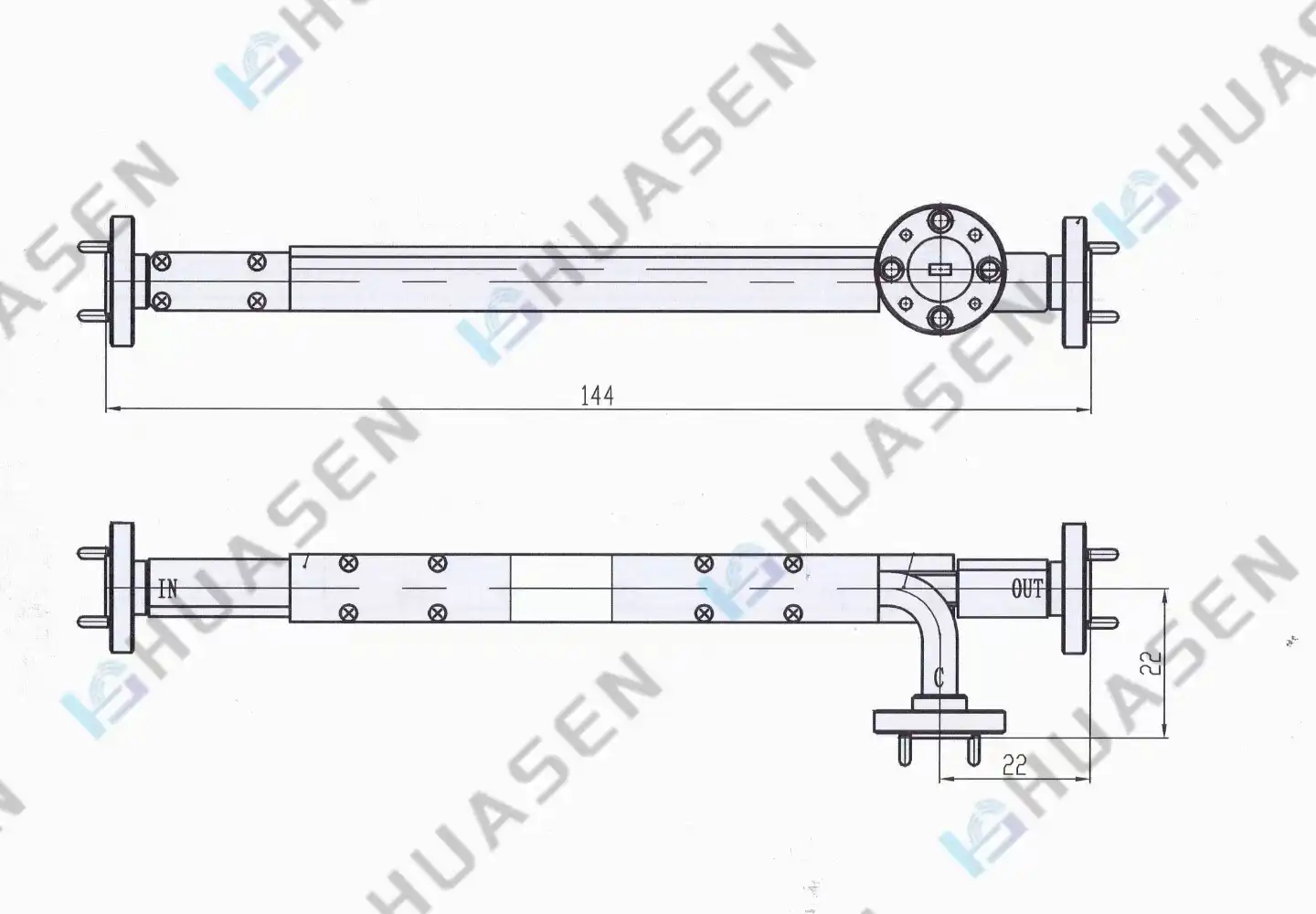
Best Practices for Installation and Maintenance to Maximize Coupler Performance
Proper installation and ongoing maintenance preserve coupler performance and ensure long-term reliability in demanding applications. These practices minimize performance degradation and extend operational life while reducing the total cost of ownership through decreased replacement frequency and improved system uptime.
Installation Guidelines and Procedures
How you ground your system has a big effect on how well the coupler works and how accurate your measurements are. Good ground connections keep interference to a minimum and keep operations stable. Ground loops, on the other hand, can cause measurement mistakes and lower the effectiveness of isolation. Star grounding configurations usually give the best results by reducing circulating currents that could mess up sensitive readings. When installing a connector, it's important to follow the torque specs and be careful not to damage it, which could lower its electrical performance. If you tighten the connection too much, the threads could get damaged, or the gaskets could deform. If you tighten it too little, the electrical contact could be bad, and the insertion loss could go up. Using calibrated torque tools makes sure that connections are consistent and reliable. Environmental protection measures keep the device safe from moisture, dirt, Directivity Coupler, and temperature changes. A directivity coupler could affect its performance. Choosing the right cage and using the right sealing methods will keep the internal environment stable and let you control the temperature when needed. Thoughts on cable routing reduce mechanical stress and keep things from breaking during installation and upkeep.
Maintenance Strategies and Performance Monitoring
Regular calibration checks make sure that measurements stay accurate and find performance drift before it changes how the system works. Setting up baseline measures right after installation gives you data that you can use to compare things in the future. Trending analysis can find small changes in performance that could mean problems are getting worse and need to be fixed. Environmental monitoring keeps an eye on things that could affect the performance or stability of a device. Temperature logging finds patterns of changing temperatures that could lead to mechanical stress, and humidity tracking makes sure that environmental protection systems work properly. Vibration tracking in mobile apps makes sure that mechanical mounting systems stay in place when they are put under a lot of stress. Preventive maintenance plans balance the cost of maintenance with the need for reliability. Applications that need to be reliable may need to be inspected and tested more often, while business applications may rely on condition-based maintenance methods that make the best use of maintenance resources.
Conclusion
High-frequency directivity coupler performance depends on careful consideration of material properties, manufacturing precision, environmental factors, and installation quality. Understanding these relationships enables informed selection decisions and optimal system integration for demanding applications ranging from 5G infrastructure to aerospace systems. Professional testing and evaluation procedures verify performance specifications while comprehensive installation and maintenance practices preserve long-term reliability and measurement accuracy.
FAQ
1. What distinguishes a directivity coupler from a standard directional coupler?
Directivity couplers emphasize maximum isolation between forward and reverse signal paths, typically achieving directivity values exceeding 30dB compared to 15-20dB for standard directional couplers. This enhanced performance enables more accurate measurements in systems with significant load reflections.
2. How do I verify frequency compatibility for my specific application?
Review the manufacturer's specification sheet for frequency response data and verify that coupling factor, directivity, and insertion loss remain within acceptable limits across your required bandwidth. Request test data or samples for verification if specifications appear marginal for your requirements.
3. Can I obtain custom coupler designs for specialized requirements?
Many manufacturers offer custom design services for applications requiring specific coupling factors, frequency ranges, or mechanical configurations. Custom solutions typically require longer lead times and higher minimum order quantities compared to standard products.
Partner with Huasen Microwave for Superior Directivity Coupler Solutions
Huasen Microwave Technology combines three decades of RF engineering expertise with advanced manufacturing capabilities to deliver precision directivity coupler solutions for your most demanding applications. Our comprehensive product portfolio spans frequencies from MHz to millimeter-wave ranges, serving telecommunications, directivity couplers, aerospace, and defense industries worldwide.
As a trusted directivity coupler manufacturer, we provide customization services, comprehensive technical support, and rigorous quality assurance to ensure optimal performance in your specific application environment. Our engineering team collaborates closely with customers to develop tailored solutions that meet unique specifications and performance requirements.
Contact our technical sales team at sales@huasenmicrowave.com to discuss your directivity coupler requirements and discover how our proven expertise can enhance your system performance and reliability.
References
1. Pozar, David M. "Microwave Engineering, 4th Edition." John Wiley & Sons, 2011.
2. Ludwig, Reinhold, and Pavel Bretchko. "RF Circuit Design: Theory and Applications, 2nd Edition." Prentice Hall, 2009.
3. Vendelin, George D., Anthony M. Pavio, and Ulrich L. Rohde. "Microwave Circuit Design Using Linear and Nonlinear Techniques, 2nd Edition." John Wiley & Sons, 2005.
4. IEEE Standard 287-2007. "IEEE Standard for Precision Coaxial Connectors at RF, Microwave and Millimeter-wave Frequencies." Institute of Electrical and Electronics Engineers, 2007.
5. Bahl, Inder and Prakash Bhartia. "Microwave Solid State Circuit Design, 2nd Edition." John Wiley & Sons, 2003.
6. Chen, Zhi Ning and Kwai-Man Luk. "Antennas for Base Stations in Wireless Communications." McGraw-Hill Education, 2009.
Send Inquiry