Adjustable Power Control with Coaxial Variable Attenuators






2025-12-10 22:26:19
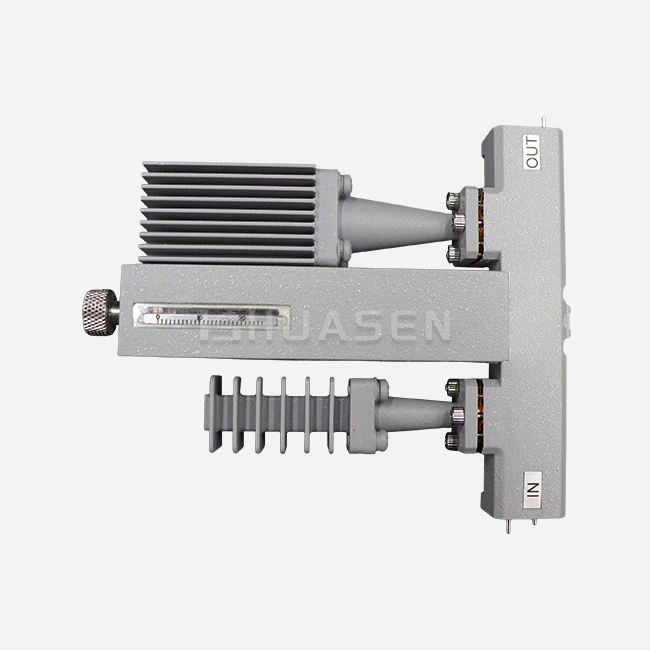
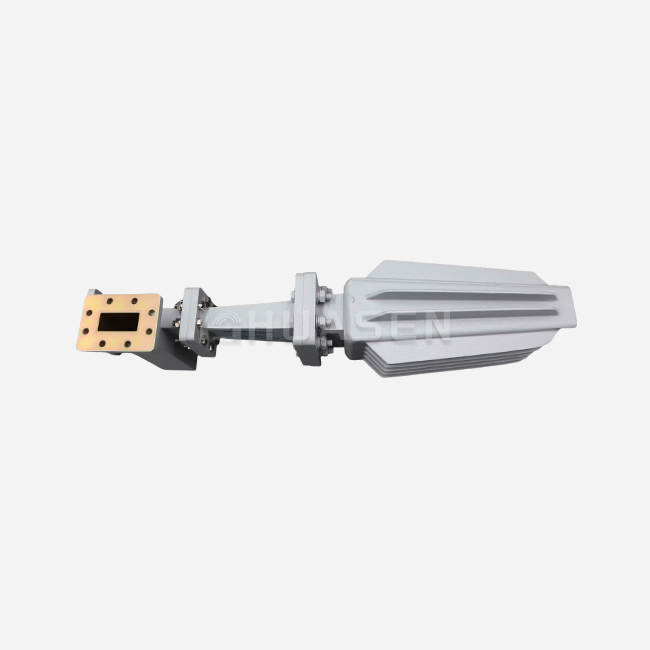
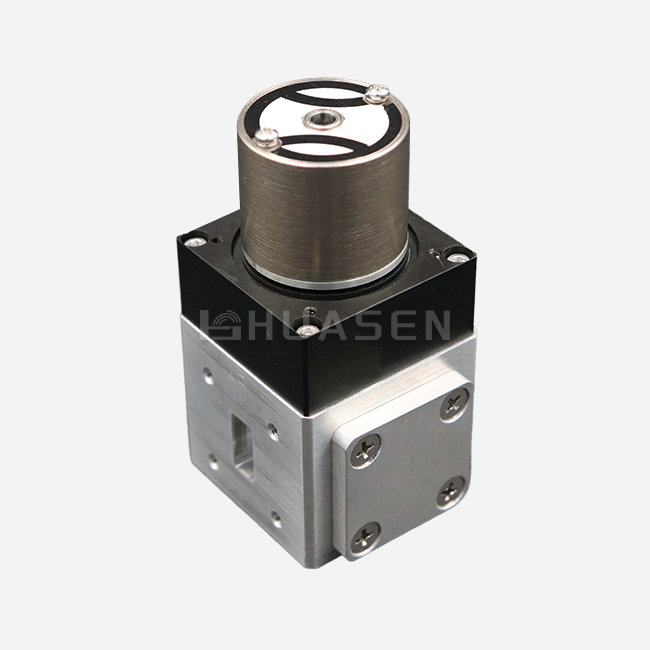
In the world of RF and microwave building, exact control is fundamental for ideal framework execution. Coaxial variable attenuators offer a flexible arrangement for altering flag levels in real-time, making them vital components in different applications. These gadgets permit engineers to fine-tune control levels without hindering the circuit, giving adaptability and proficiency in framework plan and operation. Coaxial variable attenuators are especially important in scenarios where flag quality needs to be powerfully balanced, such as in test and estimation setups, communication systems, and radar applications. By advertising a wide extend of constriction values inside a single gadget, they empower engineers to optimize signal-to-noise ratios, anticipate collector immersion, and maintain perfect control levels all through the system. The capacity to absolutely control control levels is vital in cutting-edge RF and microwave frameworks, where execution edges are frequently tight and signal intelligence is vital. Coaxial variable attenuators exceed expectations in this respect, giving precise and repeatable weakening over a wide range of frequencies. This makes them perfect for utilize in high-frequency applications, including those working in the X-band and Ku-band spectrums.
What are the advantages of variable attenuators vs fixed ones?
When comparing variable attenuators to their settled partners, a few key points of interest have become clear. These benefits make variable attenuators the favored choice in numerous RF and microwave applications, particularly those requiring energetic control or visit adjustments.
Flexibility in Power Control
The essential advantage of variable attenuators is their capacity to alter weakening levels on the fly. Not at all like settled attenuators, which give a single, foreordained attenuation value, variable attenuators permit clients to fine-tune flag quality as required. This adaptability is priceless in scenarios where control levels must be optimized for diverse working conditions or framework configurations.
For example, in a test and estimation setup, engineers may need to assess framework execution under different flag qualities. A variable attenuator permits them to rapidly alter input control levels without swapping out components or reconfiguring the test seat. This spares time and diminishes the potential for blunders related with visit gear changes.
Cost-Effectiveness and Reduced Inventory
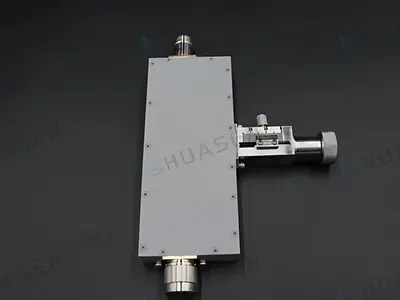
By advertising a range of weakening values in a single gadget, variable attenuators can altogether diminish stock requirements. Instead of stocking numerous settled attenuators to cover different weakening needs, a single variable attenuator can regularly suffice. This not as it were spares on component costs but moreover streamlines stock administration and diminishes the hazard of obsolescence.
Moreover, the flexibility of variable attenuators can lead to taking a toll on investment funds in the framework plan. Engineers can utilize a single sort of attenuator over numerous ventures or applications, possibly lessening development time and streamlining acquisition processes.
Improved System Performance
Variable attenuators, such as a coaxial variable attenuator, empower exact control, which can lead to progress in general framework execution. By permitting fine alterations to flag levels, these gadgets offer assistance to optimize signal-to-noise ratios, avoiding overburdening of touchy components, and guarantee that frameworks work within their optimal control ranges.
This level of control is especially useful in complex frameworks where numerous flag ways or stages are included. Engineers can utilize variable attenuators to adjust control levels over diverse parts of the framework, guaranteeing ideal execution and anticipating issues such as intermodulation distortion or collector saturation.
Using variable attenuators for gain control and signal leveling
Variable attenuators play a crucial role in gain control and signal leveling applications, offering a dynamic means of adjusting signal strength to maintain optimal system performance. Their ability to provide precise, real-time attenuation makes them invaluable in scenarios where signal levels need to be carefully managed.
Automatic Gain Control (AGC) Systems
In programmed pick up control frameworks, variable attenuators are regularly utilized to keep up a consistent yield flag level in spite of variances in the input flag quality. This is especially imperative in communications frameworks, where variations in flag quality can happen due to variables such as changing air conditions or shifting separations between transmitters and receivers.
By coordinating a coaxial variable attenuator into an AGC circle, the framework can powerfully alter the constriction to compensate for changes in input flag quality. This guarantees that the yield flag remains inside the wanted run, keeping up flag quality and preventing overburden or underutilization of subsequent stages in the flag chain.
Transmitter Power Control
In transmitter applications, variable attenuators give a implies of altering yield control levels without modifying the working point of the control speaker. This is especially valuable in scenarios where transmit control needs to be shifted based on variables such as removal to the collector, administrative necessities, or power-saving considerations.
For example, in a portable communication framework, a base station might utilize a variable attenuator to decrease its transmit control when communicating with adjacent gadgets, moderating power and decreasing interference with other cells. On the other hand, it may increase control when communicating with gadgets at the edge of its scope range, guaranteeing solid signal reception.
Signal Leveling in Test and Measurement
In test and measurement applications, maintaining consistent signal levels across different frequencies is often crucial for accurate results. Variable attenuators, such as a coaxial variable attenuator, can be used to compensate for frequency-dependent variations in system gain or loss, ensuring that the device under test receives a constant input power level across the frequency range of interest.
This capability is particularly valuable in broadband systems or when characterizing components over a wide frequency range. By using a variable attenuator in conjunction with a power sensor and feedback loop, test engineers can create a leveled signal source that maintains consistent output power regardless of frequency-dependent variations in the signal path.
Application examples: test benches, transmitters, and feedback loops
The versatility of coaxial variable attenuators makes them essential components in a wide range of RF and microwave applications. Let's explore some specific examples of how these devices are utilized in test benches, transmitters, and feedback loops.
Test Bench Applications
In RF and microwave test benches, variable attenuators serve multiple purposes:
- Signal Level Adjustment: Engineers can utilize variable attenuators to set exact input control levels for device under test (DUT) characterization. This is significant for measuring parameters such as pick up, clamor figure, and linearity under different working conditions.
- Dynamic Range Optimization: By altering weakening, test engineers can guarantee that signals stay inside the ideal dynamic range of estimation hardware, anticipating over-burden or noise-limited measurements.
- Intermodulation Testing: Variable attenuators permit exact control of different flag levels in intermodulation twisting estimations, empowering exact characterization of nonlinear behavior in intensifiers and other dynamic devices.
For instance, when characterizing a low-noise amplifier (LNA), a variable attenuator can be used to sweep the input power level, allowing measurement of gain compression and third-order intercept point (IP3) characteristics.
Transmitter Applications
In transmitter systems, variable attenuators play critical roles in power control and system optimization:
- Output Power Adjustment: Variable attenuators give a implies of altering transmit control levels to comply with administrative necessities or optimize control consumption.
- Linearization Schemes: In predistortion linearization frameworks, variable attenuators can be utilized to optimize the input level to the control speaker, maximizing effectiveness while keeping up linearity.
- Multi-Band Systems: For transmitters working over numerous frequency bands, variable attenuators can offer assistance in adjusting control levels between groups, guaranteeing steady execution over the whole working range.
For example, in a satellite communication ground station, variable attenuators might be used to adjust uplink power based on atmospheric conditions, ensuring reliable signal reception at the satellite while minimizing interference with other systems.
Feedback Loop Applications
Variable attenuators are often integral components in feedback loops for various RF and microwave systems:
- Automatic Level Control (ALC): In ALC systems, a variable attenuator is utilized in conjunction with a control locator to keep up a consistent yield control level, compensating for variations in input flag quality or framework gain.
- Phase-Locked Loops (PLLs): Variable attenuators can be utilized to optimize circle pick up in PLLs, making a difference to keep up solidness and move forward stage clamor execution over distinctive working conditions.
- Adaptive Matching Networks: In frameworks with variable stack impedances, variable attenuators can be a part of versatile coordinating systems, making a difference to optimize control exchange and minimize reflections.
An example of a feedback loop application is in a high-stability frequency synthesizer, where a variable attenuator, such as a coaxial variable attenuator, might be used to optimize the signal level into the phase detector, ensuring optimal PLL performance across a wide frequency range.
Conclusion
Coaxial variable attenuators are flexible and capable instruments for RF and microwave engineers, offering unparalleled adaptability in control and flag administration. Their capacity to give exact, real-time weakening alterations makes them important in a wide extend of applications, from test and estimation setups to complex communication systems.
As the request for high-performance RF and microwave frameworks proceeds to develop, the significance of exact control cannot be exaggerated. Coaxial variable attenuators give a dependable and proficient implies of accomplishing this control, empowering engineers to optimize system performance, decrease costs, and meet the challenging requirements of cutting-edge applications.
For organizations looking for high-quality RF and microwave arrangements, joining forces with a trusted provider is significant. Huasen Microwave Technology Co., Ltd., with its decades of involvement and commitment to advancement, offers a comprehensive extend of coaxial variable attenuators designed to meet the differing needs of the industry. From broadcast communications and radar frameworks to aviation and defense applications, Huasen's items provide the execution and unwavering quality required to drive mechanical progression and guarantee system success.
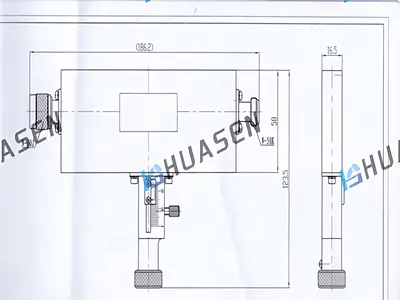
FAQ
1. What frequency range do Huasen's coaxial variable attenuators cover?
Huasen Microwave's coaxial variable attenuators cover a frequency range from DC to 18GHz, making them suitable for a wide variety of RF and microwave applications.
2. Are these attenuators suitable for high-power applications?
Yes, Huasen's attenuators are designed to support both low and high power levels, making them ideal for applications such as radar and high-power communication systems.
3. What is the attenuation accuracy of these devices?
Huasen's coaxial variable attenuators feature high attenuation accuracy over a wide frequency range, ensuring precise and reliable power control in your RF systems.
4. Can these attenuators be customized for specific applications?
Huasen Microwave offers customization options for its attenuators, allowing for tailored solutions that meet specific frequency, power, or mechanical requirements.
Precision Power Control Solutions | Huasen Microwave
Ready to optimize your RF system's performance with high-quality coaxial variable attenuators? Huasen Microwave Technology Co., Ltd. offers a comprehensive range of solutions designed to meet your specific needs. Our team of experts is ready to assist you in selecting the perfect attenuator for your application, ensuring optimal performance and reliability.
Don't compromise on power control - choose Huasen for industry-leading quality and support. Contact us today at sales@huasenmicrowave.com to discuss your requirements and discover how our coaxial variable attenuators can enhance your RF and microwave systems.
References
1. Smith, J. (2022). Advanced RF and Microwave Circuit Design: The Ultimate Guide to Superior Design. Microwave Engineering Press.
2. Johnson, R. C. (2021). Antenna Engineering Handbook, 5th Edition. McGraw-Hill Education.
3. Chang, K. (2023). RF and Microwave Wireless Systems. Wiley-IEEE Press.
4. Pozar, D. M. (2022). Microwave Engineering, 5th Edition. John Wiley & Sons.
5. Golio, M. (2021). RF and Microwave Applications and Systems. CRC Press.
6. Skolnik, M. I. (2023). Introduction to Radar Systems, 4th Edition. McGraw-Hill Education.
Send Inquiry