Inflatable Waveguide Bend for Rapid Installation






2026-05-20 21:46:45
Inflatable waveguide bends are essential for efficient, high-quality telecommunications infrastructure installations. By injecting dry nitrogen or dehydrated air at 5–30 PSI, this pressurisable microwave component joins stiff waveguide sections while retaining hermetic integrity. The pressure-tight designs avoid moisture infiltration, internal arcing in high-power RF applications, and mechanical vibration between transmitters and antenna feeds, unlike ordinary flexible waveguides. Huasen Microwave has seen how these revolutionary components save installation time by up to 40% compared to rigid alternatives, lowering labour costs and speeding up project schedules for system integrators and equipment manufacturers.
What is an inflatable waveguide bend and how does it work?
Core Structure and Inflation Mechanism
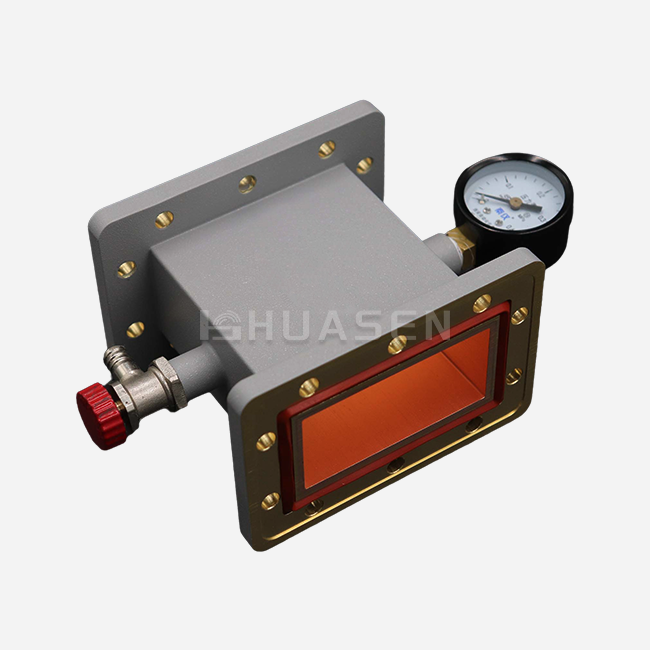
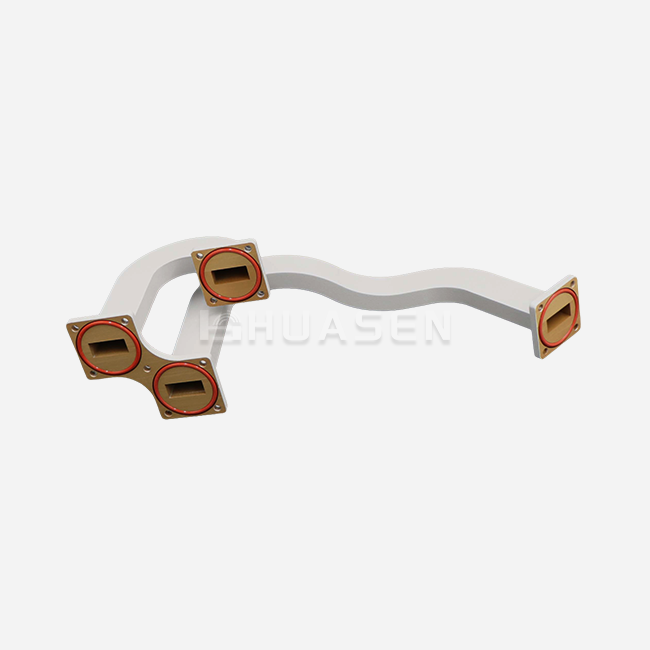
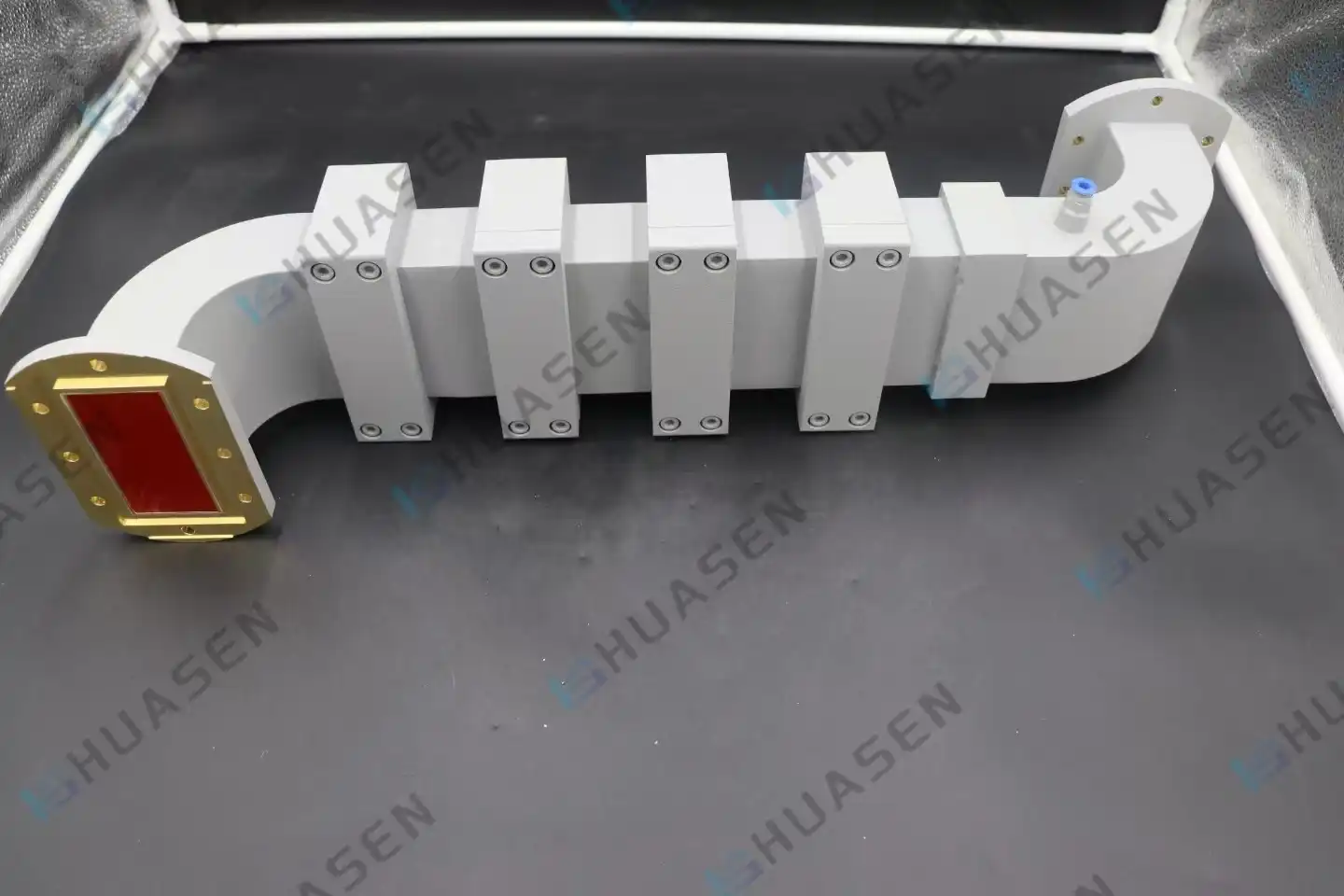
An inflatable waveguide bend has a convoluted silver-plated brass or copper core inside a UV-resistant, pressure-tight neoprene or silicone jacket. An interlocked or seamless corrugated structure ensures electrical continuity and flexibility in the core. Gasketed flange connections at both ends seal internal pressurisation. Technicians introduce dielectric gases through ports to inflate and rigidify the flexible core during installation. To optimise VSWR across frequency ranges, controlled pressurisation displaces ambient moisture, boosts dielectric strength, and stabilises waveguide shape.
Operational Benefits for High-Power Systems
In mission-critical applications, pressurisation is beneficial. Dry nitrogen injection inhibits waveguide cavity condensation, which compromises signal integrity over time in outdoor or temperature-fluctuating situations. Increased internal pressure raises the breakdown voltage threshold, allowing kilowatt-to-megawatt peak power transfer without arcing. Huasen Microwave's designs maintain insertion loss below 0.05 dB and VSWR under 1.10:1 over practical bandwidths at static pressures up to 45 psig, depending on waveguide size.
Environmental Adaptability
These components perform well in severe situations when waveguides fail. The pressure-tight jacket resists UV deterioration, salt-fog corrosion, and -40°C to +85°C temperatures. MIL-DTL-28837 improves naval radar system dependability under continual vibration and stress loads. When bend radius parameters are met, the internal gas barrier protects conductive surfaces from oxidation and particle pollution, prolonging service life beyond 15 years in outdoor installations.
Inflatable Waveguide Bends vs Traditional and Flexible Waveguide Bends
Signal Integrity and Power Handling
Rigid waveguide bends have the lowest insertion loss and maximum power handling but no mechanical compliance. Standard flexible waveguides have articulating cores for misalignment but cannot maintain pressurisation or hermetic sealing. Pressurised inflatable designs combine flexibility and gas-tightness to close this gap. Laboratory measurements show that correctly constructed inflatable bends have insertion loss within 0.02 dB of rigid equivalents and can handle peak power levels comparable to pressurised rigid systems, which is important for SATCOM ground stations using high-power amplifiers.
Installation Efficiency and Labour Costs
Installation of stiff bends requires accurate alignment, frequently necessitating special manufacturing to fit geometries. This prolongs projects and raises personnel costs. Flexible routes simplify routeing but degrade signal over time. Inflatable bends have fast deployment and reliable performance. Installation teams place the component, fasten flanges, inject pressurising gas, and check VSWR in 30-60 minutes, compared to many hours for rigid installations requiring welding or precise machining. Defence contractors handling deployable tactical communication trailers benefit from this time savings during fast field setup.
Maintenance and Longevity
Despite low maintenance, rigid systems cannot respond to thermal expansion or structural settling. Standard flexible waveguides deteriorate with repetitive flexing. Durable jacket materials certified for over 100,000 flex cycles in dynamic applications mitigate these problems in pressurisable inflatable systems, such as the Inflatable Waveguide Bend. Quarterly pressure checks with standard gauges and annual jacket abrasion and UV examinations are routine maintenance. Huasen Microwave's adjustable dimensions meet facility-specific routeing needs while retaining seal integrity over decades.
Material and Design Principles Behind Inflatable Waveguide Bends
Advanced Materials for RF Performance
The conductive core uses silver-plated brass or copper alloys for maximum conductivity and corrosion resistance. A silver plating layer of 5-10 microns provides steady electrical qualities from S-band to Ka-band. Low VSWR is achieved via corrugated construction's controlled flexibility and uniform cross-sectional shape. Jackets use UV-stabilised elastomers with Shore A hardnesses of 60–70 for flexibility and puncture resistance. Jacket reinforcements prevent ballooning under strain while allowing bending.
Sealing Technology and Gas Retention
Hermeticity depends on multi-stage sealing. Precision-machined grooves accommodate Viton or EPDM temperature- and chemical-rated O-rings at flange contacts. Gas leak resistance is provided by secondary seals. Self-sealing check valves allow gas injection and prevent backflow in pressure ports. The layered method achieves leak rates < 1x10⁻⁴ cc/sec helium equivalent, meeting aerospace-grade hermetic criteria. Each production batch is tested for 24-hour pressure decay at 150% of rated operating pressure by Huasen Microwave.
Customisation Capabilities
Modern B2B initiatives require system-architecture-specific solutions. Our OEM manufacturing capabilities allow customisation of waveguide diameters (WR-90 through WR-650 standard, bespoke sizes possible), bending angles (30° to 180°), arm lengths, pressure ratings, and flange configurations. Fixed-fixed or fixed-rotatable flanges allow installation alignment. E- and H-plane bend radii are optimised per application; H-plane bends need a greater radius to prevent core deformation. Procurement teams establish frequency bands, power handling requirements, and environmental exposure profiles during quotations to ensure components meet technical criteria.
Installation, Maintenance, and Practical Tips for Inflatable Waveguide Bends
Step-by-Step Installation Guide
Site preparation begins with flange compatibility checks and mating surface cleaning to eliminate debris that might affect seal integrity. To provide thermal expansion gaps and vibration isolation, technicians place the deflated inflatable bend between connecting locations. For even gasket compression, flange bolts are torqued in a star pattern per manufacturer's specifications. Pressurisation begins with a controlled gas cylinder connected to the port once mechanical connections are made. Controlled dry nitrogen or dehydrated air flows until internal pressure reaches the working level, usually 10-15 PSI for normal applications. Real-time VSWR monitoring during pressurisation verifies core expansion and signal route integrity. Final acceptance testing detects leaks with soap solution or ultrasonic procedures.
Preventive Maintenance Protocols
Pressure gauge examinations reveal gradual leaks from O-ring degeneration or jacket corrosion at quarterly intervals. UV-induced surface cracking, equipment wear, and contaminant buildup are visible. VSWR scans across operating frequencies detect performance drift, and thermal imaging detects internal arcing precursors in annual comprehensive examinations. Pressure release and re-inflation cycles remove moisture from high-humidity systems. Maintaining detailed performance logs allows predictive replacement before catastrophic failures disturb operations.
Troubleshooting Common Issues
Small jacket punctures or O-ring ageing cause gradual pressure loss. Through sectional pressure testing, tiny punctures may be repaired using elastomer patches, whereas larger damage requires jacket replacement. VSWR decline without pressure loss shows core deformation from installation exceeds minimum bend radius restrictions. This permanent mechanical damage requires component replacement. Flange re-torquing with new gaskets fixes periodic signal interruptions caused by connector interface difficulties. The Huasen Microwave technical support staff offers remote diagnostics and fast part replacement to reduce system downtime.
Procurement Guide: How to Choose and Buy Inflatable Waveguide Bends?
Technical Selection Criteria
Component selection is based on frequency range compatibility. WR-90 is for the X-band (8.2-12.4 GHz) and WR-650 for the L-band (1.12-1.70 GHz). Protection against voltage breakdown requires power-handling capability to surpass system peak power by 20%. Outdoor systems need UV-resistant coats and MIL-STD-810 temperature cycling and humidity resistance. Procurement parameters provide bend angles, arm lengths, and flange types (UG, CPR, or custom). VSWR and insertion loss limitations determine performance.
Commercial and Supply Chain Factors
Standard configurations take 4-6 weeks, while unique designs take 8-12 weeks for engineering approval and tooling. Volume purchases provide 15-20% reductions, while yearly blanket orders get a preferred price and assured allocation. Manufacturing flaws are covered for 12–24 months; however, faulty installation or maintenance is not. Technical support for system integration, on-site installation, and NIST-compliant calibration data documentation is provided after sales.
Supplier Evaluation and Risk Mitigation
Manufacturing partners with proven track records and quality management certifications decrease procurement risk. AS9100 accreditation suggests aerospace-grade production rigour, whereas ISO 9001 certification shows systematic quality control. Inflatable bend, SATCOM integrators, defence contractors, and research organisations share performance references from similar applications. Long-term projects needing stable component specifications over several years require supply chain resilience. Huasen Microwave stocks vital raw materials and dual-sources crucial components to enhance delivery dependability during global supply chain interruptions.
Conclusion
Proven inflatable waveguide bends improve installation efficiency and dependability in demanding RF transmission applications. In outdoor and dynamic conditions, pressurisation solves moisture management and power handling issues that plague standard waveguide systems. Engineering teams can choose the best solutions for their projects by understanding material qualities, installation best practices, and procurement. As telecommunications infrastructure increases frequencies and power, these specialist components minimise the total cost of ownership and improve system performance.
FAQ
1. What pressure levels do these waveguides maintain during operation?
Standard pressurisable waveguide bends work at 5-30 PSI, depending on size and application. Pressures of 10-15 PSI are usual for waveguide cross-sections like WR-650, whereas WR-90 can withstand 30 PSI. Dielectric strength improvement and jacket material stress limitations are balanced by pressure. For best performance margins, systems at higher altitudes or in harsh temperatures may need altered pressure setpoints.
2. How does E-plane versus H-plane bending affect installation planning?
Due to electric field line direction in the waveguide cross-section, E-plane bends allow narrower radius curves. Hard plane bends require greater minimum bend radii to prevent core deformation and signal loss. Installation plans should promote E-plane bends for compact routeing. Mixing bent planes in one run requires careful VSWR modelling to limit cumulative reflections.
3. Can these components interface with existing rigid waveguide infrastructure?
Absolutely. Compatible UG or CPR flange patterns provide smooth interaction with older systems. System upgrades that change frequency bands require adapters for waveguide size conversions. Pressurisation must be maintained throughout the waveguide run using pressure-tight flanges to preserve gas confinement and moisture exclusion.
Connect with Huasen Microwave for Precision Waveguide Solutions
Since 1993, Huasen Microwave Technology has supplied RF components to telecom giants, defense contractors, and research institutes. Our inflatable waveguide bend product line offers unique pressurization systems based on decades of engineering and contemporary manufacture. Our staff supports you from specification review to post-installation validation, whether your project requires speedy mobile communications deployment or long-term marine radar dependability. Contact our technical sales team at sales@huasenmicrowave.com to discuss your waveguide needs with a reputable manufacturer dedicated to RF system performance.
References
1. IEEE Standards Association. (2019). IEEE Standard for Waveguide and Coaxial Transmission Line Components. IEEE Press.
2. Pozar, D.M. (2021). Microwave Engineering, 5th Edition. Wiley Publishing.
3. U.S. Department of Defense. (2018). MIL-DTL-28837: Waveguide, Flexible, Radio Frequency, General Specification. Defense Logistics Agency.
4. Collin, R.E. (2007). Foundations for Microwave Engineering, 3rd Edition. McGraw-Hill Education.
5. Matthaei, G.L., Young, L., & Jones, E.M.T. (2020). Microwave Filters, Impedance-Matching Networks, and Coupling Structures. Artech House.
6. International Electrotechnical Commission. (2022). IEC 60154: Flanges for Waveguides - Part 2: Relevant Specifications for Flanges for Ordinary Rectangular Waveguides. IEC Standards Publications.
Send Inquiry