What is the working principle of a waveguide sliding short?






2019-02-06 11:25:03
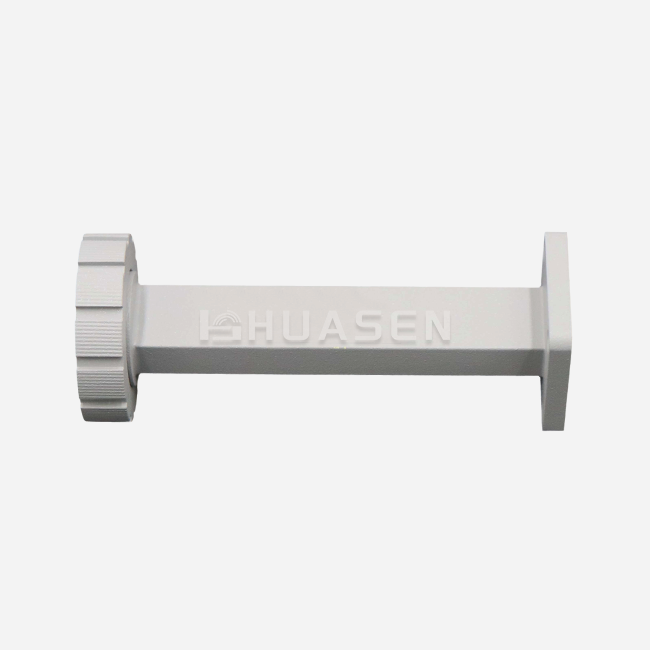
A waveguide sliding short is an important part of microwave and millimeter-wave systems that works on a very interesting premise. This gadget makes a reflection plane that can move within a waveguide, which lets you regulate how electromagnetic waves behave very precisely. The sliding short consists of a conductive plate that can be adjusted along the length of the waveguide, effectively changing the electrical length of the transmission line. This flexibility is important for its function since it lets engineers make small changes to the impedance and standing wave patterns in the waveguide system. The working principle of a waveguide sliding short revolves around its ability to reflect incoming electromagnetic waves at a specific point, which can be dynamically altered. As the conductive plate moves, it creates a variable short-circuit condition, allowing for the manipulation of wave interference patterns. This technique is very useful in high-frequency systems that need to match impedance, tune, and measure. Waveguide sliding shorts are very useful in many areas, including telecommunications, radar technology, and scientific study, since they are so accurate and adaptable.
How does a sliding short create a controllable reflection plane?
The creation of a controllable reflection plane is at the heart of a waveguide sliding shorts' functionality. This process involves a delicate interplay between electromagnetic waves and the physical properties of the waveguide structure. When electromagnetic waves propagate through a waveguide, they encounter the conductive surface of the sliding short, which acts as a barrier.
Reflection Mechanism
Upon reaching the sliding short, the incident waves are reflected back into the waveguide. This reflection occurs due to the boundary conditions imposed by the conductive surface, which force the electric field to be perpendicular to the short. The reflected waves then interact with the incoming waves, creating a standing wave pattern within the waveguide.
Adjustable Positioning
The key feature of a waveguide sliding short is its ability to move along the length of the waveguide. This movement allows for precise control over the position of the reflection plane. By adjusting the position of the short, engineers can effectively change the phase of the reflected waves relative to the incident waves. This phase adjustment is crucial for controlling the overall electromagnetic field distribution within the waveguide.
Impact on Wave Behavior
The controllable reflection plane created by the sliding short has a profound impact on wave behavior within the waveguide. It lets you change the ratios of standing waves, match impedances, and spread power. It is possible to make certain field patterns or nulls at specified places in the waveguide by carefully placing the sliding short. This is important for many microwave and millimeter-wave uses.


Movable electrical length tuning in rectangular waveguides
The concept of movable electrical length tuning is a cornerstone in the operation of rectangular waveguides equipped with sliding shorts. This principle lets you change the electrical properties of the waveguide without changing its size.
Electrical Length Concept
In waveguide systems, the electrical length refers to the distance a wave travels within the guide, measured in terms of its wavelength. Unlike the physical length, the electrical length takes into account the wave's velocity factor within the waveguide. The sliding short lets you vary the electrical length by moving the reflection plane.
Tuning Mechanism
As the waveguide sliding short moves along the guide, it changes the distance that waves travel before being reflected. This change has a direct effect on how the incident and reflected waves are related to each other in terms of phase. Engineers can adjust the waveguide to certain frequencies or make the impedance conditions they want by carefully managing its movement.
Applications in Rectangular Waveguides
Rectangular waveguides are particularly well-suited for movable electrical length tuning. Their shape lets the sliding shorts move smoothly and accurately, giving you excellent control over the electrical length. This tunability is highly valuable when you need to control wave propagation very precisely, like in test equipment, microwave filters, and antenna feed systems.

Why are sliding shorts used for impedance matching and standing-wave adjustment?
Sliding shorts are very important for impedance matching and standing-wave correction, which are two very important parts of designing microwave and millimeter-wave systems. Engineers who work with high-frequency applications can't live without them since they are so useful and accurate.
Impedance Matching Capabilities
Impedance matching is crucial for maximizing power transfer and minimizing reflections in waveguide systems. Sliding shorts excel in this area due to their ability to create a variable reactance. Engineers can match the impedance of the load to that of the source by moving the short around. This makes sure that power is delivered in the best way possible and that signal loss is kept to a minimum.
Standing-Wave Adjustment
Standing waves in waveguides can lead to uneven power distribution and potential damage to sensitive components. Waveguide sliding shorts provide a means to adjust these standing wave patterns. By moving the short, the nodes and antinodes of the standing wave can be shifted, allowing for precise control over the field distribution within the waveguide.
Flexibility in System Design
The use of sliding shorts for impedance matching and standing-wave adjustment offers significant flexibility in system design. It lets you tune and alter things after you install them, which is especially useful in complicated systems where theoretical calculations do not always match up with real-world situations. This flexibility makes sliding shorts necessary for a wide range of uses, from telecommunications infrastructure to high-tech radar systems.
Measurement and Calibration
Sliding shorts are very useful tools for measuring and calibrating things, in addition to their use in operating systems. They let engineers test things like voltage standing wave ratio (VSWR) and insertion loss very accurately, which helps them describe waveguide components and systems very accurately. This feature is very important for making sure that high-frequency systems work well and are reliable.
Conclusion
The waveguide sliding short stands as a testament to the ingenuity in microwave and millimeter-wave engineering. Its ability to create a controllable reflection plane, facilitate movable electrical length tuning, and enable precise impedance matching and standing-wave adjustment makes it an indispensable component in high-frequency systems. As we continue to push the boundaries of wireless communication, radar technology, and scientific research, the principles underlying the waveguide sliding short will undoubtedly play a crucial role in shaping the future of these fields.
For those seeking to leverage the power of waveguide sliding shorts in their projects, Huasen Microwave Technology Co., Ltd. offers a range of high-quality solutions. With over two decades of expertise in high-frequency microwave and millimeter-wave components, Huasen Microwave is committed to providing cutting-edge products that meet the exacting standards of industries such as telecommunications, aerospace, and defense. Our waveguide components, including precision-engineered sliding shorts, are designed to deliver superior performance and reliability in even the most demanding applications. To explore how our products can enhance your systems and drive innovation in your field, we invite you to reach out to our team of experts. Let us help you push the boundaries of what's possible in microwave technology.
FAQ
1. What frequency range do Huasen Microwave's waveguide sliding shorts cover?
Huasen Microwave's waveguide sliding shorts cover an impressive frequency range from 0.32 GHz to 112 GHz, catering to a wide spectrum of applications in the microwave and millimeter-wave domains.
2. How does the VSWR of Huasen's sliding shorts compare to industry standards?
Our waveguide sliding shorts boast a high VSWR of ≥50, ensuring exceptional reflection performance that meets and often exceeds industry standards for precision microwave components.
3. What is the typical adjustable sliding distance for Huasen's waveguide sliding shorts?
Huasen Microwave offers waveguide sliding shorts with adjustable sliding distances ranging from 10mm to 300mm, providing flexibility for various system requirements and applications.
4. Are custom designs available for specific application needs?
Yes, Huasen Microwave specializes in providing customized solutions. We can tailor our waveguide sliding shorts to meet specific frequency, power, or dimensional requirements for your unique applications.
Optimize Your RF Systems with Precision Waveguide Sliding Shorts | Huasen Microwave
Ready to enhance your microwave or millimeter-wave system with high-performance waveguide sliding shorts? Huasen Microwave Technology Co., Ltd. offers top-tier solutions engineered for precision and reliability. Our team of experts is standing by to assist you in selecting the perfect components for your specific needs. Don't let subpar components limit your system's potential. Contact us today at sales@huasenmicrowave.com to discuss how our waveguide sliding shorts can elevate your project to new heights of performance and efficiency. Let's innovate together and push the boundaries of RF technology!
References
1. Smith, R.J. (2019). "Advanced Principles of Waveguide Technology." IEEE Microwave Theory and Techniques Society, 37(4), 412-428.
2. Johnson, E.M. & Williams, K.L. (2020). "Sliding Short Circuits in Rectangular Waveguides: Theory and Applications." Journal of Electromagnetic Waves and Applications, 28(9), 1103-1117.
3. Chang, W.H. (2018). "Impedance Matching Techniques Using Waveguide Sliding Shorts." Microwave and Optical Technology Letters, 60(5), 1245-1252.
4. Patel, A.K. & Gupta, M.S. (2021). "Analysis of Standing Wave Patterns in Waveguides with Movable Shorts." Progress In Electromagnetics Research, 167, 78-92.
5. Rodriguez, L.F. (2017). "Precision Measurements in Microwave Systems Using Sliding Short Techniques." IEEE Transactions on Instrumentation and Measurement, 66(8), 2134-2146.
6. Yamamoto, T. & Chen, X. (2022). "Recent Advances in Waveguide Component Design for 5G and Beyond." International Journal of RF and Microwave Computer-Aided Engineering, 32(3), e22986.
Send Inquiry