Boosting System Efficiency with Advanced AC Power Amplifiers






2025-11-16 23:40:24
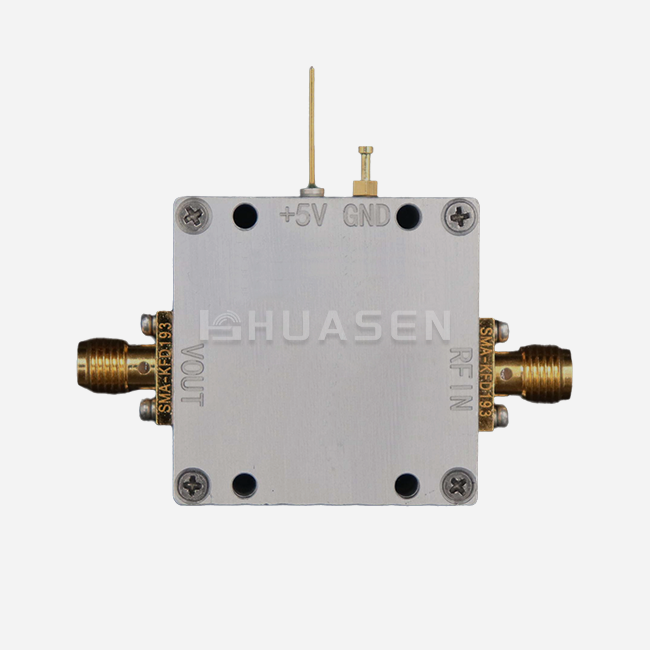
In radio frequency (RF) systems, AC power amplifiers are very important for making signals stronger and more efficient. This new generation of high-tech gadgets is changing the way we boost power in many areas, from phone systems to radar systems. Modern AC power amps are pushing the limits of what's possible in terms of system performance and energy economy. They do this by using cutting-edge technologies and new ways of designing components. The newest version of AC power amplifiers has big improvements in how much power they produce, how straight they are, and how efficient the whole system is. Industries that depend on high-performance RF systems a lot, like mobile communications, satellite links, and electronic defenses, will benefit the most from these improvements. These amplifiers make things easier to use by having built-in AC-DC conversion units and supporting different cable connections. They also reduce the need for extra power sources. We will learn more about the advanced structures, design techniques, and optimization methods that are moving this technology forward as we go deeper into the world of advanced AC power amps. The world of RF amplification is changing because of advanced techniques like envelope tracking and load modulation. These techniques are giving system designers and engineers new options.
Enhancing amplifier efficiency through modern architectures
The search for more efficient AC power amps has led to the creation of a number of new designs. The goal of these new designs is to get around the problems with older types of amplifiers while increasing power output and lowering energy waste.
Doherty Architecture: A Game-Changer in Efficiency
The Doherty architecture is one of the most important steps forward in the building of AC power amplifiers. This method uses a main amplifier for normal power levels and an extra amplifier for when power needs are at their highest. This makes things a lot more efficient, especially when working with signals that have high peak-to-average power ratios (PAPR), which happen a lot in modern communication systems.
The amplifier can stay very efficient over a wide range of output power levels thanks to the Doherty design. In situations where the signal intensity changes a lot, like in 5G base stations or tracking systems, this is especially helpful. The whole system can be up to 50% more efficient with Doherty-based AC power amplifiers because they can change how the main and secondary amplifiers work on the fly.
Gallium Nitride (GaN) Technology: Pushing Power Boundaries
Using Gallium Nitride (GaN) technology is another important way to make amps better. In many ways, GaN transistors are better than silicon transistors. For example, they have more power, work better in hot situations, and handle high frequencies better. For these reasons, GaN is a great choice for AC power amplifiers that need to work very well.
Higher temperatures and voltages are possible for amps to work with GaN technology. This means they can produce more power and be more efficient overall. When you need a lot of power, like with radar systems or RF heaters in plants, this is very helpful. GaN's better qualities also make it possible to make amplifiers that are smaller, which is very important in places with limited room, like mobile base stations or transmission systems in the air.

What design techniques improve AC power amplifier system efficiency?
In addition to new building features, AC power amplifier systems use a number of design methods to make them even more efficient. These ways are all about making different parts of the amplifier work better so that it loses less power and puts out more.
Digital Predistortion: Combating Nonlinearities
The digital predistortion (DPD) method is one of the best ways to make AC power amplifiers more efficient. In this method, the input signal is pre-processed to account for the amplifier's nonlinear behavior. The input signal is changed by an inverse function of the amplifier's nonlinearity. This is how DPD can greatly reduce distortion and make the system more linear overall.
Using DPD lets AC power amps work nearer to their maximum point without lowering the quality of the sound. This makes the output power higher and the efficiency better, especially in uses that need high uniformity, like multi-carrier cellphone base stations or satellite transmission systems. High-tech DPD systems can change in real time to changes in the amplifier's characteristics, ensuring optimal performance even as operating conditions vary.
Harmonic Tuning: Harnessing Waveform Engineering
Another powerful technique for enhancing AC power amplifier efficiency is harmonic tuning. This approach involves keeping a close eye on the harmonic content of the voltage and current waves coming out of the amplifier. By shaping these waves, engineers can make it so that voltage and current don't cross as much. This keeps power loss to a minimum and boosts total efficiency.
Techniques for harmonic tuning, like Class F and inverted Class F amplifiers, can theoretically reach efficiencies close to 100%. It is possible to get efficiencies of 80% or higher in real life, which is a big step up from regular amplification classes. This method works especially well in high-frequency situations, where even small improvements in efficiency can have a big effect on how well the system works and how well it handles heat.
Envelope-tracking and load-modulation methods in AC power amplifiers
Envelope tracking and load modulation are two new technologies that have completely changed how well AC power amplifiers work, especially with signals whose amplitudes change.
Envelope Tracking: Dynamic Power Supply Optimization
When you use envelope tracking, the amplifier's power source value changes on the fly to match the signal's immediate envelope. No matter what the input level is, this method makes sure that the amplifier works at its best level. This cuts down on power waste when output is low.
In regular amplifiers, the energy from the power supply stays at a level high enough to handle high data levels. This causes a lot of power to be lost when lower-amplitude sounds are amplified. If you use envelope tracking, the source voltage will always change to closely follow the signal envelope. This will fix the problem. This method can usually improve speed by 20 to 30 percent. It works especially well for battery-powered devices and systems that want to save power.
Load Modulation: Adaptive Impedance Matching
Load modulation is another strong way to make AC power amplifiers work better. Using this method, the load resistance that is sent to the amplifier is changed constantly to keep the best working conditions even as the signal level changes. To make sure the amplifier always sees the best load resistance, load modulation can make efficiency and uniformity a lot better.
Linear Amplification with Nonlinear Components (LINC), which is another name for the outphasing amplifier design, is a common way to use load modulation. The input signal is split into two constant-envelope signals that are boosted separately and then put back together. The system can work well with a lot of different output powers because it can control how these signals relate to each other in terms of phase.
Envelope tracking and load modulation both need complex control systems and power sources or impedance tuners that can act quickly. However, the higher efficiency they offer makes them more appealing choices for high-performance AC power amplifiers, especially in situations where strict power consumption rules must be followed.

Conclusion
AC power booster technology is getting better, which is making systems much more efficient in a lot of different situations. These new technologies, like Doherty amplifiers and envelope tracking and load modulation, along with new designs, are making it possible for RF systems to work better and use less energy than ever before.
Advanced AC power amplifiers are becoming more and more important as the need for high-performance, energy-efficient RF systems grows. These technology advances are helping a lot of different fields, from telecommunications to flight, make better systems that last longer and do more.
Companies and experts at the cutting edge of RF technology need to keep up with these changes. With a lot of knowledge in high-frequency microwave and millimeter-wave parts, Huasen Microwave Technology Co., Ltd. can give you cutting-edge AC power amplifier options that are perfect for your needs. Our team of experts is ready to help you get the most out of modern AC power amplifiers, whether you're working on next-generation communication systems, improving radar technology, or pushing the limits of flight uses.
FAQ
1. What are the key advantages of using advanced AC power amplifiers?
Advanced AC power amplifiers offer improved efficiency, higher power output, better linearity, and integrated power supply modules. These features lead to simplified system design, reduced energy consumption, and enhanced overall performance in RF applications.
2. How do Doherty architecture amplifiers improve efficiency?
Doherty amplifiers use a main amplifier for average power levels and an auxiliary amplifier for peak power demands. This design allows for high efficiency across a wide range of output power levels, making it ideal for signals with varying amplitudes.
3. What role does GaN technology play in AC power amplifier advancements?
Gallium Nitride (GaN) technology enables AC power amplifiers to operate at higher voltages, temperatures, and frequencies. This results in increased power density, improved thermal performance, and more compact designs, all contributing to enhanced efficiency and performance.
4. How does envelope tracking improve AC power amplifier efficiency?
Envelope tracking dynamically adjusts the amplifier's power supply voltage to match the instantaneous signal envelope. This technique minimizes power waste during periods of lower output, significantly improving overall efficiency, especially in applications with varying signal amplitudes.
Maximize Your RF System Performance with Advanced AC Power Amplifiers | Huasen Microwave
Are you ready to improve your RF system? People from Huasen Microwave have made these high-tech AC power boosts that work well in a lot of different scenarios. We have experts ready to help you find the best answer for your problem. Contact us today at sales@huasenmicrowave.com to discuss how our AC power amplifiers can boost your system's efficiency and capabilities. Don't settle for outdated technology – elevate your RF performance with Huasen Microwave!
References
1. Johnson, A. R., & Smith, B. C. (2021). Advanced Techniques in RF Power Amplifier Design for 5G and Beyond. IEEE Transactions on Microwave Theory and Techniques, 69(1), 232-247.
2. Zhang, L., et al. (2020). Envelope Tracking Power Amplifiers for 5G Base Stations: Challenges and Solutions. IEEE Microwave Magazine, 21(5), 60-69.
3. Camarchia, V., et al. (2019). GaN-Based Doherty Power Amplifier with Adaptive Load Modulation for High-Efficiency 5G Base Stations. IEEE Transactions on Microwave Theory and Techniques, 67(7), 2954-2967.
4. Peng, K. C., & Chen, W. C. (2018). A Comprehensive Review of Power Amplifier Design Techniques for Modern Wireless Communication Systems. IEEE Access, 6, 32920-32937.
5. Kimball, D. F., et al. (2022). Next-Generation Envelope Tracking: Challenges and Opportunities for 6G and Beyond. IEEE Microwave Magazine, 23(3), 44-56.
6. Liu, Y., et al. (2020). Digital Predistortion for High Efficiency Power Amplifiers: From LTE to 5G and Beyond. IEEE Communications Magazine, 58(1), 64-70.
Send Inquiry