Why Use Dual Polarized Horn Antenna for Telecom Applications?






2026-05-21 21:42:48
Telecom systems must be accurate, dependable, and adaptable. The Dual Polarized Horn Antenna sends and receives vertical and horizontal polarisation via a single aperture. This feature reduces hardware duplication and improves signal variety in radio frequency situations with many moving elements. Traditional single-polarized antennas are mechanically adjustable or contain many sections. However, Dual Polarised Horn Antennas incorporate both polarisation channels into a compact construction. This combination tackles three major industry issues: decreasing installation space on complete base station towers, cutting deployment costs, and increasing signal-to-noise ratios in multipath interference areas. Because they increase performance and simplify system design, mobile communications, satellite connections, and RF testing facilities are increasingly using these antennas.
Understanding Dual Polarized Horn Antennas: Working Principles and Key Features
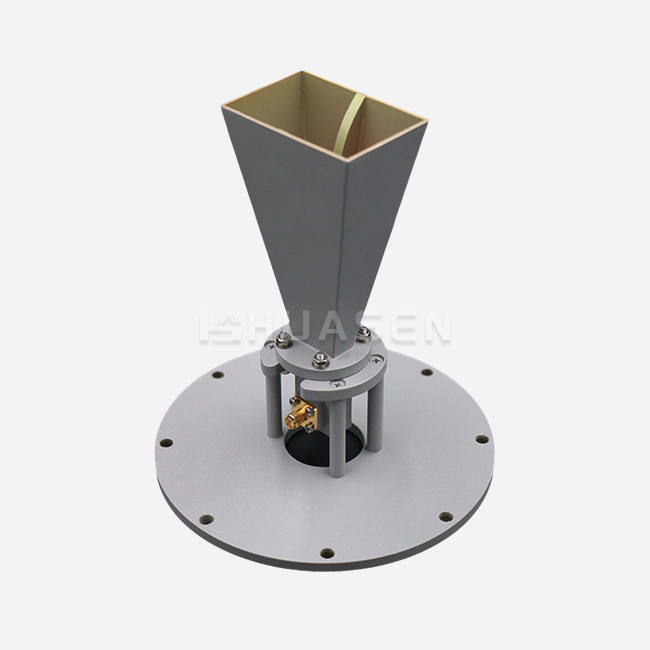
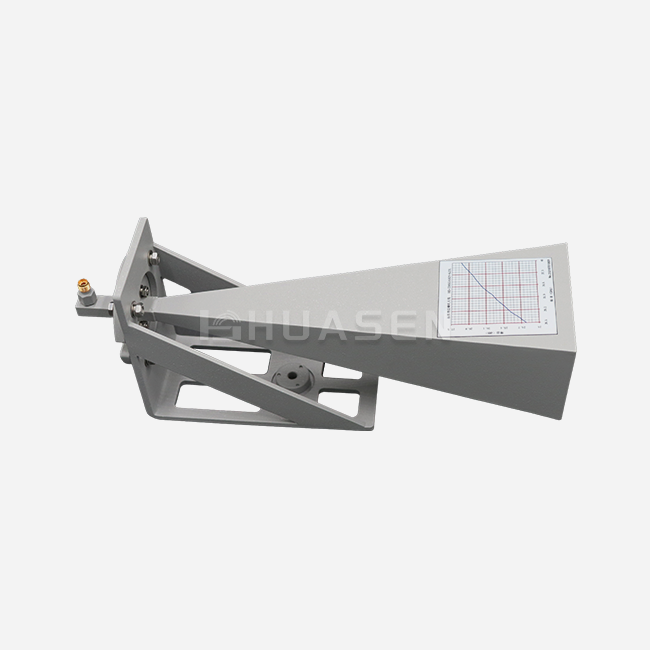
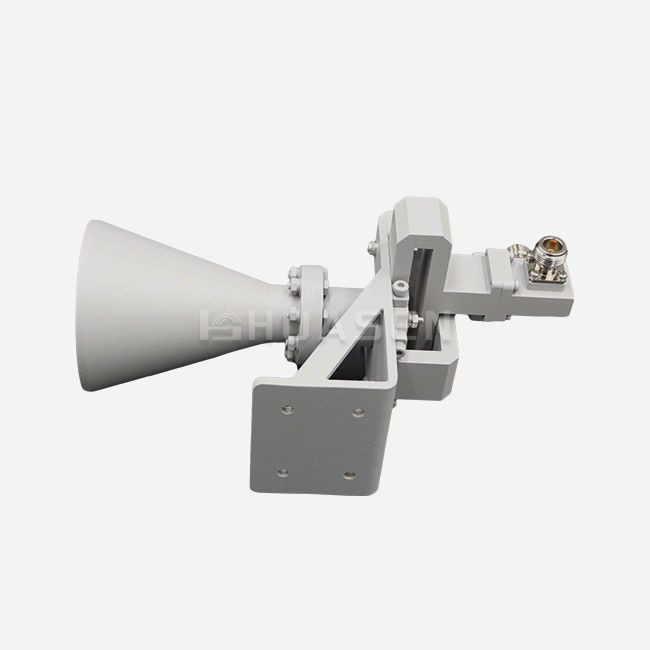
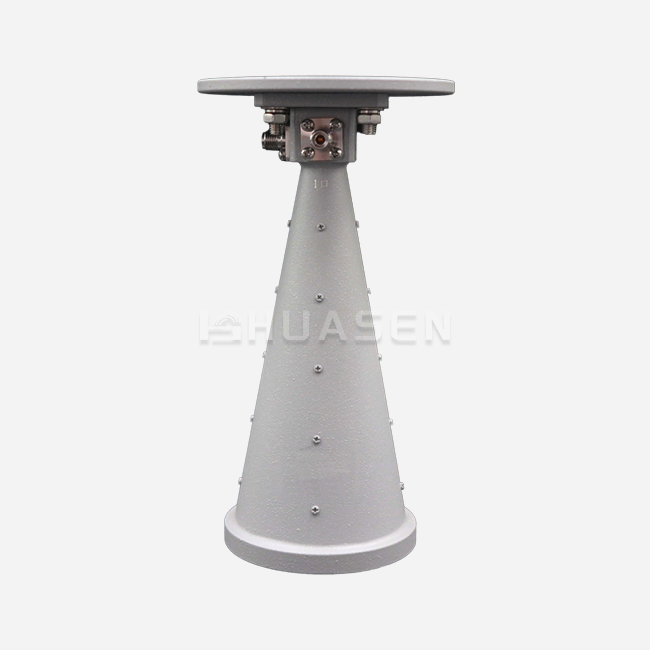
These antennas operate because they may have two signal lines in one transmitting construction. The center has an OMT. It divides or connects perpendicular polarisation modes to prevent interference. With a round or square conical horn aperture, the OMT permits linearly polarised electromagnetic waves to pass vertically and horizontally.
Two Types of OMT Architectures
Huasen Microwave's Dual Polarised Horn Antenna (DPHA) features two OMT designs for various bandwidths. The Conventional OMT is affordable for narrowband application because to its basic engineering and manufacturing. This approach works well for point-to-point microwave communications or radar bands with tight spectrum sharing. It typically spans 5% fractional bandwidth frequencies.
Technically advanced, the Symmetrical Feed OMT can manage 40% fractional bandwidth and 30 dB polarisation separation. This wideband flexibility is crucial in 5G deployments, as operators integrate various frequency bands (such as n77, n78, and n79) into one antenna system. The symmetrical feed architecture ensures phase response consistency across frequency ranges. Even at band ends, this stabilizes radiation patterns and decreases cross-polarization distortion.
Critical Technical Parameters
The antenna's performance in demanding telecom applications is measured. Polarisation isolation measures orthogonal channel separation. Above 30 dB, signals from one polarisation channel don't enter the other, preserving MIMO channel capacity. Voltage Standing Wave Ratio (VSWR) below 1.5 indicates efficient power transfer between antenna and transmission line. This reduces returning energy, which might harm transmitter parts or signal quality. Radiation always faces the same direction, and the gain is generally 15–25 dBi, depending on aperture size and frequency. These properties affect coverage area, interference reduction, and link budget estimations when system designers plan network operations.

Advantages of Dual-Polarized Horn Antennas in Telecom Applications
Telecom networks constantly face spectrum congestion, multipath fading in metropolitan valleys, and the requirement to handle more data without expanding infrastructure. Dual Polarised Horn Antenna technology solves these issues and boosts performance and efficiency. Signal quality improves with polarisation variation. Signal polarisation may become elliptical when it encounters mirrored objects like building walls, landforms, or air. These items may cause severe fading in a receiving antenna that monitors one polarization. Dual-polarized systems may combine incoming signals using maximum ratio combining or selection diversity methods since they handle vertical and horizontal components simultaneously. This maintains the connection if one polarisation channel degrades.
These antenna systems' main telecom infrastructure benefits:
- Installing one dual-polarized horn antenna instead of two single-polarized ones saves tower hiring time and money. This is beneficial in congested places when rooftop space is costly, and the building's load capacity limits device placement.
- Enhanced Spectral Efficiency: Polarisation multiplexing sends several data streams on the same frequency channel using various polarisations. This increases spectrum efficiency without increasing bandwidth, which is a big gain as authorities tighten spectrum usage laws.
- Cross-polarization detection blocks co-channel interference from surrounding cells or systems with matching frequencies. The 30 dB isolation level renders orthogonal polarisation interference signals 1000 times weaker, safeguarding the intended signal.
All of these advantages decrease network operators' total cost of ownership. Procurement teams may simplify inventory by using dual-polarized models instead of separate stock for multiple polarizations. Simple mounting steps and fewer times ascending towers boost safety and speed up network rollout plans for installation crews.
Deployment Versatility Across Frequency Bands
The system works well from 5G bands below 6 GHz to millimetre wave frequencies around 40 GHz. Wideband Dual Polarised Horn Antenna variations allow rural broadband projects using the 3.5 GHz CBRS band to serve consumers across broader service areas using Fixed Wireless Access (FWA) base stations. However, dense urban small-cell operations at 28 GHz or 39 GHz use the same architectural ideas but lower dimensions. Even with narrower apertures, polarisation purity is maintained. System designers may apply well-known design patterns for many project demands due to this frequency flexibility. This reduces engineering risk and approval time.
Dual Polarized Horn Antenna vs Other Antenna Types: Making the Right Choice
To choose the right antenna technology, you have to weigh the pros and cons of gain, bandwidth, size, and polarization traits against the needs of the application. Patch arrays are best for integrating into household electronics because they are small, and omnidirectional dipoles are best for covering large areas. However, the Dual Polarized Horn Antenna is in a special class where controlling the direction and strength of the signal becomes very important.
Comparative Analysis Against Common Alternatives
Patch antenna arrays are great for mobile phones and vehicles because they can electronically move the beam and mount to curved surfaces. Their gain is usually between 6 and 12 dBi, and their beamwidths are too wide for point-to-point backhaul links that need to reduce crosstalk. Cross-polarization discrimination in patch designs rarely goes above 15 dB, which makes them less useful in settings with a lot of channels where adjacent-channel rejection is important. Monopole and dipole designs offer coverage in all directions or a wide area, making them good for use in cell phone macrocells and transmission towers. It's great that these antennas can serve a lot of devices spread out over a large area, but they don't have the directionality that's needed for stable wireless backhaul or equipment that needs to avoid interference. Because they only have one polarization, which is linear by nature, they also don't get the capacity-doubling benefits of polarization multiplexing.
Different kinds of circularly polarized horns are used for satellite transmission when the rotating direction between the ground station and the transponder in orbit means that the receiver needs to be able to receive signals of any polarization. This means that the feed is more complicated—usually a septum polarizer or a quadrature mix is needed—and the gain is lower than with equivalent-aperture linear designs. Linear dual-polarized horn antenna architectures are more effective and help keep signals separate in telecom terrestrial networks, where both the sender and listener stay in the same position. The Dual Polarized Horn Antenna is the best choice for situations that need high gain (above 15 dBi), a small beamwidth to block spatial interference, and the ability to work with MIMO or polarization diversity methods. Radar cross-section measurement facilities, Over-The-Air testing chambers for device certification, and microwave backhaul links connecting base stations to core networks are all examples of situations where the antenna's larger size and higher unit cost are justified by its unique properties.
Procurement Considerations for Dual Polarized Horn Antennas in B2B Telecom Markets
When buying telecom infrastructure parts, people don't just look at the technical specs; they also look at how reliable the supply chain is, how much customization is possible, and how long-term the support is guaranteed. When procurement experts have to balance performance needs with budget limits, it helps to know how changes in the market and supplier skills affect the overall cost of a project involving a Dual Polarized Horn Antenna.
Pricing Structures and Lead Time Management
Industrial-grade Dual Polarized Horn Antenna units have a wide range of prices that depend on frequency range, bandwidth, and production volume. Narrowband traditional OMT systems that work in the 4–8 GHz range usually have lower unit costs because they are easier to machine and put together. Wideband millimetre-wave versions that cover 18–40 GHz with a 40% fractional bandwidth need precise waveguide manufacturing and strict quality control testing, which means they cost more to develop and make. Tiered pricing can be unlocked by making a volume pledge. Orders of 50 or more units often qualify for 15–25% discounts compared to single-unit purchases, which makes buying in bulk a good deal for large-scale network setups.
Lead times change depending on how customized the product needs to be and when the supplier's production plans are. Standard catalogue items with popular connection types, like SMA or WR-standard waveguide flanges, ship within two to four weeks from well-known makers who keep extra stock on hand. Custom frequency bands, non-standard housing materials for corrosion protection, or specialized mounting brackets can make delivery times 8–12 weeks longer because providers have to assign engineering resources and get the right raw materials. Strategic sellers keep in touch with a number of qualified suppliers to avoid the risks that come with relying on just one source. They also do this to get better prices and make sure they have enough inventory to meet project deadlines.
Customization Capabilities and Engineering Support
A lot of telecom projects need antenna modifications that go beyond what's available off the shelf. Frequency tuning works with regional spectrum licenses. For example, a system that works at 3.4–3.6 GHz can be changed to work at 3.3–3.8 GHz to meet the needs of different national regulatory settings. Standardizing connectors makes sure they work with the transmission line equipment that is already in place. This is true for both coaxial connections for low-frequency bands and waveguide flanges that meet EIA or IEC size requirements. Environmental hardening takes into account the conditions of deployment. For example, marine-grade coatings protect against corrosion caused by salt spray in coastal sites, and conformal coatings keep water out in warm regions with changing temperatures and high humidity.
Suppliers with strong technical support give thorough S-parameter data, radiation pattern plots across the whole working band, and power handling specs that have been tested and proven by a third party. This information helps system designers correctly model how antennas work in tools for planning networks and figuring out link budgets. Responding expert teams help with integration problems by giving advice on the best fixing positions to reduce side-lobe interference or suggesting radome materials that protect against weather and keep the polarization pure.
Certification and Compliance Verification
Regional and worldwide norms for electromagnetic compatibility, environmental stability, and safety must be followed for global telecom projects. RoHS approval proves that there are no harmful chemicals, meeting the needs of the European Union for imports and company sustainability policies. The MIL-STD-810 test confirms that the item can survive mechanical shock, vibration, and high temperatures that are used in defence and aircraft. ISO 9001 certification of supplier quality management systems guarantees consistent production methods and tracking rules that are needed to figure out what went wrong and file a warranty claim.
Instead of depending only on what the seller says, buyers should ask for copies of the certificates and test results from a third party. Verification by well-known testing labs, like those approved under ISO/IEC 17025, boosts trust and lowers the risk of responsibility that comes with non-compliant equipment that might slow project start-up or require expensive repairs.
Spotlight on Leading Brands and Their Dual Polarized Horn Antenna Offerings
There are specialized companies in the industrial antenna market that have been serving the defence, aircraft, and telecoms sectors for decades. Procurement teams can find the best partners for each project by learning about each supplier's technical skills and how they place their Dual Polarized Horn Antenna products.
Established North American companies like Pasternack keep large catalogues with a lot of products covering typical frequency bands from 1 GHz to 40 GHz. They focus on fast shipping and standard interfaces that can be used for test and measurement tasks. When making their goods, they usually put cost-effectiveness for lab use ahead of ruggedization features needed for outdoor use. Gain values range from 10 to 20 dBi, and bandwidth coverage is modest. This is good for users who need solid performance without having to do custom engineering.
European companies like Huber+Suhner focus on providing high-quality parts for infrastructure projects. They provide IP67-rated enclosures and links that can work continuously outside in temperatures ranging from -40°C to +65°C. Their business puts a lot of emphasis on meeting telecommunications standards and includes a lot of paperwork to help network operators with the approval process. Five-year warranties show that the company is confident in the product's long-term reliability, which is appealing to buyers who value the product's lifetime costs over its initial purchase price.
Asian companies, like Huasen Microwave, offer reasonable prices and the ability to make changes as needed. They do this by investing a lot in research and development. Since its start in 1993, Huasen has become very good at making precise waveguides and designing OMTs. This lets them make both narrowband and wideband versions that regularly have polarization separation above 30 dB. Their Symmetrical Feed OMT design gets 40% fractional bandwidth while keeping VSWR below 1.5 across the operating spectrum. This means that it performs as well as or better than Western competitors while being cheaper for large-scale purchases. Manufacturing capacity can handle orders ranging from small amounts of prototypes to thousands of units for national network rollouts, and lead times can be adjusted to fit the complexity of the order.
Customer feedback patterns across the industry show a few similar evaluation factors. Buyers always put a high value on test data that backs up the stated specs, quick responses to technical questions before the sale, and help after the sale to deal with integration issues. As infrastructure projects get more complicated, buyers are more likely to be satisfied and buy from manufacturers that have application engineering teams that understand how telecom systems work, instead of just selling catalogue parts.
Conclusion
These dual polarized horn antennavariants are a smart infrastructure investment for telecom operators and system designers who have to deal with limited bandwidth, limited room, and performance needs that single-polarization options can't meet. Because they can work across a wide frequency range, support MIMO setups, and keep high separation between orthogonal channels, they are important parts of 5G backhaul networks, satellite ground stations, and precise RF measurement systems. Because standard and symmetrical feed OMT versions offer different architectures, buyers can find the best cost-performance balance for their individual bandwidth needs. Procurement teams should look at more than just written specs when reviewing suppliers. They should also look at how customizable the suppliers are, how many safety licenses they have, and how much technical help they offer throughout the lifespan of a product. When companies put these factors at the top of their list of priorities, they build supply relationships that improve the success rates of projects and the long-term performance of networks.
FAQ: Key Questions About Dual Polarized Horn Antennas for Telecom
1. What advantages do dual-polarized antennas provide over single-polarization designs?
Dual-polarized antennas allow for polarization diversity receiving, which makes the link more reliable in multipath settings where signal fading affects each polarization separately. They allow polarization multiplexing, which doubles the number of channels without adding more frequency. When compared to installing different antennas for each polarization, combining hardware saves tower room and lowers the cost of installation.
2. Are these antennas suitable for millimetre wave 5G networks?
Modern designs keep the polarization pure and improve performance across millimetre wave bands, such as those at 28 GHz and 39 GHz. Larger fractional bandwidths are common in mmWave frequency allocations, and wideband OMT designs can handle them. Small aperture sizes scaled to higher frequencies work with the limitations of small-cell placement while providing the directed gain needed to make up for higher path loss.
3. How should buyers select appropriate gain and frequency ranges?
The path loss, receiver sensitivity, and preferred fade margin are used in link budget estimates to find the minimum gain that is needed. Higher gain makes the beam narrower, which improves spatial selection but needs careful alignment. The frequency range you choose should match the approved spectrum allocations and device working bands. Wideband models make it easier for operators to keep track of their goods when they have to manage multiple frequency assignments, while narrowband models get the best value for money for single-band uses.
Partner with a Trusted Dual Polarized Horn Antenna Manufacturer
Huasen Microwave has been making waveguide components for 30 years and can help with problems in telecom systems. Our Dual Polarized Horn Antenna product line covers all possible deployment situations, from low-cost narrowband point-to-point links to high-cost wideband 5G aggregation sites that need symmetrical feed performance with 40% bandwidth and 30 dB separation. Engineering teams can access a lot of technical information, like observed S-parameters and radiation patterns, which helps them confidently integrate the system. We can customize the frequency tuning, connector specs, and environmental protection to meet the needs of your particular project. Manufacturing capacity ranges from small numbers for prototypes to more than 1,000 units per year. Quality systems that are approved to ISO 9001 standards make sure that all deliveries are performed to the same high standard. Email our applications engineering team at sales@huasenmicrowave.com to talk about the details of your project, get sample evaluation units, or get prices for large orders for your next infrastructure rollout. We provide the technical support that your telecom projects require as a devoted Dual Polarized Horn Antenna provider committed to the success of your project.
References
1. Balanis, Constantine A. Antenna Theory: Analysis and Design. 4th ed. Wiley, 2016.
2. IEEE Std 145-2013. IEEE Standard for Definitions of Terms for Antennas. Institute of Electrical and Electronics Engineers, 2014.
3. Milligan, Thomas A. Modern Antenna Design. 2nd ed. Wiley-IEEE Press, 2005.
4. Orfanidis, Sophocles J. Electromagnetic Waves and Antennas. Rutgers University, 2016.
5. Pozar, David M. Microwave Engineering. 4th ed. Wiley, 2011.
6. Stutzman, Warren L., and Gary A. Thiele. Antenna Theory and Design. 3rd ed. Wiley, 2012.
Send Inquiry