Waveguide Probe Coupler Design Considerations for Millimeter Wave Use






2026-05-21 21:42:53
When working with millimeter wave systems at frequencies between 30 GHz and 300 GHz, building a waveguide probe coupler requires paying close attention to accuracy in measurements, choosing the right material, and making the coupling device work as well as it can. With very little reflection and insertion loss, these transition devices change electromagnetic energy from coaxial transmission lines into waveguide propagation modes. To get reliable signal transfer in challenging 5G base stations, satellite communication terminals, and radar calibration sets, engineers have to find the right mix between probe geometry, backshort positioning, and thermal stability. When buying teams, understand these basic design principles, they can choose parts that keep signals intact over a wide frequency range and can work in difficult conditions.
Understanding Waveguide Probe Couplers and Their Operating Principles
What Makes Probe Couplers Essential in Millimeter Wave Systems?
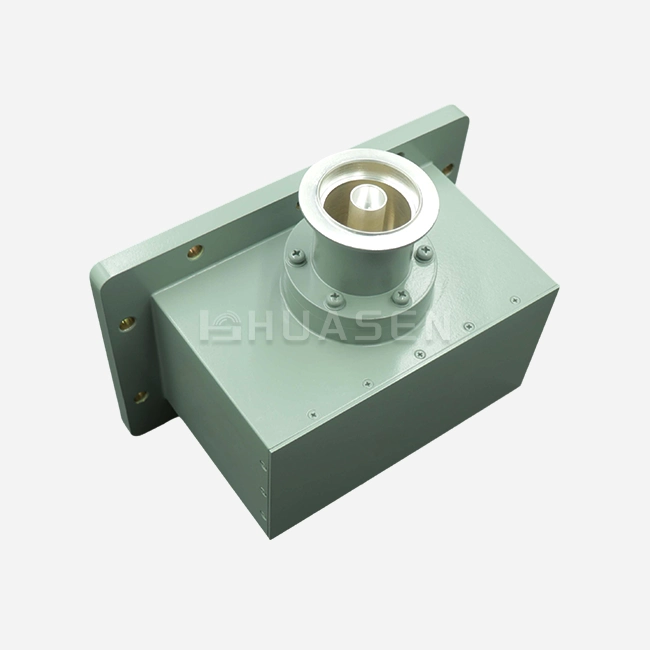
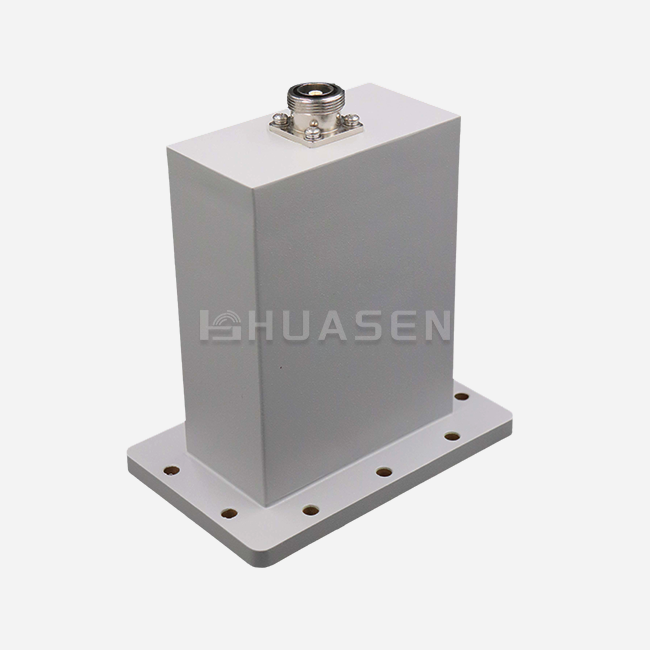
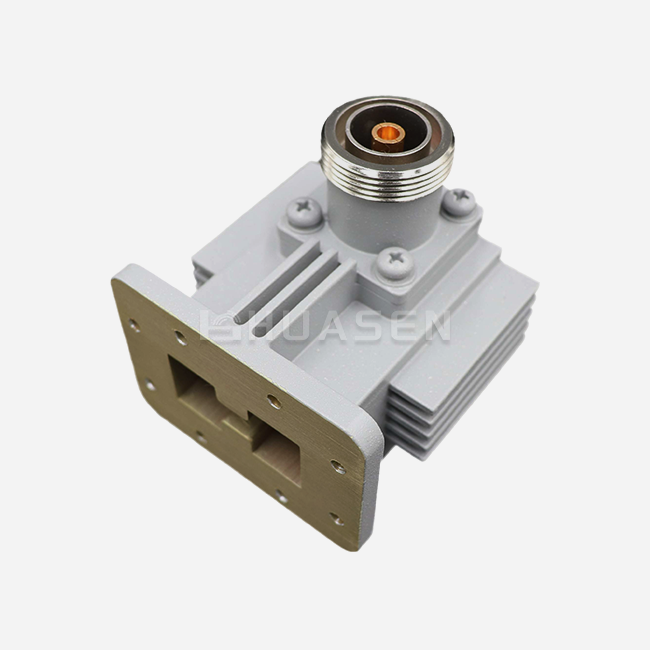
For millimeter wave uses, you need parts that can change messages between very different ways of sending them. This is done by a waveguide probe coupler putting a metallic monopole element through the wide wall of a rectangular waveguide, placing it exactly a quarter of a wavelength away from a short-circuit termination. This arrangement makes a helpful interference that boosts the main TE10 mode inside the waveguide cavity. The probe sends out electromagnetic fields into the limited waveguide environment like an antenna. It changes the voltage and current signals from a 50-ohm coaxial connection into electromagnetic field distributions that can travel through hollow metal channels.
Much of how well this energy exchange works depends on how well the coaxial input matches up with the waveguide's characteristic resistance, which changes with frequency and size. For lower frequency changes, limits can be less strict, but millimeter wave probe couplers need to be made with micrometer-level accuracy. Changes in probe width, surface roughness, and waveguide dimensions all have a direct effect on the voltage standing wave ratio (VSWR) and return loss performance. It's also important to choose the right materials. Copper and brass are still common because they carry electricity well, but gold-plated aluminum alloys are being used more and more in aircraft uses that need to be lighter and resistant to corrosion.
Core Components That Determine Performance
Most of the time, the probe element is a tubular pin that sticks out into the waveguide's electric field maximum. The coupling strength and frequency response are controlled by its length, thickness, and entry depth. When probes are shorter, they produce weaker coupling that works well for sampling. On the other hand, when probes are deeper, they improve energy transfer for main signal routes. The waveguide housing provides a resonant cavity and needs to be very accurate in its measurements. Even small errors at V-band (50–75 GHz) or W-band (75–110 GHz) frequencies can hurt performance a lot.
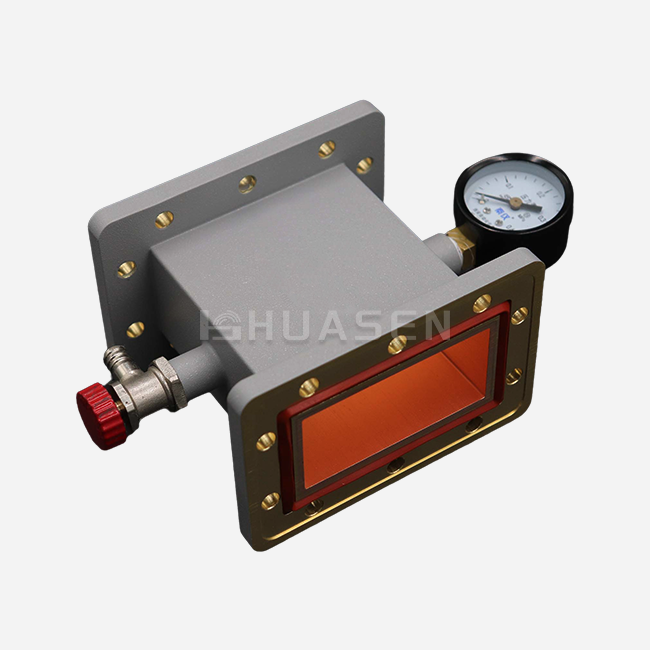
The backshort device behind the probe can be adjusted to fine-tune the electrical distance to the short circuit. By rotating this threaded part, technicians can change the effective path length and get the best VSWR across a certain frequency range. Fixed couplers, which are called WTC in the industry, don't have this ability to be adjusted. They have a small form that makes them useful for situations where factory optimization is enough. Adjustable versions (WVTC types) offer field setting freedom, but they add to the complexity of the mechanism and could cause reliability issues in places with a lot of vibration, like ships or airplanes.
Why Do Millimeter Wave Frequencies Demand Special Attention?
As operating frequencies climb into millimeter wave bands, wavelengths shrink dramatically—from 10 mm at 30 GHz down to 1 mm at 300 GHz. This physical reality forces waveguide dimensions to be smaller. For example, WR-28 (26.5–40 GHz) measures 7.11 x 3.56 mm internally, while WR-10 (75–110 GHz) shrinks to just 2.54 x 1.27 mm. Manufacturing such tiny precision structures challenges even advanced CNC machining and electroforming processes.
The depth of the skin also reduces with frequency, so the quality of the top finish is very important. At 100 GHz, current flows within approximately 0.2 micrometers of the conductor surface. Any oxidation, roughness, or metal flaws in this thin layer make insertion loss worse. Electropolishing or gold finishing is used on high-quality probe couplers to reduce these losses, but they cost more. When temperatures change, thermal expansion differences between metals that are not the same can be a problem. For example, aluminum housings with brass probes may have electrical performance drift because the sizes of the parts change in different ways as the temperature changes. When engineers are working on satellite packages that cycle between -55°C in Earth's shadow and +125°C in direct sunlight, they need to use matched-coefficient materials or active compensation.

Critical Design Considerations for Millimeter Wave Waveguide Probe Couplers
Dimensional Precision and Tolerance Management
To achieve low VSWR at millimeter wave frequencies, the waveguide's internal dimensions must be maintained within tight tolerances, typically ±0.013 mm (±0.0005 inches) or better. The position of the waveguide probe coupler relative to the waveguide walls and its distance from the backshort must also be controlled to the same level of accuracy. Misalignment of the waveguide probe coupler can excite higher-order modes, leading to loss of directivity and frequency-dependent resonances.
Modern manufacturing techniques, such as precision CNC cutting and CMM inspection, ensure that these tolerances are met. Split-block construction can simplify machining but may introduce joint losses if the mating surfaces are not perfectly flat and conductive. Techniques like silver-loaded gaskets or indium wire seals can maintain electrical contact between seams.
Tolerances in probe placement depth directly impact the coupling factor's stability across production lots. Manufacturers use precision jigs and electrical testing with network analyzers to verify performance before shipment. Automated assembly with vision-guided robotics ensures repeatability for high-volume production.
Material Selection for Loss Minimization and Durability
The choice of materials for waveguide components significantly affects insertion loss. Pure copper offers low loss but is mechanically weak and prone to tarnishing. Brass, a copper-zinc alloy, is more robust and easier to machine but exhibits slightly higher loss. Aluminum is a lightweight alternative for airborne and space applications but requires thicker plating with high-conductivity metals to compensate for its lower conductivity.
Gold plating remains a premium surface treatment, offering excellent conductivity and oxidation resistance. Silver plating provides even better conductivity but tarnishes over time unless sealed or maintained in controlled environments. Dielectric materials for coaxial connectors and probe insulators must exhibit a low loss tangent at millimeter wave frequencies, with PTFE (Teflon) being a popular choice.
Optimizing Coupling Level and Directivity Through Geometry
The coupling factor in industrial probe couplers typically ranges from 10 dB to 60 dB, depending on the application. Adjustable designs allow technicians to optimize coupling for specific measurement situations. Probe shape and size determine the coupling strength, with tapered probe tips broadening bandwidth at the cost of slightly decreased peak coupling.
High-quality couplers are distinguished by their directivity. Some probe coupler designs intentionally omit directional functionality, as their primary role is signal sampling rather than separating incident and reflected waves. When directivity is crucial, specialized directional bridge couplers with resistive terminations and coupling holes at multiple positions are employed.
Bandwidth Challenges: Mode Conversion and Dispersion
Rectangular waveguides behave like high-pass filters, with propagation occurring above the cutoff frequency. The useful bandwidth is limited by the onset of higher-order modes, typically TE20. Within this range, phase velocity changes with frequency (dispersion), affecting group delay and potentially distorting wideband signals.
Probe couplers introduce additional frequency-dependent behavior through their resonant coupling process. Broadband designs use backshort settings that sacrifice peak performance for a flatter response across the working range. Mode conversion represents another bandwidth-limiting factor, occurring when the probe excites parasitic modes (TE01 or TE20) in addition to the desired TE10 mode. To mitigate mode conversion, the probe must remain symmetrical with respect to the waveguide axis, and sharp changes that scatter energy into higher modes must be avoided.
Selecting and Procuring the Right Waveguide Probe Coupler for Your Application
Essential Specifications That Match System Requirements
Frequency range is the main factor used for choosing a waveguide probe coupler. Standard waveguide bands tell you what parts are available: WR-28 covers 26.5 to 40 GHz, WR-22 spans 33 to 50 GHz, WR-19 covers 40 to 60 GHz, and so forth up to WR-03 for 220 to 325 GHz uses. Optimal VSWR and coupling flatness are achieved by choosing a coupler fitted to your operating band. Using a part outside its intended range leads to a poor impedance match and uncertain coupling behavior.
The coupling factor sets the measurement sensitivity and main-line loading. Tighter coupling (lower dB values like 10 or 20 dB) extracts more power to make sensing easier, but loads the system proportionally. Looser connection (40–60 dB) minimally impacts the main signal but does need more sensitive monitoring gear. This choice is based on system noise floor and available signal strength—calibration labs with low-noise receivers can utilize 40 dB coupling, while field monitoring in noisy RF environments might need 20 dB coupling for reliable readings.
Insertion loss directly subtracts from the system link budget. When there are many sampling points, a 0.2 dB loss through each waveguide coupler adds up quickly. High-quality parts from well-known brands always meet specified loss figures, while budget alternatives may exceed nominal values by 0.1 to 0.3 dB due to manufacturing shortcuts. Demanding tasks like satellite payloads, where every tenth of a dB matters, justify premium components with tight loss control.
For transmitter tracking and high-power radar systems, the ability to handle power is important. Telecommunications applications usually handle average power ratings of 10 to 50 watts, while pulsed radar may specify peak power limits of several kilowatts with clear pulse width and duty cycle. Exceeding power ratings risks dielectric breakdown at the coaxial-to-waveguide joint or probe deformation from thermal stress. Conservative derating (operating at 50–70% of maximum power) keeps the calibration stable and improves component life.
Evaluating Manufacturer Capabilities and Support
Component certification provides objective proof of quality and reliability. MIL-DTL-3922 covers military-grade waveguide specifications, while ISO 9001 certification shows systematic quality management. RoHS compliance ensures environmental responsibility and legal marketability. Manufacturers publishing test data sheets with swept frequency measurements of VSWR, insertion loss, and coupling factor demonstrate transparency and confidence in their products.
Specialized makers separate themselves from catalog resellers through customization capabilities. For uses that need non-standard frequency requirements, flange types, or specific coupling profiles, suppliers offering engineering collaboration are helpful. Huasen Microwave, with over 30 years in RF component manufacturing, provides custom probe coupler designs optimized for client specifications—from modified coupling factors to environmentally hardened versions meeting specific MIL-STD test protocols. During the design phase, their engineering team helps with impedance optimization and thermal analysis, reducing procurement risk.
After-sales technical support proves invaluable when system integration challenges arise. Responsive manufacturers provide application notes explaining proper installation, torque specifications for connectors, and troubleshooting guides for common issues. Access to skilled RF engineers by phone or email helps procurement teams validate compatibility with existing equipment and resolve unexpected performance discrepancies. Long-term supply chain stability is just as important—components chosen for production systems need assured availability over product lifecycles spanning years or decades.
Practical Procurement Strategies for B2B Buyers
Technical risk can be reduced by asking for samples before committing to large production quantities. Manufacturers confident in their products readily provide evaluation units, sometimes at reduced cost or with a credit toward future orders. Testing samples in your actual system reveals compatibility issues that datasheet specifications cannot predict—mechanical fit with existing hardware, thermal behavior under operational conditions, and electrical performance with your specific signal characteristics.
Different suppliers have very different price systems for volume orders. Small quantities (1–10 units) usually cost more and qualify for minimal deals. When production numbers reach 50 to 100 or more, tiered prices can reduce unit costs by 20 to 40 percent. Long-term agreements guaranteeing minimum annual volumes often secure additional discounts and priority allocation during supply constraints. Budget-conscious procurement teams balance inventory holding costs against volume discount savings, particularly for components with stable long-term demand.
Lead times are much longer for special or non-catalog items. Standard waveguide band couplers with common specs usually ship in 2 to 4 weeks, while custom designs require 8 to 12 weeks for engineering, prototyping, and testing. Military-qualified components with full test documentation and traceability may extend to 12 to 16 weeks. Strategic buyers incorporate these timelines into project plans, initiating procurement early enough to avoid delaying system integration.
Checking for legitimacy guards against fake or low-quality parts, such as a waveguide coupler. Reputable manufacturers provide proof of approval (RoHS or certificates of conformance) for each serial-numbered unit. Packaging should look professional with proper labeling and instructions. Purchasing through authorized distributors instead of unknown online markets reduces counterfeit risk, though typically at a higher cost than direct manufacturer pricing.
Conclusion
The design of a waveguide probe coupler strikes a balance between electromagnetic accuracy and mechanical usefulness. Dimensional limits, which are recorded in micrometers, show whether or not parts meet specifications over wide frequency ranges. When choosing materials, you have to make sure that they will last in the surroundings and lose as little electricity as possible. To meet the needs of an application, coupling mechanism optimization trades off size, directivity, and bandwidth. Knowing about these design factors helps buyers make smart choices that balance performance with limitations on cost and delivery. Choosing the right waveguide couplers is important for making sure that signals stay intact and systems work reliably, whether they are serving 5G infrastructure projects, satellite ground stations, or precision test equipment. Buyers benefit when they work with makers who offer customization options, clear performance proof, and ongoing expert help for the lifetime of a product.
FAQ
1. How do waveguide probe couplers differ from directional couplers?
To get signal samples, a waveguide probe coupler uses a single monopole element that sticks out into a waveguide. Directional couplers, on the other hand, use holes or paired transmission lines to tell the difference between waves moving forward and backward. Probe designs are easier to build, smaller, and have lower insertion loss (usually 0.1 to 0.2 dB compared to 0.5 to 1.0 dB) but lack built-in directivity. Probes that are simple are good for applications that only need to check power, but directional coupler functions are needed for network analysis and VSWR measurement. Probe couplers often include backshorts that can be adjusted to get the best field performance, while directional designs fix the coupling properties when they are made.
2. What design factors primarily influence coupling directivity?
Many probe couplers don't have directional functionality on purpose, but designs that need it rely on the probe being symmetrical with respect to the waveguide axis and being placed precisely in the backshort. Multiple modes are excited by asymmetric probe placement. These modes propagate with different velocities, creating coupling to both forward and reverse waves. Manufacturing tolerances directly impact directivity—a 0.1 mm lateral offset at Ka-band can degrade directivity by 5-10 dB. Specialized designs incorporate multiple coupling elements or resistive terminations to improve directivity, though at the cost of increased complexity.
3. Can manufacturers customize probe couplers for specific frequency requirements?
Established manufacturers routinely customize coupling specifications to match application needs. Adjustments include optimizing probe dimensions and backshort position for narrow frequency ranges, providing tighter coupling flatness than stock components spanning full waveguide bands. Custom flange types accommodate non-standard interfaces, while modified connector orientations suit space-constrained installations. Power handling upgrades employ enhanced dielectrics and thermal management for high-power applications. Environmental hardening adds hermetic sealing and corrosion-resistant materials. Lead times extend 8-12 weeks for custom designs versus 2-4 weeks for standard products.
Connect with Proven Waveguide Probe Coupler Expertise at Huasen Microwave
Huasen Microwave brings three decades of millimeter wave component manufacturing experience to your most demanding RF challenges. Our engineering team collaborates with system integrators and OEM manufacturers worldwide, delivering both standard and custom Waveguide Probe Coupler solutions optimized for your specific frequency bands, coupling requirements, and environmental conditions. We maintain extensive waveguide component inventories for rapid delivery, while our in-house design capabilities support custom modifications within 8-12 week timeframes. Every unit ships with swept frequency test data verifying VSWR, insertion loss, and coupling flatness across your specified operating range. Whether sourcing components for 5G infrastructure, aerospace radar systems, or precision test equipment, our applications engineers provide technical guidance from initial specification through production integration. Contact our team at sales@huasenmicrowave.com to discuss your requirements with experienced suppliers committed to performance and reliability throughout your project lifecycle.
References
1. Pozar, David M. Microwave Engineering, 4th Edition. Hoboken: John Wiley & Sons, 2012.
2. Collin, Robert E. Foundations for Microwave Engineering, 2nd Edition. New York: McGraw-Hill, 1992.
3. Marcuvitz, Nathan. Waveguide Handbook. London: Peter Peregrinus Ltd., 1986.
4. Saad, Theodore S. Microwave Engineer's Handbook, Volume 1. Dedham: Artech House, 1971.
5. Harvey, A. F. Microwave Engineering. London: Academic Press, 1963.
6. Baden Fuller, A. J. An Introduction to Microwave Theory and Techniques, 2nd Edition. Oxford: Pergamon Press, 1979.
Send Inquiry