How Broadband Horn Antenna Improves Signal Coverage in Labs






2026-05-21 21:42:51
Broadband Horn Antennas continually operate at high frequencies across vast regions, commonly from 1 GHz to 18 GHz and beyond, changing lab signal distribution. Multi-frequency testing requires frequent switching of narrowband antennas. However, these antennas offer consistent gain and obvious radiation patterns across their range. This functionality reduces measurement downtime by a lot while maintaining EMC/EMI compliance, antenna calibration, and RF validation accuracy. Ridged horns, particularly double-ridged ones, lower cutoff frequencies, and maintain impedance throughout several octaves. This addresses the crucial issue of delivering wideband signals in controlled test conditions.
Understanding Broadband Horn Antennas and Their Role in Labs
For lab testing, you need precision equipment that can handle a variety of frequencies without impacting measurement accuracy. Broadband Horn Antennas suit these demands due to their design and electromagnetic wave operation.
The Fundamentals of Broadband Horn Antenna Architecture
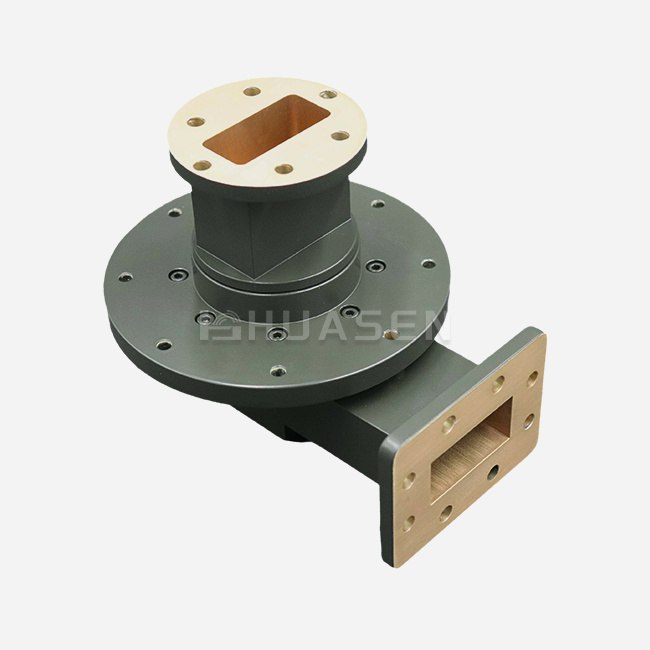
A flared horn construction with finely formed metal lines, generally along the E-plane walls, distinguishes the Broadband Horn Antenna. This rigid construction lowers the cutoff frequency and matches the usual waveguide impedance to a 50-ohm coaxial connection. The device can function over multiple octaves and maintain a VSWR below 2.0:1 for much of its operating band. Anticorrosion-coated light aluminium is used for antenna bodies. It's resilient under demanding lab settings and maintains signal integrity.
Applications Across Laboratory Testing Disciplines
Modern laboratories use these antennas for mission-critical work. EMC/EMI compliance testing uses them as standard reference antennas to measure radiated immunity and emissions in anechoic rooms. They cover the whole CISPR 16 and MIL-STD-461 range without pauses. High antenna linearity and gain factors aid radar cross-section measurements. These variables help evaluate aeroplane components for path loss. Microwave testing labs characterise antenna patterns using these antennas. The steady phase centre and predicted radiation patterns allow accurate device testing. It can also evaluate 5G and 6G components over-the-air using Broadband Horn Antenna characteristics to test MIMO performance and polarisation diversity across new frequency bands.
Advantages Over Legacy Antenna Technologies
Broadband Horn Antennas outperform log-periodic, patch, and parabolic antennas in experimental work. Many big log-periodic antennas have poorer gain and less dependable emission patterns near the band edges. Patch antennas are compact but lose channel and gain stability. Although parabolic antennas offer tremendous gain, they only function in a few frequency ranges. Multiple sets are needed to test multiple frequencies. The Broadband Horn Antenna integrates these functions into one device, reducing equipment costs and eliminating tuning issues caused by switching antennas during testing processes.

Limitations of Traditional Antennas and How Broadband Horn Antennas Address Them
Traditional radio systems have practical bottlenecks that make lab work less efficient and measurement accuracy less reliable. Knowing these problems makes it clear why Broadband Horn Antennas are so important in current test labs.
Bandwidth Constraints and Measurement Interruptions
Standard pyramidal horn antennas work in specific frequency ranges that are set by the way their waveguides cut off waves. To test over a wide range of frequencies, you have to physically switch between different antennas, each of which is best for a different band. This process makes things more difficult. The measurement system has to be recalibrated after each antenna swap, which takes time in the lab and could lead to mistakes. When changing antennas, the mechanical handling that is needed can make alignment less accurate in small range setups, which can affect the accuracy of measurements. Patch antennas have even smaller bandwidths and gain changes that are very noticeable across their small working ranges. This means they can't be used for tasks that need uniform performance across multiple frequency bands.
Gain Instability and Its Impact on Test Accuracy
Another major problem with standard antenna systems is that the gain can change. When the measurement frequency changes, standard antennas have gain curves that aren't smooth, with peaks and valleys that are hard to predict. These differences make it harder to figure out path loss and transmission efficiency, so you need to use a lot of gain adjustment tables and take a lot of reference measures. In tests for radiated emissions, antenna gain that isn't stable can hide the real amounts of emissions or give fake positives, which can cost a lot of money to fix or cause compliance failures. Broadband Horn Antennas solve this problem with their ridged design, which keeps the gain steadily rising with frequency. This is a known property that makes calibration easier and boosts the trust in measurements.
Real-World Performance Improvements in Testing Facilities
When research institutions try satellite communication components, they have found that switching to Broadband Horn Antenna systems makes them much more efficient. By not having to switch antennas during frequency runs from 2 GHz to 18 GHz, testing time for each component was cut by about 40%. More importantly, readings were much more accurate and consistent. Compared to multi-antenna setups, the standard deviation in gain measures dropped by more than 30%. Because of these improvements, it is now easier to spot small changes in the performance of parts that are being tested, which directly leads to better product quality assurance. Testing centres that did MIL-STD-461 compliance checks found similar benefits, with fewer retests needed because measurements were more accurate and there was less calibration shift.
Core Design Principles and Performance Metrics of Broadband Horn Antennas
What makes Broadband Horn Antennas good for lab use is directly related to their electromagnetic and mechanical properties. When making a procurement choice, people have to weigh a number of performance factors against special testing needs.
Electromagnetic Design Considerations
The flare angle and opening size have a big impact on how well an antenna works. When it comes to upper frequency bands, bigger aperture sizes usually mean higher gain, but they also mean bigger and heavier. When compared to smooth-walled horns, the ridged shape lets designers get a wider bandwidth in smaller packages. The purity of the polarisation is managed by the symmetry of the ridges and the accuracy of the feeding system. When the right feed networks are installed, quad-ridged designs can support either dual linear polarisation or circular polarisation, while double-ridged designs usually provide linear polarisation. The ridge taper profile, or how the height of the ridge changes from the feed point to the opening, has a big impact on how well impedance matching and VSWR work across the working band.
Critical Performance Specifications for Laboratory Use
Antenna capacity is defined by a few key measures. Gain usually goes from 6 dBi at lower frequencies to 15 dBi at the highest end of the working band. The range is shaped in a way that makes it easy to calibrate. Specifications for VSWR show how well the impedances fit. Values below 2.0:1 mean that power is transferred efficiently and there is little reflection. It is important for labs to check VSWR across the whole working band, since some designs have spikes at the band ends that could affect certain measurement frequencies. The main lobe beamwidth, side lobe levels, and cross-polarisation detection are some of the features of a radiation pattern. A beamwidth that stays the same across frequency ranges makes sure that measurements taken in the far field are accurate, and low side lobe levels keep reflections to a minimum in anechoic chambers.
Material Selection and Manufacturing Precision
Precision CNC cutting is used to make high-quality Broadband Horn Antennas with the tight size limits needed for good electromagnetic performance. The correctness of ridge alignment has a direct effect on matching resistance and maintaining polarisation purity. Losses are affected by the quality of the surface finish, especially at millimetre-wave frequencies where skin depth effects are important. Choosing the right connection is very important. For frequencies below 18 GHz, SMA connectors are enough, but at higher frequencies, 2.92mm or 2.4mm precise connectors are needed. Stable temperature is an environmental factor that needs to be thought about because thermal expansion can hurt performance in labs with inconsistent climate control. Antennas made to MIL-STD standards often have extra mechanical robustness features to make them less likely to break when they are vibrated. However, electromagnetic performance is usually more important in the lab than extreme weather resilience.
How to Choose and Procure the Right Broadband Horn Antenna for Your Lab
To choose an antenna, you have to carefully compare the technical needs with the options that are offered. The buying process works better when performance specs, seller skills, and long-term assistance issues are compared in a structured way.
Defining Your Laboratory's Testing Requirements
Before you can make a choice, you need to be clear on what frequency range you need based on the devices and standards your lab checks. Validating 5G components might need coverage from 2 GHz to 6 GHz. Testing military equipment, on the other hand, usually needs coverage from 1 GHz to 18 GHz or even wider. Gain needs depend on the test distance and power levels. For example, antennas with a small range may need higher gain to properly light up the test area. When checking receivers, where antenna losses directly lower measurement accuracy, the noise figure becomes very important. For radiation immunity tests, the Broadband Horn Antenna needs to be able to handle continuous wave power levels that could be higher than 100 watts without losing its performance or getting damaged.
Evaluating Market Solutions and Supplier Capabilities
The company Huasen Microwave focuses on making high-quality Broadband Horn Antenna systems that are perfect for tough lab uses. The company has been around since 1993 and has a lot of experience making high-frequency microwave and millimetre-wave parts. Their line of Broadband Horn Antennas comes in two-ridged styles that work in normal frequency bands from 1 GHz to 18 GHz and from 18 GHz to 40 GHz. Customisation is possible for other frequency needs. The ridged design makes sure that the VSWR performance stays the same and that the gain profiles are always the same. This is important for accurate EMC tests and antenna measurements. The accuracy of measurements, which is directly related to the trustworthiness of electromagnetic performance, is guaranteed by modern CNC machining used in manufacturing.
Keysight and HUBER+SUHNER are two foreign companies that make competing test instruments and have good names in the market. Keysight antennas often work with their network analyser and spectrum analyser products without any problems. This means that labs that are already involved in Keysight's environment can get calibrated measurement solutions. HUBER+SUHNER stresses a building that is tough enough to be used in both the lab and the field. Pasternack has choices that are cheaper and have faster lead times, but they may not be able to customise as much. Procurement managers should ask for specific gain versus frequency curves, VSWR plots across the full operating band, and radiation pattern data at various frequency points so that they can compare the performance of these options in an unbiased way.
Cost Optimisation and Procurement Considerations
Broadband Horn Antennas of good quality usually cost between a few hundred dollars and a few thousand dollars, based on their frequency coverage, gain specs, and build quality. Because they have to be made with tighter standards, higher-frequency types with longer bandwidth cost more. The initial purchase price is only one part of the total cost of ownership. Other parts include the need for calibration, the predicted operating lifespan, and the quality of vendor assistance. When doing a lot of tests, labs should weigh the speed gains from not having to change antennas against the extra costs of higher-end models with wider bandwidth. Lead times are very different. Catalogue models from big sellers may ship within weeks, but custom designs that need specific frequency ranges or mounting connections can take eight to twelve weeks. Building ties with companies that offer OEM partnership programmes can help you with technical design, get better prices on large orders, and get production scheduled faster for urgent needs.
Optimising Signal Coverage in Labs Using Broadband Horn Antennas
To get the most out of your investments in Broadband Horn Antennas, you need to pay attention to how they are installed, how they work with other systems, and how they are planned for future capabilities.
Strategic Antenna Placement and Setup Protocols
In labs, the antenna has a big effect on how accurate measurements are. In anechoic chamber setups, the antenna should be placed so that it illuminates the quiet area where the devices being tested are situated, with enough space between them to ensure far-field conditions at the lowest test frequency. The far-field distance estimate (2D²/λ, where D is the biggest dimension and λ is the wavelength) tells us how far apart things need to be. Hardware for mounting must provide solid support to stop mechanical movements that could change the accuracy of the measurement. Aligning the polarisation is very important. Most standards require vertical polarisation for many tests, which means that the antennas need to be positioned perfectly. To make sure that all test programmes and operators follow the same set-up steps, labs should write them down and include steps for checking the alignment and photos as examples.
Integration With Measurement Instrumentation
When you connect Broadband Horn Antennas to network analysers, spectrum analysers, or EMC devices, you need to be very careful about which cables you use and how you calibrate them. To keep measurements from getting worse, use low-loss wires with stable phase characteristics across the working frequency range. The length of the cable should be kept as short as possible while still allowing for necessary placement changes. Using traceable reference standards, system testing usually involves describing the whole signal path, which includes cabling, adapters, and antenna gain. Many labs use calibrated signal sources to do validation tests on a regular basis at different frequency points across the working band to make sure the system's performance stays within the limits. To connect to automated test systems, you need to think about switching matrices and control interfaces that let software arrange where the antennas are placed with the measurement processes.
Future-Proofing Your RF Testing Capabilities
As wireless transmission technology improves, frequency allocations and modulation methods keep getting bigger. Broadband Horn Antennas that can cover up to 40 GHz or more allow labs to meet new millimetre-wave testing needs without having to completely rebuild their equipment. As testing standards change, polarisation changes can be made possible by modular designs that let you switch out feed networks. Laboratories should compare antenna specs to roadmaps that show what tests will be needed in the future, not just what is needed now. Investing in high-quality Broadband Horn Antennas with stable performance usually pays off over ten years. This means that the slightly higher initial costs for wider bandwidth or better specifications are economically justified when spread out over the antenna's operational lifetime.
Conclusion
Broadband Horn Antennas are important pieces of equipment for labs that need to send and receive signals reliably and accurately over a wide frequency range. Because they can get rid of the problems that come with using multiple antennas and provide uniform gain and expected radiation patterns, they are essential for EMC compliance testing, characterising antennas, and validating components. By providing a wider bandwidth and more stable impedance matching, the ridged design architecture gets around some of the main problems with standard antennas. For certain lab uses, the best performance is guaranteed by careful selection based on frequency needs, gain requirements, and manufacturer capabilities. When you set up and connect your systems correctly, you can get the most accurate measurements and long-term value. This sets up test centres to meet both present and future technological needs in RF testing.
FAQ
1. What frequency range do broadband horn antennas typically cover?
A lot of Broadband Horn Antennas made for lab use can work over a wide range of frequency bands. For general EMC and microwave testing, common setups cover frequencies from 1 GHz to 18 GHz. For advanced communications component evaluation, millimetre-wave versions cover frequencies from 18 GHz to 40 GHz. Custom designs can be made to fit specific needs that aren't covered by these basic choices.
2. How do broadband horn antennas differ from standard horn antennas?
The most important difference is the capacity. Standard triangular horn antennas can only work in a few frequency ranges because of how waveguides cut off. Broadband Horn Antenna designs use ridged structures to lower the cutoff frequencies and keep the resistance constant across multiple octaves. This lets them work over a much wider frequency range without losing performance.
3. Can broadband horn antennas be customised for specialised testing requirements?
Certain frequency bands, polarisation configurations, gain profiles, and mechanical mounting connections can be customised by reputable makers. For planning, testing, and production, custom development usually takes eight to twelve weeks. Talking about specific needs with makers like Huasen Microwave during the planning phase of a purchase makes sure that solutions fit perfectly with the specific testing needs of a lab.
Partner With Huasen Microwave for Superior Broadband Horn Antenna Solutions
Huasen Microwave's Broadband Horn Antenna systems have been used successfully in the past and should be considered by labs that want to improve measurement accuracy and operating efficiency. We are a dedicated Broadband Horn Antenna maker with 30 years of engineering success. We offer precision-machined solutions that are best for EMC tests, radar cross-section measurements, and validating RF components. Our expert team helps with everything, from figuring out what you need at the start to integrating and calibrating the system, so that your investment has the most long-term value possible. We can meet both standard and unique testing needs thanks to our low prices, dependable supply chain management, and ability to make changes to products. Get in touch with our experts at sales@huasenmicrowave.com to talk about your specific lab needs, get full technical specs, or set up evaluation samples that show how our Broadband Horn Antennas work better in tough test environments.
References
1. Balanis, C. A. (2016). Antenna Theory: Analysis and Design (4th Edition). Wiley.
2. Stutzman, W. L., & Thiele, G. A. (2012). Antenna Theory and Design (3rd Edition). Wiley.
3. Milligan, T. A. (2005). Modern Antenna Design (2nd Edition). Wiley-IEEE Press.
4. IEEE Standard 149-2021: IEEE Recommended Practice for Antenna Measurements.
5. Hemming, L. H. (2002). Electromagnetic Anechoic Chambers: A Fundamental Design and Specification Guide. Wiley-IEEE Press.
6. Paul, C. R. (2006). Introduction to Electromagnetic Compatibility (2nd Edition). Wiley-Interscience.
Send Inquiry