Waveguide Sliding Short vs Fixed Short: Pros & Cons






2026-05-21 21:42:52
Engineers choosing waveguide termination components for RF and microwave systems must select between movable and fixed shorts. Different placements of the Waveguide Sliding Short alter the reflection phase. Precision is needed for calibration, impedance adjustment, and load-pull testing. Fixed shorts offer a robust, long-lasting closure for simple, low-cost static applications. Both are crucial for testing infrastructure, telecommunications, radar, and satellite communications, but they do distinct things that affect system performance, maintenance, and ownership cost. Understanding these variations helps procurement managers and system designers make sensible decisions for the project and how things function.
Understanding Waveguide Sliding Short and Fixed Short
What Is a Waveguide Sliding Short?
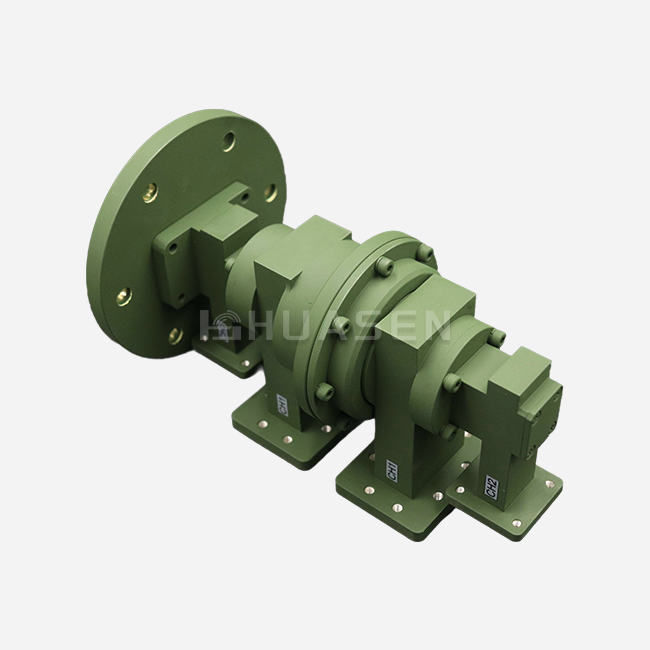
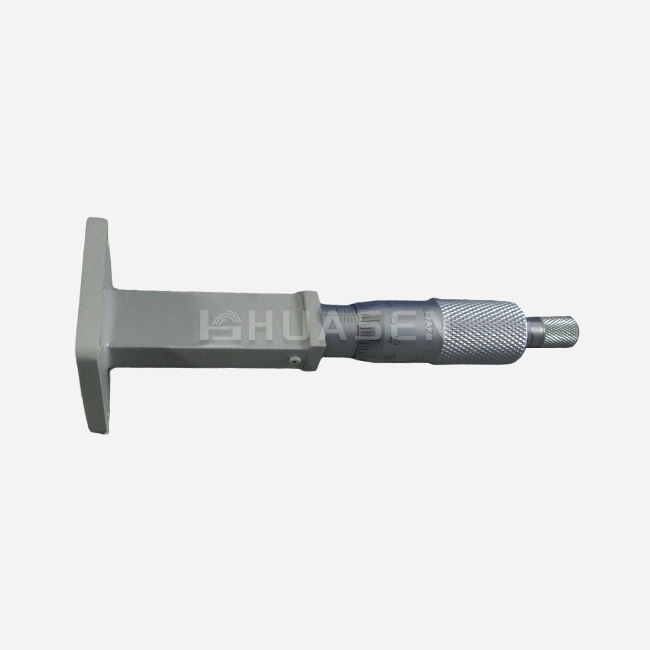
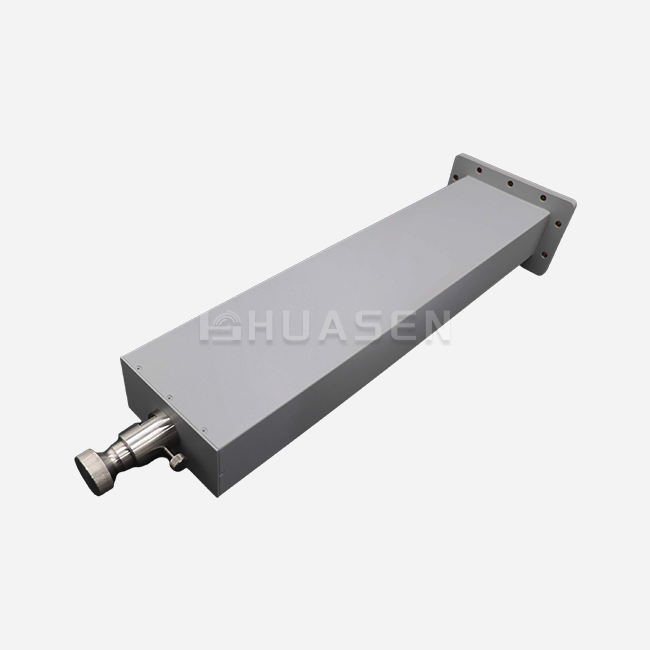
Waveguide Sliding Shorts are precision microwave components with conductive plungers that may be moved within waveguide sections. This plunger travels down the gearbox line with a calibrated micrometre. The electrical route length between the reference plane and the shorting surface varies. By manually manipulating the plunger, engineers may modify the reflected signal phase while maintaining a near-perfect reflection coefficient. The Huasen Microwave waveguide sliding short-circuit precisely changes the short-circuit location and reflection phase. It is suitable for dynamic tuning from 0.32 to 112 GHz, with reflection performance above VSWR ≥50. Depending on the waveguide band and application, the sliding distance may be 10–300 mm.
This portion addresses industrial issues such as amplifier characterisation's demand for accurate impedance matching and noise parameter measurement's necessity for controllable reactive loads. This is done using TRL (Thru-Reflect-Line) Vector Network Analyser calibration. The sliding arrangement eliminates set option errors by using phase cancellation methods after calibration.
What Is a Fixed Waveguide Short?
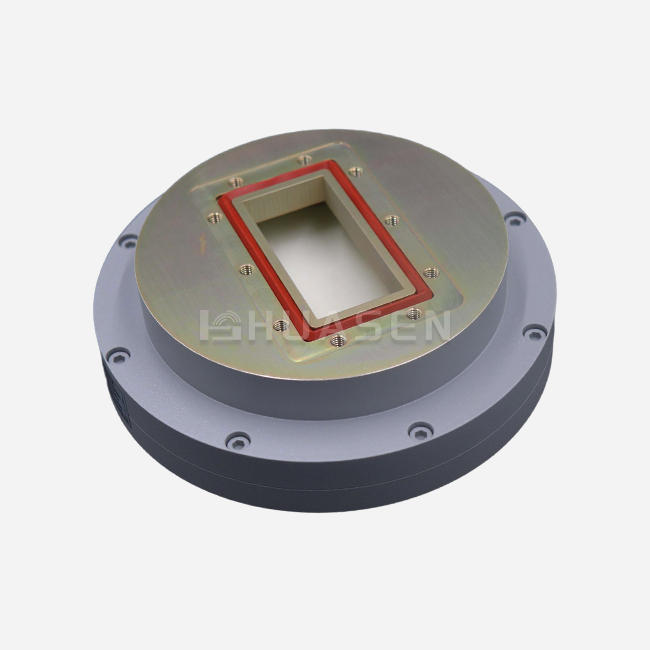
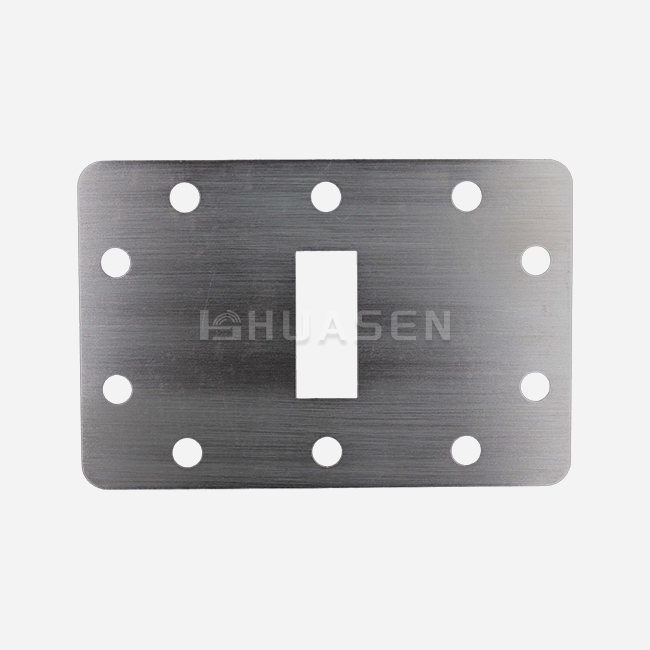
A fixed waveguide short is a solid conductive plate permanently affixed to a waveguide segment. This creates a permanent termination and restores all RF energy. The design emphasises technological simplicity with sturdy construction and few parts. Dummy loads, fixed cavity terminations, and safe endcaps for unused waveguide ports employ fixed shorts for reflection phase-independent jobs.
These devices are useful in tough outdoor applications such as base station installations, naval communications, and aeroplanes, where components must withstand vibrations, high temperatures, and corrosion. Most fixed shorts fulfil MIL-STD specifications and last long without calibration drift or mechanical wear. Their decreased manufacturing complexity makes them cheaper, which is advantageous for large-scale applications with budget constraints on component selection.
Key Structural Differences
The key difference is mechanical complexity and functional flexibility. Sliding shorts' precision driving mechanisms need tighter manufacturing tolerances and constant maintenance to maintain measurement accuracy. Fixed shorts contain no moving parts since they employ welded or bolted plates. Most sliding models employ non-contacting choke plungers with RF choke construction to produce phantom shorts. This prevents noise and wear from metal-on-metal contact. Measurement laboratories that undertake daily calibrations need this choke arrangement to maintain electrical performance after thousands of adjustment cycles.

Comparative Analysis: Sliding Short vs Fixed Short
Advantages of Waveguide Sliding Shorts
The nicest part about flexible shorts is their versatility in measurement. Calibration experts establish reference standards using a Waveguide Sliding Short. Millimetre-wave devices don't operate well with coaxial standards; this is crucial. Sweeping the reflection phase allows you to employ sophisticated calibration techniques like LRL (Line-Reflect-Line) to address consistency issues in high-frequency connection test settings.
Moving shorts from mechanical impedance tuners in amplifiers to characterise source-pull and load-pull. Researchers working on 5G power amplifiers may create complex impedances by altering plunger position, sketching Power Added Efficiency curves, and determining optimal load circumstances. This feature speeds up product development by providing real-world data that millimetre-wave modelling methods can't foresee.
The sturdy metal architecture can take kilowatt continuous wave power and peak pulse power that would damage coaxial alternatives, making it suitable for high-power applications. Cavity tuning for microwave heating systems in factories and optimising radar transmitters need the capacity to take a lot of power and make minor phase adjustments, which fixed designs cannot do.
Limitations of Sliding Configurations
Because machines are so intricate, purchasing managers must factor in maintenance costs when calculating overall cost. To maintain micrometre drive position accuracy, dimensions must be calibrated annually, and the VNA must be examined regularly to ensure the electrical short plane offset from the mechanical reference is accurate. Moving parts increase contamination, and dust or metal particles in the waveguide interior cause arcing and measurement errors, thus handle in a clean environment.
Precise cutting and quality control are needed to repeat performance, raising start-up costs. If basic terminations are adequate for the application, this initial cost may be hard to justify for budget-conscious enterprises. When new RF measurement novices join the team, training expenses rise due to the time it takes to learn how to do things correctly.
Advantages of Fixed Waveguide Shorts
Permanently attaching anything using shorts is most reliable. Base station builders and communication system designers enjoy that they're low-maintenance and long-lasting. No mechanical failure modes since there are no moving parts. This reduces field service and downtime costs. Without drive systems, environmental sealing is simpler, making waterproofing and dustproofing more effective.
Fixed shorts are cheap enough to purchase in quantity. Equipment companies that create hundreds of pieces may acquire and monitor their stock more easily. Installation is quicker since technicians only install the item and integrate the system without changes. This simplicity of use reduces labour expenses during startup and maintenance.
Mechanical stability maintains electrical performance even when the gadget is vibrated, and the temperature varies. For military radar and electronics, consistent RF performance is essential for mission success. Fixed shorts fulfil MIL-STD-202 stress and vibration regulations better than adjustable shorts, making qualification testing simpler for aviation projects.
Where Fixed Shorts Fall Short
The main problem is that it is not flexible. The reflection phase stays the same after installation, so it can't be tuned after installation to account for changes in the system or errors in the components. Fixed standards can't be used for calibration tasks that need phase sweeps, so flexible replacements have to be used instead, even though they are more expensive. If you can't change the reactive loads during diagnostics, it's harder to figure out why transmission lines aren't matched up.
Supporting multiple frequency bands makes inventory more difficult because each waveguide size needs its own fixed short. Companies with test labs that cover the WR-10 to WR-187 bands need to keep a lot of fixed shorts on hand. On the other hand, a smaller collection of sliding shorts covers the same frequency ranges and can be placed in different ways to account for changes in bandwidth.
Applications and Use Cases of Waveguide Sliding Shorts
Metrology and VNA Calibration
A Waveguide Sliding Short is used by calibration labs all over the world to set repeatable measurement standards. To describe test tools and get rid of connection effects, the TRL calibration method needs a variable reflect standard. To describe silicon chip probes that work at 110 GHz, we need sliding shorts that give us accurate reflection coefficients across the whole waveguide bandwidth. The position of the plunger can be changed so that multiple reflection readings can be taken at different electrical lengths. This lets statistical averaging happen, which lowers random errors.
These parts are used by national metrology centres to keep the main standards for measuring scattering parameters. Being able to move the short plane around literally proves the accuracy of the measurement system by finding changes in the network analyser port characteristics. Systematic mistakes that could spread through production test systems and lower the quality of all the products made during a run are caught by this testing process.
Load-Pull and Source-Pull Testing
Impedance tuners based on sliding short concepts are used by semiconductor companies to make transistors for 5G millimetre-wave uses. Engineers test a gadget by putting it through different impedances and measuring its total power, gain, and efficiency. Mechanical tuners with waveguide sliding elements can make impedances that cover the whole Smith chart. This makes it possible to fully characterise something that isn't possible with passive tuner networks.
When testing radar transmit amplifiers that work at pulse levels of several kilowatts, the ability to handle a lot of power comes in very handy. Coaxial tuners can't handle these levels of power, but waveguide shortcan because they are made of metal and have an air insulator. This feature lets you fully characterise a device in real-world working conditions, showing thermal effects and saturation behaviours that tests done on a benchtop don't pick up.
Cavity and Filter Tuning
Sliding shorts are used in industrial microwave heating systems to get the best cavity resonance and impedance matching. Adjusting the places of the plungers while keeping an eye on the reflected power helps production engineers cut down on losses that waste energy and make heating less efficient. With the precision change, process control is better, which leads to more consistent products in areas like curing polymers and pasteurising food.
Similar tuning skills are needed for the building of radar transmitters. Adjusting waveguide stub tuners with moving short elements is how engineers match magnetron outputs to radio feed systems. When tuning, real-time feedback cuts down on development time compared to iterative redesign processes with fixed parts.
When Fixed Shorts Make Sense
Fixed costs are good for permanent systems. Fixed shorts are used by satellite ground stations to end waveguide branches that aren't being used. This stops reflections that could mess up the main signal lines. The strong construction doesn't break down after decades of being outside, which makes the investment in the part worthwhile because of the lower lifecycle costs.
Fixed shorts are used as stable terminations in production test systems that measure filter insertion loss. Since mechanical positioning factors are gone, the measurement repeatability is higher than what a sliding short can do. When setting statistical process control limits, quality control teams like this level of uniformity.
Procurement Insights and Decision Support for Waveguide Shorts
Selection Criteria Framework
Before making a purchase choice, it's important to see if the application needs the ability to change the phase. Even though they cost more, projects that involve calibration, tuning, or impedance synthesis need a Waveguide Sliding Short. For static termination needs like protection caps, constant cavity loads, or simple reflection standards, fixed shorts work well and don't cost as much.
Waveguide band selection is based on frequency range. It covers popular telecommunications bands like X-band radar, Ku-band satellite downlinks, and millimetre-wave 5G frequency. The Huasen Microwave sliding short lineup goes from 0.32 GHz to 112 GHz. Managers in charge of buying things should make sure that the parts they choose have extra space around the normal frequency to account for effects like temperature change and system bandwidth.
The need for power handling separates the right options. Radar and communications systems that use more than 100 watts of steady power or kilowatt pulse levels need waveguide building that can only be done with strong sliding or fixed shorts. Coaxial options may work with cheaper testing equipment that doesn't need as much power, but waveguide is still the best way to keep the phase stable and minimise insertion loss.
Supplier Evaluation Considerations
Well-known brands like Keysight, Pasternack, and Radiall have large catalogues of standard products with public specs and calibration data that can be tracked. These companies offer VSWR performance, power ratings, and mechanical measurements that are written down to make system interaction easier. Custom needs, like non-standard flange types, longer travel ranges, or special finishes, need companies that have their own engineers on staff.
Since it was formed in 1993, Huasen Microwave Technology has been making RF and microwave components for more than 30 years. Vertically integrated manufacturing means that the business controls quality from the time that the raw materials are chosen until the final calibration. This makes sure that all production lots work the same way. This industrial control is very important for companies that buy multiple units and want to be able to swap them out because they all have the same electrical specs.
When setting production plans, the dependability of the supply line is important. Long wait times can cause projects to be late if suppliers don't keep enough supplies on hand. When businesses place large orders, they should talk to suppliers about framework deals that set supply times, prices, and quality control standards that are fair to both sides.
Cost and Customisation Balance
Standard catalogue items have the quickest shipping times and lowest unit costs, but they might not have the best specs. Custom designs, such as customised sliding ranges, specific mounting hardware, or higher power levels, can better meet the needs of each application at a modest cost increase. When purchases of tools are spread out over a range of order numbers, the break-even point usually happens around 10 to 20 units.
Along with buy prices, installation and upkeep costs should also be taken into account. Sliding shorts need to be calibrated on a regular basis and by trained people, which adds to the costs of operation that build up over the life of the component. Fixed shorts get rid of these costs, which could mean a better total cost of ownership even if the original price is the same.
Conclusion
Whether to use a Waveguide Sliding Short or a fixed short depends on the needs of the application, the available funds, and the operational goals. When it comes to testing labs, amplifier development teams, and tuning tasks where changeable phase control is important, sliding shorts are the most flexible option. Their higher prices are worth it when measurement accuracy has a direct effect on the quality of a product or the truth of a study. Fixed shorts work best in fixed installations, harsh settings, and high-volume deployments that need to save money. This is because they are simple and reliable, and they don't allow for as much adjustment freedom. When making a purchase choice, it's better to look at things like power levels, environmental conditions, tuning needs, and lifetime costs instead of just the purchase price.
Frequently Asked Questions
1. What frequency ranges do sliding shorts typically support?
Because of the way cutoff frequencies work and how transmission modes are limited, a Waveguide Sliding Short can only work in certain bands. The WR-90 unit works in the X-band (8.2-12.4 GHz), and the WR-10 parts work in the W-band (75-110 GHz). As a whole, a company like Huasen Microwave's models cover frequencies from 0.32 GHz to 112 GHz, but each unit only works with a single waveguide band. When an organisation supports more than one frequency range, it needs to keep different moving shorts for each band.
2. How does calibration accuracy differ between sliding and fixed shorts?
Sliding shorts make it possible for TRL calibration methods that are more accurate by identifying systematic mistakes through repeated readings of reflections at different electrical lengths. Fixed shorts work well as a reference standard for basic calibrations, but they can't help with more complex methods that need phase variation. For metrology tasks that need provable uncertainty below 0.1 dB, sliding shorts are usually the best choice. For production tests that can handle uncertainty of 0.5 dB, fixed options are usually the best choice.
3. Can sliding shorts handle high-power radar applications?
Modern choke designs that don't touch can handle both kilowatt-level continuous wave power and megawatt pulse uses. This means that they can be used to tune radar transmitters and characterise high-power amplifiers. How much power a waveguide can handle depends on its size and how much pressure is in it. Larger bands can handle higher raw power levels. The metal structure and air dielectric provide better thermal management and voltage failure gaps than coaxial alternatives by many orders of magnitude.
4. What customisation options exist for non-standard requirements?
Manufacturers can make unique flange types, moving ranges that are longer than the standard 10–300 mm, materials that are better for harsh environments, and position markers that are built in for automatic measurement systems. Huasen Microwave offers engineering help that looks at whether custom specs are possible and how much they will cost. When it comes to fully customised designs, minimum order numbers are usually needed. However, changes to standard goods may not have volume requirements.
Ready to Specify Your Waveguide Short Solution?
Huasen Microwave makes high-quality Waveguide Sliding Short components from 0.32 GHz to 112 GHz with VSWR performance greater than 50:1. They are backed by strict quality systems and 30 years of experience making RF components. Our research team works with system designers and equipment makers to come up with the best options for your radio bands, power needs, and environmental conditions. We offer expert advice to help you choose the right components, whether you need normal catalogue items that can be used right away or custom designs that solve specific integration problems. Email our application engineers at sales@huasenmicrowave.com to talk about the details of your project and get full datasheets, pricing for large orders, and shipping schedules. As a reliable waveguide sliding short manufacturer, we make it easier for you to buy things by communicating quickly and executing your supply chain tasks correctly.
References
1. Pozar, David M. "Microwave Engineering, 4th Edition." John Wiley & Sons, 2011.
2. Rytting, Douglas K. "Network Analyser Error Models and Calibration Methods." Hewlett-Packard Company Technical Publications, 1998.
3. Slobodnik, A.J., Conway, G.A., and Delgado, R.T. "Microwave Components Handbook." Artech House Publishers, 1990.
4. IEEE Standard 149-1979. "IEEE Standard Test Procedures for Antennas." Institute of Electrical and Electronics Engineers, 1979.
5. Collier, Robert J. "Transmission Lines: Equivalent Circuits, Electromagnetic Theory, and Photons." Cambridge University Press, 2013.
6. Saad, Theodore S. "Microwave Engineers' Handbook, Volume 1 and 2." Artech House Publishers, 1971.
Send Inquiry