
What Makes Coaxial Cable the Best Choice for RF Signal Transmission?






2026-01-18 21:54:26
When your RF system experiences signal degradation, interference, or inconsistent performance, the root cause often traces back to inadequate cable selection. Coaxial cable stands as the industry standard for RF signal transmission because its unique concentric design virtually eliminates electromagnetic interference while maintaining precise impedance control across frequencies from DC to 60GHz. Whether you're deploying 5G infrastructure, satellite communications, or defense radar systems, understanding why coaxial cable outperforms alternatives becomes critical for achieving reliable, high-quality signal transmission in demanding environments.
Understanding the Superior Design of Coaxial Cable for RF Applications
Coaxial cable achieves its exceptional RF transmission capabilities through a precisely engineered concentric structure that fundamentally differs from other cable types. The design consists of a center conductor surrounded by a dielectric insulator, an outer metal shield, and a protective jacket, all sharing the same geometric axis. This coaxial arrangement creates a self-contained electromagnetic field between the inner conductor and outer shield, effectively confining RF energy within the cable structure. The outer conductor acts as both a return path for the signal current and a barrier against external electromagnetic interference, creating a magnetic field that restricts signal leakage to minimal levels. Unlike twisted pair cables where electromagnetic fields extend into surrounding space, coaxial cable maintains signal integrity by keeping electric and magnetic fields contained within the dielectric layer. This fundamental characteristic makes coaxial cable inherently superior for carrying both weak signals that cannot tolerate environmental interference and stronger signals that must not radiate into adjacent circuits or structures. The fixed spacing between inner and outer conductors ensures consistent impedance throughout the cable length, which minimizes signal reflection and loss during high-frequency transmission. Custom Made Coax Cable Assemblies from manufacturers like Huasen Microwave Technology can be tailored with specific dielectric materials, conductor configurations, and shielding techniques to optimize performance for particular frequency ranges and power levels, ensuring your RF system operates at peak efficiency.
Key Performance Advantages of Coaxial Cable in RF Signal Transmission
Exceptional Impedance Control and Signal Integrity
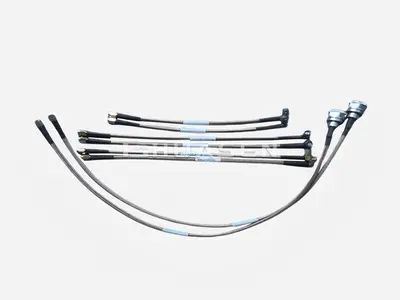
The coaxial cable structure provides unmatched impedance consistency, which is crucial for maintaining signal integrity across RF and microwave frequencies. Standard coaxial cables are manufactured to precise impedance specifications, typically 50 ohms for RF and microwave applications or 75 ohms for video and broadcast systems, with tolerances as tight as ±2 ohms. This impedance matching between cable, source, and load minimizes Voltage Standing Wave Ratio (VSWR), which directly translates to reduced signal reflection and maximum power transfer efficiency. When VSWR exceeds acceptable levels, reflected signals can interfere with transmitted signals, causing distortion and reducing overall system performance. Quality coaxial cable maintains VSWR below 1.3:1 across its operational frequency range, ensuring that over 95% of transmitted power reaches the intended destination. The geometric precision of the concentric conductor arrangement, combined with carefully selected dielectric materials like polyethylene or PTFE, creates a uniform transmission line that preserves signal characteristics even at frequencies extending into the millimeter-wave spectrum. Custom Made Coax Cable Assemblies designed for specific applications can achieve even tighter VSWR specifications, with high-performance variants maintaining ratios below 1.15:1 at frequencies up to 40GHz. This level of impedance control becomes particularly critical in phased array antennas, test and measurement equipment, and satellite communication systems where even minor signal distortions can compromise system functionality. Huasen Microwave Technology's coaxial assemblies feature precision-manufactured conductors and low-loss dielectric materials that ensure consistent impedance and superior signal integrity, supporting frequencies from DC to 60GHz with insertion loss under 0.5 dB/m at high frequencies.
Superior Shielding and Electromagnetic Interference Protection
Coaxial cable delivers exceptional protection against electromagnetic interference (EMI) and radio frequency interference (RFI), making it indispensable for RF applications in electromagnetically noisy environments. The outer conductor shielding, typically constructed from braided copper, aluminum foil, or combinations thereof, creates a Faraday cage effect that blocks external electromagnetic fields from penetrating to the center conductor. High-quality coaxial cables achieve shielding effectiveness exceeding 90 dB, meaning that external interference signals are attenuated by a factor of over 30,000 before reaching the signal conductor. This shielding works bidirectionally, preventing both ingress of external interference and egress of internal signals that could disrupt nearby sensitive equipment. Multiple shielding layers, such as quad-shield configurations with two foil layers and two braid layers, provide even greater protection in challenging RF environments like industrial facilities, military installations, and dense urban telecommunications infrastructure. The effectiveness of coaxial cable shielding remains consistent across broad frequency ranges, unlike twisted pair cables where shielding performance degrades significantly at higher frequencies. Custom Made Coax Cable Assemblies can be specified with specialized shielding configurations tailored to specific interference environments, ensuring reliable operation even when deployed near high-power transmitters, industrial machinery, or other sources of electromagnetic noise. For applications requiring absolute signal purity, such as precision test instrumentation or sensitive receiver front-ends, selecting coaxial cable with appropriate shielding specifications becomes non-negotiable. Huasen Microwave Technology manufactures coaxial assemblies with advanced shielding techniques that provide maximum EMI/RFI protection while maintaining the flexibility needed for practical installation in complex system layouts.
Low Signal Loss and Extended Transmission Distance
Coaxial cable exhibits remarkably low signal attenuation compared to alternative transmission media, enabling longer cable runs without requiring signal amplification or regeneration. Insertion loss, measured in decibels per unit length, varies with frequency, cable diameter, and dielectric materials, but quality coaxial cables maintain loss below 0.5 dB/m even at frequencies exceeding 40GHz. This low-loss characteristic stems from the efficient electromagnetic field confinement within the dielectric space and the use of high-conductivity materials for both center and outer conductors. Larger diameter coaxial cables naturally exhibit lower loss because they provide greater surface area for current flow and accommodate thicker, more efficient dielectric layers. For critical long-distance RF transmission applications, low-loss coaxial cable variants utilize specialized dielectric materials with minimal loss tangent characteristics, such as expanded PTFE or nitrogen-filled air dielectric constructions. These advanced dielectrics reduce signal absorption and maintain phase stability across wide temperature ranges, essential for applications like radar systems, long-haul telecommunications links, and precision timing distribution networks. The relationship between frequency and insertion loss follows predictable patterns, allowing system designers to accurately calculate signal budgets and determine maximum practical cable lengths for specific applications. Custom Made Coax Cable Assemblies optimized for low-loss performance enable system architectures that would be impractical with higher-loss cable types, reducing the need for inline amplifiers and their associated complexity, cost, and potential points of failure. Huasen Microwave Technology's product line includes standard coaxial assemblies suitable for general RF applications, as well as low-loss stable phase variants engineered for demanding applications where signal attenuation must be minimized and phase characteristics must remain constant despite environmental variations.
Coaxial Cable Specifications and Technical Characteristics
The technical specifications of coaxial cable directly determine its suitability for specific RF transmission requirements, and understanding these parameters enables informed selection decisions. Frequency range represents perhaps the most fundamental specification, defining the operational bandwidth over which the cable maintains acceptable electrical performance. Modern coaxial cables support frequencies from DC to 60GHz and beyond, with different cable constructions optimized for specific frequency bands. Impedance standardization at 50 ohms or 75 ohms ensures compatibility with industry-standard RF components, connectors, and equipment, though specialty applications may require non-standard impedance values. Capacitance per unit length influences the cable's velocity factor and determines how rapidly signals propagate through the dielectric medium, with typical values ranging from 70 to 95 picofarads per meter depending on dielectric materials. Power handling capability specifies the maximum RF power the cable can safely transmit without risking dielectric breakdown, conductor overheating, or connector damage, with ratings varying from milliwatts for sensitive receiver applications to kilowatts for high-power transmitter feeds. Mechanical characteristics including minimum bend radius, tensile strength, and flexibility determine installation feasibility and long-term reliability in specific physical environments. Temperature range specifications indicate the environmental conditions under which the cable maintains electrical and mechanical performance, with standard cables typically rated from -40°C to +85°C and specialized variants extending to -55°C to +200°C or beyond. Connector compatibility represents another crucial specification, as coaxial assemblies must interface seamlessly with equipment using SMA, N-type, BNC, 2.92mm, or other standard RF connector families. Custom Made Coax Cable Assemblies from Huasen Microwave Technology can be configured with tailored specifications including specific cable lengths, connector types, and shielding configurations to precisely match your system requirements, ensuring optimal performance without unnecessary over-specification or cost.
Applications Where Coaxial Cable Excellence Matters Most
Telecommunications and 5G Infrastructure Deployment
Coaxial cable forms the backbone of modern telecommunications infrastructure, connecting base stations, antennas, and distribution equipment in cellular networks worldwide. The deployment of 5G networks has intensified demands on coaxial cable performance, as these systems operate at higher frequencies and require stricter specifications for insertion loss, phase stability, and power handling. Custom Made Coax Cable Assemblies specifically engineered for 5G applications must maintain consistent electrical characteristics across the 3.3-3.8 GHz mid-band spectrum and the 24-40 GHz millimeter-wave bands while withstanding outdoor environmental exposure including temperature extremes, moisture, and UV radiation. Low-loss coaxial cables minimize signal degradation between base station equipment and antenna elements, maximizing coverage area and reducing the number of cell sites required for network deployment. Phase-stable coaxial assemblies ensure that beamforming and MIMO antenna systems maintain precise timing relationships between array elements, essential for achieving the directional transmission characteristics that enable 5G's improved capacity and efficiency. Telecommunications operators specify coaxial cables with ruggedized construction, including UV-resistant jackets, moisture-blocking compounds, and enhanced shielding effectiveness to ensure decades of reliable service in demanding outdoor installations.
Aerospace, Defense, and Radar Systems
Military and aerospace applications impose extreme performance requirements on coaxial cable assemblies, demanding operation across wide temperature ranges, resistance to shock and vibration, and absolute reliability in mission-critical scenarios. Radar systems utilize coaxial cables to interconnect transmitters, receivers, antennas, and signal processing equipment, with cable electrical characteristics directly influencing radar sensitivity, range, and resolution. Phase-stable coaxial assemblies maintain consistent electrical length despite temperature variations, ensuring that radar timing and phase relationships remain accurate throughout operational temperature excursions from -55°C at high altitude to +125°C in equipment enclosures. Aerospace applications require coaxial cables that meet stringent specifications for weight, flammability, and electromagnetic compatibility while delivering high RF performance. Defense systems often operate in electromagnetically contested environments where strong interference signals attempt to disrupt communications and sensor systems, making the superior shielding effectiveness of quality coaxial cable essential for maintaining operational capability. Custom Made Coax Cable Assemblies for aerospace and defense applications undergo rigorous testing including altitude simulation, thermal cycling, vibration exposure, and electromagnetic compatibility validation to ensure they meet military specifications. Huasen Microwave Technology's products serve aviation, aerospace, navigation, and defense applications with coaxial assemblies engineered to withstand extreme environmental conditions while maintaining exceptional RF performance characteristics.
Test and Measurement Instrumentation
Laboratory and production test equipment relies on coaxial cables to maintain measurement accuracy and repeatability when characterizing RF and microwave devices. Vector network analyzers, spectrum analyzers, signal generators, and oscilloscopes all utilize precision coaxial cable assemblies to connect test equipment to devices under test. Measurement uncertainty directly relates to cable electrical characteristics, with insertion loss, VSWR, and phase stability all contributing to overall measurement accuracy. Test cables must exhibit exceptional repeatability, maintaining consistent electrical properties through thousands of connection cycles despite mechanical flexing and connector mating/unmating. Low-loss coaxial cables extend the dynamic range of measurement systems by minimizing signal attenuation between signal source and measurement receiver, enabling characterization of both high-power and low-power devices with a single test setup. Phase-matched cable sets ensure that multi-port measurements maintain precise timing relationships between measurement channels, critical for characterizing balanced amplifiers, mixers, and other multi-port RF devices. Custom Made Coax Cable Assemblies for test applications often incorporate premium connectors with enhanced durability and electrical performance, sacrificing neither measurement accuracy nor mechanical longevity. Huasen Microwave Technology provides coaxial assemblies suitable for test and measurement applications with over 60 advanced testing instruments including vector network analyzers and spectrum analyzers ensuring each assembly meets exacting performance specifications before delivery.

Selecting and Implementing Coaxial Cable Solutions
Successful RF system implementation requires careful coaxial cable selection matched to specific application requirements, installation environment, and performance objectives. Begin by clearly defining frequency range requirements, as this determines which cable constructions and dielectric materials will maintain acceptable electrical performance across your operational spectrum. Consider the physical installation environment including available routing space, required flexibility, minimum bend radius constraints, and exposure to environmental factors such as temperature extremes, moisture, UV radiation, or chemical contaminants. Evaluate power handling requirements based on maximum RF power levels, duty cycle, and ambient temperature conditions to ensure the selected cable will not experience dielectric breakdown or excessive conductor heating during operation. Specify connector types based on equipment interface requirements, considering factors such as frequency capability, power rating, durability, and whether quick-disconnect or threaded coupling mechanisms best suit your application. Calculate insertion loss budgets accounting for cable length, frequency of operation, and any additional losses from connectors, adapters, or cable routing that requires tight bends. For critical applications, consider specifying Custom Made Coax Cable Assemblies rather than attempting to assemble cables in-house, as factory-assembled cables undergo controlled manufacturing processes and comprehensive electrical testing that ensure consistent performance and reliability. Work with experienced manufacturers like Huasen Microwave Technology who can provide engineering support to optimize cable specifications, offer samples for evaluation, and deliver custom assemblies tailored to your exact requirements with clear installation guidelines and technical support throughout the integration process.
Conclusion
Coaxial cable remains the optimal choice for RF signal transmission due to its superior electromagnetic interference protection, precise impedance control, low signal loss, and proven reliability across frequencies from DC to 60GHz and beyond. Custom Made Coax Cable Assemblies engineered to application-specific requirements deliver maximum performance while simplifying system integration.
Cooperate with Huasen Microwave Technology Co., Ltd.
Founded in 1993, Huasen Microwave Technology Co., Ltd. brings over 30 years of expertise in high-frequency microwave and millimeter-wave component manufacturing, earning recognition as a National High-Tech Enterprise with ISO certification and acclaimed as both a Xi'an outstanding enterprise and famous brand. Our 3,000-square-meter facility houses advanced CNC machining equipment, three calibrated microwave anechoic chambers spanning 21m, 9m, and 5m for comprehensive testing from 0.5GHz to 220GHz, and over 60 precision instruments including 40 vector network analyzers ensuring every Custom Made Coax Cable Assembly meets exacting specifications. As a leading China Coaxial Cable factory, China Coaxial Cable supplier, and China Coaxial Cable manufacturer, we offer China Coaxial Cable wholesale solutions with Coaxial Cable for sale at competitive Coaxial Cable price points without compromising High Quality Coaxial Cable standards. Our products serve telecommunications, radar, aerospace, satellite communications, 5G infrastructure, and defense applications worldwide, backed by rigorous quality control, RoHS compliance, environmental certifications, and dedicated after-sales support. Contact our team at sales@huasenmicrowave.com to discuss your Custom Made Coax Cable Assembly requirements and discover how our three decades of microwave expertise can optimize your RF system performance. Save this resource for future reference and reach out whenever RF transmission challenges require proven solutions from an established industry leader committed to advancing microwave technology innovation.
References
1. Maloratsky, L. G. (2020). RF and Microwave Coupled-Line Circuits (2nd ed.). Artech House Publishers.
2. Pozar, D. M. (2021). Microwave Engineering (5th ed.). John Wiley & Sons.
3. Collin, R. E. (2017). Foundations for Microwave Engineering (2nd ed.). IEEE Press.
4. Bahl, I. J. (2019). Transmission Lines and Lumped Circuits: Fundamentals and Applications. Academic Press.
5. Edwards, T. C., & Steer, M. B. (2016). Foundations for Microstrip Circuit Design (4th ed.). John Wiley & Sons.
Send Inquiry


Related Industry Knowledge
- Is Near-Field Probe Measurement a "Relative" Test? What Does That Mean for Antenna Validation?
- How does a waveguide power divider achieve microwave signal division?
- What is a Waveguide Tube, and how does it differ from ordinary coaxial cables in signal transmission?
- What is the working principle of a waveguide sliding short?
- How to Use a Coaxial Fixed Attenuator in RF Testing (With Common Mistakes to Avoid
- Coaxial Load vs. Coaxial Attenuator: What’s the Difference?
- How Does a UWB LNA Amplify Wideband Signals Without Adding Noise?
- How to Use a Coaxial Directional Coupler for 5G Base Station Power Monitoring?
- What Is an AC Power Amplifier?
