What Makes an Omnidirectional Antenna Ideal for Wide Coverage?






2026-06-16 22:06:25
Because it evenly distributes radio frequency energy across a full 360° horizontal plane, an Omnidirectional Antenna excels at wide coverage. This eliminates the directional blind spots that are a problem with focused antenna designs. This circular radiation pattern makes sure that the signal strength stays the same no matter where the receiver is in the coverage zone. Because of this, these antennas are essential for applications that need reliable connectivity over large areas, such as industrial campuses, base station deployments, and maritime communication systems. The design automatically makes network architecture easier by cutting down on the number of antenna installations that need to be done while keeping the signal strong across multiple frequency bands. This directly meets the needs for operational efficiency and cost reduction that are essential to large-scale wireless infrastructure projects.
Introduction
Today's wireless communication infrastructure has to meet coverage dependability and bandwidth economy standards that have never been seen before. Whether you're setting up communication links on ships or putting 5G base stations all over cities, the antenna technology you choose has a big impact on how well the network works and how much it costs to run. For situations needing seamless connection across large geographic areas without directional restrictions, Omnidirectional Antennas have become the best option.
Working with RF system designers and telecommunications equipment makers for many years, I've seen how choosing the right antenna has a direct effect on the success of a project. Bad antenna choices cause signal dead spots, high infrastructure costs, and unhappy end users who lose their links. Procurement workers and system designers can make decisions that balance technical performance with budgetary limits by understanding what makes Omnidirectional Antennas so effective for wide coverage applications.
This detailed book looks at the engineering ideas behind Omnidirectional radiation patterns, looks at real-life usage situations in the defense and telecoms industries, and gives useful buying advice. We'll look at how these antennas deal with common connectivity issues and important factors like VSWR performance, environmental stability, and frequency band coverage that are important to commercial buyers.
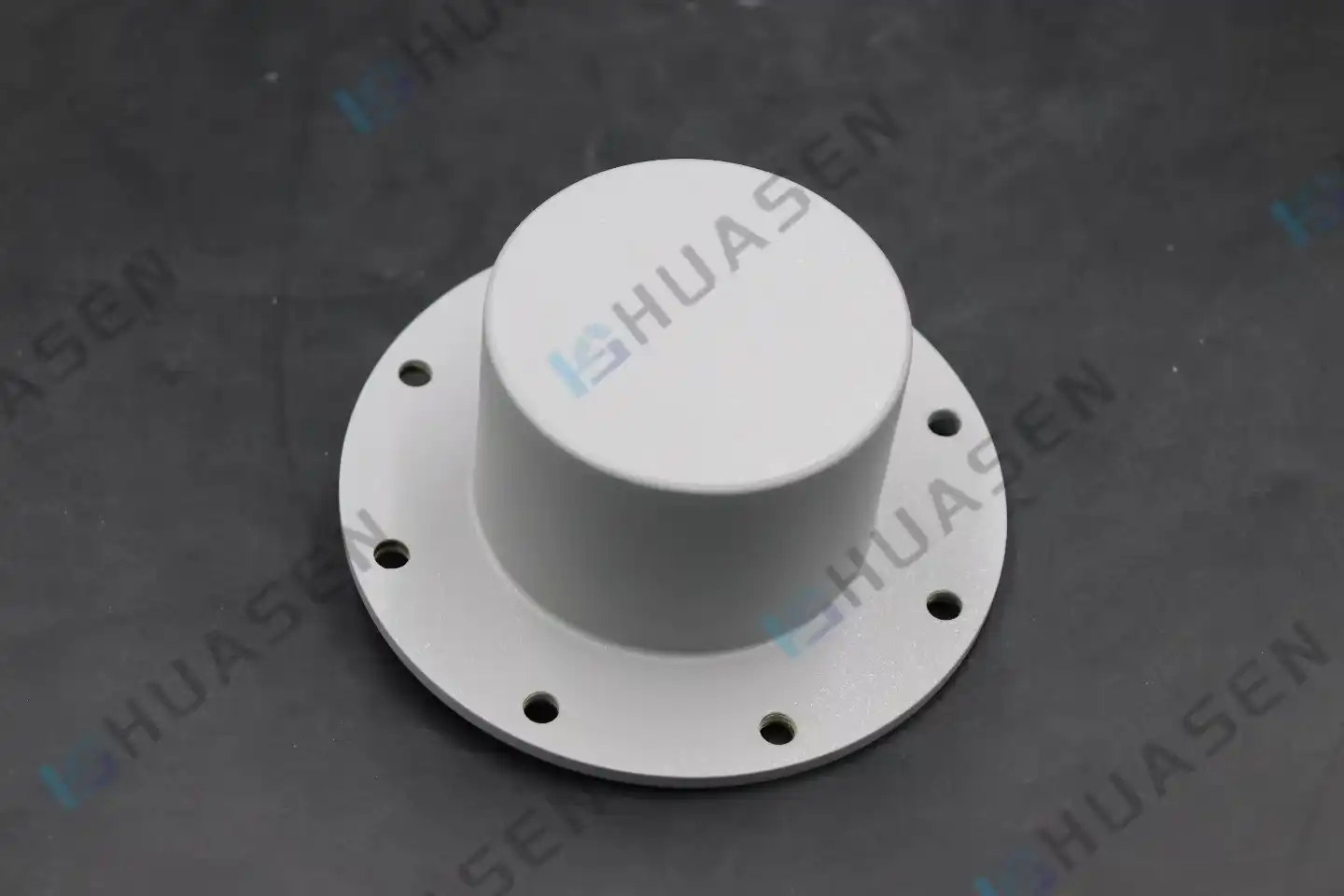
Understanding Omnidirectional Antennas: Principles and Performance
The Physics Behind 360° Radiation Patterns
Omnidirectional Antennas have a circular radiating pattern because their physical structures are carefully designed to spread electromagnetic energy evenly in all horizontal directions. These designs give up focused gain for covering breadth, which is different from directional antennas that focus energy into small beamwidths. When seen in three dimensions, the radiation pattern looks like a circle, with the most energy emitted in the horizontal plane and a controlled beamwidth in the vertical plane.
Dipole configurations, collinear arrays, and specialty geometries like discone, biconical, and monopole versions are all common ways to build structures. Depending on the frequency range and bandwidth needs, each design has its own benefits. Dipole antennas work in all directions and across narrow frequency ranges. More advanced designs, such as discone structures, cover multiple octaves of bandwidth, which is necessary for current communication systems that use multiple standards.
Frequency Coverage and Bandwidth Considerations
The operating frequency range tells you which transmission standards and regulatory bands an antenna can work with. Traditional Omnidirectional designs work in narrow bands, such as the 2.4 GHz and 5 GHz bands for Wi-Fi or certain cellphone bands. Ultra-wideband Omnidirectional Antennas, on the other hand, mark a major technological advance because they can cover absolute bandwidths of several GHz or fractional bandwidths exceeding 20%.
Through unique designs like single cone, umbrella cone, cage, and whip configurations, Huasen Microwave's CVOA series ultra-wideband Omnidirectional Antennas demonstrate this ability. These designs keep their Omnidirectional radiation properties over very large frequency ranges, which lets them use a single antenna for multi-band uses. This wide range of bandwidth directly solves the problem of spectrum fragmentation that system designers face when they have to manage different communication standards within a single infrastructure.
Antenna Gain and Coverage Radius Relationships
Compared to an isotropic reflector, antenna gain shows how well an antenna turns input power into energy that is released in the desired directions. Depending on the design complexity and frequency tuning, Omnidirectional Antennas usually have gain values between -20dB and 6dB. When the gain is low, the vertical beamwidth is bigger, which is good for close-range uses with obstacles. When the gain is high, the vertical pattern gets narrower, which increases the horizontal range.
The Friis transmission equation says that the link between gain and covering radius is based on logarithmic rules. In theory, a 3dB gain increase doubles the effective range under perfect conditions. However, in the real world, multipath transmission and absorption losses make this impossible. When buying teams understand this trade-off, they can choose the right gain specifications to meet their coverage needs without over-specifying factors that raise costs without boosting performance.
Why Omnidirectional Antennas Are Ideal for Wide Coverage: A Value Elaboration Approach
Solving Industrial Connectivity Challenges
Metal structures, moving machinery, and different types of obstructions make manufacturing facilities, logistics centers, and outdoor industry sites very difficult places for radio waves to travel. To get rid of dead spots in these kinds of areas, directional antennas need to be perfectly aligned and installed more than once. There is built-in redundancy in Omnidirectional designs because users can stay connected from any horizontal angle as they move through the coverage area.
In crowded manufacturing areas, signal interference from other wireless systems and objects that reflect light is another problem. The regular radiation pattern of Omnidirectional Antennas lessens the intensity of interference nulls caused by phase cancellation from reflected signals. Vertical polarization, which is a common feature of high-quality Omnidirectional designs, makes receiving even more stable by matching with the antenna orientations of most mobile devices and equipment.
Strategic Design Features Maximizing Coverage Effectiveness
For Omnidirectional Antennas used in mobile communication cases, vertical polarization is a crucial design feature. Vertically polarized antennas are used in most handheld devices, tools placed on vehicles, and portable instruments. When you match this polarization direction, you reduce polarization mismatch losses that would lower the received signal strength by 20dB or more when the signals are cross-polarized.
Due to Fresnel zone clearance standards and sky limitations, the height at which an antenna is placed has a huge effect on how well it covers. By raising Omnidirectional Antennas above nearby objects, near-field obstructions are reduced, and line-of-sight lengths are increased. The three-dimensional donut radiation pattern means that placing antennas too high can leave coverage gaps right under the antenna. This means that the antenna's height needs to be carefully optimized based on the minimum and maximum coverage distances that are wanted.
Performance Data and Case Studies of Deployment
Omnidirectional Antenna benefits in dynamic settings are shown by field testing data from maritime communication operations. A comparison study of coastal patrol vessel communication systems found that Omnidirectional Antennas kept link quality within 2dB variation even when the vessel turned 360°, while directional alternatives had 15dB or more variation, which needed active beam steering or the installation of multiple antennas.
Base station placements in urban cellular networks give more proof of success. Network providers using Omnidirectional Antennas for small-cell 5G infrastructure report 40% fewer site acquisitions needed compared to sector antenna methods. This means they can save a lot of money on capital costs while still meeting coverage goals. These real-world results back up the theoretical benefits when used correctly with the right strength and frequency settings.
Innovation Trends in Omnidirectional Antenna Technology
New developments focus on increasing the working bandwidth while keeping the pattern the same across all frequency bands. Multi-resonant structures and designs that use metamaterials to improve them allow fractional bandwidths that are higher than 100%. These can cover all communication bands, from sub-1GHz IoT frequencies to millimeter-wave 5G licenses, all in a single small package. This feature directly supports the movement in the industry toward software-defined radio systems that need antenna options that can work with a number of different protocols.
Improvements to environmental longevity meet the needs of operation in harsh environments. Advanced radome materials, such as UV-stabilized fiberglass and ASA plastics, keep the antenna elements inside safe while still letting radio waves pass through at all frequencies. IP67 and IP68 grades for entry protection make sure that parts work reliably in marine, outdoor industrial, and military settings where moisture, dust, and corrosive atmospheres would quickly break down parts that aren't protected.
Procurement Guide: How to Choose and Source the Right Omnidirectional Antenna
Defining Technical Requirements and Evaluation Metrics
To buy an antenna successfully, you need to start with clearly defined technical factors that come from the needs of the communication system. The size of the coverage area determines the gain values and the number of antenna placements that are needed. To find out what antenna gain is needed, you need to figure out link budgets that take into account emitter power, receiver sensitivity, cable losses, and fade reserves. Frequency compatibility must match the working bands of communication equipment, and plans for future growth into neighboring frequency licenses must be taken into account.
Specifications for Voltage Standing Wave Ratio (VSWR) show how well resistance matches up across all operating frequencies. Premium Omnidirectional Antennas keep VSWR values below 2.0:1 or 2.5:1 across certain bandwidths. This makes sure that power is transferred efficiently and that reflected energy doesn't hurt the performance of the emitter. Through carefully designed matching networks and structure optimization, Huasen Microwave's ultra-wideband Omnidirectional Antennas achieve low VSWR performance across their entire operating range.
Mechanical characteristics, such as size, weight, and mounting connections, have a direct effect on how easy it is to install. Miniaturized antenna solutions are needed for uses with limited space, such as systems that are placed on drones or small base station enclosures. Huasen's small designs have minimum measurements of φ23×399mm and still meet all performance requirements. Connector compatibility with standard interfaces like N-type, SMA, and K-type ensures that the new equipment can be easily added to the existing RF infrastructure, without the need for adapter kits that add extra loss and failure points.
Supplier Selection and Partnership Criteria
For complicated antenna deployments, it's important to work with well-known makers that give full technical support. Reliable sellers give thorough product specs like radiation pattern plots, gain versus frequency curves, and VSWR data that let you model the system correctly. Having access to technical tools helps with choosing the right antenna, getting it mounted correctly, and fixing problems throughout the deployment process.
Product claims and legal compliance are backed up by testing documents and certification compliance. Quality Omnidirectional Antennas are tested with a Vector Network Analyzer (VNA) to make sure they have good return loss and VSWR across all operating bandwidths. Measurements of the anechoic room pattern confirm the Omnidirectional features and elevation beamwidth requirements. Environmental testing, such as resistance to salt spray rust (ASTM B117), ingress protection approval (IP67/IP68), and vibration testing, shows that the product is durable enough to be used in difficult conditions.
For large-scale operations that need regular product availability, supply chain reliability, and production capacity are very important. Huasen Microwave Technology has been in business since 1993 and has 30 years of experience making things. This makes sure that supply lines are stable and product quality is always the same. This level of operational maturity gives buyers trust in projects that need a certain release date and product availability for several years to meet upkeep and growth needs.
Market Overview and Competitive Positioning
The Omnidirectional Antenna market includes a wide range of providers, from consumer-focused brands that make Wi-Fi antennas to specialized RF makers that work with the defense and communications industries. Consumer names like TP-Link and Cisco make standard frequency range wireless networking options that are both cheap and useful for businesses. These items work well in offices and light industrial settings with low environmental requirements.
Specialized RF component makers, like Huasen Microwave, make parts for tough uses that need better performance, more bandwidth, and resistance to harsh environments. In markets like defense systems, flight platforms, telecoms infrastructure, and scientific instruments, where antenna performance is closely linked to mission success, these providers provide antennas. The higher price is because the specs are better, the testing is stricter, and the technical help can handle more complicated deployment needs.
When making procurement decisions, the choice of seller should be in line with how important the product is and how well it needs to work. Investment in high-quality Omnidirectional Antennas with a track record of dependability and full support is justified for mission-critical systems like emergency communications, military platforms, and the main phone network. Consumer-grade solutions can be used in secondary systems and non-critical apps as long as they don't affect speed too much or have too many negative effects if they fail.
Practical Considerations for Installation and Deployment
No matter how good the product is, the performance of an Omnidirectional Antenna is greatly affected by how it is installed. Antenna mounting devices need to be stable mechanically and not block RF signals too much. When placed close to an antenna, metal mounting poles and frames can change the way radiation patterns behave, leading to nulls and irregularities that make coverage less even. Good mounting gear keeps antennas at certain distances from support structures and can handle loads from the surroundings.
Through insertion loss and VSWR decline, the choice of cables and how they are routed affects the total performance of the system. Low-loss coaxial cables that are compatible with operational bands keep signal loss between antennas and radio devices to a minimum. Optimization of cable length strikes a balance between installation freedom and cumulative loss, taking into account the fact that each meter of cable adds a measured amount of signal degradation. Moisture getting in and connection failures happening from time to time can be avoided by installing connectors correctly using measured torque specs and weatherproofing treatments.
Grounding and lightning protection methods keep people safe and protect expensive communication devices. According to electrical rules and industry norms, Omnidirectional Antennas placed on towers and rooftop installations need to be properly grounded. Installing gas discharge tube arrestors and surge suppressor devices in the right places within RF lines safely redirects lightning-caused transients while causing little signal loss when everything is working as it should.
Conclusion
Omnidirectional Antennas provide unmatched wide-coverage performance thanks to their 360° radiation properties, which eliminate blind spots and make network design simpler in a wide range of industrial uses. Even signal distribution, stable vertical polarization, and a wide range of frequency options are all technical benefits that directly address major problems that telecommunications providers, system integrators, and equipment makers face. These benefits are extended across very wide frequency ranges by ultra-wideband designs like Huasen Microwave's CVOA series. This lets you make investments in infrastructure that will last and adapt to changing communication standards within single antenna setups. By giving accurate information about gain, VSWR performance, environmental ratings, and mechanical factors, antenna choices can be made that meet the needs of the application while also lowering the total cost of ownership by making installation easier and improving operating reliability.
Frequently Asked Questions
1. What frequency ranges do omnidirectional antennas typically cover?
Depending on the design, Omnidirectional Antennas can pick up frequencies from VHF bands below 300 MHz to millimeter-wave slots above 30 GHz. Narrowband versions work best with certain frequencies, like 2.4 GHz Wi-Fi or single LTE bands, while ultra-wideband versions can handle a lot of different frequencies. The unique designs that Huasen Microwave uses make their bandwidth performance great in both telephony and radar frequency bands.
2. How does antenna gain affect coverage radius?
Higher gain values increase the horizontal covering range by focusing energy into shorter vertical beamwidths. In ideal conditions for transmission, each 3dB gain rise should double the range. But too much gain leaves coverage holes right above and below antenna sites. The best way to choose the gain is to combine the coverage area you want with the vertical beamwidth you need, taking into account the placement height and the minimum service distance.
3. Are omnidirectional antennas suitable for both indoor and outdoor applications?
With the right product choice, wide coverage patterns are good for both settings. For indoor use, lower-gain designs (0–3dBi) are better because they offer wider vertical beamwidths. For outdoor use, higher gain designs (3-6dBi) are better because they offer longer horizontal range. Products are differentiated by their environmental protection grades. For example, outdoor models need to have IP67/IP68 ingress protection, UV-resistant materials, and corrosion-resistant finishes to meet the standards for harsh environments.
Partner with a Trusted Omnidirectional Antenna Manufacturer
With our ultra-wideband Omnidirectional Antenna solutions created especially for challenging telecommunications, military, and defense uses, Huasen Microwave Technology has been a leader in RF engineering for thirty years. The antennas in our CVOA series have advanced structural designs that give them horizontal omnidirectional radiation with great 360° coverage regularity, low VSWR performance, and gain specs ranging from -20dB to 6dB across a wide frequency range. With standard N-type, SMA, and K-type plugs and lightweight, small form factors starting at φ23×399mm, these devices can be easily added to current systems. Our engineering team offers full technical support, including help with design, custom frequency optimization, and sample testing programs that make sure performance is good before full buying promises are made. Get in touch with our experts at sales@huasenmicrowave.com to talk about your unique coverage needs and find out why top system integrators around the world choose Huasen Microwave as their top Omnidirectional Antenna provider.
References
1. Balanis, C.A. (2016). Antenna Theory: Analysis and Design, Fourth Edition. Wiley-Interscience, Hoboken, New Jersey.
2. Huang, Y. and Boyle, K. (2008). Antennas: From Theory to Practice. John Wiley & Sons, Chichester, United Kingdom.
3. Milligan, T.A. (2005). Modern Antenna Design, Second Edition. IEEE Press, Piscataway, New Jersey.
4. Volakis, J.L. (2007). Antenna Engineering Handbook, Fourth Edition. McGraw-Hill Professional, New York, New York.
5. Stutzman, W.L. and Thiele, G.A. (2012). Antenna Theory and Design, Third Edition. John Wiley & Sons, Hoboken, New Jersey.
6. Fujimoto, K. and Morishita, H. (2013). Modern Small Antennas. Cambridge University Press, Cambridge, United Kingdom.
Send Inquiry