Waveguide Gasket Material Selection Guide






2026-05-14 21:41:59
The gasket material for waveguide flange assemblies affects system dependability, signal integrity, and long-term operating expenses. Waveguide gaskets shield internal components from moisture and impurities and maintain low-resistance electrical continuity across mating surfaces to minimise RF leakage and optimise VSWR. Huasen Microwave has designed precise waveguide components for satellite ground stations, aerospace radar, 5G infrastructure, and defence systems for 30 years. Our expertise indicates that material selection is a strategic choice that affects maintenance cycles, system uptime, and total cost of ownership in challenging applications from cryogenic temperatures to high-power gearboxes.
Understanding Waveguide Gaskets and Their Functions
Not all waveguide gaskets are pipe-closing plastic rings. These interface parts are designed for high-frequency electromagnetic communication systems from 1 GHz to over 100 GHz. On a base station front end or maritime communication array, the gasket covers the microscopic gaps between polished waveguide flanges when bolted together. This addresses two major engineering issues simultaneously.
What Waveguide Gaskets Actually Do
Electric purity is crucial as the primary duty. RF may pass through 0.001 inches between flange surfaces, lowering your system's Voltage Standing Wave Ratio. It may potentially squander link fees via insertion loss. The gasket provides a low-impedance electrical route around the complete flange. This creates a continuous metal-to-metal or conductive-elastomer-to-metal contact that blocks signals.
Second, environmental sealing is crucial. Many waveguide systems inhibit high-power arcing at gearbox peaks under dry nitrogen or air pressure. The gasket must keep out water, salt spray at naval sites, dust in desert radar operations, and temperature changes that would break less robust materials. Waveguide gaskets distinguish themselves from industrial seals by performing two tasks simultaneously.
Common Gasket Material Categories
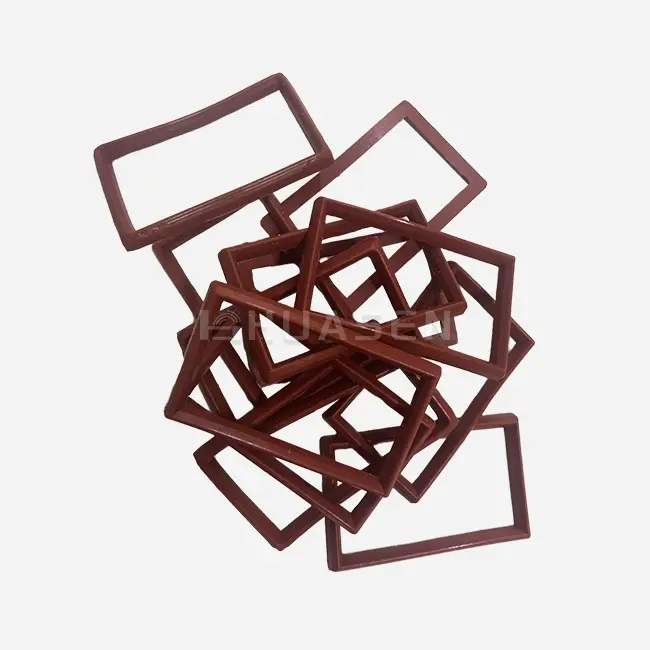
Many materials science groups may be employed for waveguides. Neoprene and EPDM seal affordably for moderate-frequency operations where electrical conductivity isn't crucial. Silicone and fluorosilicone elastomers considerably expand their temperature range. Fluorosilicone resists jet fuel and hydraulic fluids, which helps spaceship radar systems.
Conductive elastomer seals are made using silicone or fluorosilicone and silver-plated aluminium, copper, or nickel-graphite. They have a volume resistance of less than 0.005 ohm-cm and shielding effectiveness of above 100 dB at all planar frequencies. In ultra-high-frequency millimetre-wave applications where elastomers produce too much loss, soft indium, tin-plated copper, and aluminium gaskets are employed. PTFE gaskets are chemically and electrically robust, while graphite-based versions can withstand high temperatures when other materials fail. Composite designs combine metal cores for conductivity and elastomers for sealing to optimise performance in many areas.
Key Factors in Selecting Waveguide Gasket Materials
You must match material capabilities to your operational environment to make sensible material selections. We observed that rigorous evaluation across four key areas prevents costly field failures and premature gasket replacements.
Temperature Resistance and Thermal Cycling
Operating temperature quickly defines your material world. Standard silicone gaskets function consistently from -55°C to +200°C, making them suitable for most professional TV and telecom applications. Fluorosilicone extends the peak temperature range to +225°C while maintaining low-temperature flexibility for aviation systems that must handle unexpected altitude changes. High-temperature silicones are employed at high-power amplifiers and engine nacelle radar sites up to +300°C.
Cryogenic satellite base stations need materials that can resist liquid nitrogen temperatures without stiffening. However, desert radar systems face temperatures up to 70°C, and the sun's rays add 30 to 40°C to exposed flange assemblies. Thermal cycle, or repetitive expansion and contraction, compresses gasket materials, irreversibly reducing sealing effectiveness. Low compression set rates make gaskets last thousands of heat cycles, reducing maintenance and expenses.
Chemical Compatibility and Environmental Resistance
Chemical exposure concerns vary by installation location. Chloride-containing salt spray regularly damages naval gearbox systems, breaking down metals and elastomers. Aviation uses jet fuel, hydraulic oils, and de-icing chemicals. Food processing chemicals and cleaning solutions may touch industrial microwave cooking equipment gaskets. Transmission towers may be exposed to UV, ozone, and acid rain.
Materials' datasheets indicate compatibility, but concentration, temperature, and contact time determine their performance. Silver-aluminium silicone gaskets on marine aluminium flanges cause galvanic corrosion. This formula inhibits the electrochemical "battery effect" that accelerates corrosion on different metal surfaces. Unless thoroughly filled, PTFE gaskets don't conduct electricity well, yet withstand most chemicals. By matching compatibility charts to your environment, you may prevent premature gasket failures and emergency repairs.
Mechanical Properties and Compression Requirements
Proper closure requires controlled compression—20–40% of the gasket's original thickness. Various materials need various forces to crush and may maintain closure pressure over time. Soft materials like indium can smooth uneven surfaces without considerable bolt force. Under extreme pressure or vibration, they may extrude.
Note that tougher elastomers need a higher compression force; therefore, check bolt strength and flange form. Insufficient compression causes holes that let RF and moisture in. Too much stress may damage the gasket, force material into the waveguide aperture, and bend thin flanges. Knowing your bolt design, torque, and flange stiffness may help you discover machine-friendly materials. In vibration-prone areas like spacecraft, mobile base stations atop towers, and vehicle communication systems, gaskets must maintain compression.
Electrical Performance Requirements
Electrical demands need conductive gaskets for EMI shielding and RF continuity, and dielectric gaskets for separation and capacitive tuning. Conductivity prevents RF leakage and maintains impedance across the flange junction in most waveguide applications.
Shielding efficiency, measured in decibels across frequency bands, measures a conductive gasket's electromagnetic energy blockage. High-performance conductive gaskets can block 100+ dB of noise from 10 MHz to 10 GHz, but they lose effectiveness as frequency increases and wavelength approaches gasket width. Volume resistivity indicates natural conductivity; lower levels indicate greater electrical performance. Silver-plated copper fillings carry electricity better than nickel-graphite but cost more. Basic electrical performance depends on signal frequency, power levels, and VSWR. This saves money without compromising system requirements.
Comparison of Popular Gasket Materials for Waveguides
Knowing the pros and cons of each material family helps you make sure that your design choices meet both performance needs and price constraints for every gasket you select.
Rubber and Silicone Elastomer Options
Standard rubber materials, such as neoprene, can be used to seal inexpensively for uses below 6 GHz, where some RF leakage is acceptable. These materials can handle temperatures from -40°C to +100°C, which makes them good for climate-controlled indoor setups like test systems in laboratories or indoor distributed antenna systems. Because their tension set is higher than expensive materials, they need to be replaced more often—usually every 3 to 5 years, even if there is no damage that can be seen.
Silicone elastomers are the basis of the waveguide business for general-purpose uses. They stay flexible from -55°C to +200°C, don't break down in the sun or ozone, and have a low compression set, which means they last longer. Adding conductive fillers to basic silicone turns it into EMI protection covers that can be used in most business settings. Different types of fluorosilicone add resistance to fuel and oil, which is very important for military and aircraft radar systems that have to deal with hydraulic leaks or fuel spills. The material doesn't swell or break down when exposed to petroleum products, and it can still handle the same temperature range and be as flexible as regular silicone. Because of this, fluorosilicone-based conductive gaskets are usually used for installing radar on business and military aeroplanes in the air.
Metal Versus Non-Metal Considerations
Metal seals made from soft indium, tin-plated copper, aluminium, or beryllium copper are the best at conducting electricity and keeping heat in. The extreme softness of indium lets it mould to uneven surfaces with very little compression force. This makes gas-tight seals that are necessary for pressurised waveguide systems. Copper and aluminum versions can handle more tension loads and cost less than indium.
For millimetre-wave applications above 40 GHz, rubber gaskets suffer higher RF losses, making metal seals preferable. They withstand temperatures above 400°C near high-power components and provide the lowest possible RF loss at flange interfaces. However, metal gaskets require ultra-smooth mating surfaces (typically 32 micro-inches Ra or better) and perfect flatness to prevent leaks. Installation requires careful force control to avoid damage from over-compression or gaps from under-compression. Unlike elastomers, metal gaskets are generally single-use and must be replaced after disassembly.
Speciality Materials: PTFE, Graphite, and Composites
PTFE gaskets are used in places where chemicals are strong and other materials would dissolve or grow. Acids, bases, liquids, and acidic gases can't damage the material from -200°C to +260°C. Pure PTFE is a great insulator, which makes it useful for situations where dielectric separation between waveguide parts is needed. You can add conductive fillers, but full PTFE will never be as conductive as metal or elastomer options.
Some versions of graphite-based gaskets can work at temperatures higher than 650°C, which makes them good for high-power transmission systems or uses close to sources of burning. Expanded graphite has the same level of conformability as lighter metals, but it costs a lot less than indium. The material is naturally electrically conductive, which makes it useful for RF uses. However, it is very fragile, so it needs to be handled carefully during installation.
Composite gaskets carefully mix the qualities of different materials. A common design has a metal core, like aluminium or copper, that conducts electricity and is strong. Fluorosilicone is then moulded on top to seal the core and make the surface fit any shape. Another method combines electrical cloth with elastomer layers, which allows for controlled compression while still effectively protecting. These designed solutions improve a lot of performance factors at once, but they usually cost more because they are harder to build.
Procuring Waveguide Gaskets: What B2B Buyers Need to Know
Technical requirements, quality assurance, cost, and the ability of the seller are all things that need to be balanced in order to get each gasket part to work reliably for its whole service life.
Evaluating Suppliers and Quality Standards
The choice of supplier has a huge effect on the long-term stability of a system. Manufacturers who have written quality management systems—at least ISO 9001 certification—show process rules that keep product quality uniform. Suppliers to the military and aircraft industry often have AS9100 certification, which shows that they can meet strict standards for traceability and paperwork.
By asking for material certificates, you can check their makeup and properties. Conductive gaskets should have test results for conductivity and measures of how well they shield across the necessary frequency bands. Ratings for temperatures should be based on real tests, not just general qualities of the material. Performance claims can be trusted when they are in line with standards like MIL-DTL-83528 for conductive elastomers or ASTM requirements for different types of materials.
The level of technical help a supplier offers is what sets solution partners apart from component sellers. Engineers who know about waveguide uses can tell you which materials will work best in your area, offer alternatives if the materials you want are hard to find, and fix problems with how they work in the field. By asking for a sample review before making a big purchase, you can test the product in your real system, which lowers the specification risk.
Custom Manufacturing and Bulk Ordering Advantages
Standard waveguide shapes work for a lot of uses, but custom designs are needed for things like non-standard frequencies, special mounting features, or specific environmental needs. Suppliers who have their own tools and material compounding facilities can make seals that are perfect for your exact needs, including controlled levels of conductivity, custom sizes, and mixtures of materials that aren't available in catalogues.
When you buy in bulk, you save a lot of money, which is especially helpful for system designers who need to set up hundreds or thousands of units. Volume savings usually start at 100 pieces, and prices drop even more at 500, 1000, and higher amounts. A framework that deals with annual quantity promises can help you get better prices and make sure you get what you need when materials are in short supply or demand is high.
To balance the costs of keeping inventory against the savings from buying things in bulk, you need to look at usage rates and wait times. Standard things that move quickly might need to be ordered in bulk every three months, while handmade gaskets with wait times of 8 to 12 weeks would benefit from having extra inventory on hand. Supplier-managed inventory programmes make sure that parts are available on time for production plans while shifting the costs of holding onto the maker.
Lead Time Management and After-Sales Support
Stocked standard gaskets or O-rings usually ship within 1–2 weeks from reputable suppliers. Custom designs require tooling and material sourcing, extending lead times to 6–12 weeks depending on complexity. Planning procurement around project schedules prevents costly production delays. Expedited production options, often available for additional fees, provide flexibility for urgent requirements.
Support after the sale is what sets trustworthy sellers apart from transactional ones. Warranty coverage that covers material flaws or failures that happen too soon gives people who have faulty parts a way to get them fixed. Technical support that helps with installation questions, fixes efficiency problems, or suggests changes for next-generation designs is worth more than the cost of the component itself. Field failure analysis, in which providers look at returned seals to find out what went wrong, helps stop problems from happening again and guides the choice of materials for similar uses in the future.
Having ties with several qualified providers lowers the risks in the supply chain. Dependencies on a single source make businesses vulnerable when providers face problems like limited capacity, lack of materials, or business interruptions. Getting secondary sources approved for important types of gaskets ensures continuity during supply problems. However, handling multiple providers makes buying more difficult and may mean giving up big discounts.
Conclusion
Instead of just choosing common materials, choosing the right material for a waveguide seal requires a thorough analysis of the operating conditions, performance needs, and lifecycle costs. Your application's material world is made up of extreme temperatures, chemical exposures, mechanical pressures, and electrical requirements. When you know the trade-offs between elastomer flexibility and metal conductivity, between cost and life, and between standard availability and custom optimisation, you can make specs that balance the cost of buying something right away with the cost of keeping it reliable and fixing it over time. Gasket service life and system uptime are maximised in demanding telecommunications, radar, aerospace, and defence applications where failure has major operational and financial consequences. This is achieved through proper installation following the manufacturer's instructions and proactive maintenance with clear replacement criteria.
Frequently Asked Questions
1. What gasket materials handle high-temperature waveguide applications above 200°C?
For temperatures above 200°C, fluorosilicone gaskets can handle up to +225°C, while high-temperature silicones reach +300°C. Metal seals made from aluminium, copper, or stainless steel withstand over 400°C, and graphite-based seals can exceed 650°C for demanding aerospace or defence applications.
2. How do I determine if my application needs conductive or dielectric gaskets?
Conductive gaskets maintain electrical continuity and prevent RF leakage, making them ideal for radar, base stations, and communication systems. Dielectric gaskets provide electrical isolation for tuning or separating ground potentials. The right choice depends on RF performance and electrical requirements.
3. Can waveguide gaskets be customised for non-standard flange dimensions?
Yes, waveguide gaskets can be customised for unique flange sizes, bolt patterns, and material requirements. Suppliers typically require detailed flange dimensions, with tooling taking 6–8 weeks and initial production 2–4 weeks. Minimum orders are usually 50–100 pieces, though smaller prototype runs may be available.
Partner with Huasen Microwave for Precision Gasket Solutions
Picking the right waveguide gasket provider affects more than just the cost of the part; it also affects the stability of the system, how often it needs to be maintained, and its long-term success in operation. Since 1993, Huasen Microwave has been making precise RF and microwave parts that are used in defence systems, satellite ground stations, aircraft radar installations, and telecoms infrastructure around the world. We make gaskets using cutting-edge material science and thirty years of experience with waveguides. We can make conductive rubber, metal, and composite gaskets that work best in harsh conditions, from very cold temperatures to high-power millimetre-wave uses. We offer full technical support, including help choosing materials, custom design services, sample evaluation programmes, and quick help after the sale, all backed by ISO-certified quality management. Our team gives you the dependability and performance your applications need, whether you're looking for standard setups or custom seal solutions for unique systems. Get in touch with our engineering team at sales@huasenmicrowave.com to talk about your needs and find out why top system integrators and equipment makers choose Huasen Microwave as their waveguide gasket supplier.
References
1. Parker Hannifin Corporation. (2019). "Conductive Elastomers for EMI Shielding: Material Properties and Selection Criteria." Parker EMI Shielding Technical Handbook, 8th Edition.
2. Institute of Electrical and Electronics Engineers. (2021). "IEEE Standard for Waveguide Flanges and Interfaces." IEEE Std 1785-2021, Microwave Theory and Techniques Society.
3. Society of Automotive Engineers International. (2020). "Material Specification for Conductive Elastomers in Aerospace Applications." SAE AMS-DTL-83528E, Aerospace Material Specification.
4. Microwave Journal Editorial Staff. (2022). "RF Gasket Selection for High-Frequency Waveguide Systems: Trade-offs and Best Practices." Microwave Journal, Volume 65, Issue 4, pp. 44-58.
5. National Institute of Standards and Technology. (2018). "Measurement Methods for Characterization of Waveguide Flange Interface Performance." NIST Technical Note 2016, Communications Technology Laboratory.
6. Defence Technical Information Centre. (2020). "Environmental Durability of EMI Shielding Gaskets in Naval Communication Systems." DTIC Report ADA621847, Naval Research Laboratory Materials Science Division.
Send Inquiry