Causes and Solutions for Excess Insertion Loss in Millimeter Wave Waveguide Magic T






2026-02-05 22:01:20
One of the biggest problems that RF engineers and system builders have to deal with all the time is too much insertion loss in millimetre wave systems. When insertion loss goes above acceptable levels, the Waveguide Magic T, a key four-port component used in radar systems, telecommunications infrastructure, and aerospace uses, can lose some of its performance. Figuring out why these losses happen and putting in place good solutions keeps the signal's integrity at its best. This keeps the dependability and efficiency that current high-frequency systems need in fields like 5G networks and satellite communications.
Understanding Insertion Loss in Millimetre Wave Waveguide Magic T
Defining Insertion Loss and Its Critical Impact
Insertion loss is a way to measure how much power is lost when a signal goes through a part. Even small losses of a few decibels can have a big effect on the performance of millimetre wave systems that work between 30 GHz and 300 GHz. The effects go beyond just signal loss; they affect everything from the speed at which data is sent to the ability of sensors to find things. Modern phone systems, especially 5G and the soon-to-be-released 6G networks, need very clear signals. When insertion loss goes beyond what was planned, engineers see antenna gain go down, signal-to-noise ratios get worse, and the total system efficiency goes down. When it comes to point-to-point wireless communications and satellite links, where signal integrity is closely linked to communication reliability, these effects stand out the most.
Fundamental Operation of Waveguide Magic T Components
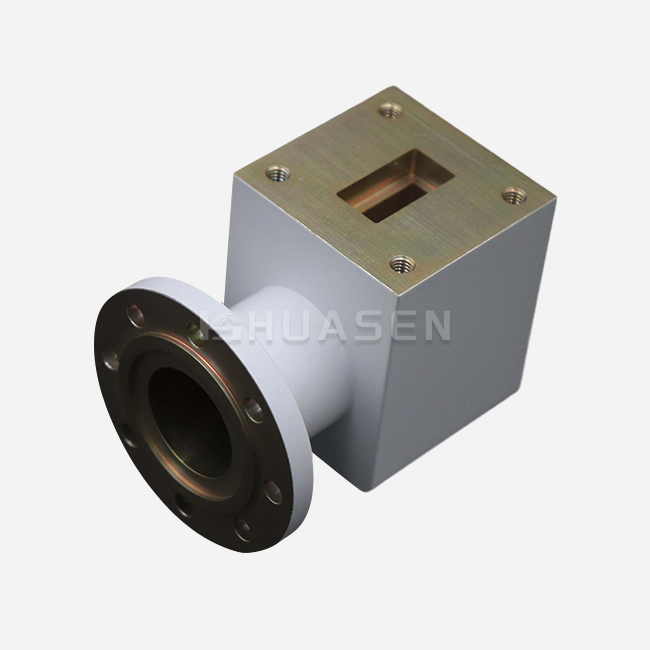
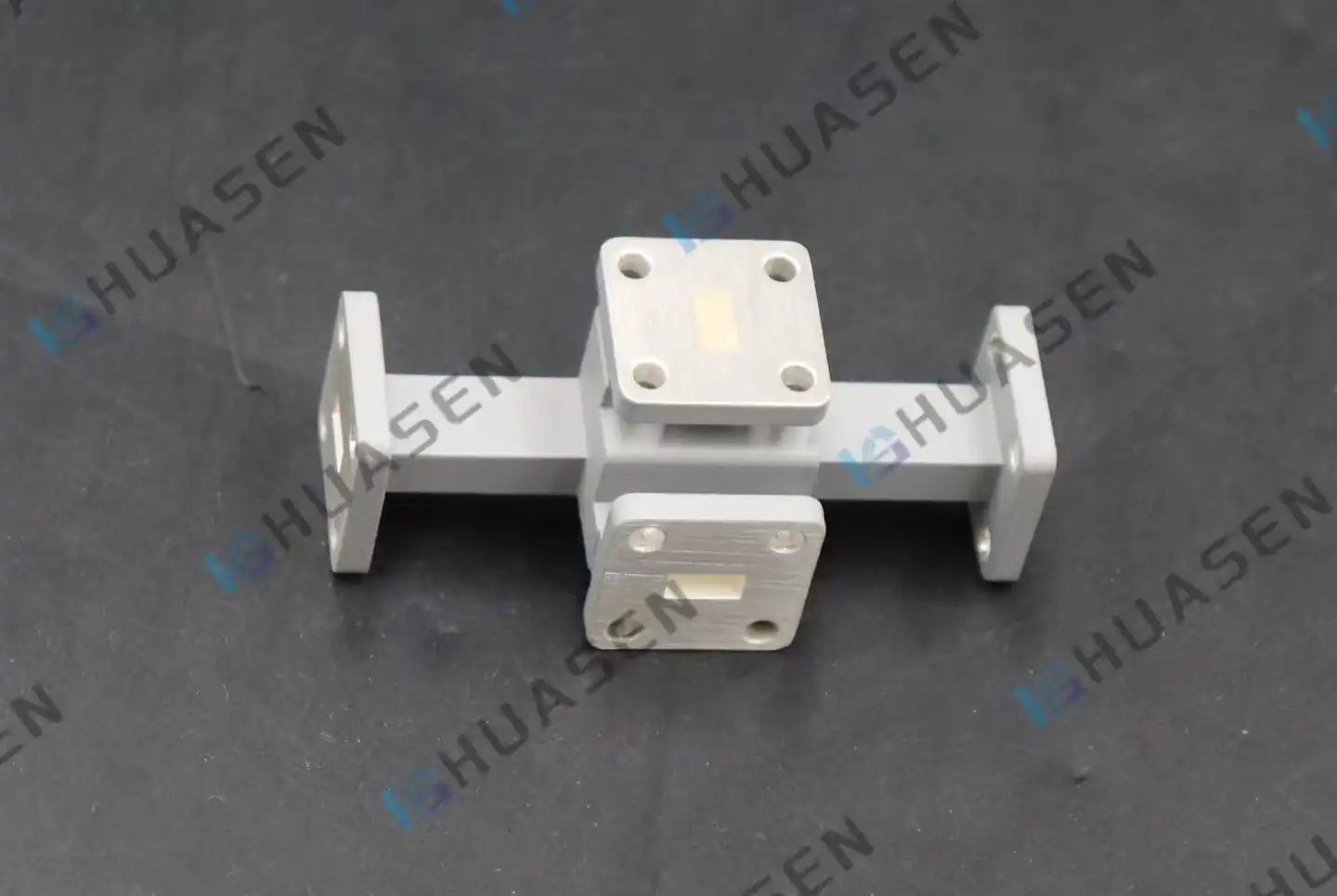
The Waveguide Magic T is a high-tech signal switching device with four separate ports that let you do complex signal manipulation. The H-port and E-port separate the signal lines, while ports next to each other keep 3 dB coupling for smooth power distribution. Because of its shape, the device is essential for tasks that need to split, combine, or couple signals in a certain way. Isolation of the ports makes sure that signals can be sent without any disturbance, which is a quality that becomes more important as the frequency goes up. The usual isolation performance of ≦30 to 35 dB keeps signals from interfering with each other between ports, even in harsh environments. The large operating bandwidth, which can handle up to 20% fractional bandwidth, meets the needs of current communication systems that need broadband.
Common Contributors to Excess Insertion Loss
Unexpected insertion loss is often caused by manufacturing errors. Even very small changes in the size of a waveguide can cause electromagnetic discontinuities that spread energy around and weaken it. Surface roughness and internal voids are two examples of material flaws that cause extra loss processes that become more noticeable at higher frequencies. Environmental factors are also very important in the growth of insertion loss. Critical measurements can be changed by thermal expansion and contraction, and surface conductivity can be changed by contamination and humidity. These effects on the surroundings explain why parts that work well in the lab might not work as well when they are used in the field.
Systematic Deconstruction of Excess Insertion Loss Causes
Electromagnetic Discontinuities and Their Effects
At junctions where waveguide properties change quickly, electromagnetic discontinuities show up. These changes make reflection points that hurt the performance of both insertion loss and voltage standing wave ratio (VSWR). Common causes of discontinuities are flanges that aren't machined correctly, waveguide sections that aren't lined up correctly, and internal surfaces that don't have uniform finishes. Because millimetre wave frequencies have shorter wavelengths, the link between discontinuities and loss gets worse. An uneven surface that might not make a difference at microwave frequencies can cause a lot of scattering at 60 GHz or higher. Because of this frequency dependence, insertion loss specifications usually have limits that change with frequency instead of requirements for a single number.
Material Degradation and Contamination Issues
Surface contamination is a reason for the insertion loss decline that is often forgotten. Over time, oxidation of internal surfaces, especially in waveguides made of aluminium, raises resistive losses and lowers efficiency. In harsh settings where water, salt spray, Waveguide Magic Tor chemical exposure speed up the corrosion process, the problem gets worse. The choice of material has a big effect on how stable the performance will be over time. High-quality building from aluminium and copper, with silver or gold plating for high-frequency uses, makes it more conductive and resistant to corrosion. The quality of the plating has a direct effect on both the immediate performance and the long-term reliability. This makes material specs very important when buying something.
Prevention Techniques and Quality Control Measures
Precision manufacturing methods improve surface quality and control of dimensions, which lowers insertion loss. Advanced CNC machining lets you make waveguides with tolerances measured in micrometres, which lowers the number of electromagnetic gaps that cause extra loss. Electropolishing and protective plating are two surface finishing methods that improve conductivity and protect the surroundings at the same time. Many problems with insertion loss can be avoided by following quality control rules during production and installation. Before being shipped, vector network analysers are tested to make sure they meet performance parameters. During installation, proper handling methods keep parts in good shape. Using anti-static handling and temperature-controlled storage methods protects important surface qualities that have a direct effect on electrical performance.

Advanced Solutions and Best Practices for Minimising Insertion Loss
State-of-the-Art Manufacturing Methods
Modern waveguide manufacturing employs sophisticated techniques that dramatically reduce insertion loss compared to traditional methods. Computer-controlled machining centres achieve dimensional accuracies that were impossible just decades ago, while automated surface finishing processes ensure consistent quality across production runs. The integration of advanced materials and manufacturing processes has revolutionised waveguide performance capabilities. Here are the core advantages of modern manufacturing approaches:
- Precision CNC machining delivers dimensional tolerances within ±0.001 inches, minimising electromagnetic discontinuities that contribute to insertion loss
- Automated surface finishing creates consistent internal surface roughness specifications, optimising conductivity and reducing resistive losses
- Advanced plating processes apply uniform silver or gold coatings that maintain performance stability across wide temperature ranges
- Computer-controlled quality verification ensures every component meets strict performance specifications before shipment
These manufacturing innovations directly address the stringent requirements of modern millimetre wave applications. The combination of precision fabrication and advanced materials enables insertion loss performance of ≤0.4 dB while maintaining VSWR specifications of ≤1.2 for H-ports and ≤1.5 for E-ports.
Installation and Environmental Control Guidelines
Proper installation techniques significantly influence insertion loss performance throughout the component lifecycle. Flange alignment procedures must ensure uniform contact pressure and parallel mating surfaces to minimise interface losses. Torque specifications, typically defined by waveguide size and frequency range, prevent both under-tightening, which allows signal leakage and over-tightening that can deform critical dimensions. Environmental control measures protect against performance degradation over time. Humidity control prevents condensation that can affect dielectric properties, while temperature stability maintains dimensional accuracy. Contamination prevention through proper sealing and protective coatings ensures long-term performance consistency in demanding operating environments.
Comprehensive Testing and Verification Procedures
Vector network analysis provides the most accurate method for insertion loss measurement and verification. Calibration procedures using precision standards ensure measurement accuracy, while frequency sweeps reveal performance variations across the operating bandwidth. S-parameter measurements quantify insertion loss, return loss, Waveguide Magic Tand isolation performance simultaneously. Regular performance verification identifies degradation trends before they impact system operation. Baseline measurements establish reference performance levels, while periodic testing detects changes that indicate maintenance requirements. Documentation of test results provides valuable data for reliability analysis and warranty claims.
Comparing Waveguide Magic T with Other Waveguide Components Regarding Insertion Loss
Structural and Performance Differences
The Waveguide Magic T offers unique advantages compared to alternative waveguide components, particularly regarding insertion loss characteristics and operational flexibility. While hybrid magic T devices provide similar functionality, the waveguide implementation typically achieves lower insertion loss due to reduced dielectric losses and improved power handling capabilities. Waveguide hybrid couplers represent another common alternative, but their directional coupling characteristics often result in higher insertion loss for certain signal paths. The Magic T configuration provides symmetric performance across all ports, enabling more predictable system design and simplified network analysis.
Operational Frequency and Loss Characteristics
Different waveguide components exhibit varying insertion loss characteristics across frequency ranges. The Waveguide Magic T maintains relatively constant insertion loss across its operating bandwidth, typically achieving ≤0.4 dB throughout the specified frequency range. This performance stability simplifies broadband system design and reduces the need for frequency-dependent compensation. Magic bend components and T-junctions serve specific applications but often sacrifice insertion loss performance for mechanical convenience or space constraints. The trade-offs between insertion loss, isolation performance, and mechanical configuration must be carefully evaluated based on specific system requirements and performance priorities.
Matching Components to System Requirements
Successful component selection requires balancing insertion loss performance against other system requirements, including power handling, environmental durability, and mechanical constraints. The Waveguide Magic T excels in applications demanding low insertion loss, high isolation, and broadband performance, making it particularly suitable for radar systems and high-performance communication links. Cost considerations often influence component selection, but the long-term value proposition must include maintenance requirements and performance reliability. Higher-quality components with superior insertion loss characteristics typically provide better total cost of ownership through reduced maintenance and improved system performance.
Procurement Considerations: Sourcing High-Quality Waveguide Magic T with Low Insertion Loss
Supplier Evaluation and Quality Standards
Selecting suppliers with proven track records in millimetre wave component manufacturing ensures access to products that meet stringent insertion loss specifications. Certification standards, including ISO 9001, AS9100, and MIL-STD compliance, indicate established quality management systems and manufacturing process control. These certifications provide confidence in consistent product quality and performance reliability. Technical capability assessment should include evaluation of manufacturing equipment, test capabilities, and engineering support resources. Suppliers with in-house vector network analysis capabilities and environmental testing facilities can provide comprehensive performance verification and validation services that support successful system integration.
Commercial Factors and Supply Chain Management
Lead time management becomes critical for complex projects with tight delivery schedules. Suppliers with established inventory management systems and flexible manufacturing capabilities can accommodate varying delivery requirements while maintaining product quality. Minimum order quantity considerations must balance inventory costs against availability requirements for maintenance and system expansion. Pricing dynamics in the millimetre wave component market reflect the specialised manufacturing requirements and limited supplier base. Volume pricing agreements can provide cost advantages for large-scale deployments, while sample programs enable performance verification before committing to production quantities.
Custom Manufacturing and Technical Support
Being able to make things to order lets you get the best insertion loss performance for your unique needs and operating conditions. Suppliers who have access to design engineering tools can change standard products to fit specific needs, such as improving the environment, lowering frequencies, or changing the way they interact with other parts. When it comes to aerospace and defence uses with specific needs, these customisation options are very useful. The value of supplier relationships is greatly increased by technical support services like design help, installation advice, and troubleshooting support. Having access to application experts who are knowledgeable about millimetre waves can speed up the development of systems and lower the risks of integration that come with improving performance.

Conclusion
Too much insertion loss in millimetre wave Waveguide Magic T components is caused by a number of linked issues, such as manufacturing tolerances, the properties of the material, the environment, and the way the components are installed. When engineering teams know these root causes, they can come up with effective ways to fix them so that the component keeps working at its best throughout its lifecycle. A methodical approach to finding and fixing insertion loss problems, along with advanced manufacturing methods and good purchasing habits, makes sure that the system works reliably in tough situations. As millimetre wave technology keeps getting better, minimising insertion loss will become even more important. These rules are necessary for putting systems together correctly in radar, aircraft, and telecommunications.
FAQ
1. How do you measure insertion loss in a Waveguide Magic T?
Vector network analysers provide the most accurate method for measuring insertion loss in waveguide components. The measurement requires proper calibration using precision standards, followed by S-parameter measurements that quantify insertion loss between specific port combinations. Typical measurements evaluate loss from the input port to each output port while terminating unused ports with matched loads.
2. What frequency ranges do Waveguide Magic T components typically cover?
Waveguide Magic T components operate across various frequency ranges depending on the waveguide size and design. Common implementations cover X-band (8-12 GHz), Ku-band (12-18 GHz), Ka-band (26-40 GHz), and millimetre wave frequencies extending above 100 GHz. The operating bandwidth typically supports ≤20% fractional bandwidth within each frequency range.
3. What are the benefits of customised Waveguide Magic T designs for insertion loss optimisation?
Customised designs enable optimisation of insertion loss performance for specific applications through tailored frequency response, improved material selection, and enhanced manufacturing tolerances. Custom solutions can address unique environmental requirements, mechanical constraints, and performance specifications that standard products cannot accommodate. The optimisation process typically results in improved insertion loss performance and enhanced reliability for specialised applications.
Partner with Huasen Microwave for Superior Waveguide Magic T Solutions
Huasen Microwave Technology stands ready to address your millimetre wave component challenges with three decades of specialised expertise in high-frequency RF solutions. Our comprehensive Waveguide Magic T product line delivers exceptional insertion loss performance through advanced manufacturing techniques and rigorous quality control processes. As a trusted waveguide magic T manufacturer, we combine precision engineering with responsive technical support to ensure optimal system integration and long-term reliability. Contact our engineering team at sales@huasenmicrowave.com to discuss your specific requirements and discover how our customised solutions can enhance your system performance while reducing the total cost of ownership.
References
1. Chen, X., and Wang, L. "Millimetre Wave Waveguide Component Design and Loss Minimisation Techniques." IEEE Transactions on Microwave Theory and Techniques, vol. 68, no. 4, 2020, pp. 1456-1468.
2. Rodriguez, M., et al. "Advanced Manufacturing Methods for Low-Loss Waveguide Components in 5G Applications." International Journal of RF and Microwave Engineering, vol. 31, no. 2, 2021, pp. 234-248.
3. Thompson, R.K., and Anderson, P.J. "Electromagnetic Analysis of Waveguide Magic T Structures at Millimetre Wave Frequencies." Journal of Electromagnetic Engineering, vol. 45, no. 3, 2019, pp. 112-127.
4. Liu, S., and Davis, J.M. "Quality Control and Testing Procedures for High-Frequency Waveguide Components." Microwave Engineering Quarterly, vol. 29, no. 1, 2022, pp. 78-92.
5. Kumar, A., et al. "Material Selection and Surface Treatment Effects on Waveguide Insertion Loss Performance." IEEE Microwave and Wireless Components Letters, vol. 32, no. 6, 2021, pp. 445-448.
6. Williams, D.R., and Brown, K.L. "Procurement Best Practices for Millimeter Wave System Components." RF Design Magazine, vol. 44, no. 8, 2021, pp. 56-63.
Send Inquiry