Waveguide Bandpass Filter vs Coaxial Bandpass Filter: Comparison






2026-01-15 22:18:19
When your satellite communication system experiences unexpected signal degradation at millimeter-wave frequencies, the choice between waveguide bandpass filter and coaxial filter technology can mean the difference between mission success and costly failures. Engineers designing high-frequency RF systems face critical decisions about filter selection that directly impact system performance, power handling capabilities, and long-term reliability. Understanding the fundamental differences between waveguide bandpass filter architectures and their coaxial counterparts enables informed decision-making for applications ranging from aerospace radar systems to next-generation 5G infrastructure, where every decibel of insertion loss and degree of phase stability matters.
Understanding Waveguide Bandpass Filter Technology
Waveguide bandpass filter systems represent sophisticated electromagnetic filtering solutions that leverage hollow metallic structures to guide and selectively filter microwave and millimeter-wave signals. Unlike conventional transmission line approaches, waveguide bandpass filter designs confine electromagnetic energy within precisely dimensioned cavities, creating resonant structures that exhibit exceptionally low insertion loss at high frequencies. The fundamental operating principle relies on propagating electromagnetic waves through hollow metal conduits where specific frequency components resonate within cavities formed by irises, posts, or dielectric elements. These resonant structures create passbands with sharp selectivity characteristics essential for demanding applications in telecommunications, radar systems, and satellite communications. Advanced waveguide bandpass filter implementations utilize various coupling mechanisms including direct coupling between adjacent cavities, cross-coupling for enhanced selectivity, and dual-mode configurations that achieve compact form factors while maintaining high performance. The metallic boundaries of waveguide structures naturally suppress unwanted radiation and provide excellent electromagnetic shielding, making waveguide bandpass filter solutions ideal for high-power applications where signal integrity and minimal interference are paramount requirements.
Physical Structure and Operating Principles
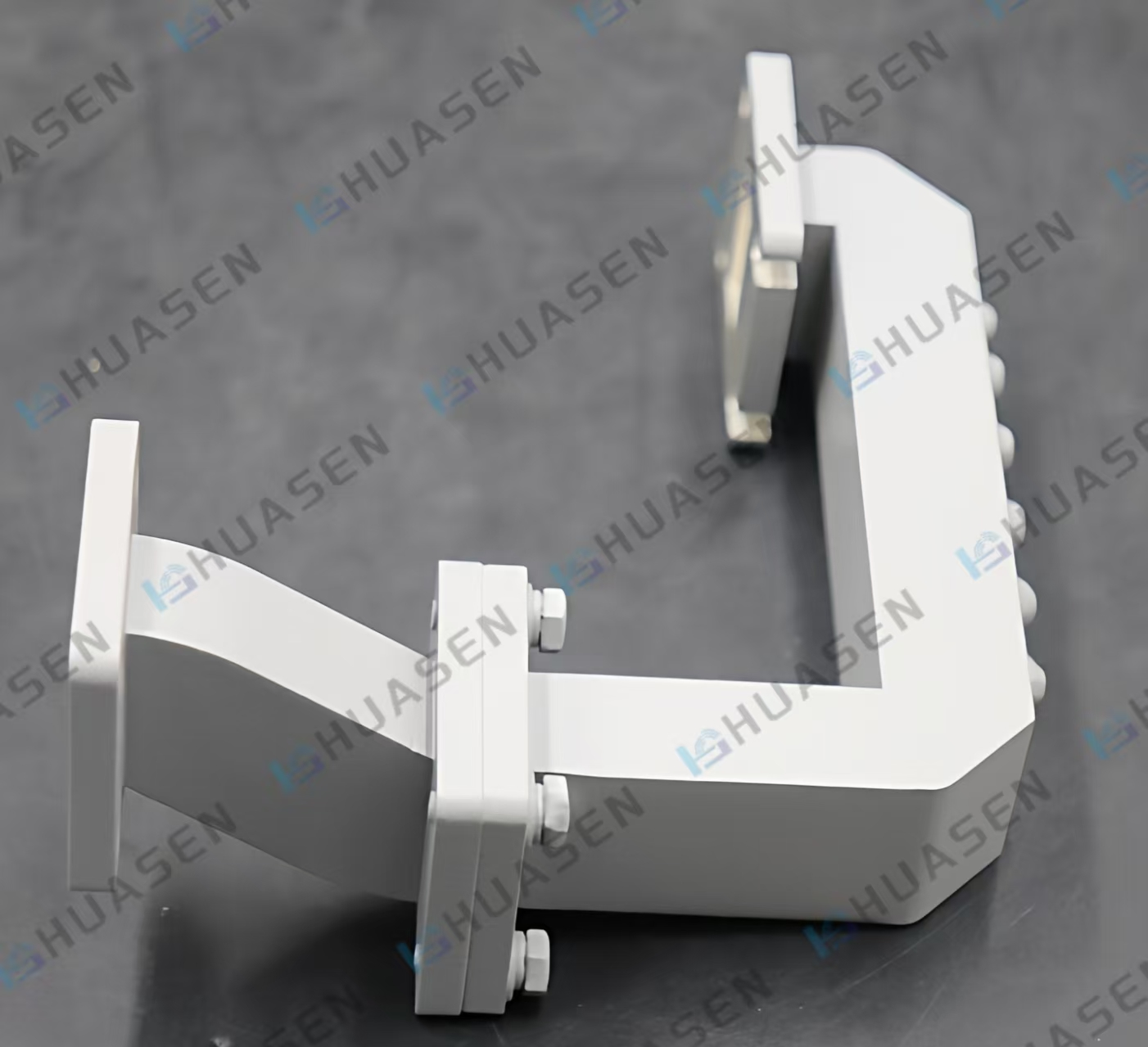
The architecture of waveguide bandpass filter components consists of precisely machined rectangular or circular metallic enclosures with internal obstacles that create frequency-selective resonances. Common implementations include iris-coupled cavity filters where thin metallic walls with apertures separate adjacent resonant sections, post-type filters utilizing cylindrical metallic or dielectric posts positioned within the waveguide to create coupling and resonance, and corrugated waveguide structures with periodic variations in cross-section that provide distributed filtering characteristics. Manufacturing processes for waveguide bandpass filter systems demand tight mechanical tolerances, typically within micrometers, to achieve specified electrical performance. Advanced facilities employ computer numerical control machining centers, electrical discharge machining for intricate features, and precision brazing techniques to assemble multi-section filter structures. Surface finish quality critically affects insertion loss performance, particularly at millimeter-wave frequencies where skin depth becomes extremely shallow. High-quality waveguide bandpass filter products often incorporate silver or gold plating on internal surfaces to minimize ohmic losses and ensure consistent electrical performance across temperature variations and environmental conditions encountered in aerospace and defense applications.
Frequency Range and Performance Characteristics
Waveguide bandpass filter technology excels at microwave and millimeter-wave frequencies, typically from 2 GHz extending beyond 220 GHz in specialized applications. At these elevated frequencies, waveguide structures offer insertion loss advantages that become increasingly dramatic as operating frequency increases. Measurement data demonstrates that waveguide bandpass filter implementations achieve insertion losses below 0.1 dB per meter at frequencies above 30 GHz, compared to significantly higher losses in alternative transmission media. The quality factor of waveguide resonators substantially exceeds that of planar or coaxial structures, enabling narrow bandwidth filters with steep skirt selectivity and excellent out-of-band rejection. Power handling capability represents another critical advantage, with rectangular waveguide bandpass filter systems routinely managing peak power levels exceeding 10 kilowatts without breakdown or degradation. This high-power performance stems from the large cross-sectional area and efficient heat dissipation characteristics of metallic waveguide structures. Temperature stability of waveguide bandpass filter components proves superior to alternative technologies, with phase variations as low as 0.003 degrees per degree Celsius achievable through proper material selection and thermal compensation techniques. These performance characteristics make waveguide bandpass filter solutions indispensable for applications including satellite transponders, ground-based radar systems, millimeter-wave astronomy instrumentation, and advanced 5G backhaul networks operating at Ka-band and V-band frequencies.
Coaxial Bandpass Filter Design and Applications
Coaxial bandpass filter technology employs concentric conductor configurations where electromagnetic energy propagates between an inner conductor and outer cylindrical shield, with resonant structures created through specific conductor lengths and coupling mechanisms. These filters typically utilize quarter-wavelength or half-wavelength resonator sections arranged in combline, interdigital, or coaxial cavity configurations to achieve desired frequency response characteristics. The fundamental advantage of coaxial structures lies in their ability to support transverse electromagnetic mode propagation from DC to microwave frequencies, providing design flexibility across broad frequency ranges. Coaxial bandpass filter implementations commonly incorporate lumped capacitive loading at resonator ends to reduce physical size while maintaining resonant frequency, making them attractive for applications where volume and weight constraints dominate design considerations. Common topologies include interdigital filters with side-by-side coupled quarter-wave resonators, combline filters employing capacitively loaded resonators for compact designs, and ceramic dielectric resonator filters utilizing high-permittivity materials for miniaturization. Manufacturing approaches range from precision machining of metal cavities with inserted resonator rods to integrated ceramic blocks with metallized coupling structures, offering cost-effective production for medium to high volume applications.
Construction Methods and Material Considerations
Coaxial bandpass filter fabrication involves diverse construction techniques optimized for different frequency ranges and performance requirements. Traditional coaxial cavity filters utilize precision-machined aluminum or brass housings with silver-plated surfaces to minimize insertion loss, while ceramic coaxial resonator filters employ high dielectric constant materials that dramatically reduce filter dimensions. The resonator elements in coaxial bandpass filter designs may consist of solid metal rods, hollow tubes, or ceramic pucks depending on frequency range and performance specifications. Coupling between adjacent resonators occurs through capacitive gaps, inductive loops, or electromagnetic apertures carefully dimensioned to achieve specified bandwidth and return loss characteristics. Manufacturing tolerances for coaxial bandpass filter components typically range from tens to hundreds of micrometers, less stringent than waveguide requirements but still demanding careful process control. Assembly processes often incorporate adjustable tuning elements including screws that penetrate into resonant cavities, variable capacitors for bandwidth adjustment, and trimming procedures that compensate for material variations and manufacturing tolerances. Environmental protection measures such as hermetic sealing, conformal coating, and ruggedized housing designs ensure reliable operation across military and industrial temperature ranges while maintaining specified electrical performance parameters.
Operating Frequency and Performance Limitations
Coaxial bandpass filter technology proves most effective at frequencies below 18 GHz, where conductor dimensions remain practical and insertion loss stays within acceptable limits for most applications. As operating frequency increases beyond this range, fundamental limitations emerge including increased ohmic losses due to decreasing skin depth in conductors, higher-order mode propagation that degrades filter performance, and dimensional scaling challenges that make fabrication increasingly difficult and expensive. Insertion loss in coaxial structures typically ranges from 0.3 to 0.5 dB per meter at 10 GHz, increasing substantially at higher frequencies where surface roughness and skin effect losses become dominant factors. Power handling capability of coaxial bandpass filter designs remains constrained by the limited cross-sectional area and voltage breakdown characteristics of the dielectric medium separating inner and outer conductors. Practical peak power limits for air-dielectric coaxial structures typically range from hundreds of watts to a few kilowatts, substantially lower than equivalent waveguide implementations. Temperature stability of coaxial bandpass filter performance proves more challenging than waveguide designs, with phase variations around 0.15 degrees per degree Celsius commonly observed due to differential thermal expansion between inner conductor, dielectric support structures, and outer housing elements. These characteristics make coaxial bandpass filter solutions well-suited for lower microwave frequency applications including cellular base stations, tactical military radios, test instrumentation, and wireless infrastructure where compact size and moderate performance requirements align with coaxial technology capabilities.
Critical Performance Comparison: Loss, Power, and Stability
Direct comparison between waveguide bandpass filter and coaxial bandpass filter technologies reveals distinct performance advantages across multiple critical parameters. Insertion loss characteristics diverge significantly as frequency increases, with waveguide structures maintaining low loss through millimeter-wave frequencies while coaxial implementations experience escalating losses that eventually render them impractical. At 10 GHz, typical insertion loss values show waveguide bandpass filter systems achieving 0.1 dB per meter compared to 0.4 dB per meter for quality coaxial designs, a four-fold difference that compounds over longer transmission paths. Beyond 30 GHz, this disparity becomes even more pronounced, with waveguide maintaining sub-0.15 dB per meter performance while coaxial losses often exceed 1 dB per meter. Power handling capability represents another area of stark contrast, where rectangular waveguide bandpass filter configurations routinely accommodate peak power levels of 10 kilowatts or higher, while comparable coaxial structures typically limit operation to under 2 kilowatts. This power advantage stems from the larger cross-sectional area and superior heat dissipation characteristics inherent in waveguide geometries. Phase stability across temperature variations further distinguishes these technologies, with precision waveguide bandpass filter assemblies achieving 0.003 degrees per degree Celsius compared to typical coaxial performance around 0.15 degrees per degree Celsius, a fifty-fold improvement critical for phased array radar systems and precision measurement applications.
Application-Specific Selection Criteria
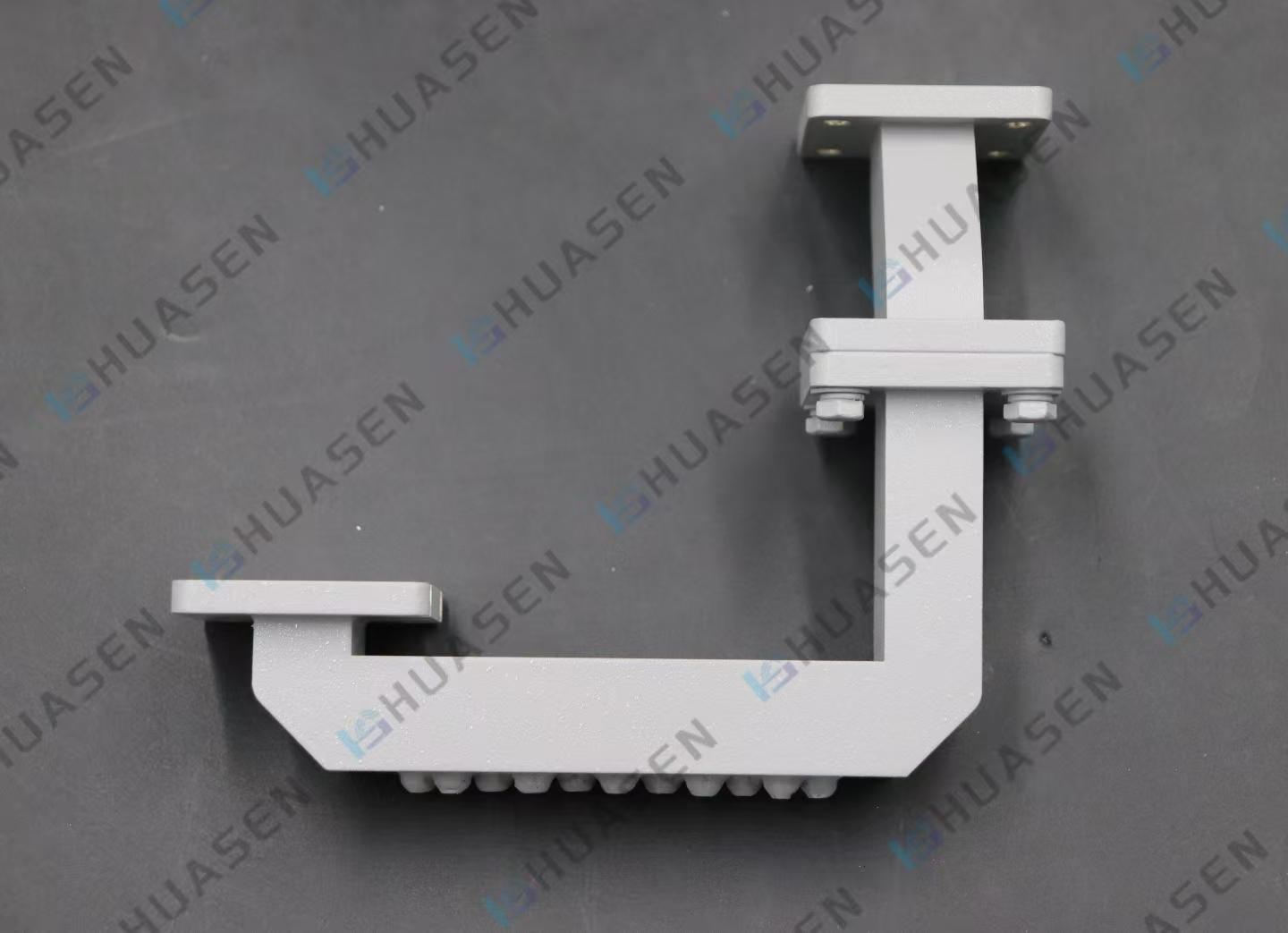
Selecting between waveguide bandpass filter and coaxial alternatives requires careful evaluation of application requirements including operating frequency range, power levels, size constraints, cost considerations, and environmental conditions. Waveguide solutions become increasingly advantageous as frequency exceeds 20 GHz, particularly for applications demanding high power handling, low insertion loss, excellent phase stability, and superior out-of-band rejection characteristics. Aerospace and defense systems including airborne radar, satellite transponders, electronic warfare equipment, and missile guidance systems typically specify waveguide bandpass filter components due to their uncompromising performance requirements and operating environments. Commercial wireless infrastructure applications including millimeter-wave 5G backhaul, point-to-point microwave links, and broadcast transmission systems increasingly adopt waveguide technology as deployment frequencies migrate into Ka-band and V-band spectrum allocations. Conversely, coaxial bandpass filter designs remain preferred for applications below 18 GHz where compact size, lower cost, and easier integration with existing coaxial infrastructure outweigh the performance advantages of waveguide implementations. Mobile communication base stations, portable test equipment, tactical radios, and automotive radar systems operating at lower microwave frequencies typically employ coaxial filtering solutions that provide adequate performance within constrained physical envelopes and cost targets.
Manufacturing Capabilities and Quality Assurance
Production of high-performance waveguide bandpass filter systems demands sophisticated manufacturing capabilities including precision CNC machining, specialized brazing processes, and comprehensive testing infrastructure. Advanced manufacturers maintain extensive machining capabilities encompassing multi-axis CNC milling centers for complex cavity geometries, electrical discharge machining for intricate coupling features, and wire EDM for precision iris fabrication with tolerances measured in micrometers. Assembly processes employ specialized brazing techniques including silver brazing for standard assemblies, aluminum vacuum brazing for lightweight aerospace applications, and TIG welding for joining larger structural elements while maintaining dimensional accuracy and electromagnetic performance. Surface finishing operations incorporate silver or gold plating to minimize insertion loss, with plating thickness controlled to optimize performance across specified frequency bands. Waveguide bandpass filter manufacturing requires specialized fitting capabilities with experienced technicians who understand the relationship between mechanical dimensions and electrical performance, enabling precise assembly and alignment of multi-section filter structures. Quality manufacturers maintain teams of specialized waveguide fitters, typically numbering forty or more skilled craftspeople, who possess the expertise to construct complex filter assemblies meeting stringent military and aerospace specifications.
Advanced Testing and Validation Infrastructure
Comprehensive testing capabilities prove essential for validating waveguide bandpass filter performance and ensuring compliance with demanding application requirements. State-of-the-art testing facilities incorporate vector network analyzers covering frequency ranges from DC through 220 GHz, enabling complete characterization of insertion loss, return loss, group delay, and phase linearity across specified passbands. High-frequency measurement systems including 110 GHz vector network analyzers, 320 GHz spectrum analyzers, and millimeter-wave signal generators enable verification of performance at extended frequency ranges critical for next-generation communications and radar systems. Environmental testing infrastructure including temperature shock chambers, thermal cycling equipment, vibration test systems, and humidity chambers validates waveguide bandpass filter reliability under extreme conditions encountered in aerospace, defense, and outdoor telecommunications applications. Dimensional verification employs coordinate measuring machines with submicron resolution, image measuring instruments for optical inspection, and specialized gauges for waveguide flange interface validation. Microwave anechoic chambers with calibrated measurement ranges enable far-field antenna pattern characterization when waveguide bandpass filter components integrate with antenna systems, ensuring overall system performance meets specifications. Leading manufacturers operate multiple anechoic chambers including 21-meter, 9-meter, and 5-meter facilities covering frequency ranges from 0.5 GHz through 220 GHz, providing comprehensive validation capabilities for complex filter and antenna assemblies. Additional test equipment including planar near-field scanning systems, spherical field probes, and external test ranges with distances extending to 2000 meters support development and qualification of advanced waveguide bandpass filter products for demanding applications.
Conclusion
The comparison between waveguide bandpass filter and coaxial bandpass filter technologies reveals distinct performance characteristics that guide appropriate application selection. Waveguide implementations excel at frequencies above 20 GHz with superior insertion loss, power handling, and phase stability, while coaxial designs offer compact solutions for lower frequency applications. Understanding these fundamental differences enables engineers to optimize system performance through informed filter technology selection.
Cooperate with Huasen Microwave Technology Co., Ltd.
Founded in 1993, Huasen Microwave Technology Co., Ltd. stands as a trusted China Waveguide Bandpass Filter manufacturer delivering high-performance RF and microwave solutions to global markets. As a leading China Waveguide Bandpass Filter supplier, our company specializes in designing and manufacturing superior waveguide components, millimeter-wave antennas, and coaxial devices for telecommunications, radar, aerospace, and defense applications. Our China Waveguide Bandpass Filter factory encompasses over 3,000 square meters of advanced production facilities equipped with state-of-the-art CNC machining centers, precision brazing capabilities, and comprehensive testing infrastructure including three calibrated microwave anechoic chambers covering frequencies from 0.5 GHz to 220 GHz. With over 40 specialized waveguide fitters and more than 200 experienced technical staff, we deliver High Quality Waveguide Bandpass Filter products meeting the most demanding specifications. As a qualified China Waveguide Bandpass Filter wholesale provider, Huasen Microwave offers competitive Waveguide Bandpass Filter price points while maintaining ISO certifications and National High-Tech Enterprise status. Our Waveguide Bandpass Filter for sale encompasses standard and custom designs optimized for your specific applications. Contact our team at sales@huasenmicrowave.com to discuss your waveguide filtering requirements and discover how our three decades of microwave expertise can enhance your system performance.
References
1. Cameron, Richard J., Chandra M. Kudsia, and Raafat R. Mansour. "Microwave Filters for Communication Systems: Fundamentals, Design, and Applications." John Wiley & Sons, 2018.
2. Dad, Vinay Kumar, and Shiban Koul. "Design and Performance Comparison of Novel High Q Coaxial Resonator Filter and Compact Waveguide Filter for Millimeter Wave Payload Applications." International Journal of RF and Microwave Computer-Aided Engineering, 2019.
3. Hong, Jia-Sheng, and Michael J. Lancaster. "Microstrip Filters for RF/Microwave Applications." John Wiley & Sons, 2001.
4. Matthaei, George L., Leo Young, and E.M.T. Jones. "Microwave Filters, Impedance-Matching Networks, and Coupling Structures." Artech House Publishers, 1980.
5. Pozar, David M. "Microwave Engineering." Fourth Edition, John Wiley & Sons, 2012.
Send Inquiry

Related Industry Knowledge
- What Are the Application Scenarios of Waveguide Matching Loads in RF/Microwave Test Systems and Radar Systems?
- How to Achieve Low Insertion Loss: Selection Tips for High Power Adapters
- What Affects Crossguide Couplers’ Phase Stability? Factors to Control in System Design
- What are the types and application scenarios of waveguide rotary joints?
- Flexible Twistable Waveguides vs. Traditional Rigid Waveguides: A Performance Comparison