
Waveguide Bandpass Filter Characteristics for High-Frequency RF






2026-01-15 22:27:21
When your radar system experiences signal interference or your satellite communication suffers from unwanted frequency crosstalk, the root cause often lies in inadequate frequency selectivity. Waveguide bandpass filters serve as critical components in high-frequency RF systems, precisely isolating desired frequency bands while rejecting spurious signals that compromise system performance and data integrity in mission-critical applications.
Understanding Waveguide Bandpass Filter Fundamentals in RF Applications
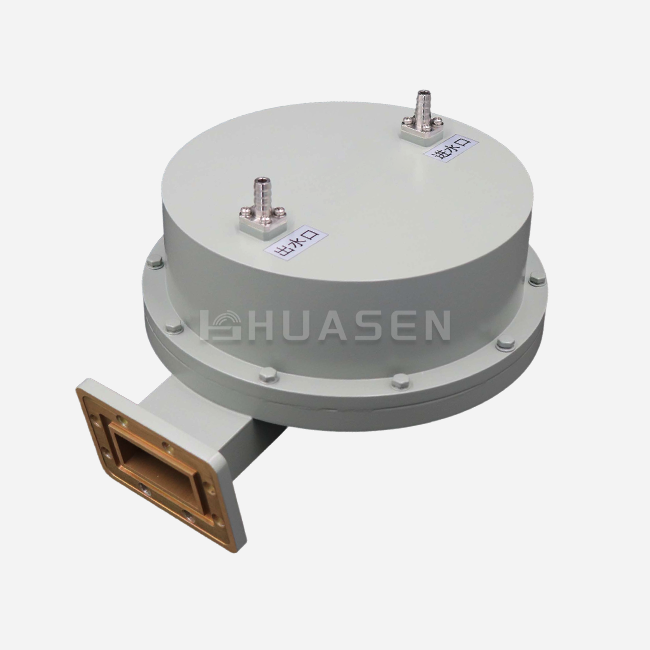
Waveguide bandpass filters represent specialized passive microwave components engineered to transmit electromagnetic signals within specific frequency ranges while attenuating frequencies outside the passband. Unlike conventional coaxial filters, waveguide bandpass filters exploit the electromagnetic wave propagation characteristics within hollow metallic structures, offering superior power handling capabilities and lower insertion loss at microwave and millimeter-wave frequencies. The fundamental operating principle relies on resonant cavity structures that create standing wave patterns at designed frequencies, enabling precise frequency discrimination essential for telecommunications, radar, aerospace, and defense applications.
The physical construction of waveguide bandpass filters involves carefully dimensioned cavities coupled through irises or apertures, with each cavity contributing to the overall filter response. The electromagnetic field distribution within these cavities determines the resonant frequency, while the coupling mechanisms control bandwidth and filter shape factor. Modern waveguide bandpass filter designs achieve exceptional performance through advanced electromagnetic simulation and precision manufacturing techniques, delivering insertion losses below 0.5 dB and rejection levels exceeding 60 dB in stopbands for frequencies ranging from L-band through W-band and beyond.

Critical Performance Parameters
Performance characterization of waveguide bandpass filters encompasses multiple interdependent parameters that determine system suitability. Insertion loss quantifies signal attenuation within the passband, directly impacting system sensitivity and link budget calculations. Return loss measures impedance matching quality, with values exceeding 20 dB indicating minimal signal reflection and optimal power transfer. Bandwidth specifications define the frequency range of acceptable signal transmission, typically expressed as absolute bandwidth or fractional bandwidth relative to center frequency. Rejection characteristics specify attenuation levels at frequencies outside the passband, crucial for preventing interference and maintaining signal purity in dense spectral environments.
Temperature stability represents another critical consideration, as frequency drift with thermal variations can compromise filter performance in real-world operating conditions. High-quality waveguide bandpass filters maintain frequency stability within ±0.01% across industrial temperature ranges through careful material selection and thermal compensation techniques. Power handling capability distinguishes waveguide implementations from other filter technologies, with properly designed waveguide bandpass filtersmanaging kilowatts of continuous power and megawatts of peak power without breakdown or performance degradation.
Key Design Characteristics for High-Frequency Performance
The electromagnetic characteristics of waveguide bandpass filters fundamentally depend on physical dimensions, material properties, and coupling configurations. At high frequencies, skin depth becomes increasingly shallow, necessitating superior surface finish and conductivity to minimize ohmic losses. Silver plating or gold plating on internal surfaces reduces resistive losses and enhances long-term stability against oxidation. The waveguide cross-sectional dimensions must maintain single-mode propagation throughout the operating band, preventing higher-order mode excitation that would distort filter response and introduce unpredictable phase characteristics.
Resonant cavity design involves precise control of physical length and electromagnetic boundary conditions. Quarter-wave and half-wave resonators form the foundation of most waveguide bandpass filter topologies, with capacitive or inductive coupling iris dimensions determining inter-cavity energy transfer. Advanced filter designs employ mixed coupling schemes, incorporating both electric and magnetic coupling to achieve transmission zeros at specific frequencies, dramatically improving rejection performance near passband edges. These elliptic function responses enable compact filter realizations with steeper skirt selectivity compared to traditional Chebyshev or Butterworth alignments.
Manufacturing Precision and Quality Control
Achieving specified waveguide bandpass filter performance demands extraordinary manufacturing precision, with dimensional tolerances often measured in micrometers for millimeter-wave applications. Computer numerical control machining enables the accuracy required for consistent filter response, while electrical discharge machining and wire cutting technologies facilitate complex internal geometries. Post-machining processes including deburring, cleaning, and surface treatment critically influence final performance, as any surface irregularities or contamination can degrade insertion loss and power handling.
Quality verification employs sophisticated vector network analyzers capable of measuring S-parameters across the entire frequency range with high dynamic range. Calibrated anechoic chamber testing validates filter performance under realistic electromagnetic conditions, ensuring specified rejection levels account for packaging effects and mounting configurations. Advanced facilities utilize planar near-field measurement systems and far-field test systems with frequency coverage from hundreds of megahertz through hundreds of gigahertz, providing comprehensive characterization of filter amplitude and phase response. Testing capabilities including measurement dynamic ranges exceeding 50 dB and beamwidth measurement accuracy to 0.02 degrees enable verification of even the most demanding filter specifications.
Application-Specific Waveguide Filter Selection Criteria
Selecting appropriate waveguide bandpass filters requires comprehensive understanding of system requirements and operational environment. Satellite communication systems demand filters with exceptional linearity and phase stability to preserve signal integrity across multi-gigahertz bandwidths, while radar applications prioritize high power handling and fast time-domain response for accurate target detection. Aerospace and defense systems often require filters meeting stringent environmental specifications, withstanding extreme temperatures, vibration, and shock loads without performance degradation.
Frequency band selection influences fundamental filter architecture, as different microwave bands from L-band through Ka-band and W-band present distinct propagation characteristics and manufacturing challenges. Lower frequency filters benefit from larger physical dimensions permitting easier fabrication tolerances, while millimeter-wave filters demand advanced manufacturing capabilities but offer compact footprints. Custom waveguide bandpass filter designs address unique system requirements, incorporating features such as tuning elements for frequency adjustment, integrated switching for reconfigurable filtering, or harmonic suppression structures for transmitter applications.
The integration of waveguide bandpass filters into complete RF systems requires careful attention to interface specifications and mechanical mounting provisions. Standard waveguide flanges ensure repeatable electrical connections with minimal discontinuity, while custom interface solutions accommodate space-constrained installations. Environmental sealing protects internal surfaces from moisture and contaminants in harsh operating conditions, extending operational lifetime and maintaining performance stability. Comprehensive testing under environmental stress conditions including temperature cycling, humidity exposure, and vibration validates filter reliability for mission-critical applications.
Advanced Materials and Manufacturing Technologies
Material selection profoundly influences waveguide bandpass filter performance and operational reliability. Aluminum alloys provide excellent conductivity-to-weight ratios for aerospace applications, while brass and copper offer superior electrical performance for laboratory and commercial systems. Specialized materials including invar and kovar enable thermal compensation in precision filter designs, maintaining frequency stability across wide temperature ranges. Surface treatments such as silver plating enhance conductivity and reduce insertion loss, with typical plating thicknesses of several micrometers ensuring adequate skin depth coverage across operating frequencies.
Modern manufacturing leverages advanced CNC machining centers equipped with multi-axis capabilities, producing complex filter geometries with exceptional repeatability. Wire electrical discharge machining creates intricate coupling features and tuning elements impossible to achieve through conventional machining. Precision brazing techniques including silver brazing, aluminum brazing, and vacuum furnace processing enable hermetic assembly of multi-cavity filters, ensuring long-term mechanical stability and electrical performance. Specialized facilities equipped with over 40 waveguide fitters possessing unique processing expertise deliver filters meeting the most demanding specifications for telecommunications, radar, aerospace, and defense applications.

Quality assurance extends beyond dimensional verification to encompass comprehensive electrical testing and environmental qualification. Vector network analyzers with frequency coverage to 220 GHz characterize filter response across entire operating bands, while specialized test equipment including spectrum analyzers, signal generators, and power meters validate performance under various operating conditions. Environmental testing chambers subject filters to temperature extremes, humidity cycling, and vibration profiles representative of actual deployment scenarios, confirming specification compliance throughout product lifetime.
Integration Considerations for System Performance Optimization
Successful waveguide bandpass filter integration demands holistic system-level thinking beyond individual component specifications. Impedance matching across all interfaces minimizes standing wave ratio and maximizes power transfer efficiency, requiring careful attention to waveguide flange types, gasket materials, and bolt torque specifications. Thermal management considerations become critical in high-power applications, with proper heat sinking and cooling provisions preventing temperature-induced frequency drift or power handling limitations.
Electromagnetic compatibility analysis ensures filter installations do not introduce spurious coupling paths or resonances degrading overall system performance. Proper grounding and shielding techniques prevent unwanted signal leakage, while strategic filter placement minimizes cable lengths and associated losses. Multi-stage filtering architectures combining waveguide bandpass filters with complementary technologies such as absorptive filters or diplexers achieve performance levels unattainable with single-component solutions, enabling sophisticated frequency management in complex RF systems.
Testing and validation of integrated filter assemblies requires measurement capabilities spanning multiple frequency decades with exceptional dynamic range. Anechoic chamber facilities with dimensions up to 21 meters enable far-field antenna pattern measurements incorporating filter effects, while near-field scanning systems with 9-meter by 6-meter scanning frames characterize radiation patterns for large aperture antennas. External test ranges with distances to 2000 meters support full-scale system validation under realistic propagation conditions, confirming filter performance contributes to overall system requirements for applications including navigation, meteorology, security inspection, surveillance, satellite communications, and 5G infrastructure.
Conclusion
Waveguide bandpass filtersdeliver unmatched performance for high-frequency RF applications demanding superior selectivity, power handling, and reliability. Through precise electromagnetic design, advanced manufacturing, and rigorous testing, these components enable critical functionality across telecommunications, radar, aerospace, and defense systems operating from microwave through millimeter-wave frequencies.
Cooperate with Huasen Microwave Technology Co., Ltd.
Partner with Huasen Microwave Technology Co., Ltd., a leading China waveguide bandpass filter manufacturer and China waveguide bandpass filter supplier established in 1993, specializing in high-frequency microwave and millimeter-wave components. As a National High-Tech Enterprise and China waveguide bandpass filter factory, we deliver high quality waveguide bandpass filters at competitive waveguide bandpass filter prices. Our 3,000-square-meter facility houses advanced CNC machining, specialized waveguide processing teams, and comprehensive testing capabilities including 21m, 9m, and 5m anechoic chambers with frequency coverage to 220 GHz. Choose our waveguide bandpass filters for sale backed by ISO certifications, extensive industry experience, and proven expertise in telecommunications, radar, aerospace, and defense applications. Contact our China waveguide bandpass filter wholesale team at sales@huasenmicrowave.comfor custom solutions meeting your precise specifications.
References
1. "Microwave Filters, Impedance-Matching Networks, and Coupling Structures" by George L. Matthaei, Leo Young, and E.M.T. Jones, Artech House Publishers
2. "RF and Microwave Coupled-Line Circuits" by Rajesh Mongia, Inder Bahl, and Prakash Bhartia, Artech House Microwave Library
3. "Waveguide Handbook" by Nathan Marcuvitz, Institution of Engineering and Technology
4. "Microwave Engineering" by David M. Pozar, John Wiley & Sons, Fourth Edition
5. "Advanced Design Techniques and Realizations of Microwave and RF Filters" by Pierre Jarry and Jacques Beneat, IEEE Press Series on Electromagnetic Wave Theory
Send Inquiry


Related Industry Knowledge
- Understanding TE11 Mode: The Fundamental Operation of Circular Horns
- The Role of Corrugated Horns in Radio Astronomy and Deep Space Exploration?
- What is a Microstrip Conformal Array Antenna?
- Why Choose a Planar Slot Antenna? Key Benefits and Advantages?
- Circular vs. Linear Polarization: Which Antenna is Right for Your Project?
- 5 Key Parameters for Choosing Dual Polarized Parabolic Antennas
- Fixed vs. Variable Coaxial Loads: Which One Fits Your Test Scenarios Better?
- How to test the performance of an ultra-wideband omnidirectional antenna?
