5 Key Parameters for Choosing Dual Polarized Parabolic Antennas






2019-02-21 09:10:03
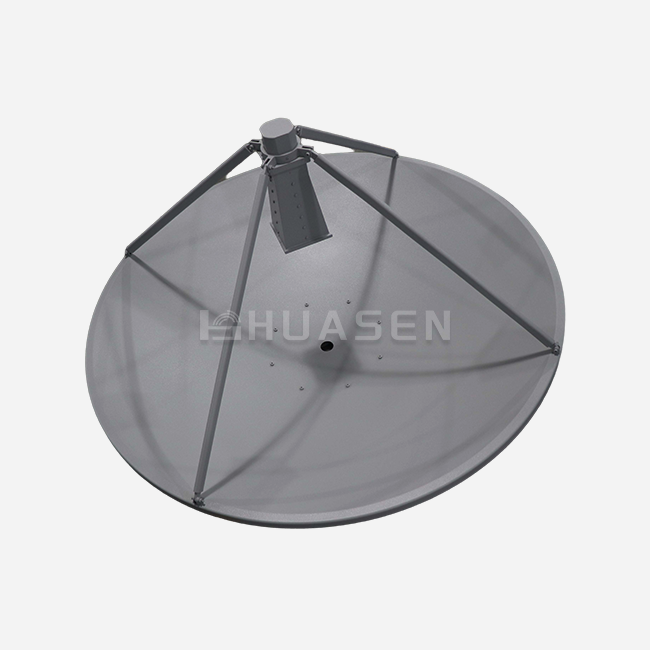
Selecting the right Double Polarized Illustrative Radio wire requires cautious assessment of a few basic specialized determinations that straightforwardly affect framework execution. A Dual Polarized Parabolic Antenna offers enhanced versatility by supporting both vertical and horizontal polarizations, making it ideal for applications requiring high isolation, improved signal quality, and reliable performance under diverse operating conditions. Whether you're sending obsequious communication systems, radar frameworks, or remote backhaul foundations, understanding these parameters guarantees ideal flag quality, the most extreme proficiency, and long-term unwavering quality. This comprehensive direct look at the five fundamental components that experts must consider when indicating a Double Polarized Allegorical Recieving wire for requesting applications in broadcast communications, aviation, and defense divisions. When assessing a Double Polarized Allegorical Recieving wire for your application, the choice pivots on five principal parameters: recurrence run and transfer speed capability, pickupand beamwidth characteristics, polarization sort and confinement execution, opening estimate and mechanical plan, and cross-polarization separation levels. These determinations decide how successfully the receiving wire will perform in your particular operational environment, whether dealing with double direct polarization for earthly joins or double circular polarization for lackey communications. Cutting-edge frameworks require receiving wires that provide reliable execution over wide transmission capacities while keeping up amazing separation between polarization channels, making parameter choice basic for effective deployment.
Frequency Range and Bandwidth Capabilities
The operational frequency range represents the foundation of any Dual Polarized Parabolic Antenna specification, determining compatibility with existing infrastructure and regulatory compliance. Professional-grade antennas typically offer bandwidth capabilities ranging from narrowband designs at 5% to ultra-wideband configurations exceeding 40%, covering frequency spans from 1 GHz to 300 GHz. Bandwidth directly affects the antenna's versatility, with wider bandwidths enabling multi-frequency operations and future-proofing investments against changing communication standards. For satellite communications, narrowband Dual Polarized Parabolic Antenna designs with bandwidth under 15% provide optimal performance for dedicated frequency allocations, ensuring maximum gain stability and minimal VSWR variations across the operating band. Conversely, radar and electronic warfare applications benefit from wideband designs that support frequency agility and interference mitigation. The feed network architecture significantly influences achievable bandwidth, with precision CNC-machined feeds using high-quality copper and aluminum materials delivering superior performance consistency. System designers must balance bandwidth requirements against other performance metrics, as extremely wide bandwidths may compromise peak gain or increase complexity in polarization purity maintenance across the entire frequency range.

Gain Performance and Beamwidth Characteristics
Gain and beamwidth form an inverse relationship that defines the Dual Polarized Parabolic Antenna's coverage pattern and link budget contribution. High-gain configurations typically range from 23 dB to 32.5 dB, with corresponding beamwidths spanning 3.3 degrees to 9.5 degrees, making them ideal for point-to-point communications requiring maximum directivity and minimal interference susceptibility. The parabolic reflector's aperture diameter directly determines gain, following the fundamental relationship where larger apertures produce higher gains and narrower beamwidths. Customizable aperture options ranging from 0.05 meters to 12 meters accommodate diverse application requirements, from compact mobile platforms to large earth station installations. Gain stability across the operating bandwidth is equally critical, as gain variations exceeding 1-2 dB can significantly impact link margin calculations and system reliability. The Dual Polarized Parabolic Antenna's feed illumination pattern must be precisely optimized to balance gain maximization against sidelobe suppression, with typical designs achieving E-plane sidelobes of -13 dB and H-plane sidelobes of -15 dB. Advanced offset feed configurations can achieve sidelobe levels below -25 dB, crucial for applications requiring superior interference rejection or operating in congested spectrum environments. Material selection and surface accuracy achieved through precision manufacturing directly influence realized gain, with surface tolerances typically maintained within a fraction of the operating wavelength to minimize diffraction losses and preserve antenna efficiency.
Polarization Type and Isolation Requirements
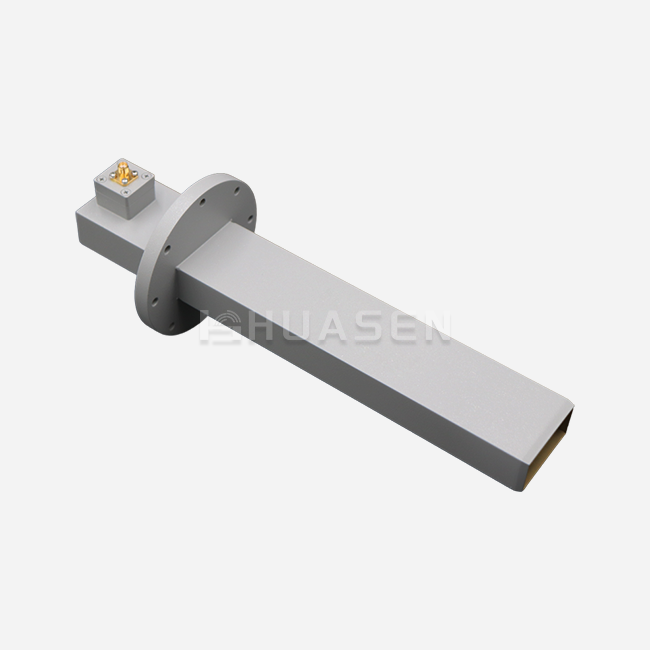
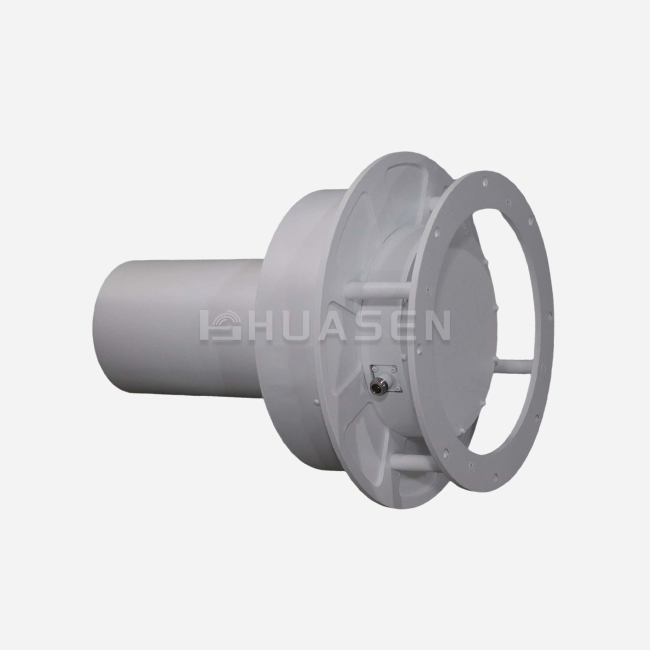
Polarization architecture represents a critical design choice in Dual Polarized Parabolic Antenna systems, with dual linear polarization and dual circular polarization serving distinctly different operational requirements. Dual linear polarization configurations supporting horizontal and vertical orientations are standard for terrestrial microwave links and VSAT systems, utilizing N-type or SMA connectors for reliable RF connection. These designs typically operate with working bandwidths under 15% and excel in applications where polarization alignment can be precisely maintained throughout the link. Conversely, dual circular polarization variants supporting left-hand and right-hand circular polarization prove essential for satellite communications, where the Faraday rotation effect in the ionosphere would otherwise degrade linear polarization signals. Axial ratio specifications define circular polarization quality, with narrowband designs achieving ratios below 1.5 dB and wideband configurations maintaining values under 3 dB across the operating bandwidth. Port-to-port isolation between orthogonal polarization channels typically exceeds 30 dB in well-designed systems, enabling full-duplex operations and frequency reuse without interference. The Dual Polarized Parabolic Antenna's feed network complexity increases significantly for circular polarization implementations, requiring precision hybrid couplers or specialized feed horns that maintain phase quadrature across the operational bandwidth. Cross-polarization discrimination performance directly impacts channel isolation and must be rigorously tested during manufacturing to ensure specifications are met across all operational conditions, including temperature variations and mechanical stress.

Mechanical Design and Environmental Durability
The mechanical development of a Double Polarized Illustrative Radio wire altogether impacts long-term execution and unwavering quality, especially for open-air establishments uncovered to cruel natural conditions. Progressed fabricating procedures counting accuracy CNC machining guarantees ideal surface exactness, keeping up reflector profile resistances basic for protecting pickupand design characteristics. Fabric choice equalizes electrical execution against auxiliary prerequisites, with high-quality copper and aluminum giving fabulous conductivity while keeping up adequate unbending nature to stand up to wind stacking and warm development impacts. Weather-resistant coatings secure against erosion, UV debasement, and dampness penetration that may compromise execution over decades of operational life. Measured plan rationalities encourage field upkeep and framework updates, permitting nourishment substitutions or polarization changes without total radio wire substitution. Mounting frameworks must give exact arrangement capabilities while withstanding natural loads, with comprehensive mounting units and counting arrangement apparatuses guaranteeing legitimate establishment. The Double Polarized Allegorical Antenna's auxiliary judgment straightforwardly influences indicating solidness, especially basic for adj. following applications where fractional-degree misalignments cause critical flag corruption. Standard interfacing such as WR-75 and CPR-229 waveguide ribs guarantees compatibility with major VSAT and partisan communication frameworks, diminishing integration complexity and empowering quick arrangement. Thorough testing conventions approve mechanical execution beneath mimicked natural conditions, affirming that determinations for pickup, VSWR, and cross-polarization separation stay steady over temperature ranges, stickiness levels, and vibration profiles experienced in real-world deployments.
Manufacturing Quality and Performance Verification
Manufacturing excellence and comprehensive quality control distinguish professional-grade Dual Polarized Parabolic Antenna products from inferior alternatives, directly impacting operational reliability and long-term cost-effectiveness. ISO9001 certified manufacturing processes ensure consistent production quality through documented procedures, traceability systems, and continuous improvement methodologies. Material compliance with RoHS and REACH regulations demonstrates environmental responsibility and facilitates global deployment without regulatory barriers. Performance testing protocols must validate all critical parameters before shipment, with 100% inspection ensuring each antenna meets specified gain, VSWR, and cross-polarization discrimination requirements. Advanced test facilities equipped with precision measurement systems characterize far-field radiation patterns, confirming sidelobe levels, beamwidth accuracy, and polarization purity across the entire operating bandwidth. The Dual Polarized Parabolic Antenna manufacturing process requires specialized expertise in precision machining, RF design, and assembly techniques that maintain tight tolerances throughout production. Surface finish quality directly affects electrical performance at higher frequencies, necessitating careful control of machining parameters and post-processing treatments. Feed network fabrication demands particular attention, as phase imbalances or impedance mismatches degrade polarization isolation and increase VSWR. Protective packaging using custom-designed crates with shock-absorbing materials prevents transportation damage, while detailed handling instructions ensure proper installation procedures are followed. Comprehensive warranty coverage and dedicated after-sales support teams provide ongoing assistance for complex installations and troubleshooting, reducing deployment risks and ensuring maximum return on investment throughout the antenna's operational lifetime.
Conclusion
Selecting the ideal Double Polarized Illustrative Radio wire requires adjusting recurrence capabilities, pickupcharacteristics, polarization engineering, mechanical strength, and fabricating quality. Huasen Microwave Innovation Co., Ltd. leverages over three decades of RF ability to convey high-performance arrangements crossing broadcast communications, radar, and aviation applications, guaranteeing clients get solid, customizable radio wires that meet specialized details and operational prerequisites for mission-critical deployments.
FAQ
1. What bandwidth options are available for dual polarized parabolic antennas?
Bandwidth options range from narrowband designs at 5% for dedicated frequency applications to ultra-wideband configurations exceeding 40%, with typical telecommunications antennas offering 15% bandwidth. Selection depends on operational requirements, with narrowband designs providing optimal gain stability while wideband variants enable multi-frequency flexibility and future system expansion capabilities.
2. How does aperture size affect antenna performance?
Aperture diameter directly determines gain and beamwidth characteristics, with larger apertures producing higher gains and narrower beams. Available configurations span 0.05 meters to 12 meters, accommodating applications from compact mobile platforms to large earth stations. Increased aperture size improves directivity and link margin but requires more robust mounting structures to maintain pointing stability.
3. What is the difference between dual linear and dual circular polarization?
Dual linear polarization supports horizontal and vertical orientations for terrestrial links, while dual circular polarization handles left-hand and right-hand rotation for satellite communications. Circular polarization resists ionospheric Faraday rotation and multipath effects, making it essential for space communications, whereas linear polarization offers simpler implementation for line-of-sight terrestrial applications.
4. What quality standards ensure antenna reliability?
Professional antennas undergo ISO9001 certified manufacturing with RoHS and REACH compliant materials. Comprehensive testing validates gain, VSWR, and cross-polarization discrimination parameters with 100% inspection before shipment. Weather-resistant coatings, precision CNC machining, and rigorous environmental testing ensure long-term reliability across temperature, humidity, and vibration conditions encountered in field deployments.
Dual Polarized Parabolic Antenna Manufacturer | Huasen Microwave
Huasen Microwave Technology Co., Ltd. is a leading manufacturer and supplier of high-quality Dual Polarized Parabolic Antenna solutions. With over 30 years of expertise in RF and microwave technology, we deliver cutting-edge products for telecommunications, radar, and aerospace applications. Our antennas offer superior performance, reliability, and customization options to meet your specific needs. As a trusted Dual Polarized Parabolic Antenna supplier, we provide comprehensive technical support from specification through deployment. Whether you need standard configurations or custom-engineered solutions, our experienced team ensures optimal performance for your critical communications infrastructure. As a dedicated Dual Polarized Parabolic Antenna manufacturer, we maintain rigorous quality standards and offer global shipping with complete installation support. Contact us today at sales@huasenmicrowave.com to discuss your requirements and discover how our advanced antenna solutions can enhance your system performance.
References
1. Balanis, C.A. (2016). Antenna Theory: Analysis and Design. Fourth Edition. John Wiley & Sons, Hoboken, New Jersey.
2. Kraus, J.D. and Marhefka, R.J. (2002). Antennas for All Applications. Third Edition. McGraw-Hill Education, New York.
3. Milligan, T.A. (2005). Modern Antenna Design. Second Edition. IEEE Press, Wiley-Interscience, Hoboken, New Jersey.
4. Stutzman, W.L. and Thiele, G.A. (2012). Antenna Theory and Design. Third Edition. John Wiley & Sons, Hoboken, New Jersey.
5. Volakis, J.L. (2007). Antenna Engineering Handbook. Fourth Edition. McGraw-Hill Professional, New York.
6. Rudge, A.W., Milne, K., Olver, A.D., and Knight, P. (1986). The Handbook of Antenna Design. Volumes 1-2. Peter Peregrinus Ltd., London, United Kingdom.
Send Inquiry