Understanding TE11 Mode: The Fundamental Operation of Circular Horns






2019-02-26 13:56:00
The TE11 mode is the cornerstone of circular horn antenna operation, playing a pivotal role in shaping electromagnetic wave propagation. This fundamental mode is crucial for achieving optimal performance in various applications, from telecommunications to radar systems. In circular waveguides and horn antennas, the TE11 mode exhibits unique characteristics that make it ideal for efficient signal transmission and reception. By leveraging this mode, engineers can design antennas with superior gain, bandwidth, and polarization properties. Understanding the intricacies of TE11 mode propagation is essential for anyone working with circular horn antennas or seeking to optimize their RF and microwave systems. This article delves into the nuances of TE11 mode, exploring its significance in circular horn operation and its impact on antenna performance across a wide frequency spectrum.
What is the TE₁₁ mode, and why is it fundamental in circular horns?
The TE₁₁ mode, or Transverse Electric 11 mode, is the dominant propagation mode in circular waveguides and horn antennas. It is characterized by its unique electromagnetic field distribution, where the electric field lines are perpendicular to the direction of propagation. This configuration results in several advantageous properties that make the TE₁₁ mode fundamental for circular horn antennas:
Low Cut-off Frequency
The TE₁₁ mode has the lowest cut-off frequency among all possible modes in a circular waveguide. This allows for a wide operating bandwidth, making it suitable for broadband applications.
Symmetrical Field Pattern
The field distribution of the TE₁₁ mode is symmetrical about the horn's axis, leading to a well-defined radiation pattern with a single main lobe. This symmetry is crucial for achieving high directivity and gain in circular horn antennas.
Efficient Energy Transfer
The TE₁₁ mode facilitates efficient energy transfer from the waveguide to free space, minimizing losses and maximizing the antenna's radiation efficiency.
Polarization Control
The electric field orientation in the TE₁₁ mode allows for precise control over the antenna's polarization, enabling linear, circular, or dual-polarization configurations to suit various application requirements.
These characteristics make the TE₁₁ mode indispensable in circular horn design, forming the basis for its widespread use in high-frequency communications, radar systems, and scientific instrumentation.
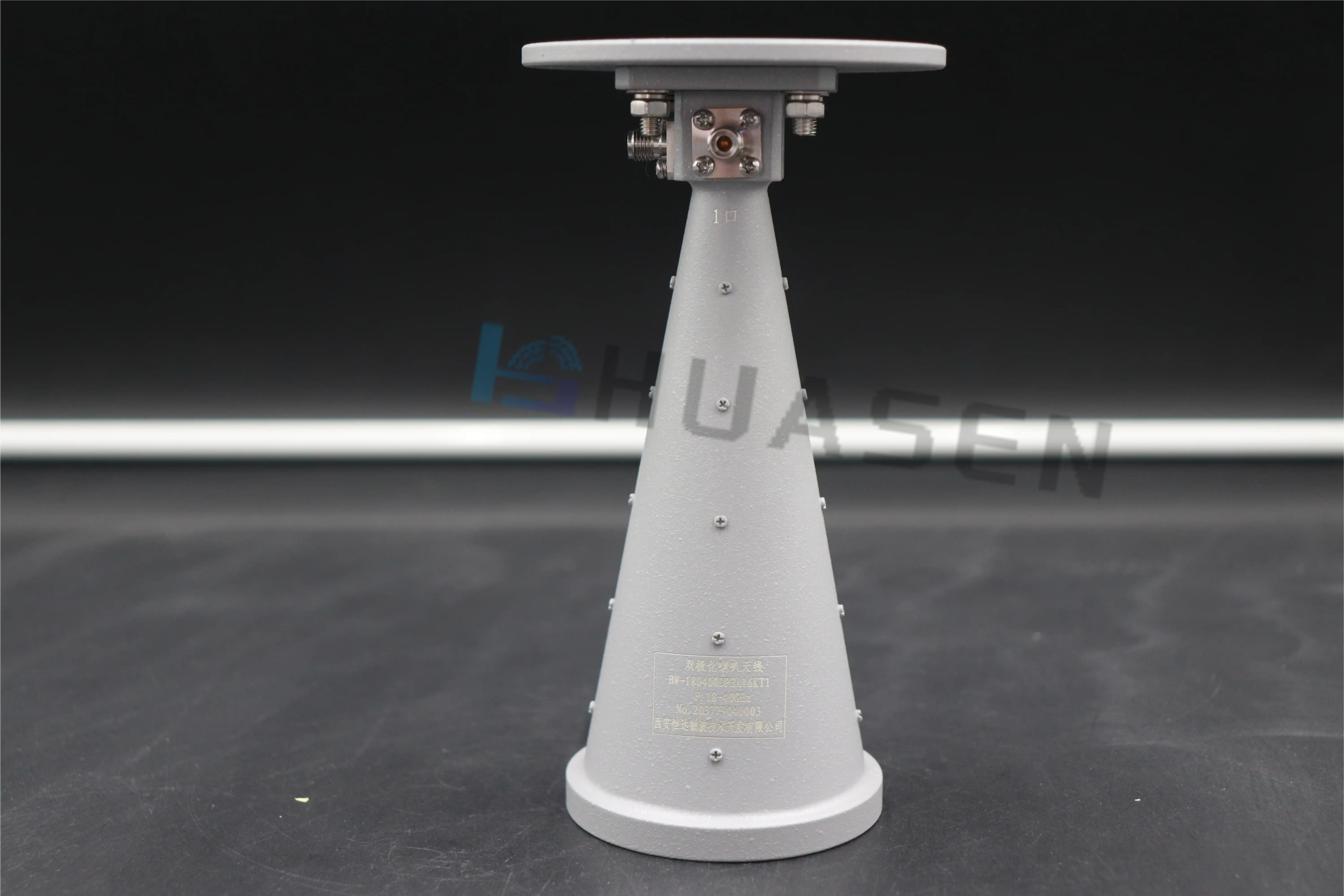
Circular horn antenna operation using TE11 mode
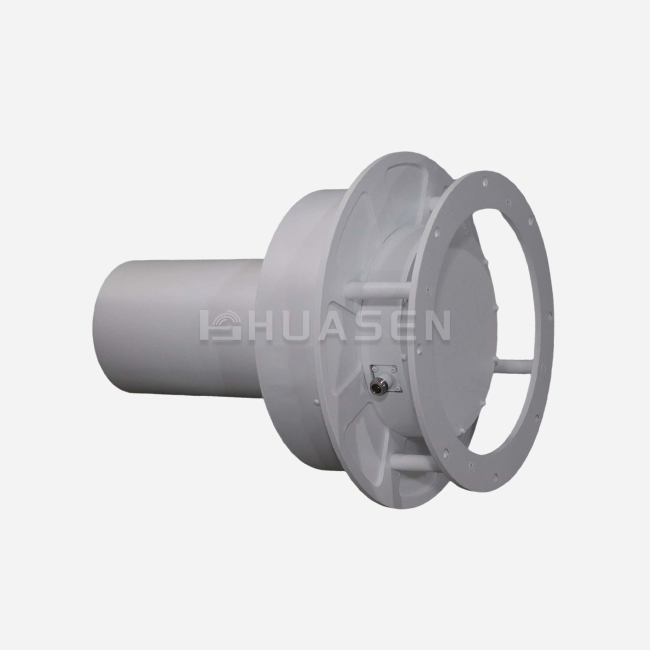
Circular horn antennas harness the TE11 mode to achieve exceptional performance across a wide range of frequencies. The operation of these antennas relies on the unique properties of TE11 mode propagation:
Waveguide-to-Free Space Transition
The circular horn acts as a smooth transition from the waveguide to free space. As the TE11 mode propagates through the expanding horn section, it gradually adapts to match the impedance of free space, minimizing reflections and maximizing power transfer.
Aperture Field Distribution
The TE11 mode creates a specific field distribution at the horn's aperture. This distribution is key to shaping the antenna's radiation pattern, determining its beamwidth, and influencing its gain characteristics.
Frequency Scaling
Circular horns operating in TE11 mode exhibit favorable frequency scaling properties. As the frequency increases, the electrical size of the horn grows, leading to improved directivity and gain without changing the physical dimensions.
Phase Center Stability
The TE11 mode contributes to a stable phase center in circular horn antennas, which is crucial for maintaining consistent performance across the operational bandwidth and in applications requiring precise focusing or beam steering.
By leveraging these operational characteristics, engineers can design circular horn antennas that meet the demanding requirements of modern communication systems, offering high gain, wide bandwidth, and excellent polarization purity.
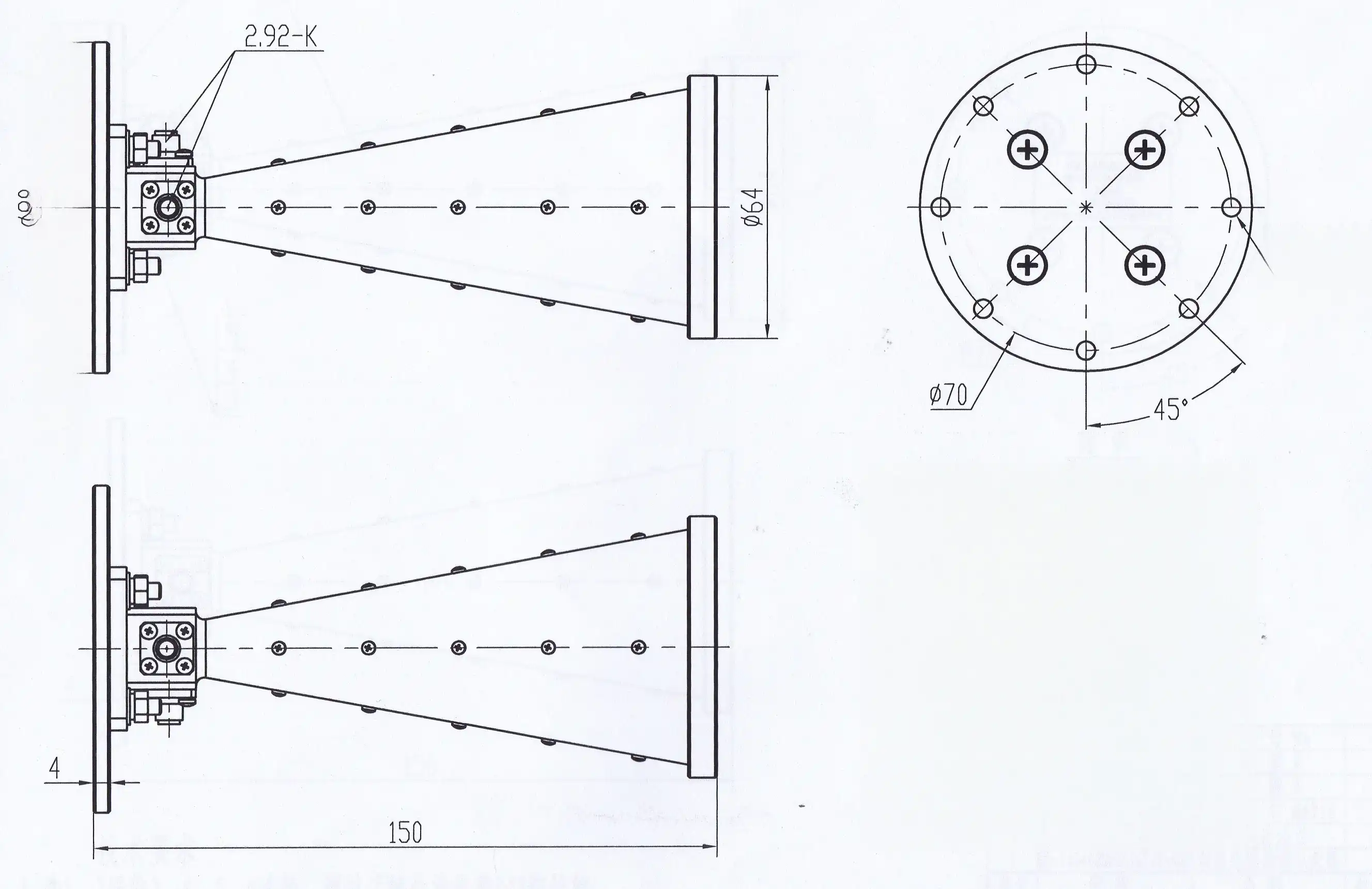
TE11 mode: field distribution, cut-off, and propagation characteristics
Understanding the field distribution, cut-off frequency, and propagation characteristics of the TE11 mode is essential for optimizing circular horn antenna performance:
Field Distribution
In TE11 mode, the electric field lines form closed loops in planes perpendicular to the axis of propagation. The magnetic field lines circulate around these electric field loops. This distribution results in a concentrated field at the center of the waveguide, tapering towards the walls.
Cut-off Frequency
The cut-off frequency for TE11 mode in a circular waveguide is given by:
fc = c * 1.841 / (2πa)
Where 'c' is the speed of light and 'a is the waveguide radius. This relationship is crucial for determining the operational frequency range of circular horn antennas.
Propagation Characteristics
Above the cut-off frequency, the TE11 mode propagates with minimal attenuation. The phase velocity and group velocity of the wave vary with frequency, influencing the antenna's dispersion characteristics and potentially affecting signal integrity in wideband applications.
Mode Purity
Maintaining TE11 mode purity is vital for optimal circular horn antenna performance. Higher-order modes can be excited at frequencies above their respective cut-offs, potentially degrading the antenna's radiation pattern and polarization properties.
By carefully considering these aspects of TE11 mode behavior, antenna designers can create circular horns that offer superior performance across a wide range of applications, from satellite communications to advanced radar systems.
Conclusion
The TE11 mode is the cornerstone of circular horn antenna design, offering a unique combination of low cut-off frequency, symmetrical field patterns, and efficient energy transfer. By harnessing the properties of this fundamental mode, engineers can create antennas with exceptional gain, bandwidth, and polarization characteristics. As the demand for high-performance RF and microwave systems continues to grow, understanding and optimizing TE11 mode propagation in circular horns becomes increasingly critical.
For those seeking to leverage the power of TE11 mode in their antenna designs, Huasen Microwave Technology Co., Ltd. offers a comprehensive range of circular horn antennas optimized for TE11 mode operation. With decades of expertise in high-frequency microwave and millimeter-wave components, Huasen provides cutting-edge solutions for telecommunications, radar, aerospace, and defense applications. Our team of experienced engineers can assist you in selecting the ideal circular horn antenna for your specific needs, ensuring optimal performance and reliability in your RF systems. Contact us today to explore how our TE11 mode-optimized antennas can enhance your project's capabilities and drive innovation in your field.
FAQ
1. What frequency range do circular horn antennas typically cover?
Circular horn antennas can operate over a wide frequency range, typically from 1.76 GHz to 400 GHz, with specific models designed for different bands within this spectrum.
2. How does the TE11 mode affect the polarization of a circular horn antenna?
The TE11 mode allows for flexible polarization control. Circular horn antennas can be designed for linear polarization by default, but can achieve circular polarization when combined with appropriate polarizers.
3. What is the typical gain range for circular horn antennas?
Circular horn antennas generally offer gains ranging from 13 dB to 24 dB, with the possibility of customization to meet specific requirements.
4. How are circular horn antennas manufactured to ensure optimal TE11 mode performance?
Circular horn antennas are typically manufactured using precision techniques such as electroforming or integral machining to ensure accurate dimensions and smooth surfaces, crucial for maintaining TE11 mode purity.
Optimize Your RF Systems with Huasen Microwave's TE11 Mode Circular Horn Antennas | Huasen Microwave
Ready to elevate your RF and microwave systems with high-performance circular horn antennas optimized for TE11 mode operation? Huasen Microwave Technology Co., Ltd. offers a comprehensive range of solutions tailored to your specific needs. Our expert team is ready to assist you in selecting the perfect antenna for your application, ensuring optimal performance and reliability. Don't settle for less when it comes to your critical RF infrastructure. Contact us today at sales@huasenmicrowave.com to discuss how our TE11 mode circular horn antennas can drive innovation and excellence in your projects.
References
1. Balanis, C. A. (2015). "Antenna Theory: Analysis and Design," 4th Edition, Wiley.
2. Olver, A. D., Clarricoats, P. J. B., Kishk, A. A., & Shafai, L. (1994). "Microwave Horns and Feeds," IET.
3. Pozar, D. M. (2011). "Microwave Engineering," 4th Edition, Wiley.
4. Silver, S. (1949). "Microwave Antenna Theory and Design," McGraw-Hill.
5. Milligan, T. A. (2005). "Modern Antenna Design," 2nd Edition, Wiley-IEEE Press.
6. Love, A. W. (1976). "Electromagnetic Horn Antennas," IEEE Press.
Send Inquiry