Standard Gain Horn Antenna vs Broadband Horn Antenna: Application Difference






2026-03-15 22:14:21
For successful RF projects, it's important to know the basic differences between standard gain horn antennas and broadband horn antenna solutions before picking between them. Standard gain horn antenna designs work precisely and are calibrated across narrow frequency ranges, and they promise accuracy to within 0.5 dB, which makes them perfect for use as measurement standards and for calibration tasks. Broadband horn antennas cover a wide range of frequencies across several bands. This makes them useful for testing settings that use more than one standard and don't need absolute accuracy.
Understanding Standard Gain Horn Antennas
Horn antennas represent fundamental building blocks in RF measurement and calibration systems worldwide. Among these, standard gain horn designs occupy a unique position as precision reference tools that enable accurate measurements across critical applications.
Precision Engineering for Reference Standards
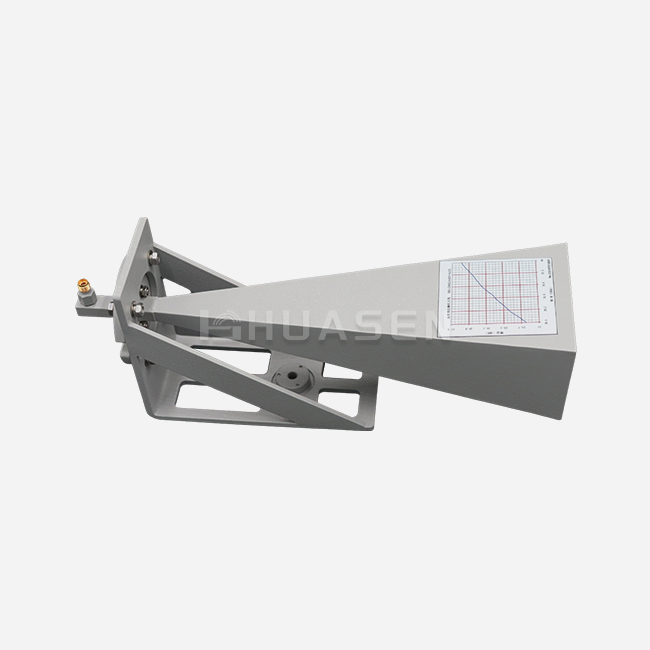
Standard gain horn antennas go through a lot of complicated physical calculations and manufacturing steps to make sure they work the way they're supposed to. The aperture sizes, flare angles, and neck shapes of these antennas are carefully controlled, and these features directly affect how well they gain. Unlike general-purpose horn designs, the antenna's theoretical gain curve is affected by every physical parameter. This means that micrometer-level accuracy is needed when manufacturing it. The building method changes depending on how often it needs to be done. Low-frequency types use aluminium arc welding methods that make the joints strong while keeping the electricity flowing. For high-frequency uses, copper-silver soldering methods that keep surface conductivity and minimise insertion losses are needed. For millimeter-wave and higher frequency designs, precise cutting is needed to get the dimensions right so that theoretical gain calculations can be done.
Calibration Laboratory Applications
Standard gain horn antennas are used as main reference sources in EMC testing facilities and antenna measurement ranges. In these settings, measurements must be able to be repeated and linked to national standards. This means that gaining accuracy is very important for getting valid test results. The ±0.5 dB accuracy guarantee makes sure that the uncertainties in the calibration stay within the acceptable range for most industry measurement needs. Standard gain designs make emission patterns that don't change when the temperature or the mechanical stress changes. When setting measurement baselines that can be used months or years later, this steadiness is very important. High cross-polarization discrimination, usually more than 25 dB, is provided by the linear polarization characteristics. This gets rid of measurement mistakes caused by polarisation in sensitive situations.
Overview of Broadband Horn Antennas
Modern RF development environments increasingly demand standard gain hornversatile measurement tools capable of supporting multiple frequency bands and communication standards. Broadband horn antennas address these requirements by extending operational bandwidth while maintaining acceptable performance across diverse frequency ranges.
Multi-Band Coverage Capabilities
Broadband horn designs use advanced engineering methods that let them work with frequency bands that cover many octaves. Most of the time, these antennas are able to offer this wider bandwidth by using improved flare profiles, stepped transitions, and impedance matching networks that keep the VSWR performance good across the whole working range. When you look at broadband designs next to their standard gain peers, the trade-off between bandwidth and gain stability becomes clear. Broadband antennas may have gain changes of a few decibels across their working range, but they offer the frequency flexibility needed for current testing environments that use more than one standard. This makes them very useful in places like 5G study labs, satellite communication development labs, and radar system evaluation labs.
Operational Flexibility in Dynamic Environments
Broadband horn antenna flexibility is very helpful for testing centers that handle multiple communication standards. Engineers don't have to keep a lot of narrowband antennas on hand for all the different frequency bands. Instead, they can use a single broadband unit that covers the whole frequency range. This method lowers the cost of tools, makes setting up tests easier, and speeds up the measurement process in development projects that need to be finished quickly. Broadband designs work great for tasks that need to quickly change frequencies or make readings across multiple bands at the same time. Their ability to keep good impedance matching over a wide frequency range makes power transfer efficient and reduces measurement errors caused by antenna mismatches.
Comparative Analysis: Standard Gain Horn Antenna vs Broadband Horn Antenna
The selection between standard gain and broadband horn antenna technologies depends largely on application priorities and performance requirements. Understanding these trade-offs enables informed procurement decisions that align with specific project objectives.
Performance Characteristics Comparison
Standard gain horn antennas deliver superior performance in applications demanding measurement precision and calibration accuracy. Their narrow-band optimization enables theoretical gain calculations that match measured performance within ±0.5 dB across specified frequency ranges. This predictability makes them indispensable for establishing measurement traceability and validating antenna range performance. Broadband horn designs sacrifice some gain precision to achieve extended frequency coverage. While their gain characteristics may vary by several decibels across the operating bandwidth, they provide the frequency agility necessary for versatile testing environments. The impedance matching performance of broadband designs typically remains acceptable across their entire range, though not optimized for any specific frequency.
Cost-Benefit Analysis for Procurement
Procurement strategies must consider both initial equipment standard gain horncosts and long-term operational benefits. Standard gain horn antennas often command premium pricing due to their precision manufacturing requirements and individual calibration processes. However, their role as measurement references can justify higher initial investments through improved measurement accuracy and reduced calibration uncertainties. Broadband horn antennas may offer lower per-unit costs while providing coverage equivalent to multiple narrowband units. This consolidation can reduce inventory management complexity, simplify spare parts requirements, and accelerate test setup procedures. The operational efficiency gains often offset any performance compromises in development environments, prioritizing measurement throughput over absolute accuracy.
Selecting the Right Horn Antenna for Your Procurement Needs
Successful antenna procurement requires careful evaluation of technical requirements, application environments, and supplier capabilities. Modern RF projects demand solutions that balance performance, cost, and delivery considerations while maintaining compliance with industry standards.
Technical Specification Analysis
Frequency range represents the primary selection criterion for most applications. Standard gain horn antennas typically operate across single waveguide bands, offering optimized performance within specific frequency allocations. Available gain options of 10 dB, 15 dB, 20 dB, and 25 dB provide flexibility for different measurement scenarios and power budget requirements. The extended frequency coverage of 30 MHz to 300 GHz, with customization capabilities up to 3 THz, addresses emerging applications in millimeter-wave communications and automotive radar systems. Both integrated and separated coaxial input configurations accommodate different system architectures and installation constraints.
Supplier Evaluation Criteria
Reliable suppliers demonstrate comprehensive technical expertise through detailed product documentation, calibration certificates, and application support services. Manufacturing capabilities spanning aluminum arc welding for low frequencies through precision machining for millimeter-wave applications indicate versatile production competencies suitable for diverse project requirements. In-stock availability becomes critical for projects with aggressive timelines or urgent replacement needs. Suppliers maintaining a ready inventory of standard configurations can significantly reduce project delays while offering customization services for specialized applications. Technical support capabilities, including design assistance and measurement guidance, add substantial value for complex system integrations.
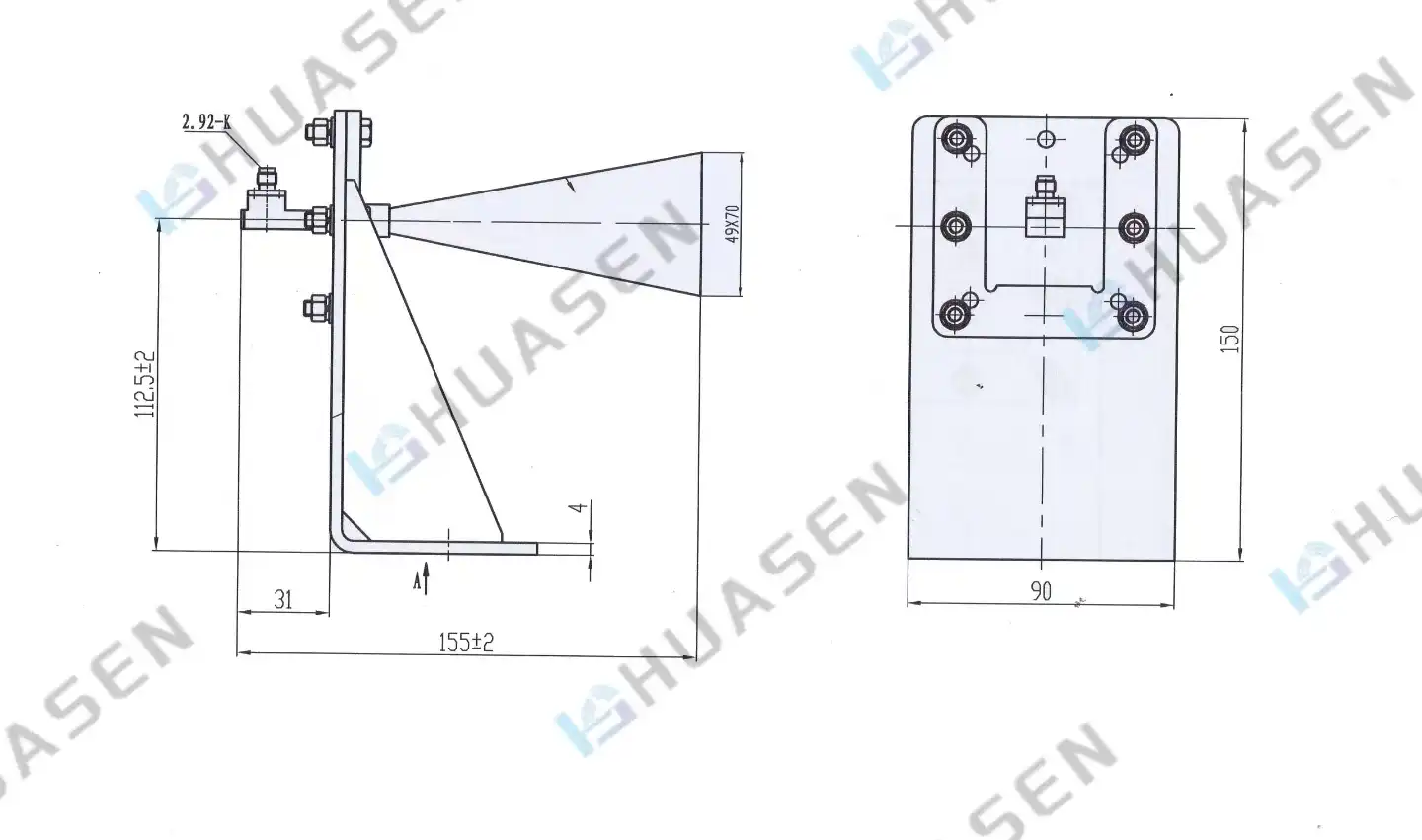
Case Studies: Industry Applications Demonstrating Product Choice
Real-world applications provide valuable insights into the standard horn antenna'spractical considerations that drive antenna selection decisions. These examples demonstrate how different industries prioritize various performance characteristics based on their specific operational requirements.
Precision Measurement Laboratory Implementation
A national metrology center needed reference antennas to make sure that measurements could be tracked across a number of frequency bands. Because of the need for extreme accuracy and long-term stability, the lab chose standard gain horn antennas for its gain testing facility. For the execution, different antennas were used to cover different waveguide bands. Each antenna had its own calibration certificate that could be tracked back to national standards. The ±0.5 dB accuracy guarantee helped the lab meet international standards for measurement uncertainty while offering calibration services to partners in the industry. Buying precise antennas was a good idea because they would bring in money from testing services and make measurements more reliable.
Multi-Standard Development Facility
For 5G base station development projects, a big company that makes telecom equipment needed a wide range of testing options. Broadband horn antennas were chosen by the engineering team to meet the needs of fast prototyping and multi-band testing across all of their development projects. With the broadband method, engineers could test antenna performance across multiple 5G frequency bands with just one set of equipment. This flexibility sped up development processes by getting rid of the need to change equipment, which took time, and making test setups simpler. Absolute gain accuracy wasn't as important as measurement reliability, but the broadband antennas worked well enough for comparisons and design optimisation studies.
Conclusion
In the end, the choice between standard gain horn antenna and broadband horn antenna technologies comes down to the needs and goals of the application. Broadband options give you the frequency flexibility you need for a wide range of development and testing tasks, while standard gain designs work best in calibration settings that need very accurate measurements that can be tracked. Both technologies are very important in modern RF engineering, and to make good procurement choices, technical requirements must be carefully aligned with operational goals. When engineering teams understand these basic differences, they can choose the best antenna options that meet their project goals while also meeting performance, cost, and delivery needs.
FAQ
1. What factors influence gain accuracy in standard gain horn antennas?
The accuracy depends primarily on manufacturing precision, geometric tolerances, and surface finish quality. The dimensional accuracy of the antenna aperture, flare angle, and throat geometry directly affects the correlation between theoretical calculations and measured performance. High-quality surface treatments and precision machining processes ensure that physical characteristics match design specifications within the ±0.5 dB accuracy guarantee.
2. Can broadband horn antennas replace standard gain models for calibration applications?
Broadband horn antennas generally cannot replace standard gain models in precision calibration applications due to their inherent gain variations across frequency ranges. Calibration environments require the predictable, stable performance characteristics that only standard gain designs can provide. However, broadband antennas may serve as suitable alternatives in development environments where measurement repeatability is more important than absolute accuracy.
3. How do I verify supplier authenticity and calibration documentation?
Authentic suppliers provide comprehensive calibration certificates that include measurement data, uncertainty analyses, and traceability statements to recognized national standards. Documentation should specify measurement conditions, equipment used, and personnel qualifications. Reputable suppliers also maintain quality management systems certified to ISO 9001 or similar standards and can provide customer references from established organizations.
Partner with Huasen Microwave for Premium Horn Antenna Solutions
Huasen Microwave Technology delivers industry-leading standard gain horn antenna solutions backed by three decades of RF engineering expertise and precision manufacturing capabilities. Our comprehensive product portfolio spans 30 MHz to 300 GHz with customization options extending to 3 THz, offering gain configurations from 10 dB to 25 dB with guaranteed ±0.5 dB accuracy. Whether you require standard gain horn antenna manufacturer capabilities for large-scale procurement or specialized customization for unique applications, our engineering team provides complete technical support from initial specification through delivery and beyond. Contact our experts at sales@huasenmicrowave.com to discuss your project requirements and discover how our proven antenna solutions can enhance your measurement and testing capabilities.
References
1. IEEE Standards Association. "IEEE Standard for Definitions of Terms for Antennas." IEEE Std 145-2013, Institute of Electrical and Electronics Engineers, 2013.
2. Balanis, Constantine A. "Antenna Theory: Analysis and Design." 4th ed., John Wiley & Sons, 2016.
3. International Electrotechnical Commission. "Electromagnetic Compatibility (EMC) - Part 4-3: Testing and Measurement Techniques - Radiated, Radio-Frequency, Electromagnetic Field Immunity Test." IEC 61000-4-3:2020, IEC Publications, 2020.
4. Hollis, J. S., Lyon, T. J., and Clayton, L. "Microwave Antenna Measurements." 3rd ed., Scientific-Atlanta Inc., 1985.
5. National Institute of Standards and Technology. "Guidelines for Evaluating and Expressing the Uncertainty of NIST Measurement Results." NIST Technical Note 1297, U.S. Department of Commerce, 2020.
6. Milligan, Thomas A. "Modern Antenna Design." 2nd ed., IEEE Press, 2005.
Send Inquiry