Optimizing Mitered Bend Waveguide Performance






2026-06-04 21:30:57
Minimizing signal bounce and insertion loss while keeping the system's size small is the key to optimizing Mitered Bend Waveguide performance. A well-made mitered bend waveguide has exact cuts at angles, usually 45 degrees, and impedance-matching features that send electromagnetic waves through 90-degree turns efficiently without taking up as much space as wide bends. By paying close attention to the miter geometry, internal surface finish, flange alignment, and material choice, engineers can get VSWR values below 1.15 across all operational bands. This is possible because of the space limitations that come with radar systems, satellite payloads, and 5G base station architectures.
Introduction
As microwave and radio frequency (RF) systems change, the performance of each part has a direct effect on the purity of the signals and the total efficiency of the system. Engineers always have to figure out how to get high-frequency signals through small areas without lowering the quality of the transfer when they are making small communication networks for 5G infrastructure, satellite stations, or aerospace radar systems. In current high-density systems, where every millimeter counts, traditional sweeping bends cause problems because they need a lot of space to be installed.
This guide looks at how important Mitered Bend Waveguides are for dealing with these performance and space issues. We give engineers, buying managers, and OEM clients in the military, instrumentation, and telecommunications sectors useful information about design principles, performance optimization methods, and strategic sourcing approaches. Whether you're setting up test equipment for millimeter-wave evaluation or putting waveguide networks into unmanned aerial vehicles, knowing how to choose and use these parts correctly will directly lead to higher reliability and measurable cost savings throughout the lifecycle of your project.
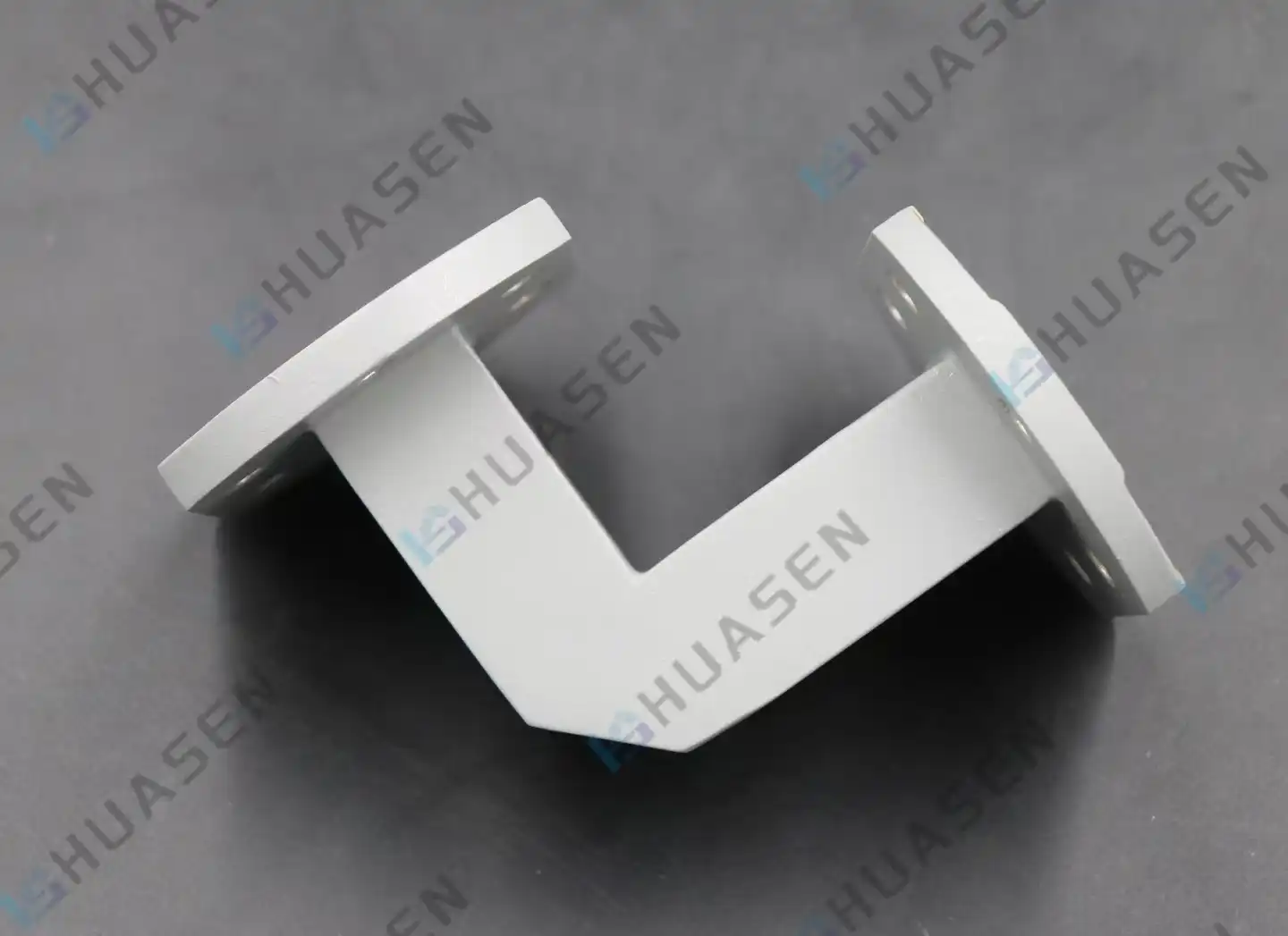
Understanding Mitered Bend Waveguides: Fundamentals and Design Principles
What Defines a Mitered Bend Configuration?
A mitered bend waveguide uses a precisely cut reflecting plane at the joint to reroute electromagnetic waves around a sharp corner, usually at a 90-degree angle. This setup allows for direction changes with no turning radius, unlike gradual curved bends that need turning radii several times bigger than the waveguide width. As an impedance transformer, the miter surface makes up for reactive irregularities that would otherwise cause large standing waves and signal echoes.
E-Plane Versus H-Plane Architectures
There are two main designs that meet different transportation needs. The WTEB E-plane mitered bend curves along the narrow dimension where the electric field vector is strongest. This makes it good for vertical route changes in small chassis designs. On the other hand, the H-plane mitered bend (WTHB) follows the wide dimension that matches the magnetic field direction, which makes it easier to change the horizontal path. Because the field distributions are so different between these planes, each type needs its own impedance correction formulas. Choosing the right angle depends on the frequency band needs of your application and the limitations of your mechanical layout.
Material and Surface Treatment Considerations
Performance depends a lot on the building materials and finishes used. Body parts made of aluminum with oxidized coats are very light and work well for space and plane travel, where mass is limited. A copper structure with silver finishing improves conductivity, which lowers resistive losses in radar and electronic countermeasure systems with a lot of power. Surface roughness has a direct effect on attenuation. Keeping internal finishing below 63 microinches Ra prevents too much current packing and loss growth across frequency sweeps. These material choices are affected by the need for long-lasting performance in harsh environments. For example, marine communications and outdoor base stations need treatments that prevent rust and keep the electricity working even when temperatures change, and they are exposed to water.
Flange Standards and Interface Compatibility
For proper integration, you need to make sure that the type of flange you use fits your frequency range and system design. For lower frequency uses, FDP (female) or FDM (male) flange designs are common. For higher frequency systems, FBP/FBM setups are used, which keep the dimensions more accurate. During installation, flange planarity is very important—differences greater than 0.005 inches can weaken the mating integrity by letting air in and affecting measures of return loss, and in mitered bend waveguides, this can also create possible discharge points for multipactors in high-power transmission situations.
Key Factors in Optimizing Mitered Bend Waveguide Performance
Precision Manufacturing and Miter Geometry
To get low VSWR performance, the production of the mitered bend waveguide has to be very precise. To keep the impedance matching across the operating bandwidth, the miter cut angle and placement must be very close to each other. Advanced computer numerical control (CNC) machining centers let makers keep the exact measurements needed for microwave frequencies, and electromagnetic modeling tools check designs before they are made in real life. Coordinate measuring machines (CMMs) check important measurements during production to make sure that every unit meets the standards. This is especially important for narrow-band uses where VSWR needs to be 1.1 or less.
Managing Insertion Loss and Return Loss
For signal transfer to work well, both entry loss and return loss must be kept to a minimum throughout the bend structure. Insertion loss is mostly caused by resistive heating in the walls of the wire and surface flaws that spread electromagnetic energy around. Return loss shows the difference in resistance between the bend and the waveguide parts next to it. The return loss for high-quality bends is usually more than 26 dB, which means that the VSWR is at or below 1.1. This is important for sensitive receiver front-ends and measurement systems that can't handle more returned energy.
Installation Best Practices for Sustained Performance
When put incorrectly, even parts that were made perfectly don't work as well as they should. The order in which you tighten flange bolts is important because uneven tightening causes mechanical stress that bends contact surfaces, which breaks electrical continuity. When used outside, environmental sealing is very important because water can damage internal surfaces, which raises resistance losses over time. Visual checks for oxidation, heat discoloration that shows hotspots, and vector network analyzer (VNA) readings to find performance shift before it affects system function should all be part of regular inspections.
Comparing Mitered Bend Waveguides to Other Bend Types: Making the Right Choice
Mitered Versus Sweeping Bend Performance Trade-offs
Because they are gradually curved, sweeping bends naturally reduce reflections over a wide frequency range. However, they take up a lot of space during installation, which can be a problem for platforms that don't have a lot of room. A compensated mitered bend waveguide has the same swept performance across normal waveguide bands as a straight bend while taking up very little room. This spatial efficiency is very important when planning antenna feed networks for phased arrays or routing lines inside equipment boxes. When mitered designs are properly designed, the performance gap gets much smaller, and both can get VSWR below 1.05 when they are optimized correctly.
Power Handling Capabilities and Field Concentration
Standard sharp nitrides focus electric fields at the corner junction, making it possible for breakdown places when RF power is high. When megawatt-level radar emitters and electronic warfare systems are used, they need better designs with double-miter geometries or radiused transitions that spread field gradients more widely. Knowing your power range helps you choose the right material and shape. For example, silver-plated copper miters can handle more constant power than aluminum ones, and the quality of the surface finish has a direct effect on the highest voltage levels at which they break.
Cost and Customization Considerations
When your needs match up with goods already in stock, standard 90-degree mitered bends (such as E-plane Mitered Bend Waveguide (WTEB)) with popular flange types are the most cost-effective choice. Custom angle needs, unique flange attachment patterns, or better VSWR performance over wider bandwidths add engineering and tooling costs that have an effect on unit price. When buying things for big projects like building base stations or satellite constellations, finding the right balance between standardization and performance improvement has a direct effect on the prices of the parts and the difficulty of keeping track of them.
Procuring High-Quality Mitered Bend Waveguides for Your Projects
Evaluating Supplier Capabilities and Certifications
When looking for the right mitered bend waveguide maker, you need to look at more than just price quotes. Certification that meets MIL-STD requirements, ISO quality management standards, and RoHS environmental rules shows that the production process is mature and under control. Technical support is also important. Suppliers who give electromagnetic modeling help, custom design changes, and calibration data files make it easier to integrate their products into complex systems. When coordinating multi-part assemblies with tight project deadlines, delivery reliability becomes very important. This makes sellers' track records and supply chain stability important evaluation factors.
Standard Products Versus Custom Engineering
When your needs match up with standard frequency bands and mechanical connections, off-the-shelf parts give you shorter lead times and lower unit costs. When system layouts need non-standard bend angles, different ways of handling power, or merging with unique flange designs, custom-engineered solutions are needed. For standard goods, the minimum order quantity usually goes down, but for special runs, promises may be needed, which can change how you buy things for the test and production stages. When buying, teams know about these trade-offs, and they can put together request-for-quote (RFQ) packages that meet technology needs while also staying within budget and meeting delivery dates.
Partnering with Experienced Waveguide Component Manufacturers
Over the past 30 years, Huasen Microwave has specialized in making precise waveguide components for use in military systems, aircraft, and telecommunications infrastructure around the world. Our engineering team works with clients from the first idea to putting the system into production. They offer design validation services and performance testing that shorten the time it takes to get complex RF systems on the market. Huasen is a good partner for companies that need reliable, high-performance waveguide options that meet strict electrical and environmental requirements because they can make advanced products and offer quick expert support.
Technical Specifications and Installation Guidelines
Critical Dimensional Parameters and Tolerances
Standard 90-degree mitered bend waveguides can be used for both WTEB and WTHB designs that work best with certain frequency bands. VSWR specifications usually fall between 1.15 and 1.1, with 1.15 being for full-band operation and 1.1 being for narrow-band usage where better impedance control is possible. To keep electromagnetic performance, wall thickness, internal measurements, and joint positioning must all stay within thousandths of an inch of each other. These size requirements have a direct effect on how hard it is to make and how much it costs. Tighter tolerances fetch higher prices, which is supported by better electrical properties.
Material Selection Impact on System Performance
The protective oxidation coatings on aluminum make it a good choice for uses that want to save weight and money, like business wireless equipment and test instruments. Copper bodies that have been plated with silver make them more conductive, which is important for high-power radar systems and electronic countermeasure platforms where reducing insertion loss affects both the range of detection and the effectiveness of jamming. When temperatures change quickly, like in spaceships and high-altitude platforms, the thermal expansion factors of the materials used are important. This is because the wide temperature changes can put stress on different metal junctions if they are not properly planned for.
Installation Procedures and Post-Assembly Verification
The first step in a proper fitting of an H-Mitered Bend Waveguide (WTHB) is to clean the flange mating surfaces very well to get rid of any oxidation, machine oil, or other contaminants that could hurt the quality of the electrical contact. To make sure that pressure is spread evenly and that flange sides don't warp, bolts must be tightened in a certain way and with a certain amount of force. Environmental sealing materials that are right for the working temperature range keep water out of outdoor installations. Before the system is turned on, it is tested after installation using calibrated VNA tools to make sure that the measurements of insertion loss and return loss meet the acceptance standards. This sets performance baselines for ongoing maintenance monitoring.
Conclusion
To get the best performance out of a mitered bend waveguide, you need to find a balance between electromagnetic theory and real manufacturing skills and installation discipline. When system designs need small routing options that don't lose signal integrity, properly designed mitered setups offer performance-matching sweeping options with much smaller footprints. To be successful, you need to choose the right E-plane or H-plane geometries for your routing needs, make sure the materials you use can handle power and the environment, and work with manufacturers who can keep the tight tolerances that microwave frequencies require. It helps the buying process when VSWR goals, flange standards, and customization needs are clearly stated. This lets providers come up with solutions that meet both technical needs and project budgets.
FAQ
1. How do mitered bends compare to sweeping alternatives regarding VSWR performance?
When mitered bend waveguides are properly compensated, they achieve VSWR values below 1.05 across standard waveguide frequency ranges. This is the same as swept-bend performance without the big turning radius that takes up important installation space. There are impedance-matching features in the miter shape that get rid of reactive discontinuities at the sharp corner.
2. Can these components handle high-power RF transmission requirements?
Standard mitered shapes work well for medium-level power, but for high-power uses, better shapes like double-miter shapes or radiused corners that spread out electric field concentrations are better. Compared to aluminum options, silver-plated copper designs can handle even more power.
3. What distinguishes E-plane from H-plane mitered bend configurations?
E-plane bends (WTEB) follow the direction of the electric field along the narrow waveguide dimension, while H-plane bends (WTHB) follow the direction of the magnetic field along the wide dimension. Each type needs a different way to deal with resistance issues and works best in certain mechanical routing situations in your system plan.
4. Does surface plating significantly affect electrical performance?
Microwave currents move through the thin skin of the conductor, so it is very important to treat the surface. When compared to raw aluminum, silver or gold plating greatly lowers resistive loss and stops rust, which raises resistance over time. This is especially important for systems that need to keep working well for long periods of time.
Partner with Huasen Microwave for Superior Waveguide Solutions
When it comes to demanding telecommunications, aerospace, and defense uses, Huasen Microwave provides precision-engineered waveguide components and full expert support. We are a well-known seller of Mitered Bend Waveguides, and our manufacturing processes are ISO-certified. We offer both standard catalog goods and custom-engineered solutions that are made to fit your exact needs. Our engineering team helps with design validation, electromagnetic simulation, and integration advice, which shortens the time it takes to finish a job and makes sure the system works perfectly. You can email us at sales@huasenmicrowave.com to discuss your needs, get detailed technical specs, or set up sample test units that show how committed we are to making sure that every part we make is of high quality and reliability.
References
1. Marcuvitz, N. (1986). Waveguide Handbook. London: Peter Peregrinus Ltd. on behalf of the Institution of Electrical Engineers.
2. Saad, T. S. (1971). Microwave Engineers' Handbook, Volume 1. Dedham, MA: Artech House.
3. Pozar, D. M. (2011). Microwave Engineering, 4th Edition. Hoboken, NJ: John Wiley & Sons.
4. Collin, R. E. (1992). Foundations for Microwave Engineering, 2nd Edition. New York: McGraw-Hill.
5. Leong, K. (2007). Advanced Millimeter-Wave Technologies: Antennas, Packaging and Circuits. Chichester, UK: John Wiley & Sons.
6. Rizzi, P. A. (1988). Microwave Engineering: Passive Circuits. Englewood Cliffs, NJ: Prentice Hall.
Send Inquiry