Choosing Waveguide Circulator for Satcom Systems






2026-06-04 21:31:00
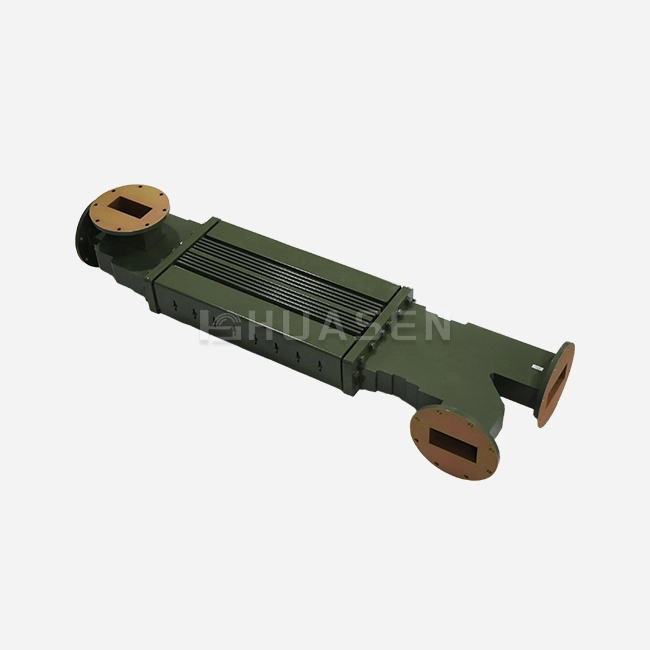
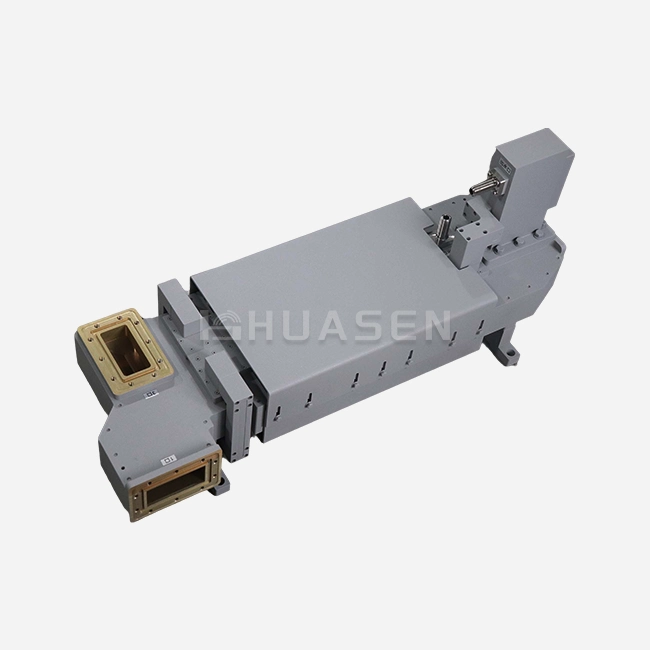
Choosing the correct waveguide circulator for satellite communication systems has a direct effect on how reliable the links are, how much power they use, and how long the system lasts, generally. A waveguide circulator is an RF part that doesn't work backwards and forwards. It sends messages in a certain way and keeps the broadcast and receive chains separate. When high-power amplifiers and sensitive, low-noise receivers are used together in Satcom applications, this part keeps equipment safe from damaging mirrored power while keeping the signal integrity across difficult frequency bands.
Understanding Waveguide Circulators and Their Operation
Waveguide circulators are special passive devices that are made to control the flow of electromagnetic signals in microwave communication systems. Instead of normal components that can go in both directions, these circulators only allow one way to flow by using the qualities of ferrite material and magnetic fields.
The Physics Behind Non-Reciprocal Signal Routing
Faraday rotation in magnetized ferrite joints placed at waveguide crossings is what makes the system work. When radio frequency energy comes in through Port 1, the ferrite material's gyromagnetic effect, along with the permanent magnet bias, causes the signal to only leave through Port 2. After entering at Port 2, energy leaves at Port 3, ending the movement cycle. This behavior is caused by the tensor permeability properties of ferrites when they are saturated with a DC magnetic field, which makes uneven transmission constants for signal directions that are at odds with each other.
Critical Performance Metrics for Satcom Applications
When it comes to satellite ground stations, three factors rule the review of circulators. Insertion loss measures how much the forward path signal is weakened. It usually falls between 0.15 dB and 0.5 dB, but this depends on the frequency and the quality of the building. Isolation measures how well signals from ports that are not next to each other are blocked from traveling in the opposite way. Values above 20 dB are usually considered good for Satcom systems. VSWR shows how well the impedances are matched, which has a direct effect on the amounts of reflected power that could hurt high-power amplifiers that feed uplink chains.
Why Waveguide Construction Dominates Satcom Installations?
Waveguide versions are better at handling high power than coaxial circulators because they don't have any center wires that would concentrate electric fields. This difference in architecture lets kilowatt-level continuous wave operation and megawatt peak power control happen without the risk of dielectric breakdown. The hollow steel structure also has better heat dissipation properties, which is important for open earth stations where temperatures change a lot. Standard frequency bands are covered, such as C-band (3.7–4.2 GHz), X-band (7.9–8.4 GHz), and Ku-band (10.7–12.75 GHz), which is in line with how commercial and military satellites are assigned.
Compared to simple isolators, circulators with three ports are more flexible for duplexing tasks where a single receiver needs to send and receive at the same time. Isolators can't do what the circulator does: it sends high-power signals out to the antenna and sends weak signals to the front ends of receivers. This architectural benefit makes the system simpler and gets rid of the need for separate send and receive apertures in setups with limited room.
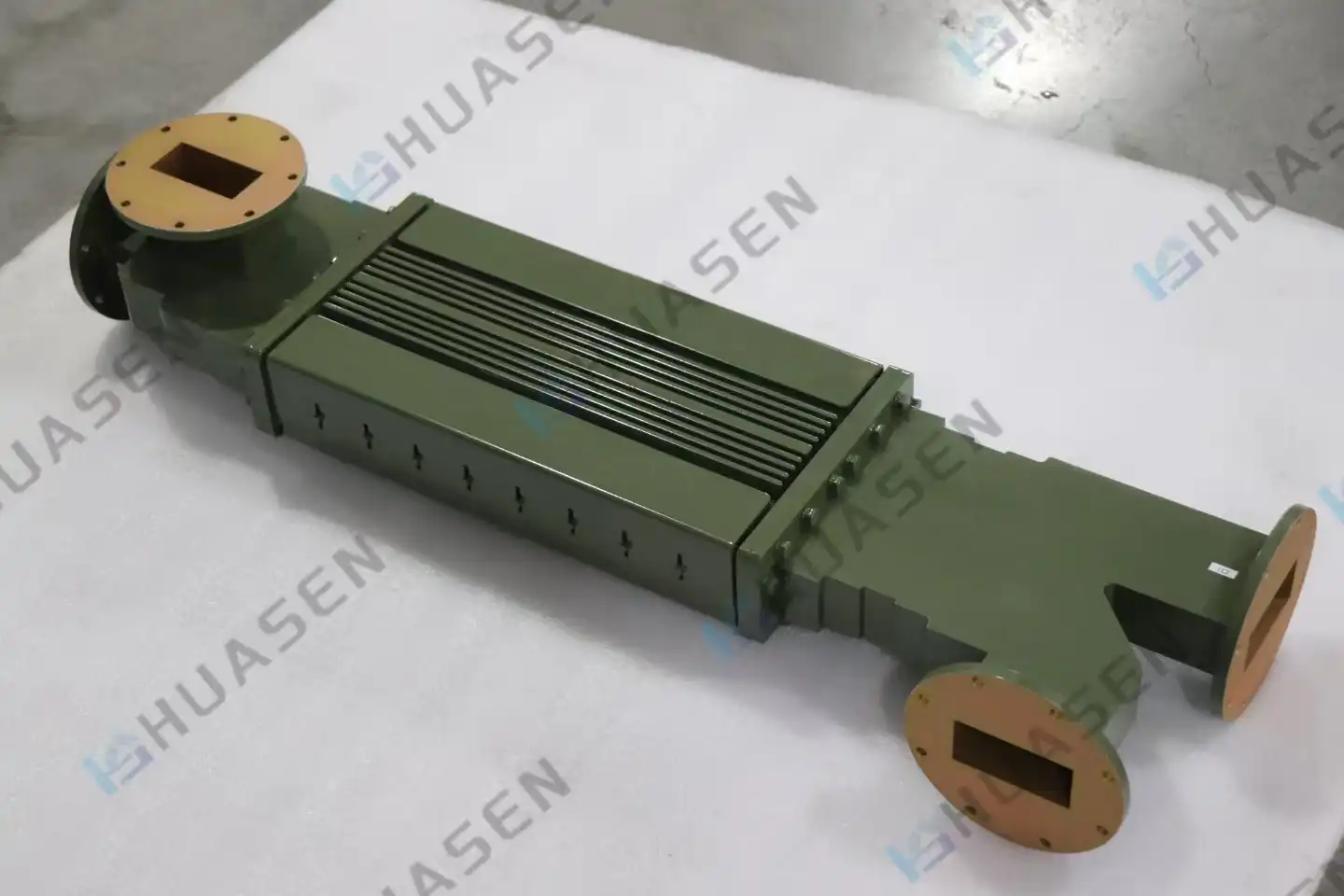
Criteria for Selecting the Best Waveguide Circulator for Satcom Systems
When making a purchase choice, it's important to carefully look at both the technical and practical aspects to make sure that it will work with the current infrastructure and meet the needs for future expansion. Earth station designers must ensure the waveguide circulator frequency response aligns precisely with assigned uplink and downlink bands.
Matching Frequency Bands to Satellite Allocations
Satcom devices work in parts of the airwaves that are controlled by international rules. Earth station makers need to make sure that the frequency response of the circulator is perfectly in sync with the uplink and downlink bands that were given. For transmission, Ku-band marine ports need devices that can handle 13.75 to 14.5 GHz, and Ka-band VSAT networks need devices that can handle 27.5 to 31 GHz. Bandwidth requirements usually say 5–10% partial coverage, but there are wideband designs that can handle 20% or more bandwidth at the cost of slightly worsened isolation performance.
Power Handling Requirements for HPA Protection
A lot of RF energy is made by high-power amplifier output stages, and it has to go through the waveguide circulator without demagnetizing the ferrite or overheating it. To account for standing waves caused by VSWR, average power levels should be 20–30% higher than the maximum HPA output. In pulsed radar and time-division multiple access (TDMA) satellite lines, where power levels spike orders of magnitude above normal, peak power specs become very important. C-band earth stations that use traveling wave tube amplifiers usually use devices with a peak power rating of 100 kW.
Interface Compatibility and Mechanical Integration
Waveguide rail standards describe how system parts can physically connect to each other. UG-39/U (WR-90 for X-band), UG-135/U (WR-62 for Ku-band), and CPRF (Cover Pressure Radiating Flange) variants are all common standards. To avoid expensive adapter kits that add extra insertion loss, flange types must match current antenna lines, filters, and amplifier outputs. In radio tower placements where structural loading limits apply, the size and weight of the mounting footprint are also important.
Environmental Durability and MIL-STD Compliance
When earth stations are outside, the circulators are exposed to changes in temperature, humidity, salt fog, and mechanical shaking. Housings made of aluminum or copper that have been plated to avoid rust provide basic protection, and conformal coatings on the internal ferrite structures keep moisture out. Parts that are going to be used in defense often need to be certified by MIL-STD-810 for environmental tests and by MIL-DTL-44959 for electrical performance proof. Most of the time, operating temperatures are between -40°C and +85°C, but some systems can handle temperatures up to +125°C on spaceships.
Supply Chain Reliability and Lead Time Considerations
Global shortages of semiconductors and political unrest are making it harder to get RF components. Project timeline risks can be reduced by looking at the manufacturer's production ability, stock levels, and past delivery performance. Large-scale deployments are safer when suppliers keep their ISO 9001 quality certifications up to date and offer detailed supply chain openness. Standard catalog items usually ship within 4 to 8 weeks, but special frequency or power configurations may need 12 to 16 weeks, based on how long it takes to get the ferrite material and how well the magnetic circuit works.
Integrating and Maintaining Waveguide Circulators in Satcom Systems
It is directly related to the right installation and ongoing repair procedures that waveguide circulators meet their basic performance requirements in real-world settings.
Installation Best Practices for Signal Integrity
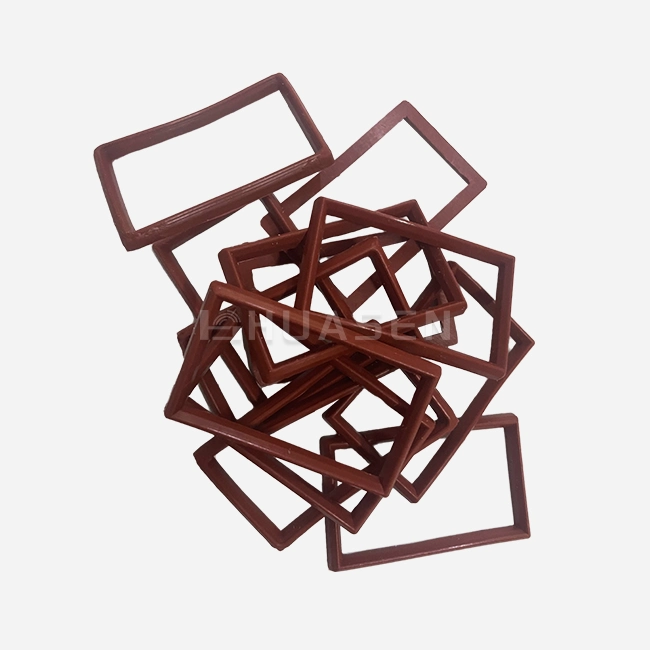
To avoid too much insertion loss and VSWR decline, waveguide fitting needs to be done very precisely. To make sure that the flange surfaces fit together perfectly, there must be no gaps between them. This is done by tightening the bolts in star designs while controlling the pressure. RF leakage can be stopped by choosing the right seal. Silicone or fluorosilicone materials work well for most uses, while indium or silver-plated copper gaskets are best for military systems that need to be very reliable. When you route waveguide runs with gradual turns instead of sharp curves, you reduce the mode conversion losses that hurt circulator isolation.
Calibration Procedures for System Verification
Vector network analyzers (VNAs) measure S-parameters across working bandwidths to give a complete picture of a circulator. In calibration, the VNA is connected to each port one at a time, and any ports that aren't being used are closed off with precisely matching loads. Recorded S21 data shows insertion loss, S11 data shows input match quality, and S31 data measures separation between ports that are not nearby. To find nonlinear ferrite behavior that shows up near saturation limits, measurements should be taken at a number of different power levels.
Troubleshooting Common Failure Modes
Isolation decline is often a sign of ferrite demagnetization caused by too much RF power or magnetic circuit movement caused by shock. Thermal cycling can make internal parts loose, which can lead to air gaps that mess up the flow of magnetic flux. Corrosion at the surfaces of flanges causes resistance losses that show up as high insertion loss and VSWR spikes. Systematic repair starts with looking for physical damage, then moves on to low-power S-parameter confirmation, and finally ends with high-power testing using dummy loads if the first results look normal.
Preventive Maintenance Schedules
Visual checks every three months find early signs of external damage on the high-power waveguide circulator, like housing rust or gasket wear and tear. S-parameter sweeps are used to check the performance of equipment once a year. They show how the equipment's electrical properties change over time, which lets you replace it before it breaks and disrupts satellite links. Cleaning the sides of the flanges during maintenance periods gets rid of built-up dirt and grime that lowers the quality of the RF contact. Keeping track of measurement trends helps with planned repair, which cuts down on unplanned downtime at mission-critical earth stations.
Market Overview and Trusted Waveguide Circulator Brands
To find the right source, you need to know what each manufacturer of the Waveguide Circulator does best, how to get expert help, and the best ways to buy things so that they fit your project's budget and schedule.
Leading Manufacturers and Their Specializations
Companies that have been making RF components for a long time have become experts in certain frequency bands and application areas. M3 Microwave focuses on making custom high-power designs for defense radar systems and provides a lot of tech help for specific needs. Pasternack keeps a large catalog that includes business Satcom bands and offers fast shipping choices that integration firms with tight schedules will like. Krytar specializes in designing broadband products that work with a wide range of frequencies and can be used in wideband satellite devices that can change frequencies. Anritsu uses precise production to make circulators for test tools that need to be very repeatable. Knowing these things that make candidates different helps buying teams narrow down the list of candidates who meet project goals.
Evaluating Supplier Reliability
Customer reviews and comments from third parties can give you an idea of the quality of after-sales help and how consistent the product is. Manufacturers that offer sample review programs let you make sure that the specs are correct before committing to large amounts of production. A warranty that lasts between one and three years shows that the company is confident in its manufacturing methods and the durability of its parts. In addition to the price of the components, responsive technical support teams that can help with merging problems through application notes and design meetings are very valuable.
Procurement Strategies for Cost Optimization
Volume price tiers encourage buying in bulk, with savings of 15–30% for sales of more than 50 units. To find the right balance between inventory holding costs and unit price savings, you need to carefully look at rollout timelines and store space. By working out consignment agreements or vendor-managed inventory programs, you can give sellers more control over your stock and make sure that parts are available for a gradual spread. Multi-year framework deals keep prices stable even when the commodity market is volatile. This is especially important for ferrite materials and valuable metal platings whose spot prices can change.
Future Trends and Innovations in Waveguide Circulators for Satcom
Waveguide Circulator design ideas that will change the way things are bought over the next ten years are driven by new technologies and changing satellite systems.
Advances in Low-Loss Magnetic Materials
It is hoped that studying lithium-aluminum ferrites and single-crystal yttrium iron garnet (YIG) surfaces will lead to insertion loss decreases of about 0.05 dB at Ku-band frequencies. These materials have lower magnetic loss tangents and higher maximum magnetization, which lets them work better and take up less space. Adoption timelines rely on how quickly the product can be made and how much it costs. It will be used in high-end defense projects first before it's available to the public.
Miniaturization for Small Satellite Platforms
As low-earth-orbit (LEO) systems grow, they need parts that are small, light, and compatible with small satellite form factors, such as the high-power waveguide circulator. With additive manufacturing, complicated waveguide shapes can be made that aren't possible with traditional machining. This means that circulator volumes can be cut by 40–50% while electrical performance stays the same. These changes are especially helpful for cubesat and microsatellite systems, since the weight of a flight affects the cost.
Frequency Extension into Millimeter Waves
Next-generation Ka-band and V-band SATCOM systems that work above 40 GHz need circulators with better magnetic circuit designs and tighter mechanical limits. As the dimensions of a waveguide get bigger, it gets harder to make because the surface roughness gets bigger compared to the wavelength. These problems can be solved with electroforming and precise CNC methods, but they come at the cost of higher production costs, which are represented in the prices of the parts.
Conclusion
Waveguide circulators are very important for protecting and directing signals in satellite ground stations. They let transmission and reception happen at the same time and protect expensive amplifiers from damage caused by reflected power. Procurement teams use selection factors that cover things like frequency alignment, power handling, environmental resilience, and supply chain stability to make the best choices. Precise installation and preventative maintenance plans make sure that devices work as well as they can for as long as they are used. As Satcom systems move toward higher frequencies and smaller platforms, new developments in material science and production will keep making circulators more useful while also challenging standard ideas about size and cost.
FAQ
1. What distinguishes waveguide circulators from coaxial versions in Satcom?
Waveguide circulators can handle a lot more power because their hollow conductor design doesn't have the dielectric breakdown risks that come with coaxial center conductors. They also have less insertion loss at microwave frequencies, which helps long-distance satellite lines keep their valuable link budget gaps. Although they are more durable, they take up more space and are harder to route than coaxial lines.
2. How does insertion loss impact satellite link budgets?
Every 0.1 dB of insertion loss lowers the effective emitted power by the same amount. This could hurt link margins during Ku- and Ka-band rain fade events. Earth stations make up for it by putting out more HPA power, which raises running costs and makes thermal control more difficult. Choosing circulators with proven low-loss features directly raises the stability and power efficiency of the system.
3. Can a single circulator cover multiple Satcom frequency bands?
There are versions that cover the whole spectrum, from C-band to Ku-band, but they don't isolate as well as narrowband options. Most earth stations use band-specific circulators that are designed for the uplink frequencies that they are given. This makes sure that there is the most security and the least amount of insertion loss within the operating bandwidths.
Partner with Huasen Microwave for Reliable Satcom Components
Huasen Microwave Technology can help you with your satellite ground station projects because they have been making precise RF parts for more than 30 years. Our Waveguide Circulator product line includes models from C-band to Ka-band, and they can be customized to meet specific frequency, power, and environmental needs. MIL-STD compliance and long-term dependability in tough outdoor setups are made possible by strict quality control methods. Our engineering team can help you with everything from choosing the right parts to putting the whole system together, whether you're setting up a business VSAT network or a defense-grade tactical station. Get in touch with our experts at sales@huasenmicrowave.com to talk about your project needs and get full specs from a reliable Waveguide Circulator maker that wants you to succeed.
References
1. Smith, J.R. "Ferrite Devices for Satellite Communication Systems," IEEE Transactions on Microwave Theory and Techniques, vol. 58, no. 7, 2010.
2. Anderson, P.L. "High-Power Waveguide Component Design for Earth Station Applications," Microwave Journal Annual Review, 2019.
3. Chen, W. "Non-Reciprocal Microwave Devices: Theory and Applications," Artech House Publishers, 2018.
4. International Telecommunication Union, "Handbook on Satellite Communications," ITU-R Technical Standards, 3rd Edition, 2021.
5. Miller, R.K. "Material Selection for High-Performance RF Circulators," Journal of Applied Electromagnetics, vol. 44, no. 3, 2020.
6. Defense Logistics Agency, "MIL-DTL-44959D: Circulators and Isolators, RF, Coaxial and Waveguide," U.S. Department of Defense Specification, 2017.
Send Inquiry