Selecting High Power Differential Phase Shift Isolator






2026-06-04 21:31:01
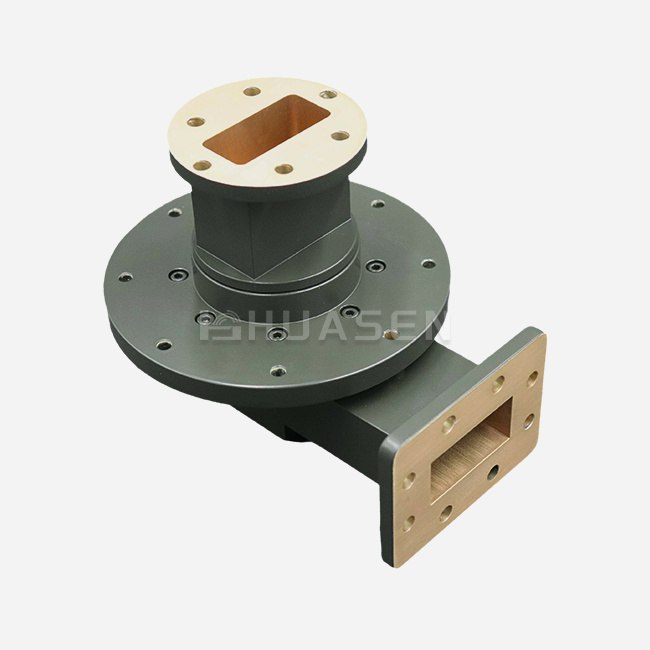
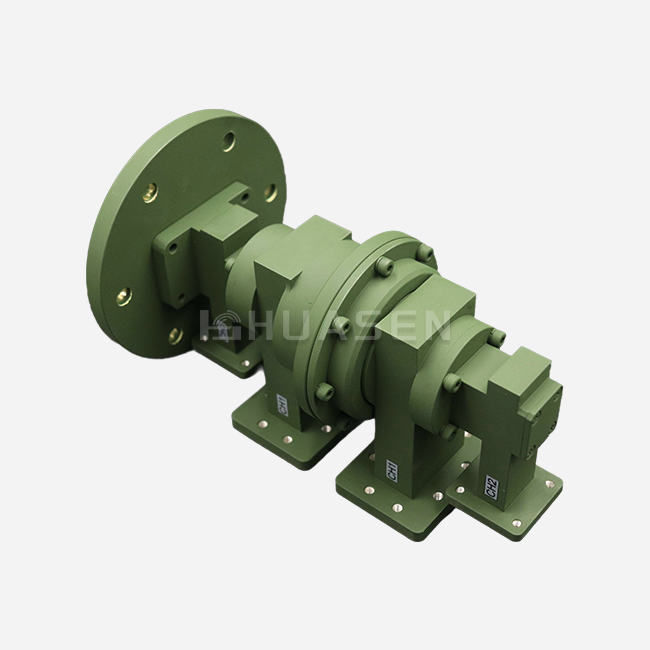
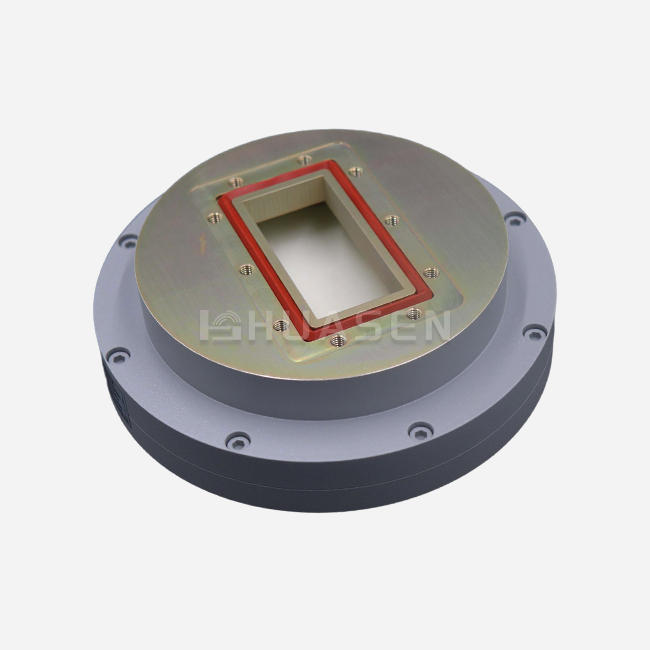
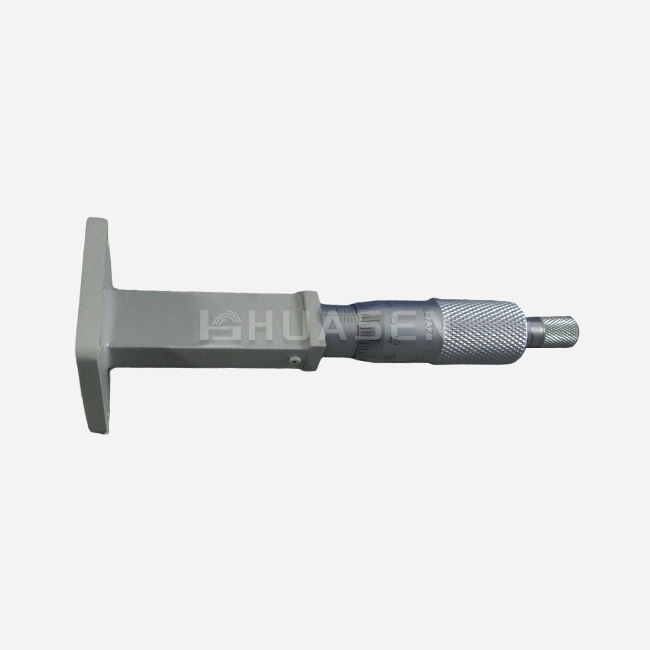
When choosing a high power waveguide differential phase shift isolator, you have to balance complex technical requirements with real-world operating needs. By sending signals moving backwards into outside termination loads, these non-reciprocal microwave devices keep important RF sources, like klystrons and solid-state power amplifiers, safe from damage. High-Power Waveguide Differential Phase Shift Isolators spread heat across waveguide walls, which lets them handle kilowatt to megawatt power loads. Junction Isolators are bound by the thermal limits of the center ferrite. To make sure that products work with base stations, radar systems, scientific accelerators, and satellite communication networks, procurement teams have to look at things like insertion loss, isolation levels, power capacity, weather stability, and the ability of suppliers to make changes.
Understanding High-Power Waveguide Differential Phase Shift Isolators
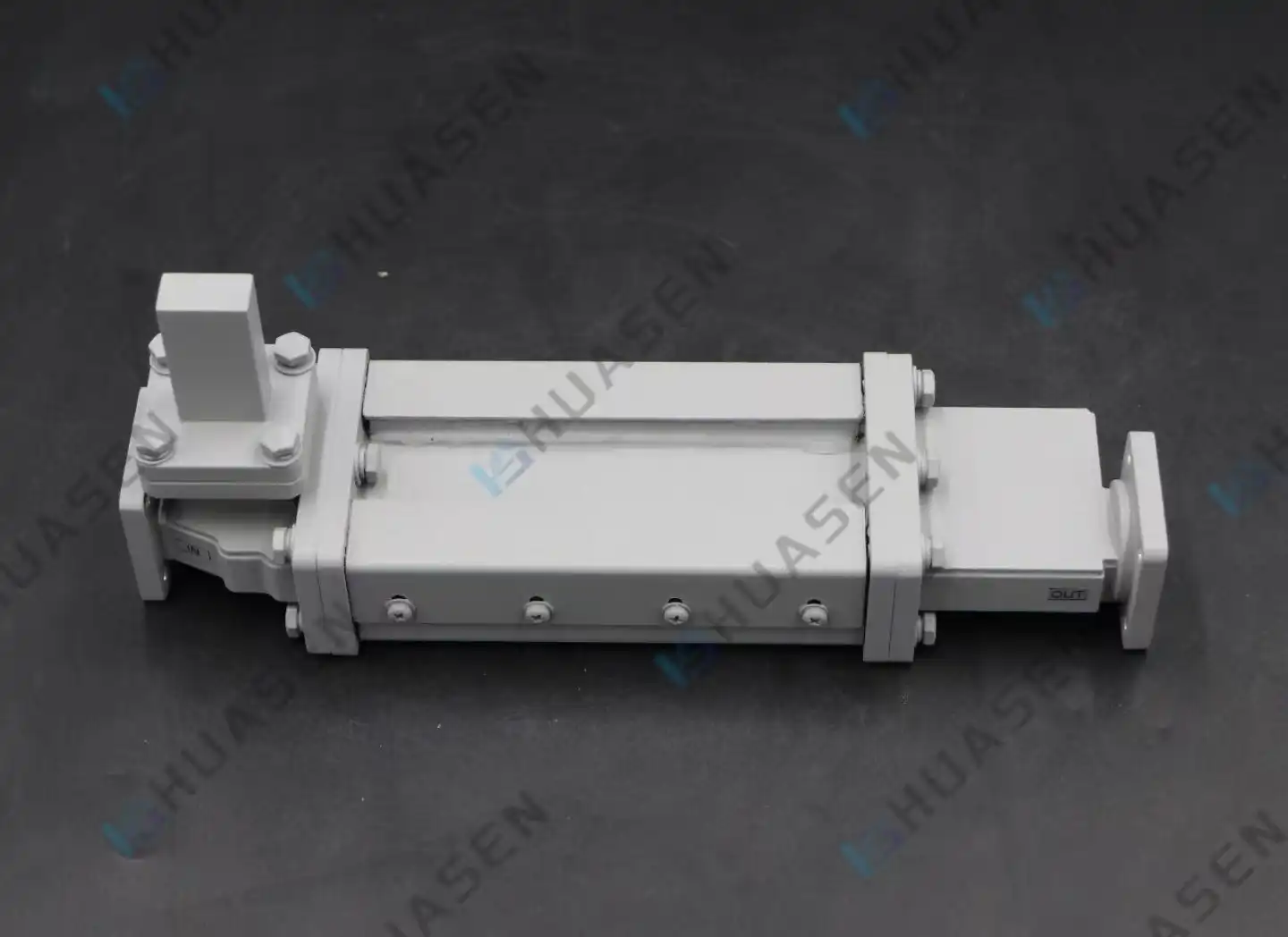
Load differences have caused many of our clients to have trouble keeping their expensive RF amplifiers from overheating. Because it has four advanced ports, a high-power waveguide differential phase shift isolator can solve this problem. The input and output ends of the device have hybrid couplers linked by two waveguide sections that hold lengthwise magnetized ferrite bars. There isn't much phase shift and insertion loss when forward signals go through. When energy is reflected, it goes through a differential 90-degree phase shift that sends it straight into a high-capacity fake load instead of back toward the source. This design solves the problem that junction isolators can't: it can keep working at megawatt peak powers without ferrite saturation or voltage breakdown.
Core Operating Principles
The electromagnetic base is based on Faraday's rules for rotation in ferrite materials when they are magnetically biased. Waves moving forward meet matching resistance conditions and pass through with an insertion loss of less than 0.25 dB. The phase velocity of reverse waves changes in a way that is not reciprocal. The hybrid coupler network turns this phase difference into spatial separation. It then sends the mirrored power to Port 4, where it is safely released by a water-cooled termination. This device keeps the signal's purity and keeps the source from getting damaged, even when there is a full short circuit at the antenna or load interface.
Critical Technical Specifications
Several factors need to be taken into account when these isolators are being considered for purchase. Peak power handling runs from 1 MW to 10 MW, based on the frequency band and the way the pressure is set. Depending on how well the cooling system works, the average power ranges from 1 kW to over 100 kW. Most of the time, isolation performance is higher than 20 dB, which means that less than 1% of the energy is returned to the amplifier. As long as the VSWR number stays below 1.10:1, the impedance will match across all operating bandwidths. Coverage ranges from L-band to Ku-band, and custom forms are offered for specific millimeter-wave uses.
Architectural Advantages Over Competing Technologies
The most important benefit is the spread of thermal control. When you place ferrite slabs against waveguide walls, you can use low-conductivity pure water or dielectric fluids for direct liquid cooling. This setup can handle 10 to 100 times more power than junction isolators with ferrite posts in the middle. The shape lets SF6 or nitrogen gas be used to increase the pressure, which raises the breakdown voltage above 30 kV/cm to stop arcing during microsecond pulses. Yttrium iron garnet (YIG) or treated spinel ferrites with Curie temperatures above 200°C are the main materials chosen because they are stable under high temperatures. High-Power Waveguide Differential Phase Shift Isolators are essential for particle accelerators, high-energy radar, and industrial plasma production systems, where part failure means huge amounts of downtime.
Comparing Different Types of High-Power Isolators
To find the right isolator for your needs, you need to know how the different designs work with different types of applications. The comparison makes it clear when high-power waveguide differential phase shift isolator designs are better than other options and when simpler technologies are enough.
Differential Phase Shift vs. Junction Isolators
In junction isolators, a ferrite disc is put in the middle of where two waveguides meet. The small size and low cost make them good for low-power uses, but they lose heat by conducting heat through the ferrite to the outside housing. This restriction means that the most power that can be handled is between 100 and 500 watts before the ferrite detuning happens. High Power Waveguide Differential Phase Shift Isolators use forced convection cooling ducts to spread RF absorption over a bigger surface area. A comparison of the two types of isolators shows that junction isolators work best for lab testing tools and low-power receivers, while differential designs are best for base station front-ends and defense radar that needs to run continuously at multiple kilowatts.
Waveguide vs. Coaxial Implementations
Waveguide designs naturally handle higher power levels because the spacing between the conductors is wider, and they are better at managing heat. Coaxial isolators are used for compact electronics and frequency bands below 6 GHz, where space is at a premium. High-Power Waveguide Differential Phase Shift Isolators work from S-band to Ka-band and have insertion losses of less than 0.2 dB. This makes them perfect for use in satellite ground stations and aircraft tracking systems. The strong structure of waveguide construction also makes it better at resisting vibrations, meeting MIL-STD-810 standards for placements on ships and in the air.
Faraday Rotation Isolators in Optical Systems
Faraday isolators are used in fiber optics, but their working principle is similar to that of RF waveguide designs. Optical versions keep laser diodes safe from back-reflections in phone networks. The main difference is the wavelength: optical isolators work at 1310 nm or 1550 nm with magneto-optic crystals such as TGG (Terbium Gallium Garnet). RF waveguide isolators use ferrite ceramics to control bands from a few centimeters to a few millimeters. Material science and manufacturing processes are very different, but they both use magnetic field interactions in a non-reciprocal way. For mixed RF-optical systems, procurement teams need to make sure that requirements are coordinated across both areas.
Aligning Frequency Requirements With Manufacturer Capabilities
Standard frequency bands that most component makers offer are 1-2 GHz, 2-4 GHz, 8-12 GHz, and 18-26 GHz. Custom designs can work with different frequency assignments for 5G millimeter-wave bands or specific radar frequencies. When looking for isolators, make sure that the test data provided by the seller shows that the insertion loss is flat across the entire working bandwidth. Some makers offer magnetic bias that can be changed, which lets the field be adjusted to get the best separation at certain frequencies. This adaptability is useful in study settings where experimental setups change factors all the time.
Practical Guide to Procuring High-Power Waveguide Differential Phase Shift Isolators
A good buying process strikes a balance between technical needs and the facts of the supply chain. From working with system designers and study institutions, we've learned a few important things about how to make strategies.
Identifying Reputable Manufacturers and Distributors
Specialized makers in the US, Europe, and China make up most of the world market. Companies that have been in the RF business for a long time usually keep their standard tolerances smaller and give more detailed test results. When looking at possible high-power waveguide differential phase shift isolator providers, make sure they have the right paperwork, like ISO 9001 certification, MIL-STD compliance records, and proof from a third-party calibration lab. Authorized wholesalers can help with local support, but make sure they keep stock instead of drop-shipping from overseas, which can make wait times longer than expected.
Cost Factors and Lead Time Expectations
Prices per unit vary a lot depending on the power grade, frequency band, and amount of customization. Standard catalog items in popular bands, such as 2-4 GHz at 10 kW average power, vary in price from $3,000 to $8,000. This depends on the type of connector and how the device is cooled. Costs can go up to $15,000 to $30,000 per unit for custom designs that need special waveguide flanges, ferrite formulas, or wider temperature ranges. Standard goods have lead times of 8 to 12 weeks, while engineered options have lead times of 14 to 20 weeks. When you buy more than ten units at once, you usually get a 10-15% discount. This makes blanket purchase orders a good way to save money for big base station deployments.
OEM Customization and Technical Collaboration
Many applications need setting changes that go beyond what is listed in the catalog, such as the high-power waveguide differential phase shift isolator. A 5G backup link might need to be able to handle both single and dual polarization within the same isolation housing. According to MIL-STD-810G, military electronic countermeasures systems need to be housed in ruggedized cases that can handle being exposed to salt fog. Getting makers involved early in the system design process lets everyone work together to come up with the best answers. Look for providers that offer sample trial programs, design help, and finite element electromagnetic models. Field failures that cost a lot of money can be avoided by making changes to samples before committing to large amounts.
Compliance Standards and After-Sales Support
Check that the isolators you're buying meet the rules for business telecommunications (RoHS), defense communications (MIL-STD-188), and broadcast uses (FCC Part 15). The paperwork should have composition records, data from heat cycle tests, and results from vibration and shock qualifications. Support after the sale is what sets top sellers apart from commodity vendors. Technical teams that are quick to respond and offer help with fixing, interpreting calibration data, and handling RMAs quickly keep downtime to a minimum. Some makers offer longer guarantees that cover ferrite degradation, which is a good thing to think about since systems usually work for 15 to 20 years if they are properly kept.
Applications and Use Cases of High-Power Waveguide Differential Phase Shift Isolators
In many fields, where RF power density and signal accuracy are very important, these devices are essential equipment.
Medical and Particle Physics Accelerators
Linear accelerators used in radiotherapy send carefully controlled electron beams to the cancer. Megawatt blasts at S-band or X-band frequencies are made by the klystron that powers the accelerator chamber. Changes in beam current cause changes in load, which sends a lot of power back to the klystron. Putting a high-power waveguide differential phase shift isolator between the klystron and the accelerator structure takes in these reflections, which stops the klystron from arcing and keeps the dose accurate. Similar problems can be found at high-energy physics sites like synchrotron light sources, where isolators protect multi-megawatt RF sources that feed particle bunching holes. The devices work in an extremely high vacuum, so they need waveguide connections that are completely sealed and materials that let out very little gas.
Defense Radar and Electronic Warfare Systems
Tracking ballistic missiles with long-range monitoring radars needs emitters with average power levels above 100 kW and pulse rise times in the nanosecond range. It keeps the traveling wave tube or crossed-field amplifier safe from antenna mismatch while beam steering. The accuracy of Doppler processing is directly affected by phase stability across the separation span. Airborne early warning systems have extra rules, like being able to handle vibrations and working in temperatures ranging from -55°C to +85°C. Naval radar sites need materials that don't rust and can handle sea spray. Because of these difficult environmental conditions, waveguide flanges need to be gold-plated, ferrite systems need to be sealed, and the approval testing needs to be very thorough and mimic practical stresses.
Industrial Microwave Processing
Magnetron arrays with frequencies of 915 MHz or 2.45 GHz are used in commercial food preparation companies to cook, dry, and pasteurize food. The load resistance of a product changes a lot as the moisture content changes during processing. Without separation, magnetrons can lose their mode stability and fail before they should. High-Power Waveguide Differential Phase Shift Isolators protect the magnetron from changes in the load, which increases the tube life from 2,000 hours to 8,000 hours. Similar uses can be found in drying wood, hardening ceramics, and speeding up chemical reactions. The challenge is to fit cooling systems into factory floors that are limited in size while still meeting hygiene standards for areas that come into contact with food.
Satellite and Terrestrial Communication Links
High Power Waveguide Differential Phase Shift Isolator—Solid-state power amplifiers that make kilowatts in Ku-band and Ka-band are used in high-throughput satellites. Isolators keep amplifiers safe from antenna VSWR loss due to ice building up on reflector surfaces or broken release mechanisms. Terrestrial point-to-point microwave backhaul connecting cell towers uses less power but needs to be very reliable—it needs to be up 99.999% of the time, which leaves no room for amplification failures. The isolators let faraway sites work for years without being watched, which lowers the cost of maintaining equipment that is spread out.
Conclusion
To choose the best high-power waveguide differential phase shift isolator, you need to carefully consider how it handles power, how it handles heat, how long it will last in different environments, and how knowledgeable the provider is. High-power waveguide differential phase shift isolator designs are great at keeping kilowatt- to megawatt-RF sources safe in base stations, radar, particle accelerators, and heating systems in factories. A successful purchase matches scientific requirements with problems that are unique to the application, like frequency bandwidth, cooling infrastructure, mechanical limitations, and following the rules. Isolators can be turned from common items into strategic system aids by working with experienced makers who offer customization, thorough testing, and quick support. Investing in isolation technology that is properly defined stops catastrophic amplifier failures, lowers maintenance costs, and guarantees long-term operating reliability.
FAQ
1. What insertion loss should I expect from a differential phase shift isolator?
A high-power waveguide differential phase shift isolator should not have more than a certain amount of insertion loss. When it comes to frequency band and power level, insertion loss usually falls between 0.15 dB and 0.30 dB. The insertion loss is less than 0.20 dB at lower frequencies (L-band, S-band), but it can reach 0.40 dB in millimeter-wave designs at Ka-band because the ferrite loss slope goes up. This small loss keeps the system working well, which is very important since even a tenth of a decibel can change how much power the emitter needs and how much it costs to run.
2. How do I determine if my system requires a differential phase shift or a junction isolator?
Figure out how much power you need on average and how much VSWR you can handle. To save money, systems with stable loads that use less than 500 watts of power often use junction isolators. High-Power Waveguide Differential Phase Shift Isolator topology is better at managing heat and keeping things reliable in situations where the load changes or where the power needs to be close to its highest value.
3. Can isolators withstand full reflection indefinitely?
If the terminal load is the same as the source power rate, the isolator takes care of full reflection itself. The cooling system and fake load are put under a lot of stress by continuous full-reflection operation. Most designs can handle short-term full reflection (like when the antenna disconnects or there is bad weather), but they need to keep an eye on the VSWR and lower the power automatically when the mismatch lasts for a long time to keep the load from getting too hot.
Partner With Huasen Microwave for Your RF Protection Needs
Since 1993, Huasen Microwave Technology has been providing high-quality High Power Waveguide Differential Phase Shift Isolators to serve communication networks, space projects, and scientific study facilities all over the world. Our design teams work closely with system developers to create unique solutions that deal with issues like power density, frequency sharing, and the environment. Before it is shipped, every isolator goes through a lot of tests, such as temperature cycling, high-power burnout proof, and network analyzer characterization. As a well-known company that makes High Power Waveguide Differential Phase Shift Isolators, we keep a large stock of typical setups and can also make quick prototypes for unique needs. Email our engineering team at sales@huasenmicrowave.com to talk about the details of your project, get detailed sketches, or get quotes. Let our 30 years of experience with microwaves make sure that your important RF systems work reliably even in the toughest situations.
References
1. Baden Fuller, A.J. (1987). Ferrites at Microwave Frequencies. London: Peter Peregrinus Ltd.
2. Helszajn, J. (2008). The Stripline Circulator: Theory and Practice. Hoboken: Wiley-IEEE Press.
3. Linkhart, D.K. (2008). Microwave Circulator Design (2nd ed.). Norwood: Artech House.
4. Pozar, D.M. (2011). Microwave Engineering (4th ed.). Hoboken: John Wiley & Sons.
5. Schloemann, E. (1988). Advances in ferrite microwave materials and devices. Journal of Magnetism and Magnetic Materials, 209-219.
6. Von Aulock, W.H. (1965). Handbook of Microwave Ferrite Materials. New York: Academic Press.
Send Inquiry