Narrow vs Wideband Coaxial Bandpass Filter Applications






2026-07-12 22:36:04
The frequency structure and interference surroundings of your system will play a big role in deciding between narrowband and wideband coaxial bandpass filters. Narrowband filters are great for tasks that need to be very selective, like military radar and satellite uplinks, where exact channel separation stops interference from other channels. Wideband filters cover a lot of frequency bands in one device, which makes them useful for internet systems like 5G backhaul and test equipment. Both types use coaxial cavity structures to get high Q-values and low insertion loss, but the trade-offs between bandwidth and selectivity have a direct effect on link budget, system complexity, and purchase costs in mission-critical RF operations.
Introduction
In current RF systems, like 5G macro cell sites and aircraft radar platforms, signal integrity is still a top concern that can't be compromised. Coaxial bandpass filters act as guardians, letting only the frequencies that are wanted through while blocking out-of-band interference that could lower the receiver's sensitivity or go beyond the limits set by regulations. Global procurement teams have to make a tough choice: narrowband filters, which offer surgical accuracy, or wideband filters, which offer operating freedom. Not only does this choice change short-term performance measures, but it also changes long-term repair processes, inventory management, and the total cost of ownership.
In this guide, we'll look at the technical differences between these two filter architectures, how they're used in the real world in the defense and telecoms sectors, and how to evaluate providers. If you run a distributed antenna system for a big carrier or specify parts for a next-generation phased array radar, these basics will help you buy things more quickly and build stronger relationships with other people in the supply chain.
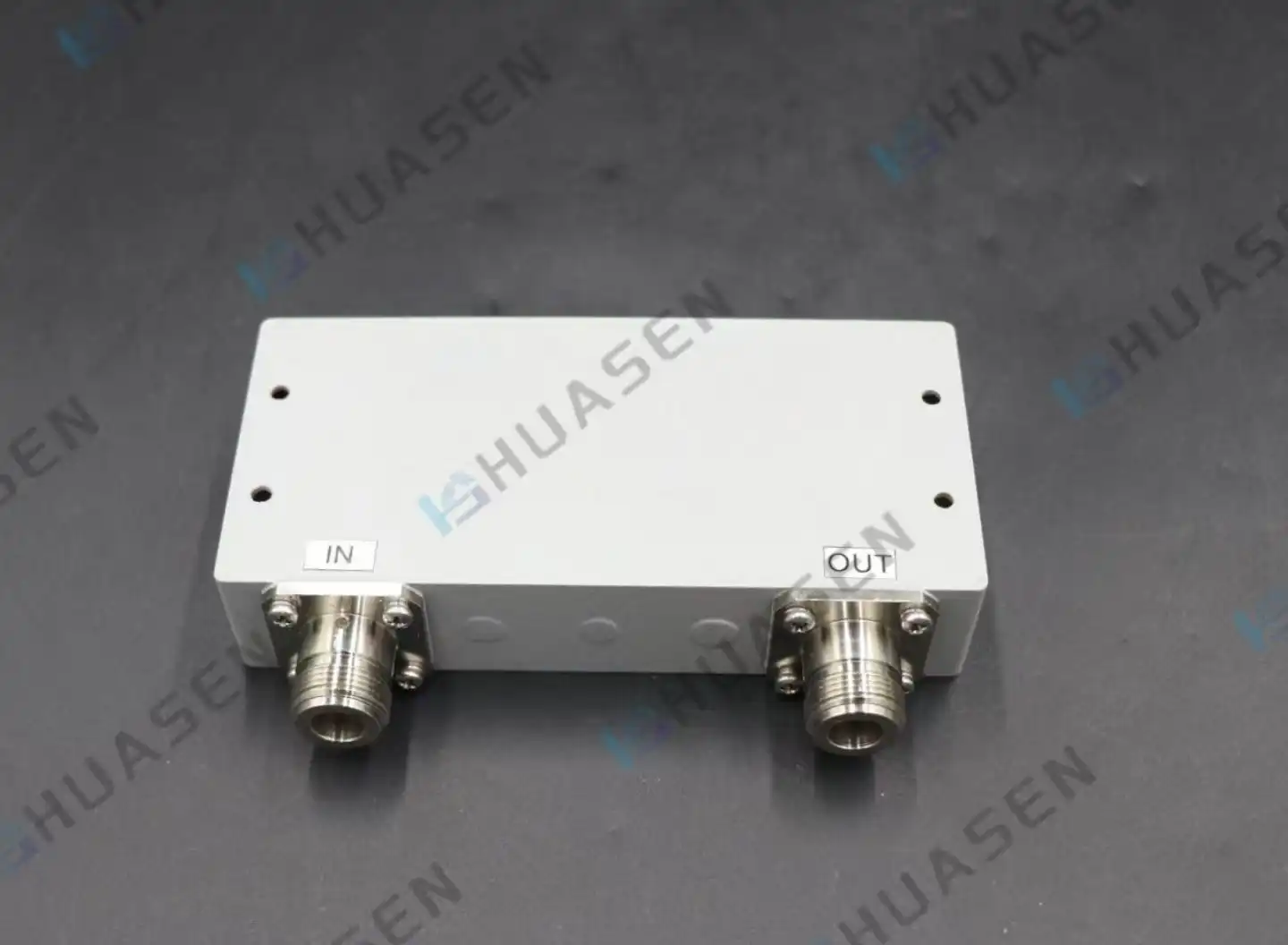
Understanding Narrowband and Wideband Coaxial Bandpass Filters
Fundamental Design Principles
The differences between narrowband and wideband filters come from how their resonators are set up and how they connect to each other. Many narrowband designs use combline or interdigital topologies, in which several quarter-wave resonators connect through precise gaps in the air or dielectric fillers. This design gets fractional bandwidths below 5%, providing high skirt selectivity that is needed to separate channels that are close to each other. On the other hand, it means more precise production and being more sensitive to temperature drift, which can cause the center frequency to move outside of the specified range during thermal cycles.
Wideband filters use different shapes, like stub-line sections or cascaded resonator stages with weaker coupling coefficients. These devices cover fractional bandwidths greater than 20%. They give up ultimate rejection at band ends in return for less sensitivity to component tolerances and a wider frequency range. Engineers often choose wideband solutions when they need to manage multiple sub-bands in a single housing. This cuts down on the number of connectors needed and the difficulty of placement in places with limited space, like unmanned aerial vehicles or marine communication pods.
Insertion Loss and Q-Factor Considerations
Both types of filters work by using transverse electromagnetic mode transmission in coaxial structures, but they work very differently when it comes to electricity. When narrowband filters are not loaded, their Q-factors are between 2,000 and 5,000, which means that their insertion losses are less than 0.5 dB in the passband. This efficiency keeps the send power the same in high-power transmission situations and the receiver noise level the same in satellite ground stations. The choice of material is very important. Copper resonators that are silver-plated reduce skin effect losses, and aluminum housings that have been hard anodized last a long time in tough outdoor settings.
Wideband filters, coaxial bandpass filters, have smaller Q-factors, usually between 500 and 1,500. This means that they lose between 0.8 and 1.5 dB of signal across the whole span. When figuring out link costs, procurement teams have to take this loss into account. This is especially true in cascade systems, where multiple filters work together to protect sensitive receivers from emitters that are close by. The benefit is that they can handle differences in manufacturing; wideband designs stay true to specifications even when regular machining errors happen. This lowers production costs and speeds up lead times compared to narrowband designs that need to be tuned after assembly.
Applications and Benefits of Narrowband vs. Wideband Filters in Industry
Narrowband Applications in Critical Infrastructure
Coaxial bandpass filters are most common in situations where rejecting neighboring channels is necessary for the system to work. In cellular base station duplexers, these filters separate the send and receive routes that are only a few megahertz apart. A normal 700 MHz public safety system needs more than 70 dB of rejection between the Tx and Rx bands so that emitter noise doesn't dull receivers that are watching for weak mobile signals. Narrowband cavity filters can handle constant power levels of more than 200 watts and keep working properly even when the temperature changes from -40°C to +60°C in outdoor cabinet setups.
Military radar systems use narrowband filters to get rid of unwanted harmonics that could identify the location of a base or break rules about electromagnetic compatibility. A marine search radar that works in the X-band could have a 9.4 GHz filter with a 50 MHz frequency built in. This would block second and third harmonics by more than 80 dB. This behavior keeps friendly communication systems on the same ship safe and makes sure that radar signals follow international rules for the seas. Because coaxial design is so strong mechanically, it can handle the shocks and vibrations that would break ceramic dielectric screens on a ship.
Wideband Applications in Flexible Systems
Wideband filters are used in broadband communication networks to make RF designs easier to understand and lower the number of parts needed. A single wideband filter that covers bands from 1.7 GHz to 2.7 GHz, including AWS, PCS, and LTE Band 7, could be used in a distributed antenna system that serves business buildings. This gets rid of the need for multiple narrowband filters and the combiners that go with them. This cuts down on insertion loss, passive intermodulation products, and installation time. When setting up infrastructure in different metropolitan areas with different carrier frequency assignments, system designers like this method.
Wideband filters are built into spectrum analyzers and vector network analyzers by test equipment makers to keep sensitive input stages safe from high-power out-of-band sounds. A normal RF test set covers DC to 40 GHz, but each measurement receiver needs pre-selection filtering to keep the mixer from getting too busy with strong interference from outside the analysis span. Wideband coaxial filters that work from 6 GHz to 18 GHz let you quickly switch frequencies during automated production testing, which isn't possible with narrowband filter banks because of the delays caused by mechanical relay switching.
Comparing Narrowband and Wideband Coaxial Bandpass Filters for Procurement Decisions
Performance Trade-Offs and System Integration
It's up to the procurement teams to find a mix between electrical requirements, physical limitations, and lifetime costs. Narrowband filters (Coaxial Bandpass Filter) are more selective, but they take up more space because they need high-Q resonators. For example, a 2 GHz filter with 2% bandwidth might be 100 mm x 50 mm x 30 mm and weigh 300 grams. This size makes it hard to fit into small remote radio heads, since every cubic centimeter changes the amount of wind that blows and the cost of renting a tower. On the other hand, wideband filters that cover the same frequency ranges can reduce their size by 30% by making the resonator measurements less strict. This makes them useful in aerospace uses where weight directly affects fuel use.
Different systems have different ways of managing heat. Narrowband designs focus RF currents on smaller resonator cross-sections, which causes localized warmth when the power is high. When the temperature goes above 200°C, the silver plate oxidizes, which lowers the Q-factor and shifts the center frequency too far. Power is spread out over larger structures by wideband filters, which lowers current intensity and temperature gradients. When system engineers choose continuous wave emitters with output powers greater than 100 watts, they need to look at the thermal derating curves given in the manufacturer's datasheets and make sure that junction temperatures stay below the material limits even in the worst environmental conditions.
Supply Chain and Customization Factors
Lead times and minimum order numbers are very different for each type of filter (coaxial bandpass filter). Narrowband devices often need to be tuned for each customer, which involves repeated measures and mechanical changes that make production take 8–12 weeks for first orders. Wideband filters with standard frequency bands can be shipped from stock or need very little customization, which cuts the time it takes to get them down to 4 to 6 weeks. Large system integrators who are in charge of many projects can save time and money by keeping wideband filters in stock. This lets them do fast prototyping and upgrades in the field without having to wait for special manufacturing runs.
Customization is what sets industry stars apart from providers of basic goods. Advanced makers give frequency ranges from DC to 60 GHz, power levels from milliwatts to kilowatts, and connection types including SMA, N-type, and 2.92 mm. People who work in procurement should ask for thorough performance data, such as changes in group delay, temperature coefficients, and passive intermodulation standards below -160 dBc. When suppliers offer full test results, compliance certifications like MIL-STD-202, and quick application engineering support, it shows that they are committed to long-term partnerships, which are necessary for mission-critical deployments.
Leading Coaxial Bandpass Filter Suppliers and Their Solutions
There are specialized companies in the global RF components market that have been making coaxial bandpass filters for decades. Companies like Mini-Circuits offer catalog-wideband filters that cover industrial frequency bands and can be delivered quickly. These filters are used in test rooms and prototyping settings that need quick solutions. With online selection tools and clear pricing, their standard product lines make buying less complicated, but customization options are still restricted compared to full-service makers.
MACOM and API Technologies make high-reliability narrow-band filters that meet MIL-STD-883 and AS9100 standards for the defense and aircraft industries. These suppliers keep supply lines safe, make sure materials don't come from war zones, and keep export compliance records that are very important for government contractors. Their engineering teams work together to make special designs for space uses that include temperature adjustment, hermetic sealing, and materials that are hardened by radiation. Qualification testing makes the procurement cycle longer, but the parts that are made have been shown to work well in life-safety systems, where failure costs are much higher than component prices.
Huasen Microwave Technology is one type of company that can combine the ability to customize with the ability to make more products. The business has been around since 1993 and makes high-quality coaxial bandpass filters. Filters with insertion loss levels below 0.8 dB. Our filters work from DC to 60 GHz and can block out-of-band signals by more than 60 dB. They can be used in radar systems, satellite ground stations, and communication equipment. Aluminum and copper resonators that are silver-plated or anodized make them durable in harsh environments. They also keep their small sizes so they can fit in rack-mount frames or weatherproof cases. We offer design help, sample testing, and calibration data delivery so that buying teams can make sure the performance is good before committing to mass production.
Conclusion
When choosing between narrowband and wideband coaxial bandpass filters, it's important to make sure that the filter's features fit the priorities of the system. These priorities should be selectivity versus bandwidth, accuracy versus flexibility, and performance versus cost. When surgical frequency control and maximum neighboring channel avoidance are needed, narrowband designs are the way to go. On the other hand, wideband solutions make multi-band systems easier to use and shorten the time it takes to deploy them. To be successful at procurement, you need to understand these trade-offs in the context of your particular operations, evaluate suppliers based on their technical skills and commitment to a relationship, and set clear specifications that allow for comparisons of similar products. Spending time and money on detailed research up front pays off by improving system performance and lowering costs over its lifetime.
FAQ
1. What distinguishes narrowband from wideband coaxial filters?
Narrowband filters have fractional bandwidths below 5% and high selectivity, making them perfect for separating channels that are close to each other in devices like cellular duplexers. Wideband filters can handle fractional bandwidths greater than 20% and can accommodate multiple frequency bands in a single device. They are good for broadband test tools and communication systems that use more than one standard.
2. How do I select the appropriate filter bandwidth for my RF application?
Look at your frequency plan to find the smallest bandwidth that all of the operating channels can use. Then, leave some room for component errors and temperature drift. Narrower bandwidths make it easier to get rid of nearby interference, but they cost more and take longer to make because they have to be made with tighter standards. Wider bandwidths make system design easier, but they might need more filtering steps to get the stopband attenuation that is needed.
3. Can coaxial bandpass filters be changed to work with certain frequency ranges?
Reliable makers let you make a lot of changes to the frequency scaling, power rates, connection types, and environmental requirements. Engineering, development, and quality testing for custom designs usually take 8 to 12 weeks. Suppliers can come up with the best solutions that balance performance, cost, and delivery plans if you give them thorough specs that include mechanical limits and weather conditions.
Partner with a Trusted Coaxial Bandpass Filter Manufacturer
Huasen Microwave makes engineered filtering solutions that meet the strict needs of current RF systems in the defense, aircraft, and telecoms industries. Our coaxial bandpass filters have an insertion loss of less than 0.8 dB and an out-of-band reduction of more than 60 dB. They work from DC to 60 GHz and come in small, durable packages. Since our founding in 1993, we've been making microwave components for 30 years, so we can help you with design, fast prototyping, and scalable production that fits your project's timeline and budget.
Our applications engineers work together to turn system requirements into the best component solutions, whether you need narrowband filters for cellular infrastructure or broadband devices for test equipment. We have strict quality standards that we stick to. These include full S-parameter testing, temperature characterisation, and compliance paperwork that meets MIL-STD and ISO standards. Email our sales team at sales@huasenmicrowave.com to talk about your filtering problems, get detailed datasheets, or set up a trial sample. Find out why top system integrators choose Huasen Microwave as their provider for mission-critical applications that need unwavering performance and dependability.
References
1. Matthaei, G.L., Young, L., and Jones, E.M.T. Microwave Filters, Impedance-Matching Networks, and Coupling Structures. Artech House, 1980.
2. Hunter, Ian C. Theory and Design of Microwave Filters. Institution of Engineering and Technology, 2001.
3. Cameron, Richard J., et al. Microwave Filters for Communication Systems: Fundamentals, Design, and Applications. Wiley-IEEE Press, 2018.
4. Pozar, David M. Microwave Engineering, Fourth Edition. John Wiley & Sons, 2011.
5. Rhodes, J.D. Theory of Electrical Filters. John Wiley & Sons, 1976.
6. Hong, Jia-Sheng G., and Lancaster, M.J. Microstrip Filters for RF/Microwave Applications. John Wiley & Sons, 2001.
Send Inquiry