How to Select a DC Power Amplifier for Broadband Use






2026-06-29 21:52:37
To choose the best DC Power Amplifier for broadband uses, you need to carefully look at its performance specs, working needs, and ability to work with your specific RF system. A DC Power Amplifier works by boosting weak radio waves over a wide frequency range, usually between 0.1 GHz and 40 GHz, using a direct current source and no extra AC-DC converters. When setting up 5G base stations, satellite communication links, or radar systems that need to send high-fidelity signals, it's important to make sure that the bandwidth, output power, uniformity requirements, and heat stability all meet your needs.
Understanding DC Power Amplifiers and Their Role in Broadband Applications
RF power amplifiers are the most important part of modern radar and broadband transmission devices. DC Power Amplifiers are different from regular AC-powered units because they get their power straight from DC sources. This means that there are no conversion costs and less electromagnetic interference. This design is very important for amplifying signals over wide frequency ranges while keeping the purity of the signals.
Fundamental Operation Principles
At their core, these amplifiers take weak RF signals and boost them to higher power levels that can be sent over long distances or picked up by radar. Transistor-based circuits, which are often based on GaN (Gallium Nitride) or GaAs (Gallium Arsenide) technology, control the flow of current based on signals that are sent in. DC biasing makes sure that the transistors work in their best linear regions, which minimises distortion and maximises gain. The direct DC supply design skips over the power conversion steps, which makes the output signals cleaner with less ripple and noise. This is very important when working with secure communication protocols or accurate radar measurements.
Differentiating DC from AC Power Amplifiers
DC-powered units connect straight to battery banks or controlled DC supplies, while AC-powered amplifiers need rectifier and filtering steps at the front end. This difference is very important in places where DC power infrastructure is already present, like mobile base stations, aeroplane systems, and marine communications. DC Power Amplifiers don't have the space or weight problems that come with AC transformers, so they are better for uses that need to be light, like radar systems on drones or communication systems on spaceships.
Core Applications Across Industries
Broadband DC Power Amplifiers are used in many challenging areas. In 5G and soon-to-be-released 6G networks, they power huge MIMO antenna systems that need to be amplified across multiple frequency bands at the same time. Ground stations for satellite communications use these boosters to boost transfer signals that are weak because of the atmosphere. Military electronic defence systems rely on being able to send out strong blocking messages over a wide range of frequencies. When testing RF components, test labs use them to create conditions that are similar to real-life signal conditions. Similarly, broadcast TV emitters use their linear properties to keep signal quality high across transmission chains.
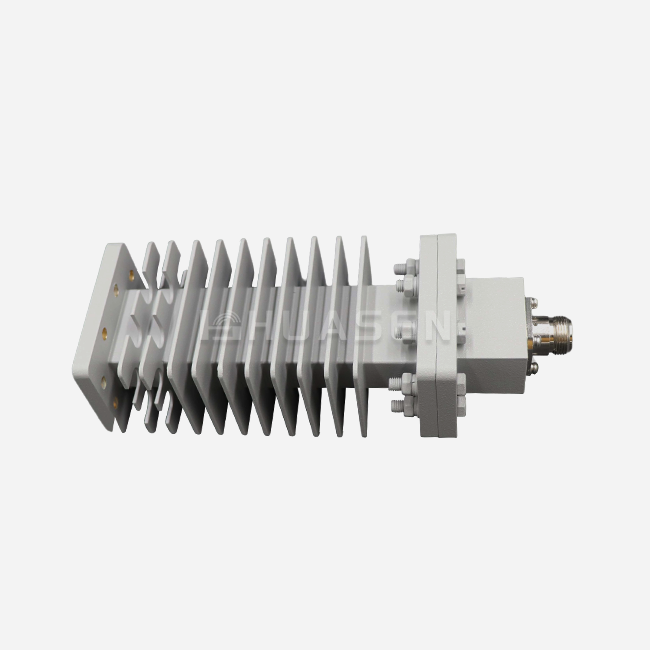
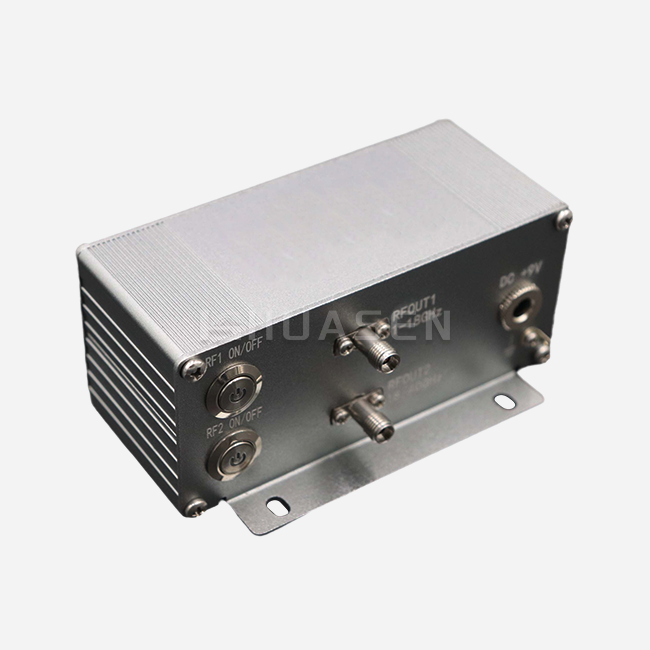
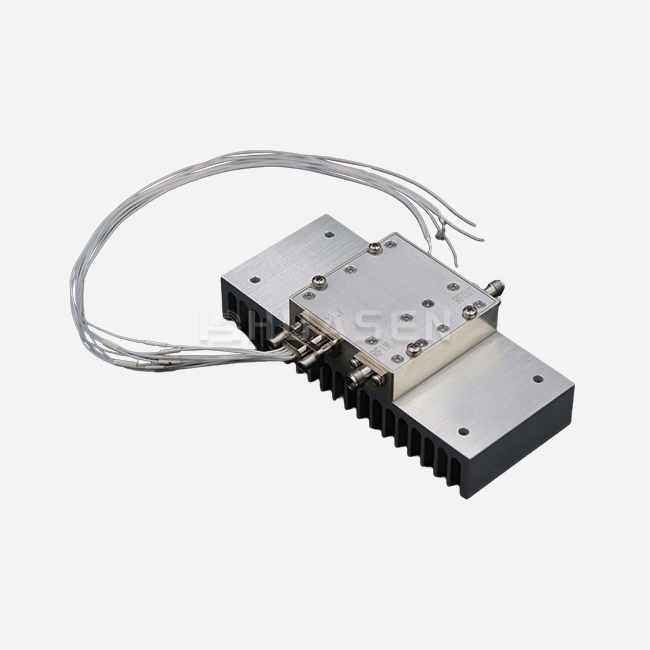
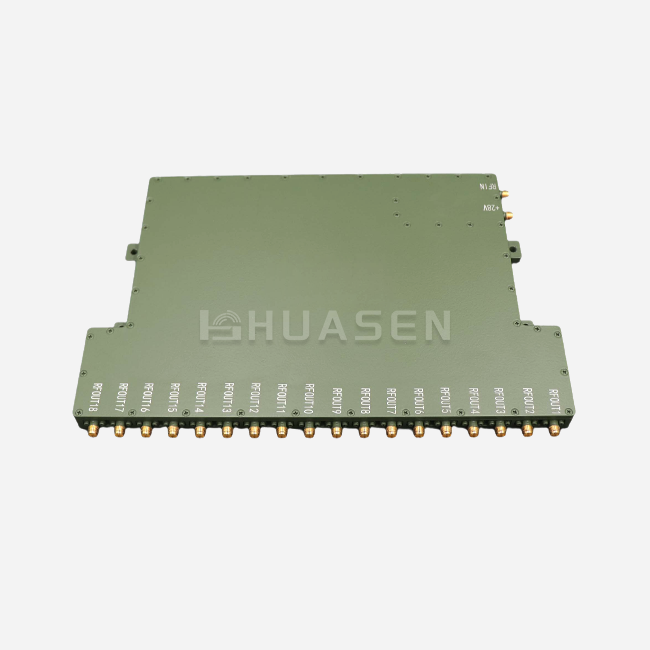
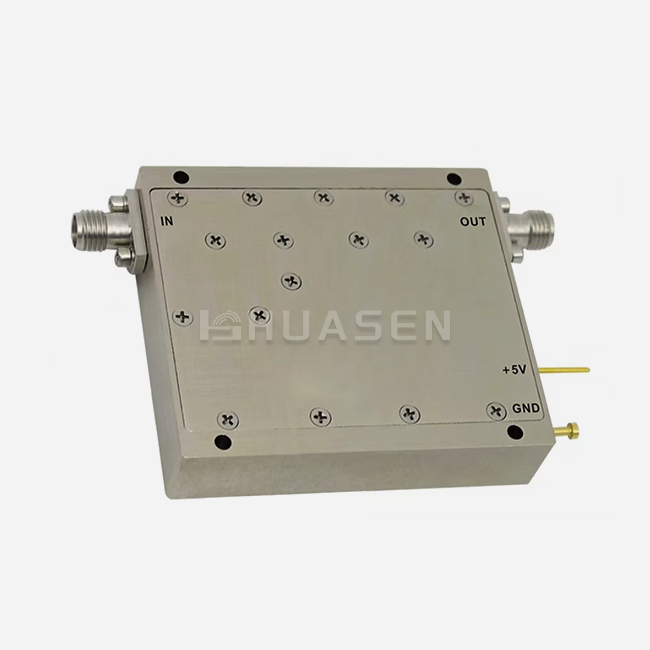
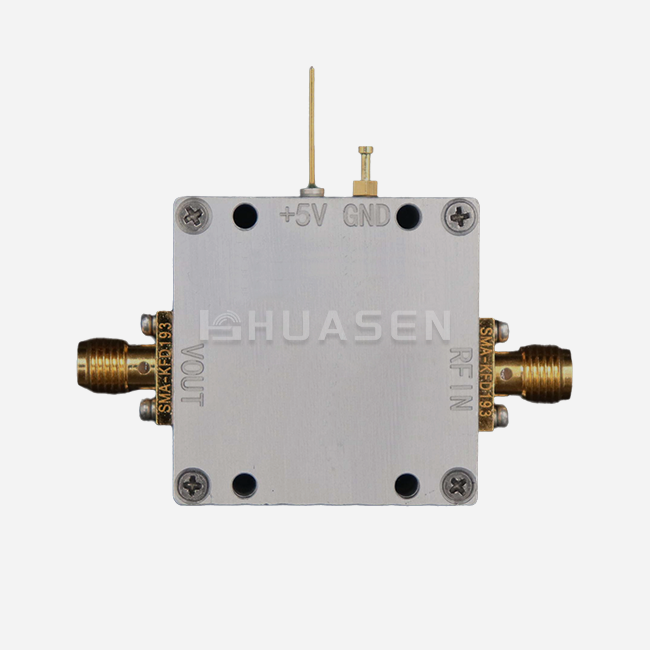
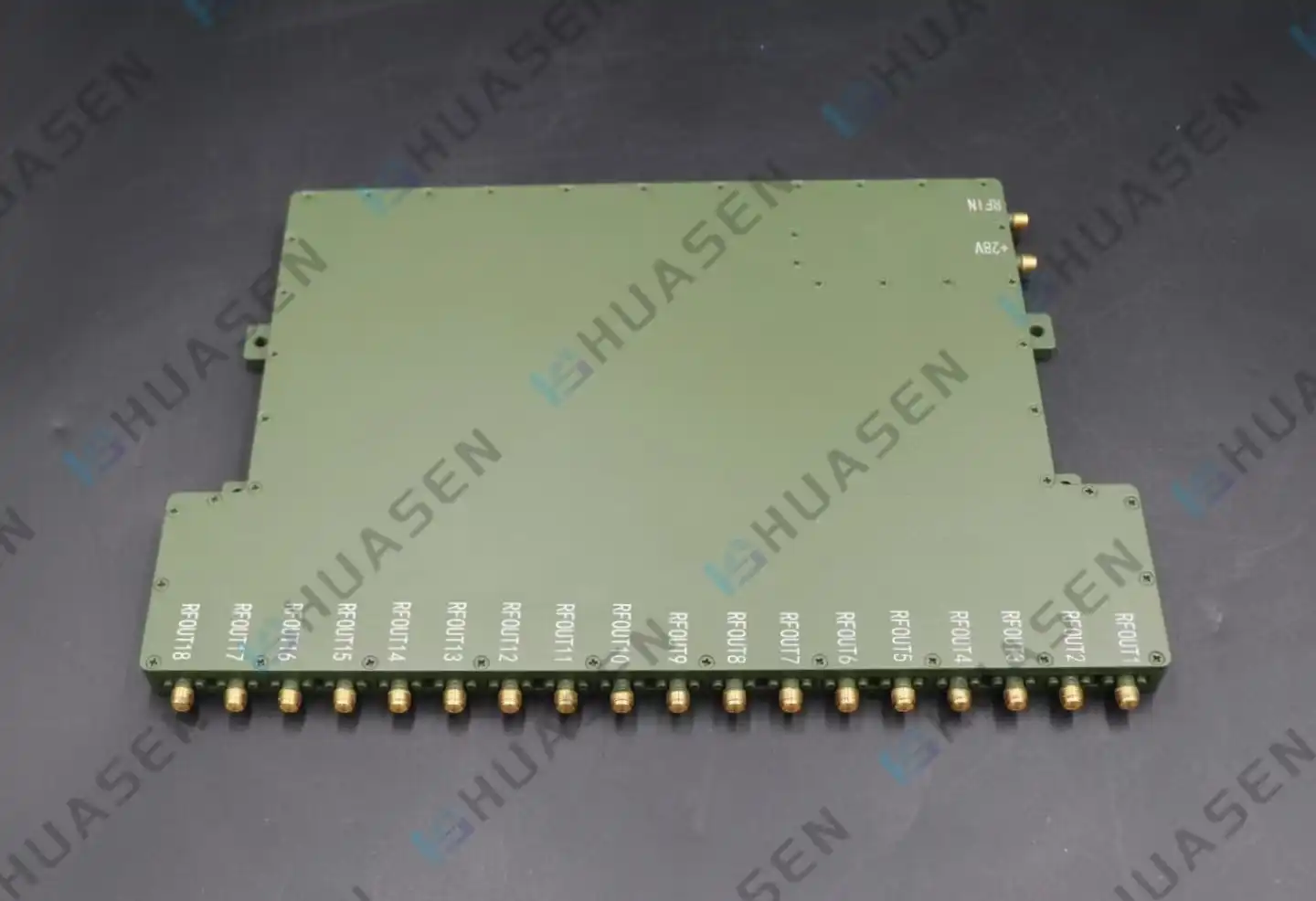
Linear DC Power Amplifiers from Huasen Microwave are a good example of this. These amplifiers work from 0.1 GHz to 40 GHz and have output choices ranging from milliwatts to kilowatts. They have very good gain flatness (usually within ±1dB), which means they work the same way across their whole operating bandwidth. This linearity is very important for keeping the purity of the signal in high-frequency areas where interference from nearby channels can hurt system performance.
Key Selection Criteria for DC Power Amplifiers in Broadband Use
Buying choices depend on how well the amplifier's specs match the needs of the application. When engineering teams know about key performance measures, they can choose DC Power Amplifiers that combine technical excellence with operational reliability.
Gain, Bandwidth, and Output Power Requirements
Gain, which is usually given in decibels (dB), tells you how much the amplifier boosts the input sounds. Often, 30 to 50 dB gain is needed in broadband uses to boost data from microwatts to watt or kilowatt levels. But gain by itself doesn't tell the whole story; gain flatness across the working span is just as important. If an amplifier says it has 40 dB of gain but actually changes by 3dB across its frequency range, it will distort the signal. This is especially true for broad modulation schemes like OFDM used in 5G systems.
The bandwidth measurement must be higher than your working frequency range by a sufficient amount. Near the edges of the band, a booster rated for 2 to 18 GHz will not work as well. Choosing units with a wide bandwidth—for example, 1-20 GHz for a 2-18 GHz application—will make sure that they work the same way at all frequencies. Different types of devices need very different amounts of output power. For example, point-to-point microwave links may only need 10 to 50 watts, but base station receivers may need hundreds of watts, and radar sites may need kilowatt-level outputs.
Noise and Distortion Levels
The signal-to-noise ratio has a direct effect on the range and speed of transmission. Noise figure, which is the loss in signal-to-noise ratio caused by the amplifier, should stay below 5 dB for most transmission uses. For research-grade tools, performance must be below 2 dB. Third-order intermodulation distortion (IMD3) is very important in multi-carrier systems where multiple signals go through the same amplifier. IMD3 standards better than -30 dBc stop the creation of unwanted signals that could mess up channels next to them.
Efficiency and Thermal Management Challenges
RF amplifiers only turn some of the DC power that comes in into RF output. The rest of the power is lost as heat. Class A linear amplifiers may only be 10–20% efficient, which means that an amplifier that puts out 100 watts of RF power could lose 400–500 watts of heat. Strong cooling systems are needed for high-power setups. For middle powers, forced air convection works, and for kilowatt-level systems, liquid cooling does the job. Specifications for thermal resistance show how well the amplifier moves heat from active parts to heat sinks. Outdoor base stations have to deal with temperatures ranging from -40°C to +70°C, which means DC Power Amplifiers need to be able to handle a wide range of temperatures.
Impedance Matching and Load Compatibility
50-ohm resistance is the standard for RF devices. To keep reflections to a minimum, amplifiers must have the right input and output impedance across their working span. Reflections hurt efficiency and could even damage output stages. This matching quality can be measured by the Voltage Standing Wave Ratio (VSWR), which should be less than 1.5:1. Load compatibility is more than just impedance; it also includes steadiness when the load changes. Amplifiers should be able to handle errors of up to 3:1 VSWR without oscillation or activation of the safety circuit.
Reliability Factors and Environmental Ruggedness
Amplifiers that can handle shock, pressure, humidity, and toxic atmospheres are needed in industrial and military settings. Compliance with MIL-STD-810 ensures reliability in harsh environments, while compliance with MIL-STD-461 ensures compatibility with electromagnetic fields. If the Mean Time Between Failures (MTBF) is more than 50,000 hours, it means that the design is stable and the components are well-rated. For frequencies below 18 GHz, connector types must match the system infrastructure. For frequencies above 40 GHz, connector types must match the system infrastructure.
Comparing DC Power Amplifier Types and Alternatives
There are different DC Power Amplifier designs that trade off efficiency for cost and complexity. Knowing about these trade-offs helps choose the best answers.
Linear Amplifiers versus Switching Alternatives
Linear amplifiers work in continuous conduction modes (Class A, AB, or B), making sure that the input and output waveforms are equal. This uniformity keeps the complicated modulation forms that are used in modern communication systems, but it makes the systems less efficient. Class D, E, and F switching amplifiers work by using transistors as on/off switches to get 70–90% efficiency. However, they introduce distortion, which means they can only be used in constant-envelope modulation schemes or situations that can handle nonlinearity.
Solid-State versus Tube Amplifiers
Modern wideband amplifiers mostly use solid-state technology, with GaN transistors used for high-power tasks and GaAs for lower-power tasks that need low noise. These gadgets come in small sizes, can turn on instantly, and have service lives of more than 100,000 hours. Travelling-wave tubes and klystrons, which are examples of legacy tube amplifiers, are still used in some high-power situations, but they need to be warmed up, given high voltage, and replaced every so often.
Voltage versus Current Amplifiers
Voltage amplifiers make sure that the output voltage stays the same, no matter how much current is flowing through them. They can be used to power antennas and communication lines. Current amplifiers keep the output current steady, which is useful for checking electromagnetic compatibility and measuring some antennas. Voltage amplification designs are used in most RF applications.
Huasen Microwave's amplifiers are mainly linear solid-state designs that use modern GaN technology to balance high output power with great uniformity. The gain flatness specification of ±1 dB typical across operational bandwidths ensures that there is little signal distortion. This means that these amplifiers can be used in high-stakes situations where signal integrity must be maintained, such as in electronic warfare systems, precision radar, and high-order modulation communication links.
Practical Guidance for Procuring DC Power Amplifiers
Strategic buying of DC Power Amplifiers is more than just comparing spreadsheets. It also includes evaluating suppliers, figuring out the total cost of ownership, and making sure the supply chain is reliable.
Sourcing from Established Suppliers
There are both well-known component makers and specialised systems developers in the RF power amplifier market (RF power amplifier). Systems integrators, like Huasen Microwave, can make changes based on specific deployment scenarios, while component sellers give large catalogues with standard specs. To check a supplier's qualifications, you need to look at their ISO 9001 quality badges, customer references from similar projects, and how well they can help with technical issues. Suppliers who have their own design teams can help with problems like impedance-matching networks, temperature control, and system integration.
Price Expectations and Cost-Effectiveness Strategies
Broadband RF amplifiers have huge price differences. Low-power units (1–10 watts) cost between $2,000 and $5,000, mid-power units (50–100 watts) cost between $10,000 and $30,000, and high-power systems (500+ watts) cost more than $50,000. Custom designs cost more than off-the-shelf goods, but they don't have the flaws that come with them. When you buy a lot of something, like dozens or hundreds of units for a base station rollout, you can negotiate savings of 15 to 30 per cent. The total cost of ownership includes things like energy use, cooling equipment, and repairs that need to be done over the course of 10 to 15 years.
Custom Solutions for OEM Requirements
Standard catalogue items rarely perfectly match what the system needs. Customisation choices include changing the frequency band, changing the output power, choosing the type of connection, and changing the mechanical form factor. Suppliers of "turnkey" options can combine amplifiers with power sources, tracking circuits, and protected housings, which makes it easier to put the system together. Custom designs usually have longer lead times (12 to 16 weeks) than standard goods, but they can improve performance and possibly lower long-term costs.
Warranty Coverage and After-Sales Support
Standard guarantees last for one to two years, but you can pay a small fee to get coverage for up to five years. The warranty terms should make it clear what kinds of failures are covered, such as damage from wrong use, high temperatures or conditions. How fast technical help is, as shown by how quickly questions are answered and how many application engineers are available, has a big effect on the success of deployment. Suppliers who keep extra parts on hand make sure that repairs can be done quickly, which cuts down on system downtime.
Case Studies and Best Practices for Broadband DC Power Amplifier Selection
Real-world operations show how choosing the right DC Power Amplifier can solve practical problems and show you how to avoid problems.
Successful Deployment in 5G Base Station Infrastructure
A big phone company that was putting up 5G huge MIMO base stations in cities needed amps that could handle frequencies between 3.3 and 3.8 GHz and output 200 watts. The purchasing team first thought about switching amplifiers because they are efficient, but they knew that 5G's OFDM modulation needs very good stability to keep error vector magnitude (EVM) to a minimum. The system met 3GPP requirements by using linear GaN amplifiers with third-order intercept points above +55 dBm. Advanced bias control methods kept the system's energy economy high. Problems with managing heat in rooftop setups were solved with liquid-cooled heat exchangers that kept junction temperatures below 150°C even during the hottest parts of summer.
Satellite Ground Station Uplink Amplifier Optimisation
A business that uses commercial satellites had to replace some old TWTAs (travelling-wave tube amplifiers) in ground units that serve Ka-band communications. The alternative had to match 500 watts of output power across 27.5 to 30 GHz, but it was more reliable and needed less upkeep. Solid-state GaN amplifiers could be turned on right away, so they didn't need the 3-minute TWTA warm-up times that made things more difficult to do. Individual GaN modules only put out 80 watts of power, but power-combining networks made it possible to build 500-watt systems with N+1 resilience. If one module failed, the system kept running at a lower power level until it was fixed. When MTBF went from 8,000 hours (TWTA) to over 100,000 hours (solid-state), running costs dropped by a huge amount.
Common Pitfalls and Avoidance Strategies
Thermal planning that isn't good enough leads to early failures in the RFpower amplifier. Amplifiers need to work with junction temperatures below the manufacturer's maximums, which are usually 175°C for GaN devices. This requires careful estimates for heat sink size and airflow. Ignoring load imbalance protection could lead to a catastrophic failure when antenna systems go wrong; choosing amplifiers with built-in VSWR protection circuits protects against this. When you don't think about how much bandwidth you need, you end up sacrificing performance. If you choose amplifiers with 20–30% bandwidth margins beyond their standard working ranges, you can account for future system improvements and changes in the environment that affect the characteristics of the components.
Integration problems are found early on when amps are tested in real-world settings before they are fully deployed. When real antenna impedances are used in load-pull tests, matching problems that can't be seen with lab loads are found. Long-term burn-in testing at full peak power finds weak parts before they are put into use in the field.
Conclusion
When choosing DC Power Amplifiers for broadband uses, you have to weigh a lot of technical factors against price and operational factors. Putting gain flatness, output power capacity, thermal management, and weather toughness at the top of the list of priorities matches the capabilities of the equipment with the needs of deployment. Knowing the differences between switching and linear designs, solid-state versus tube technologies, and standard versus custom solutions helps you make smart decisions about what to buy. Partnering with providers that offer full technical support, the ability to customise products, and strong guarantee programs can help reduce the risks that come with putting in place complex RF systems. The case studies show that careful consideration of thermal management, thorough analysis of requirements, and realistic testing methods are what separate successful deployments from costly failures.
FAQ
1. What distinguishes DC power amplifiers from traditional AC-powered RF amplifiers?
What makes DC Power Amplifiers different from regular RF amplifiers that are driven by AC? DC Power Amplifiers connect directly to DC sources, bypassing the need for an AC-DC converter. This cuts down on electromagnetic interference and boosts efficiency in systems that already have DC infrastructure. They get rid of power source transformers, which cuts down on weight and size, which are important benefits in aerospace and mobile uses.
2. How do I verify amplifier performance before installation?
Use network analysers to take swept-frequency gain readings across the operating bandwidth to make sure that the gain flatness requirements are met. Check the noise number with noise sources that have been measured. To make sure power levels are correct, test output power at the 1-dB compression point. To make sure the antenna will work well in real life, you should test its load-pull capabilities with different antenna impedances. Thermal imaging during running at full power shows that the system is properly cooled.
3. What industry standards govern DC power amplifier specifications?
MIL-STD-461 talks about electromagnetic compatibility, while MIL-STD-188 talks about the needs for military transmission tools. IEC 60215 sets the requirements for radio transmitters. The 3GPP standards say what the cellular infrastructure needs to do to work well. These standards include error vector size and neighbouring channel power ratio, both of which depend on how linear the amplifier is.
Partner with Huasen Microwave for Your Broadband Amplification Needs
Huasen Microwave Technology makes linear DC Power Amplifiers that have been used successfully in the radar, aircraft, defence, and telecoms industries for demanding broadband applications. Our amplifiers work from 0.1 GHz to 40 GHz and can output power ranging from milliwatts to kilowatts. They also have very good gain flatness within ±1dB across all operating bandwidths. With 30 years of experience in RF engineering, we can offer full customisation, including frequency band optimisation, connector choices, heat management solutions, and mechanical integration. Systems engineers and procurement managers looking for a reliable DC Power Amplifier supplier can benefit from our quick expert help, low prices for large orders, and dedication to quality that is backed up by ISO certifications. Please email our team at sales@huasenmicrowave.com to talk about your specific needs, get full specs, or set up performance demos to make sure our amplifiers meet your mission-critical requirements.
References
1. Cripps, S.C. (2006). RF Power Amplifiers for Wireless Communications (2nd ed.). Artech House Publishers.
2. Grebennikov, A., Sokal, N.O., & Franco, M.J. (2012). Switchmode RF and Microwave Power Amplifiers (2nd ed.). Academic Press.
3. Raab, F.H., et al. (2002). "Power amplifiers and transmitters for RF and microwave." IEEE Transactions on Microwave Theory and Techniques, 50(3), 814-826.
4. Kenington, P.B. (2000). High-Linearity RF Amplifier Design. Artech House Publishers.
5. Sevic, J.F. (2016). "Statistical characterization of RF power amplifier efficiency for CDMA wireless communication systems." IEEE Wireless Communications and Networking Conference Proceedings.
6. U.S. Department of Defense (2015). MIL-STD-188-164B: Interoperability Standard for High Frequency Radio Equipment.
Send Inquiry