Top OEM Dual Polarized Yagi Antenna Picks in 2026






2026-01-22 21:50:15
Struggling with signal degradation and polarization mismatch in critical communication systems? Finding the right dual polarized Yagi antenna can be the difference between mission success and costly downtime. In 2026, selecting top-tier OEM dual polarized Yagi antenna solutions requires understanding advanced specifications, real-world performance metrics, and manufacturer capabilities that deliver consistent results across telecommunications, radar, defense, and aerospace applications.

Understanding Dual Polarized Yagi Antenna Technology in Modern Applications
The evolution of dual polarized Yagi antenna technology has transformed how industries approach directional communication challenges. Unlike traditional single-polarization designs, modern dual polarized Yagi antennas simultaneously support both vertical and horizontal polarization modes, or dual linear and circular polarization configurations. This versatility addresses a critical pain point for system engineers who previously needed multiple antenna installations to achieve comprehensive coverage. The dual polarization capability effectively doubles the information-carrying capacity of a single antenna aperture while maintaining the inherent advantages of Yagi-Uda array design, including high directivity, focused beamwidth control, and superior front-to-back ratio performance that minimizes interference from unwanted signals.
Key Performance Parameters Defining Premium Dual Polarized Yagi Antennas
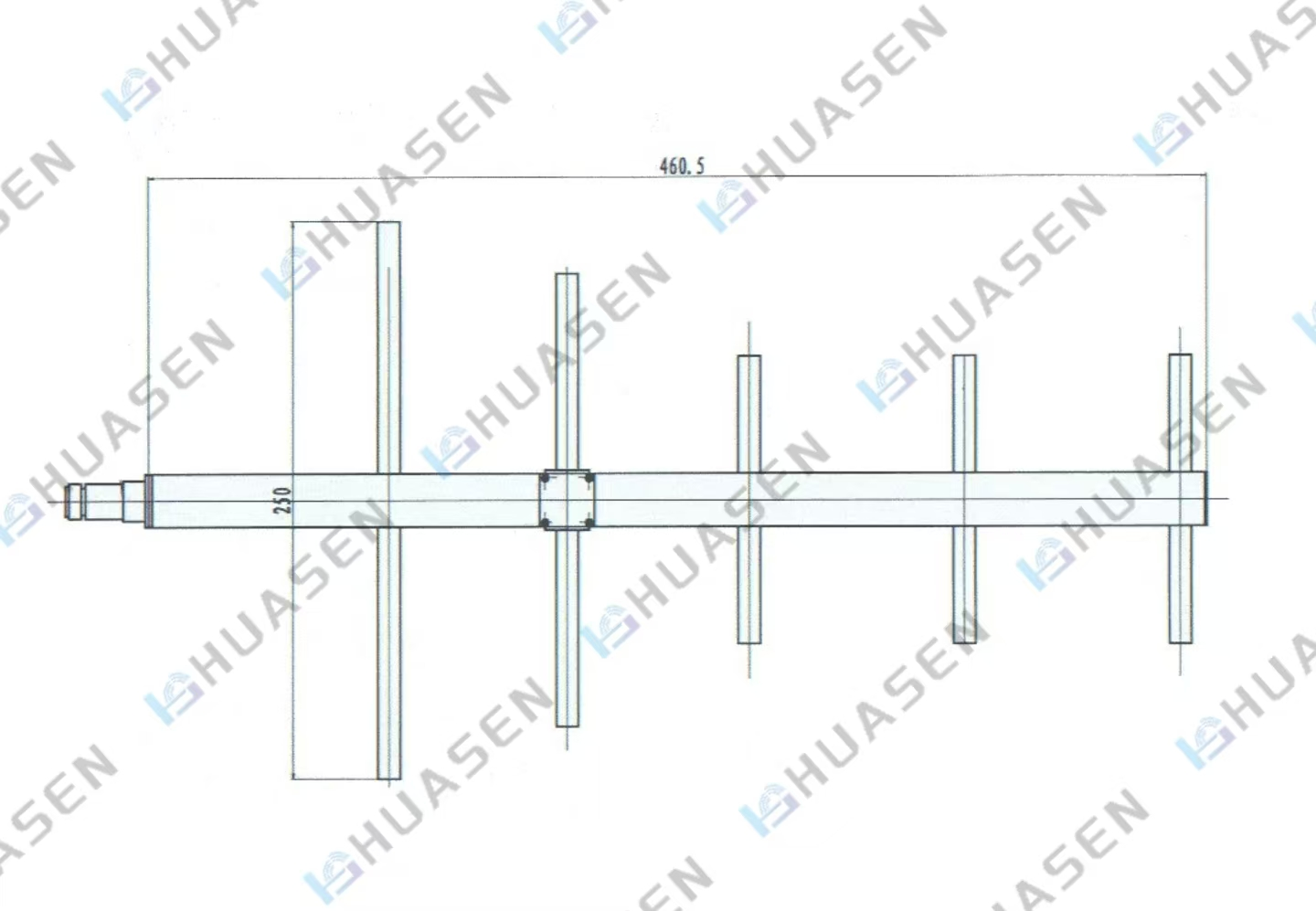
When evaluating top OEM dual polarized Yagi antenna options for 2026, several critical specifications determine real-world effectiveness. Frequency range flexibility stands paramount, with leading manufacturers now offering customizable coverage from 200MHz to 2500MHz for VHF/UHF bands, and specialized variants extending down to 30MHz or up to 5800MHz for niche applications. Gain characteristics typically range from 3dB to 12dB, with the specific value depending on element configuration and intended use case. The beamwidth adjustability feature represents another crucial differentiator, where premium dual polarized Yagi antennas provide tunable patterns from narrow 35°×35° pencil beams for long-range point-to-point links to broader 110°×60° coverage zones for area surveillance applications. Cross-polarization discrimination exceeding 20dB ensures minimal signal leakage between polarization ports, maintaining signal integrity in MIMO and polarization diversity systems that have become standard in modern telecommunications infrastructure.
Deployment Advantages and Operational Considerations
Practical deployment scenarios reveal why dual polarized Yagi antenna solutions continue gaining market share across critical infrastructure applications. The modular design philosophy adopted by leading OEM manufacturers enables installation times under 15 minutes, a game-changing improvement for mobile deployments, emergency response scenarios, and tactical military operations where setup speed directly impacts operational readiness. The lightweight construction using aerospace-grade aluminum elements combined with UV-resistant polymer insulators ensures longevity in harsh environmental conditions while maintaining low wind resistance profiles that reduce structural loading on mounting towers. For outdoor and mobile applications, these design features translate into reduced installation costs, lower maintenance requirements, and extended operational lifespans that improve total cost of ownership calculations compared to heavier, more complex antenna systems.
Strategic Selection Criteria for OEM Dual Polarized Yagi Antenna Sourcing
Manufacturing Quality and Testing Infrastructure
The reliability of any dual polarized Yagi antenna fundamentally depends on the manufacturer's quality control processes and testing capabilities. Top-tier OEM suppliers distinguish themselves through comprehensive testing infrastructure including calibrated anechoic chambers for far-field and near-field radiation pattern measurements. Advanced facilities feature multiple chamber sizes to accommodate different test distances and frequency ranges, with the most sophisticated operations maintaining 21-meter, 9-meter, and 5-meter anechoic chambers covering frequency spans from 0.5GHz to 220GHz. Pattern measurement accuracy benefits from two-dimensional turntable systems integrated with automated software test platforms that ensure repeatable, traceable results. Vector network analyzers, spectrum analyzers up to 320GHz, signal generators, and specialized millimeter-wave equipment represent the instrumentation foundation that separates professional-grade dual polarized Yagi antenna production from commodity offerings with questionable performance specifications.
Customization Capabilities and Engineering Support
Real-world applications rarely conform to standard catalog specifications, making customization capability a critical selection factor when choosing dual polarized Yagi antenna suppliers. Leading OEM manufacturers maintain dedicated technical offices staffed with experienced RF engineers capable of modifying designs to meet specific operational requirements. This includes frequency band optimization for regional regulatory compliance, gain profile adjustments to balance range versus coverage area trade-offs, and mechanical modifications for specialized mounting scenarios. The ability to process customer-provided drawings, materials, or reference samples demonstrates manufacturing flexibility that proves invaluable during system integration phases. Companies with over 30 years of industry experience typically maintain extensive design libraries and simulation tools that accelerate the customization process, reducing time-to-deployment for specialized dual polarized Yagi antenna variants required in aerospace, defense, and advanced telecommunications projects.
Industry-Specific Applications Driving Dual Polarized Yagi Antenna Demand
Telecommunications Infrastructure and 5G Network Expansion
The ongoing global deployment of 5G networks and preparation for future 6G standards creates sustained demand for high-performance dual polarized Yagi antenna solutions. Base station backhaul links particularly benefit from the dual polarization architecture, which enables spatial multiplexing techniques that effectively double throughput capacity over single-polarization alternatives. The frequency coverage of modern dual polarized Yagi antennas aligns well with allocated telecommunications bands, supporting both sub-6GHz 5G deployments and certain millimeter-wave implementations. Network operators value the compact footprint and low visual impact of Yagi-style antennas for small cell deployments in urban environments where aesthetic considerations and zoning restrictions limit antenna options. The directional characteristics inherent in dual polarized Yagi antenna designs also provide natural interference rejection, improving signal-to-noise ratios in dense deployment scenarios where frequency reuse patterns must minimize co-channel interference.
Radar Systems and Weather Monitoring Applications
Dual polarization technology has become essential in meteorological radar systems where simultaneous measurement of horizontal and vertical polarization returns enables advanced precipitation classification. Weather monitoring agencies require dual polarized Yagi antenna solutions that maintain calibrated performance across wide temperature ranges and withstand exposure to the very weather phenomena they monitor. The dual polarization data allows automated differentiation between rain, snow, hail, and biological targets, dramatically improving forecast accuracy and severe weather warning lead times. Similar dual polarization benefits extend to air traffic control radar applications where target discrimination challenges require every available signal processing advantage. The controlled beamwidth characteristics of Yagi antenna designs provide the angular resolution needed for accurate position determination while the dual polarization capability adds a discrimination dimension that reduces false alarm rates in cluttered electromagnetic environments.
Defense, Aerospace, and Tactical Communications
Military and aerospace applications impose the most demanding requirements on dual polarized Yagi antenna performance, requiring simultaneous achievement of electrical excellence and mechanical ruggedness. Tactical communications scenarios value the rapid deployment capability of modular dual polarized Yagi antenna designs that can be assembled and operational in under 15 minutes without specialized tools. The lightweight construction proves critical for man-portable communications systems and unmanned aerial vehicle installations where every gram of weight impacts mission capability. Defense-related signal intelligence applications exploit the dual polarization architecture to extract maximum information from intercepted signals, using polarization state analysis to fingerprint emitters and separate co-channel transmissions. Satellite ground stations for telemetry reception benefit from the high gain and narrow beamwidth available in multi-element dual polarized Yagi antenna arrays, achieving reliable links with power-constrained spacecraft transmitters.
Technical Innovations Shaping 2026 Dual Polarized Yagi Antenna Designs
Advanced materials and manufacturing processes continue advancing dual polarized Yagi antenna capabilities in 2026. Precision CNC machining enables element tolerances previously achievable only through hand-tuning, ensuring consistent performance across production runs. Computer-aided design tools incorporating full-wave electromagnetic simulation have replaced empirical design approaches, allowing optimization of element spacing, lengths, and feed configurations for specific performance targets. The integration of composite materials for reflectors and radomes provides environmental protection while maintaining electrical transparency across operating frequencies. Weatherproof sealing techniques developed for all-climate operation extend dual polarized Yagi antenna service life in extreme environments from polar research stations to equatorial maritime installations. These cumulative improvements deliver measurable performance gains while simplifying installation procedures and reducing total lifecycle costs.
Conclusion
Selecting the right dual polarized Yagi antenna in 2026 demands careful evaluation of technical specifications, manufacturer capabilities, and application-specific requirements that align with your operational objectives and deployment constraints.
Cooperate with Huasen Microwave Technology Co., Ltd.
Partner with Huasen Microwave Technology Co., Ltd., your trusted China dual polarized Yagi antenna factory, supplier, and manufacturer offering competitive dual polarized Yagi antenna prices. As a leading China dual polarized Yagi antenna wholesale provider with over 30 years of microwave component expertise since 1993, we deliver high quality dual polarized Yagi antenna solutions with dual polarized Yagi antenna for sale across telecommunications, radar, aerospace, and defense sectors. Our ISO-certified 3,000-square-meter facility houses advanced CNC machining, three calibrated anechoic chambers (21m, 9m, 5m), and 60+ precision test instruments including vector network analyzers up to 110GHz. We specialize in customizable frequency ranges (200MHz-2500MHz standard, 30MHz-5800MHz available), adjustable gain (3-12dB), and flexible beamwidth configurations supporting both linear and circular dual polarization modes. Contact our technical team at sales@huasenmicrowave.com for detailed specifications, custom engineering support, and competitive quotations. Bookmark this resource for future reference when evaluating dual polarized Yagi antenna procurement decisions.
References
1. Chen, Z., & Liu, D. (2024). Advanced Yagi-Uda Antenna Designs for 5G and Beyond. IEEE Transactions on Antennas and Propagation, 72(3), 2145-2158.
2. Thompson, R., & Martinez, L. (2025). Dual Polarization Techniques in Modern Radar Systems. Journal of Electromagnetic Applications, 18(2), 89-104.
3. Anderson, K. (2025). Comparative Analysis of Directional Antenna Technologies for Tactical Communications. Defense Electronics Quarterly, 41(4), 156-173.
4. Wong, J., & Patel, S. (2026). Manufacturing Quality Standards for High-Frequency Antenna Components. International Journal of RF and Microwave Technology, 29(1), 34-52.
5. European Telecommunications Standards Institute. (2025). Technical Specifications for Dual-Polarized Base Station Antennas. ETSI Technical Report TR 125.942, Version 16.0.0.
Send Inquiry