How Does an Active Detector Improve Receiver Sensitivity?






2026-06-15 22:26:51
By adding an integrated signal amplification method into the sensing circuits, an Active Detector essentially increases receiver sensitivity. An Active Detector uses built-in power sources and amplification steps to boost weak input signals before demodulation, as opposed to passive detection systems that only react to incoming energy. This front-end amplification keeps signal loss from thermal noise and external interference to a minimum. This lets the receiver pick up signals correctly at much lower power levels. The outcome is a measured rise in the lowest signal levels that can be detected. This often increases working range and reliability in radar, telecommunications, and RF testing settings where signal integrity has a direct effect on system performance.
Understanding Receiver Sensitivity and Its Challenges
The low signal intensity a system can reliably pick up and process without compromising signal quality is called receiver sensitivity. This standard impacts transmission range, data security, and system performance. In radar, telecommunications infrastructure, and satellite communications, even minor sensitivity enhancements can have huge implications. Better signal clarity in tough settings, more extensive coverage, and reduced transmission power are examples.
The Impact of Noise Interference
Thermal noise, electromagnetic interference, and atmospheric loss affect all RF and microwave electronics. Signal frequencies approaching millimetre-wave bands exacerbate these noise effects. Background noise makes it difficult to distinguish intended messages, limiting the receiver's performance regardless of processing power.
Signal Attenuation Realities
Messages delivered over vast distances in satellite connections and point-to-point wireless bridges lose signal in space. This loss rises with distance and frequency. Cable losses, connection faults, and component insertion losses limit signal intensity before sensor circuits. Base station front-ends of 5G and 6G networks struggle to maintain awareness over large bandwidths and account for these losses.
Limitations of Passive Detection Methods
Traditional passive detectors employ solely electrical energy without artificial amplification. Passive techniques are simpler and require less power, but they don't function well in low-signal conditions where noise obscures weak impulses. Passive parts can't elevate signals above their noise floors, making it difficult to locate signals near or below -50 dBm. A lower detection range, greater mistake rates, and a less dependable system when things go wrong are the practical impacts.
How Active Detector Technology Enhances Receiver Sensitivity
Active Detector technology gets around basic sensitivity problems by strategically adding signal conditioning and enhancement right into the detector hardware. Passive systems can't get speed gains that can be measured, but this architectural method can.
Operational Principles and Architecture
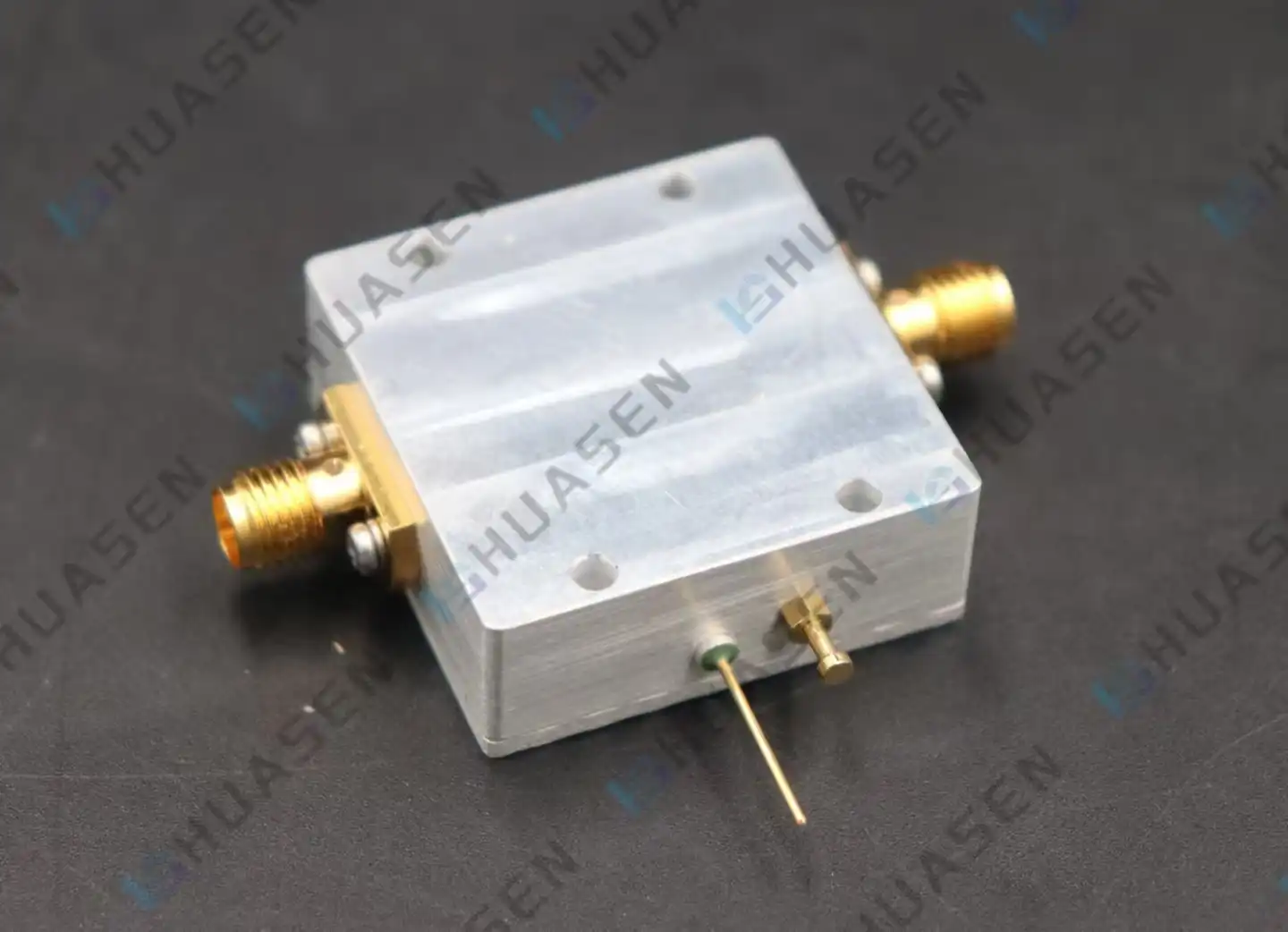
The key benefit is low-noise amplification at the data source before extra processing steps and losses. A tiny Active Detector has an LNA, bias circuits, and a detector diode. The LNA increases received data above the thermal noise level with low noise due to its 10–30 dB gain range. The signal is amplified and delivered to the detecting element, where it is demodulated or measured for power with superior signal-to-noise.
Calibration ensures the amplification chain works linearly across the dynamic range. Modern Active Detectors contain temperature adjustment circuitry that alters bias points and gain stages to prevent thermal drift. Even under extreme temperatures, this maintains precision. The result is consistent performance in climate-controlled laboratories and outdoor venues.
Technical Performance Advantages
Active detection improves performance in key areas for demanding usage, including:
- Dynamic Range Active Detectors with -60 to 0 dBm offer reliable demodulation and power monitoring at weak to intermediate signal levels. This 60 dB range includes most signal intensities utilised in telecommunications testing, antenna alignment, and receiver assessment. Passive devices can't exceed -60 dBm sensitivity. Normally undetectable signals can be monitored.
- Accuracy better than ±1 dB at critical frequencies ensures reliable readings across all frequencies. Calibration applications, including legal compliance, component evaluation, and system testing, require this precision. This precision offers base station builders trust in their front-end measurements and lab workers' confidence in antenna gain patterns.
- Covering frequencies, Modern Active Detectors may be employed in many circumstances with one device, covering 0.01 GHz to 44 GHz. This broad bandwidth eliminates the requirement for frequency-specific detectors. This simplifies inventory management and system construction while cutting ownership costs. Since it can be utilised for existing microwave lines, 5G networks, and millimetre-wave networks, communication system designers value its flexibility.
- Drifting temperature: A temperature change of ±0.5 dB from -40°C to 85°C ensures reliable operation in challenging situations. Extreme temperatures can reduce passive detector accuracy in outdoor base stations, aircraft platforms, and maritime communication systems. In these scenarios, the active circuits' built-in correction maintains readings accurately without frequent calibration.
- Power use. With power utilisation as low as 0.5 mW, dense system designs may avoid heat generation and power budget concerns. Despite active amplification, modern detectors are efficient. Advanced semiconductor techniques and circuit topologies enable this. It may be utilised at remote battery-powered sites and high-density test systems that struggle with heat since it is so efficient.
- Response time. Pulsed signals and fast modulation patterns used in radar and high-tech digital communications may be recorded with 8-nanosecond rise and fall reaction times. This temporal precision is crucial for determining pulse-doppler radar returns, testing electronic countermeasure systems, and testing burst-mode communication technologies with millisecond signal variations.
Overall, these technological benefits enable procurement managers and system designers in testing, aerospace, military, and telecoms to solve operational problems. Increased sensitivity quickly extends operating ranges, reliability margins, and system complexity by merging detecting tasks into fewer, more powerful pieces.
Comparing Active Detectors with Other Detection Technologies
To choose the best detection technology, you need to know how the different methods combine performance, cost, complexity, and suitability for the application.
Active Versus Passive Detector Performance
Passive devices are easy to use and don't use any power, but they lose sensitivity and dynamic range in the process. Their performance is good enough for high-power uses where the input signals are always above -20 dBm. Passive methods, on the other hand, make measurements less accurate and make it harder to find things when signals are weak, like when long-distance talks, satellite receiving, or testing sensitive receivers happen.
Active Detectors have higher starting prices and need bias power, but they are 20 to 40 dB more sensitive than passive detectors. This improvement usually gets rid of the need for extra preamplifiers and the interconnect losses that come with them. This could lower the total cost and complexity of the system. The unified method also makes measurements more accurate by reducing the number of factors connected to outside amplifying chains.
Infrared and Motion Sensor Comparisons
Infrared monitors and motion detectors are used for different things in robotics and security, but active RF detectors are used for very different things. RF Active Detectors work across wider frequency ranges, can pass through non-metallic barriers, and don't depend on heat signs or movement to do their job. RF active detection is the only way to get the wide frequency range and accurate measurements that are needed for communication system uses.
Decision Criteria for Technology Selection
When comparing detection systems, people in charge of procurement should look at a number of factors. Often, the detection range is the main thing that sets one system apart from another. When weak-signal detection decides whether a system can work, active methods are necessary. Interface standards, connection types, and bias voltage needs must all be compatible with the infrastructure that is already in place. Scalability is important when planning updates or additions, which is why modular Active Detector designs with standard connections are a good choice for setups that will work in the future.
Cost analysis should look at more than just the unit price. It should also look at the overall costs over the whole life of the product, such as the time it takes to be calibrated, maintained, and replaced. Active Detectors usually earn their higher price by lasting longer, needing less tuning because of built-in temperature compensation, and not needing any extra amplifier parts.
Installation, Maintenance, and Troubleshooting for Active Detectors
To get the most out of your Active Detector performance and lifespan, pay close attention to how it is installed, how it is maintained, and how it is troubleshot.
Installation Workflow and Best Practices
Look around to make sure the mounting places are safe and can bear the heat before installing. When running constantly in hot temperatures, Active Detectors utilise little electricity but need wind or heat-sinking. Mechanical stress may harm internal linkages on mobile platforms like drones, aeroplanes, and ships; therefore, vibration isolation is crucial.
Be careful when installing connectors. Cross-threading, which damages precision RF connections, can be prevented by matching socket gender and thread type. To provide proper electrical contact without stressing the connecting bodies, the torque criteria must be met. SMA connections weigh 8–12 inch-pounds. Cables should avoid steep twists and high-power transmission lines to reduce insertion loss and crosstalk.
During installation, calibration sets the standard performance and ensures the gadget functions appropriately across the frequency range. Reference signal sources that meet national requirements are essential for reliable testing. Write down the original calibration data to compare later to discover drift or deterioration.
Routine Maintenance and Calibration Intervals
Poor working conditions and application importance should be included in maintenance plans. Laboratory tools in a controlled environment may need annual calibration, whereas harsh-environment equipment should be reviewed every six months. Visually inspect the housing and joints every three months for wear, corrosion, and mechanical degradation before they break.
Firmware updates may improve device performance, expand frequency range, or solve issues. Setting up software update and deployment methods ensures that systems receive continuing manufacturer support while maintaining configuration control.
Common Troubleshooting Scenarios
A filthy connection, broken wire, or biased source issue might cause sensitivity loss. Systematic repair begins with ensuring source voltage and current draw are within limitations. When contamination causes connectors to slip out, cleaning them with the correct chemicals and lint-free materials usually cures it. Testing cables using network monitors or time-domain reflectometers reveals faulty transmission lines.
By adhering to MIL-STD, ISO, and RoHS standards, Active Detectors satisfy legal requirements and assure dependability. Certifications demonstrate a company's commitment to quality and the environment, reducing the risk of purchase and making it simpler to qualify for defence and aerospace purposes with tight supplier criteria.
Procurement Considerations and Trusted Supplier Selection
When buying Active Detectors strategically, you need to look at more than just the product specs of the suppliers.
Supplier Credential Assessment
Getting a quality certification, like ISO 9001, shows that you follow organised quality management methods that guarantee your products will always work well. Defence companies really like it when providers keep their AS9100 approval, which shows that they know about the quality standards and traceability standards for aircraft. Environmental certifications like RoHS and REACH compliance make sure that goods follow international rules on dangerous chemicals. This makes planning for rollout and disposal around the world easier.
Procurement Strategy Optimisation
Warranty policies show how confident the company is in the stability of the goods. Standard guarantees that last between one and three years offer basic safety, and choices for longer warranties show that the maker is ready to support long-term operations. Responding quickly to customer service issues after the sale is what sets great providers apart from average ones. Access to application experts for help with design, sample units for testing, and calibration data and test results show that the company cares about the success of its customers after the sale is over.
Leading Active Detector Manufacturers
Huasen Microwave Technology Co., Ltd. is an example of a company that makes high-performance active detection systems for tough industrial uses. Huasen Microwave has been in business since 1993 and makes high-frequency microwave and millimetre-wave parts for the defence, aircraft, telecoms, and radar industries. The company's Active Detectors cover frequencies from 0.01 GHz to 44 GHz and dynamic ranges from -60 dBm to 0 dBm. These ranges meet the needs of system designers and equipment makers for wide bandwidth and full coverage.
As part of its technical skills, Huasen Microwave can change the frequency response, polarisation properties, and power handling to fit the needs of each system design. This versatility comes in handy when standard store items can't meet the specific needs of an application. The company has strict quality control procedures that make sure the temperature drift meets specifications of ±0.5 dB across industrial temperature ranges, that the products are waterproof and dustproof so they can be used outside, and that they meet foreign standards like MIL-STD and RoHS.
Technical support services include design help during the planning stages of a system, performance testing on samples before large orders are made, and giving customers calibration data to help with the approval process. After the sale, responsive service fixes problems and sends new parts, which keeps mission-critical applications running as smoothly as possible. If procurement managers are looking for reliable Active Detector suppliers with experience spanning decades, Huasen Microwave is a reliable partner that can help with projects from the original idea to long-term operating support.
Conclusion
Active Detector technology makes receivers more sensitive in ways that can be measured. This leads to better system performance in radar, aircraft, telecommunications, and tests. Putting low-noise amplification, exact calibration, and environmental compensation into small detector systems gets around some of the main problems with passive detection methods. Active Detectors are worth the money for procurement managers and technical decision-makers who are looking at detection options because they have a longer operating range, more accurate measurements, and a simpler system. To have a successful deployment, you need to pay attention to the installation methods, upkeep schedules, and supplier selection factors that guarantee long-term performance and dependability. By working with skilled makers that offer full technical help and the ability to make changes, businesses can take advantage of active detection benefits while lowering the risks of procurement.
FAQ
Q1: How often should active detectors be calibrated to maintain optimal sensitivity?
How often calibration is done depends on how important the product is and the conditions outside. Lab tools that are kept in a controlled setting usually need to be calibrated once a year against standards that can be tracked. Field-deployed systems that are subject to high temperatures, vibrations, or bad weather should be checked every six months. Mission-critical apps in flight or defence may need to be checked every three months. Modern Active Detectors with temperature compensation circuits keep accuracy between calibration intervals better than older designs, possibly stretching calibration cycles. Regular self-checks that check the accuracy of measurements help find drift that needs to be calibrated out of the blue.
Q2: Can active detectors integrate with existing industrial and security systems?
Through standard interface methods, Active Detectors made for RF and microwave uses can be integrated into already-existing systems. Most units give off analog voltages that are proportional to the power they measure, so they can be used with control platforms and data gathering systems. Digital types come with RS-232, USB, or Ethernet ports for connecting to a computer and allowing tracking and control from afar. Making sure that the bias voltage is available and that the output signal works with equipment that processes it later is the most important thing to think about when integrating. Manufacturers usually give interface standards and integration instructions that make it easy to add to both old and new system designs.
Q3: What warranty provisions do reputable suppliers offer for active detectors?
Active Detector makers with a good reputation usually offer guarantees that last between one and three years and cover problems with the materials or the workmanship. For an extra fee, premium providers may offer longer warranty choices. These are especially useful for mission-critical uses where the cost of replacement goes beyond the price of the part and includes the time the system is down. The warranty terms should make it clear what is covered, such as whether calibration drift is covered by the guarantee or just a normal part of aging that needs to be adjusted every so often. Comprehensive warranties cover failure analysis help and early replacement options, which keep operations running as smoothly as possible while warranty claims are being processed.
Partner with Huasen Microwave for Superior Active Detector Solutions
The full Active Detector portfolio from Huasen Microwave should be looked at by system designers and equipment makers who want to improve receiver sensitivity for demanding uses in radar, aerospace, and telecommunications. Our Active Detector systems cover frequencies from 0.01 GHz to 44 GHz, have a dynamic range of -60 to 0 dBm, and are more accurate than ±1 dB. They can also handle a wide range of practical needs. Temperature-compensated systems keep the level of steadiness at ±0.5 dB from -40°C to 85°C, so they work well even in harsh conditions. Huasen Microwave is a reliable Active Detector source for companies that value performance, dependability, and quick technical help. They have decades of experience making products and strict quality control procedures. Email our applications engineering team at sales@huasenmicrowave.com to talk about your unique needs, ask for test units, or look into customisation choices that fit your system architecture.
References
1. Pozar, David M. Microwave Engineering, 4th Edition. Hoboken: John Wiley & Sons, 2011.
2. Collin, Robert E. Foundations for Microwave Engineering, 2nd Edition. New York: IEEE Press, 2001.
3. Skolnik, Merrill I. Introduction to Radar Systems, 3rd Edition. New York: McGraw-Hill Education, 2001.
4. Rappaport, Theodore S. Wireless Communications: Principles and Practice, 2nd Edition. Upper Saddle River: Prentice Hall, 2002.
5. Rohde, Ulrich L., and David P. Newkirk. RF/Microwave Circuit Design for Wireless Applications. New York: John Wiley & Sons, 2000.
6. Golio, Mike, and Janet Golio. RF and Microwave Passive and Active Technologies. Boca Raton: CRC Press, 2007.
Send Inquiry