Helical Antenna Applications in Aerospace and Defense






2026-06-17 21:24:49
When mission-critical communications in defence and flight need to be completely reliable, engineers use specialized RF parts that work the same way in all kinds of tough operating situations. In satellite telemetry, UAV command lines, radar feeds, and safe combat communications, Helical Antennas have become essential instruments. Their special shape creates circular polarization, which keeps the signal strong no matter which way the platform is facing. This is very important when satellites fall during placement or when airplanes do high-G maneuvers. With frequency ranges from 200 to 5000 MHz and gains ranging from 3 to 12 dB, these antennas are the best choice for system designers who can't afford transmission problems because they are both small and effective.
Understanding Helical Antenna Fundamentals in Aerospace and Defence
Core Operating Principles
A Helical Antenna has a wire winding around a cylinder-shaped support structure. Antennas in axial mode emit helix-polarized waves in a circle. This differs from linear-polarized patch or dipole antennas. Circular polarisation eliminates linear polarisation's direction dependency. As satellites rotate in orbit, signal strength remains constant; therefore, they don't need mechanical tracking alterations.
Performance depends on shape. Wire diameter, helix diameter, turn spacing, and number of turns influence impedance matching, bandwidth, and radiation pattern. Huasen Microwave's Helical Antennas may have left or right circular polarisation by adjusting the helix. This provides designers with additional possibilities without complicating manufacturing.
Performance Parameters That Matter
Three factors guide aerospace and defence purchases. Operating freedom depends on bandwidth. A 20% bandwidth antenna with VSWR < 1.5 simplifies communication and reduces costs by covering many channels. Gain directly impacts link budget estimations. Typical levels of 3 to 12 dB allow long-distance interaction without utilizing too much transmitter power. Numbers below 3 dB (typically 2 dB in premium versions) indicate pure polarisation and ensure the best signal reception regardless of transmitter polarisation.
Comparing these measures to patch antennas shows their superiority. Patch antennas feature lower bandwidths and angled orientations. Dipole antennas can receive signals from all directions, but they lack focused gain for long-distance interaction. Helical Antennas balance directivity, bandwidth, and polarisation in a robust package.
Environmental Resilience for Harsh Conditions
Antennas in aerospace and defence are threatened by extreme temperature, pressure, shock, moisture, and atmospheres. Helical Antennas may withstand mechanical stress better than flat ones by their sheer nature. The three-dimensional form distributes stresses throughout the structure rather than stressing solder connections or substrate surfaces. Good producers place the helix in IP67 dielectric radomes. This totally prevents dust and brief water exposure.
Temperature fluctuations between -55°C and +125°C are common in space and high-altitude aviation systems. Choose the proper material since discrepancies in the wire and support structure's coefficients of thermal expansion might affect the antenna's frequency or cause mechanical failure. Dielectric materials with continuous permittivity maintain electrical performance at all operating temperatures.
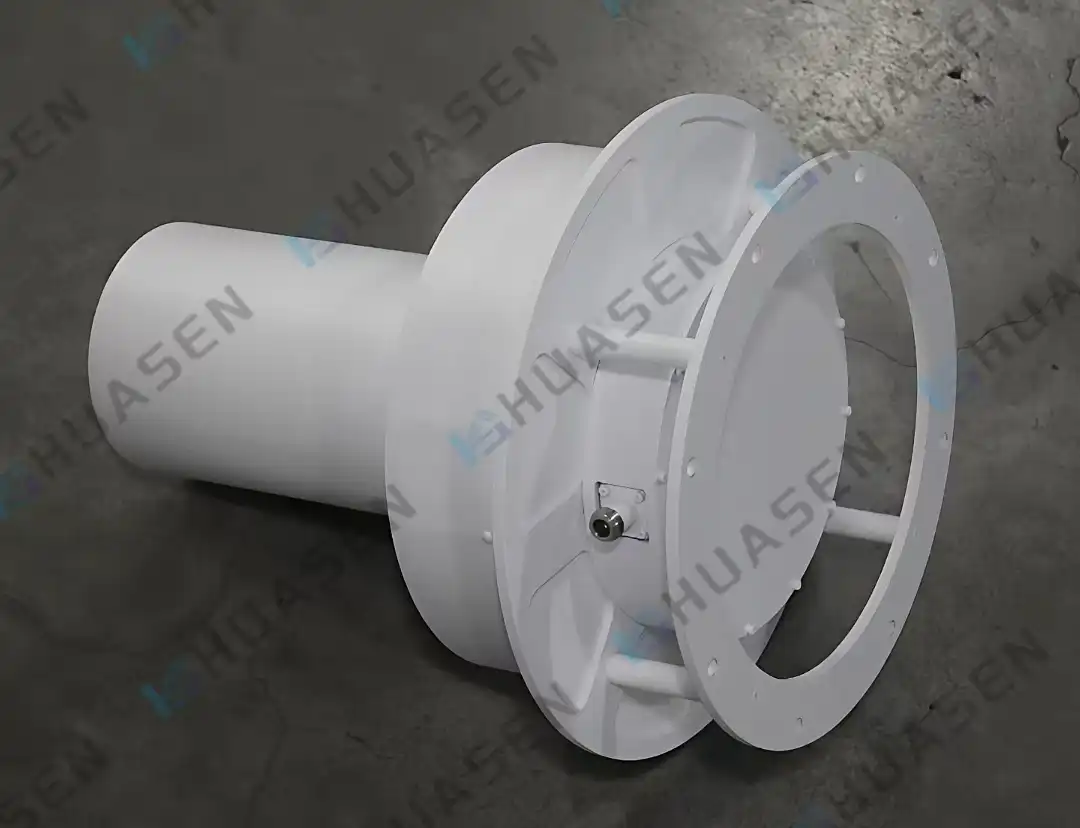
Aerospace Applications of Helical Antennas
Satellite Communication Links
Helical Antennas are utilized for both ground station uplinks and low-earth orbit satellite downlinks. In linearly polarised systems, Faraday spin in the ionosphere causes a 3 dB signal loss. Circular polarisation causes this. As attitude control may not be set up before satellite launch, the spacecraft may fall unexpectedly. Helical ground station antennas catch up signals during these motions, allowing crucial mission data to be received.
Standard satellite transmission allocations encompass S-band (2-4 GHz) and C-band (4-8 GHz). Wide beamwidth (60–90 degrees at half-power points) makes tracking simpler than with narrow-beam parabolic reflectors. Aerospace integrators enjoy this operational cushion because communication continues even if mechanical wear or control system drift affects direction accuracy.
UAV Telemetry and Command Systems
Ground control stations must communicate with aircraft that can bank suddenly, rise swiftly, or fly over 100 km distant consistently and reliably for unmanned aerial vehicle operations to operate. Helical Antennas installed beneath the body give hemispherical coverage without the aerodynamic limitations of visible structures. The antenna is tiny (one wavelength long for optimal gain) and easy to mount on small combat UAVs.
Multiple-frequency capabilities let a single antenna arrangement handle video downlink, data transmission, and command uplink. This merger reduces weight, which affects flight time and cargo capacity. Military firms buying UAV parts search for antennas that perform in all flying circumstances and fulfil MIL-STD-810 stress and vibration specifications.
Deep Space Exploration Feeds
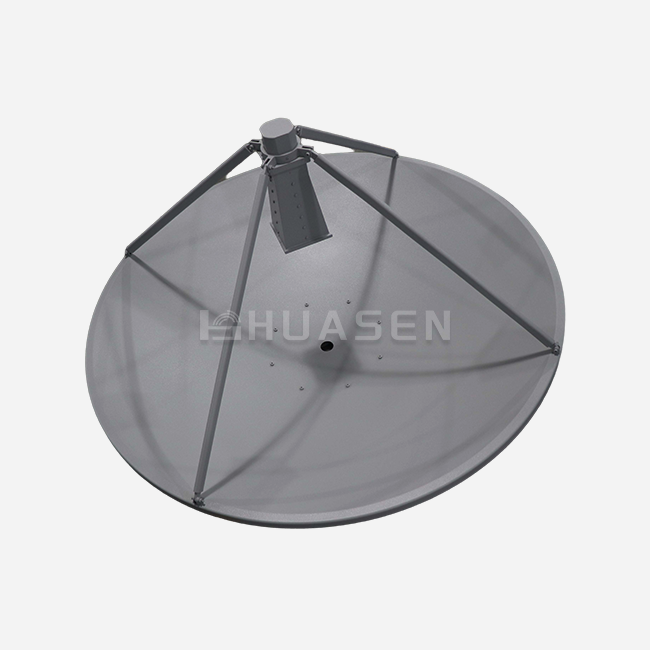
Deep space missions communicate over millions of kilometres with 2–70-meter parabolic reflector antennas. Helical Antennas serve as feed elements at the reflector's focus point, illuminating the dish with circularly polarised radiation. The inverse-square rule across cosmic distances reduces signal strength; hence, this arrangement needs large gains (40–70 dB) to break communication lines.
The feed receiver's vertical ratio affects system performance. Even a little polarisation contamination can destroy a signal. Precision manufacture maintains axial ratios below 2 dB across the operating spectrum. This maximizes wattage from spaceship emitters with tens-watt solar panel power budgets. NASA's Jet Propulsion Laboratory and other organizations have stringent performance demands that only specialized manufacturers can meet.
Defence Industry Applications and Benefits
Secure Military Communications
Defence communication systems operate in contested electromagnetic environments; therefore, attackers deliberately jam and seize them. Sending linearly polarised jamming signals to circularly polarised receivers reduces coupling by 3 dB. This is because circular polarisation naturally suppresses interference. This gap typically determines contact in cyberwarfare.
Tactical radio networks benefit from the employment of multi-band Helical Antennas in the VHF to UHF (200 to 500 MHz) frequency range, and satellite transmission systems use higher-frequency equivalents. With spread-spectrum and frequency-hopping, frequency agility makes communications tougher to detect for attackers. System designers choose anti-jamming antennas without active electronic defences for safe communication networks.
Electronic Warfare and SIGINT Operations
Signal intelligence requires receivers with reliable gain patterns and many signal inputs. While maintaining their circular polarisation, Helical Antennas arranged in circles cover all 360 degrees. You may listen to many chat lines without returning due to the huge instantaneous bandwidth (20% of the central frequency).
Direction finder systems employ the Helical Antenna's stable phase center. Comparing signal phases at different antenna elements can give a heading estimate within a few degrees. This function aids strategic information gathering and tactical weapon targeting. Defence businesses buying antennas for electronic warfare equipment must document the radiation pattern. This should provide cross-polarization levels and phase center placement throughout the frequency range.
Ground and Naval System Integration
Ground radar and maritime transmission stations face salt spray, severe winds, ice buildup, and temperature variations. Even after decades of usage, corrosion-resistant Helical Antennas (such as stainless steel wires and UV-stabilized radomes) continue to function well. Simple feed networks are more dependable since fewer pieces equal fewer failures.
Circular polarisation is important in naval communications when the ship is tossing and pitching in severe seas. As the ship travels, the polarisation plane shifts away from shore stations, causing linear antenna signal loss. Circular polarisation ensures consistent contact regardless of platform shift, addressing this shortcoming. Quadrifilar helix antenna is a common choice for such naval communication systems, and marine equipment purchases generally need MIL-STD-810 salt fog testing and shock strength to withstand firing guns.
Procurement Considerations for Helical Antennas in Aerospace and Defence
Custom Versus Off-the-Shelf Solutions
The reliability, low cost, and fast delivery of standard stock antennas make them useful in many scenarios. Popular frequency ranges with precise characteristics are stocked at Huasen Microwave. This enables speedy prototyping and small-scale manufacturing. Off-the-shelf parts perform effectively when system demands match standard goods and integration limits allow for several mounting alternatives.
Custom Helical Antennas are needed when space limits require unusual form factors, gain demands are higher than conventional setups, or operation at restricted or non-standard frequencies is required. Technical analysis, prototypes, anechoic chamber testing, and design revisions comprise custom development. This method takes longer and costs more per unit, but it performs best for each mission profile. Large system designers spend 12–16 weeks constructing unique antennas and passing military tests.
Certification and Compliance Requirements
You must follow design criteria while buying aeronautical and defence products. To prevent receivers from sending out undesirable signals or being exposed to outside interference, MIL-STD-461 regulates electromagnetic interference. MIL-STD-810 governs testing in temperature, humidity, vibration, shock, and salt fog. ITAR restricts defence sales, and RoHS restricts chemical usage.
Aerospace vendors employ AS9100 and ISO 9001-approved quality management systems. Test reports from accredited labs, material certificates from the mill, and inspection documents verifying dimensions are included in documentation packages. Procurement professionals evaluate sellers based on heavy documentation. Missing certificates delay the program and increase compliance concerns, outweighing any initial cost benefits.
Technical Support and Design Assistance
System architects and antenna providers must collaborate to tackle difficult system integration issues. Link budget analysis determines if antenna gain is sufficient for transmission ranges depending on transmitter power and reception sensitivity. The mounting frame geometry impacts antenna performance through ground plane interactions and structural resonances. Lossy cables reduce antenna performance gains, affecting system performance.
During planning, skilled providers review system designs and recommend antenna configurations for applications engineering. Sample assessment programs evaluate antennas in real-world environments before bulk manufacture. Calibration data supply goes beyond specification compliance. A vector network analyzer provides reliable data to help system designers simulate whole RF chains.
Supply Chain Stability and Delivery Performance
From design to deployment and upkeep, defence projects can take decades. Changing a component's approval testing after it becomes outdated is expensive. Long-term availability assurances and thorough obsolescence control from well-known producers indicate supply chain stability. Escrow arrangements for critical designs prevent supplier issues.
Projects with scheduled targets tied to contract payments need delivery success metrics. Reliable suppliers stock capacity buffers and component supplies to satisfy urgent requirements without compromising quality. More procurement personnel desire to collaborate with U.S.-based manufacturers and engineers. This reduces import delays, simplifies ITAR compliance, and facilitates cross-time-zone communication.
Future Trends and Innovations in Helical Antenna Technology
AI-Driven Design Optimization
While electromagnetic simulation tools have changed the way antennas are made, standard methods still need a lot of human testing. Now, programs that use artificial intelligence automatically search through huge design spaces to find the best shapes that human engineers might miss. Machine learning models that have been trained on thousands of simulation results can predict performance based on dimensional factors. This cuts the time it takes to start designing something from weeks to hours.
Generative design methods suggest new Helical Antenna shapes that are best at achieving multiple goals at the same time, such as increasing gain while reducing mass or getting broadband performance within a limited space. As engineering time goes down, these computational methods will make it possible to build unique antennas at prices close to those of standard antennas. When defence projects need to adapt tried-and-true designs to new frequency allocations or platform interaction needs, fast design iteration is especially helpful.
Advanced Materials and Manufacturing
Using selective laser sintering of metal powders or direct metal casting, additive manufacturing technologies make it possible to make Helical Antennas. These methods make complicated shapes that can't be made with regular machining. For example, variable pitch helices are better at sending out certain types of radiation, combined feed networks get rid of the need for links, and monolithic structures combine the antenna and mounting interface. When compared to polished parts, they can be 40% lighter while still having the same electrical performance.
Composite materials with conductive threads mixed in with structural plastics are used to make antennas that can also be used as load-bearing aircraft parts. This structural integration gets rid of the need for separate mounting holes, which saves weight and lowers aerodynamic drag in rocket and airplane uses. At high frequencies, carbon nanotube wires have lower resistive losses than copper. They also have better strength-to-weight ratios, which is important for space uses where launch costs are thousands of dollars per kilogram.
Satellite Constellation Demands
Mega-constellation projects that put thousands of satellites into low-Earth orbit create a need for small, light antennas that have never been seen before. CubeSat platforms, which are only 10x10x30 centimetres, need antennas that fold up during launch and then unfold themselves automatically in space. Because of these limitations, Helical Antennas use flexible or inflatable parts to maintain the electrical performance even though the mechanical parts are complicated.
Intersatellite links that allow cluster members to connect through mesh networking need antennas that can point precisely but don't have to follow strict ground plane standards. Helical configurations work best in these situations. Hundreds of thousands of antennas will be sent into space over the next ten years. This will give suppliers a chance to show that they can make large quantities of products with stable quality and low prices.
Conclusion
Circular polarization maintains signal integrity across dynamic platforms, wide bandwidth makes system design easier, and mechanical robustness withstands harsh operational environments are just a few of the special features that Helical Antennas offer that directly address the needs of aerospace and defence. The mission's success depends on the procurement choices that are made by matching performance requirements with cost, delivery times, and the reliability of the suppliers. The need for specialized RF components will grow as satellite groups grow and robotic systems become more common. When system integrators work with experienced makers that offer both catalogue goods and custom engineering services, they can meet new challenges and keep their technological benefits in areas that are competitive.
FAQ
Q1: Why are helical antennas preferred over patch antennas in aerospace applications?
Even at low elevation angles that are getting close to the horizon, Helical Antennas keep circular polarization purity across their full beamwidth. Patch antennas have smaller shapes, but their axial ratio drops when the boresight goes beyond ±40 degrees. Patch antennas would lose a lot of signal when satellites are low in relation to ground stations or when an airplane banks during maneuvers. The wide, hemispherical coverage pattern of the helical design makes sure that transmission stays reliable even when the platform's direction changes without warning.
Q2: How do I select between a helical antenna and other circular polarization designs?
Selection is based on the needs of the application. When directional gain (6–12 dB) and wide bandwidth (20% fractional bandwidth) are required in a package that is physically straightforward, Helical Antennas shine. Quadrifilar helix antennas have wider beamwidths (almost omnidirectional) but lower gain, making them good for handheld users but not good for long-distance lines. Crossed-dipole designs can make circular polarization, but they need complicated feed networks that are easy to break. Figure out which topology works best for your system design by looking at link costs, room limitations, and environmental conditions.
Q3: Can helical antennas be customized for classified defence frequency bands?
Of course. By changing the helix width, turn spacing, and conductor lengths, custom Helical Antennas can work with any frequency between 200 MHz and 5000 MHz. As part of the development process, non-disclosure agreements protect knowledge about frequencies, radiation patterns, and applications. Making things that are ITAR-compliant and only letting U.S. people access them saves secret defence technology. Custom secret designs usually take 14 to 18 weeks to deliver, which includes getting security clearances, verifying the design, and qualifying tests as required by the defence contract.
Partner with Huasen Microwave for Mission-Critical Antenna Solutions
Integrators of military and defence systems looking for a trusted Helical Antenna manufacturer can turn to Huasen Microwave Technology, which has 30 years of experience in specialized RF engineering. Our designs for Helical Antennas cover frequencies from 200 to 5000 MHz and have exceptional axial ratios below 2 dB. This makes sure that your important communication links can catch signals as efficiently as possible. Our applications engineering team can help you with all of your design needs, whether you need catalogue parts for fast prototyping or custom-engineered solutions that are best for your goal. Our manufacturing is ISO 9001 certified to back up their work.
We know that procurement choices aren't just based on specification sheets; the success of a program depends on how well it is delivered, how full the documentation is, and how quickly expert help is provided. Email our team at sales@huasenmicrowave.com to talk about what dish you need. We give you a thorough link budget analysis, rising integration advice, and sample evaluation programs that you can use in your real operational setting to make sure they work before you commit to production.
References
1. Kraus, J. D., & Marhefka, R. J. (2002). Antennas: For All Applications (3rd ed.). McGraw-Hill Education.
2. Balanis, C. A. (2016). Antenna Theory: Analysis and Design (4th ed.). John Wiley & Sons.
3. Stutzman, W. L., & Thiele, G. A. (2012). Antenna Theory and Design (3rd ed.). John Wiley & Sons.
4. IEEE Standards Association. (2021). IEEE Standard for Definitions of Terms for Antennas. IEEE Std 145-2013.
5. U.S. Department of Defense. (2015). MIL-STD-461G: Requirements for the Control of Electromagnetic Interference Characteristics of Subsystems and Equipment. Department of Defense Interface Standard.
6. Volakis, J. L. (2007). Antenna Engineering Handbook (4th ed.). McGraw-Hill Professional.
Send Inquiry