What Is Parabolic Antenna and How It Focuses RF Energy?






2026-06-17 21:24:58
To direct radio frequency energy at a single place called the focal point, a Parabolic Antenna uses a curved reflector with a mathematically precise parabolic shape. When broadcasting, the feed horn at this focal point sends out RF waves that hit the surface of the reflector and move forward in a very focused beam. This makes the signal stronger and farther away. When it receives, the reflector gathers incoming RF energy across its full opening and focuses it on the feed horn. This makes reception much more sensitive and cuts down on noise disturbance.
Introduction to Parabolic Antennas
One of the most effective ways to communicate over high frequencies is with a Parabolic Antenna reflector. They are very important in antenna systems for point-to-point wireless bridge systems, marine communications, radar sites, and telecommunications backhaul networks because they focus electromagnetic energy. These curved reflectors can be found on cell phone towers, spaceships, military ships, and broadcasting sites all over the world.
The physical accuracy of these antennas is what makes them so important. Omnidirectional antennas send messages in all directions. Parabolic designs, on the other hand, focus energy into small beams, giving them great gain and directivity. This feature directly solves several practical problems, including getting around signal loss over long distances, reducing interference in crowded spectrum areas, and increasing data throughput for high-bandwidth uses such as 5G backhaul and satellite internet.
Why Shape and Material Quality Matter
The reflector surface must match its measurements within a narrow operating frequency. Surface imperfections cause phase errors that scatter energy from the focal point, diminishing gain and increasing sidelobe radiation. Most high-performance devices are powder-coated spun metal or precision-formed materials to resist corrosion in harsh climates. It is mathematically demonstrated that all parabolic curve points return parallel rays to the same focal point. This ensures signal coherence.
Material choice influences electrical conductivity and mechanical durability. Aluminium is light and conducts electricity well. For large-diameter systems, composite materials with metallic meshes resist wind stresses better. Surface treatment determines an antenna's durability in severe settings like the ocean, desert, and cold, where temperature variations, salt spray, and UV radiation can destroy it.
Industry Applications and Requirements
Telecom system builders employing 5G backhaul networks need antennas with high strength (30–45 dBi) and narrow beamwidth for point-to-point connections between base stations and core network nodes. To maintain Ku and Ka band performance, satellite users require surface accuracy greater than λ/16 RMS error. Radar specialists prefer low-sidelobe receivers to reduce noise and boost target range.
How Parabolic Antennas Focus RF Energy: Principles and Theory
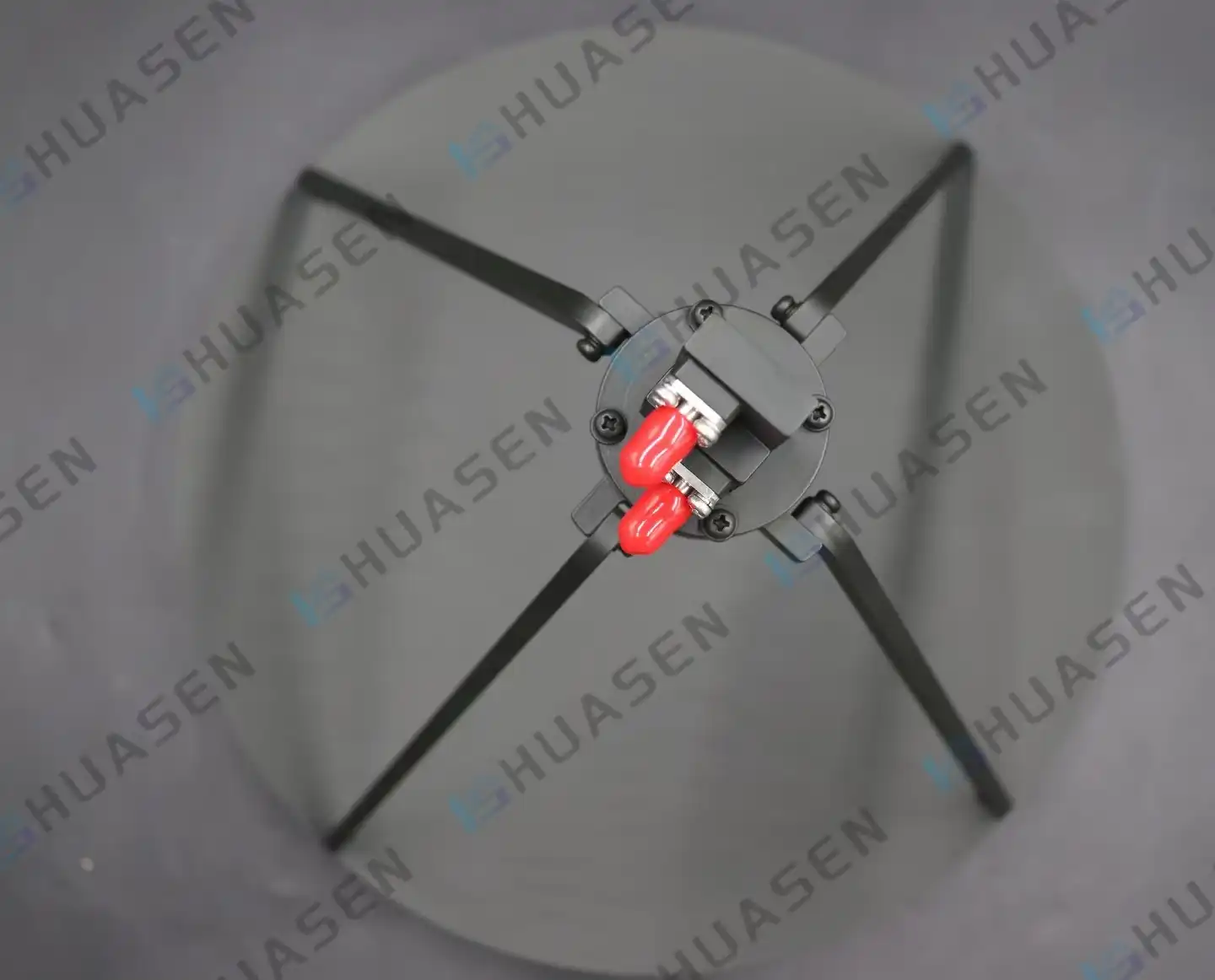
Geometric optics rules are used to explain how Parabolic Antennas work with electromagnetic waves. A special thing about every parabolic curve is that any ray that is parallel to the line of symmetry bounces off the surface and goes through the focus point. This feature works in both directions, which means that waves coming from the focal point bounce off the surface as parallel rays that make a focused beam.
Geometric Design and Focal Point Concentration
Plugging y = 4fx yields a parabola. Focal length is f. At this focus, the feed horn converts transmission line energy into spreading waves. In broadcast mode, circular feed waves contact the reflector and become narrow-beam plane waves. In receive mode, plane waves from distant sources bounce off the surface and form a coherent phase at the feed horn.
Aperture efficiency measures how successfully a reflector converts surface area into power. Well-designed antennas function 57%–75% of the time. Feed obstruction, spillage, and surface defects create losses. Light transmission and sidelobe depend on the f/D ratio. Values between 0.25 and 0.45 balance feed design complexity and electricity performance.
Gain, Beamwidth, and Directional Accuracy
Compared to an isotropic reflector, antenna gain measures signal amplification. The formula for gain, G = (πD/λ), indicates a 6 dB increase in gain when the width is doubled. At 65% efficiency, a 1.2-meter dish at 6 GHz (λ = 5 cm) provides 35 dBi gain. As the diameter increases, the beamwidth decreases (θ = 70λ/D degrees). In high-deployment environments, narrow beams reduce crosstalk and allow frequency reuse.
Radiation patterns reveal major lobe features and sidelobe suppression. High-performance antennas have front-to-back ratios of 60 dB, wasting less energy. Cross-polarization discrimination (XPD) is crucial in dual-polarized systems with independent data streams. Channel separation between 30 and 40 dB helps MIMO and XPIC technologies maximise spectrum efficiency.
Frequency Range Considerations
From the UHF band up to the millimeter wave band, Parabolic Antennas work well. Because they need bigger lengths to get enough gain at lower frequencies, they can't be used below 1 GHz. At higher frequencies (E-band, 60–90 GHz), even small sizes give a lot of gain, but the standards for surface accuracy get a lot stricter. To make a 0.3-meter dish that works for 6 GHz microwave links, the standards needed for mass production at 80 GHz would be too tight.
Comparing Parabolic Antennas with Other Antenna Types
Knowing the trade-offs in performance between antenna technologies helps buying teams choose the best options for each job. When maximum gain and directivity are needed, Parabolic Antennas work best. Other forms, on the other hand, are better in terms of size, cost, or bandwidth.
Parabolic vs. Yagi Antennas
Yagi antennas make directed patterns by arranging many linear parts along a boom. They usually give 10–17 dBi gain, which is a lot less than parabolic types of the same size. In VHF and UHF situations where modest gain is enough and lower wind loads are preferred, yagis are the most common antenna type. Above 2 GHz, where their gain benefit outweighs their structural complexity, parabolic mirrors become the best choice.
Parabolic vs. Flat Panel and Phased Array
Microstrip patches or slot arrays are used in flat panel antennas to get directivity without the need for bent reflectors. They have smaller visual profiles and are easier to put together, which makes them appealing for setups that care about how things look. Gain levels between 18 and 25 dBi are usually enough for point-to-point links with short to medium ranges. Phased arrays make it possible to steer the beam electronically, but they are much more expensive. In fixed-pointing situations, Parabolic Antennas are still the best choice for getting the most gain for your money.
Structural and Cost Considerations
Parabolic Antenna size grows directly with the need for gain. A 0.6-meter dish for short-distance microwave links is between 5 and 8 kg, and 3-meter satellite earth station antennas need strong pedestals and supporting structures. Wind loading estimates show what kind of tower reinforcements are needed, which affects how much the whole installation costs. Radomes cover lower wind resistance and protect feed parts, but they also add an insertion loss of 0.5 to 1 dB.
As more is made, the costs of making it go down. Standard sizes (0.3m, 0.6m, 1.2m, 1.8m, and 2.4m) save money through economies of scale, but special widths cost more to make. When choosing materials, performance and environmental needs must be weighed. For example, marine installations need finishes that are made for the sea, while land installations may be able to handle normal powder painting. A parabolic reflector antenna must also be designed to balance these tradeoffs.
Practical Applications and Troubleshooting of Parabolic Antennas
In the real world, deployments happen in many different businesses, and each one has its own set of technical and practical problems. Engineering teams can keep systems available and improve performance by learning about popular apps and troubleshooting methods. Parabolic Antennas are critical components in these high-stakes environments.
Telecommunications Backhaul Networks
Parabolic Antennas are used by cell phone companies to connect base stations and switching offices over microwave links. Point-to-point links like these usually work in approved bands (6, 11, 18, and 23 GHz), and their channel bandwidths can handle data rates of several gigabits per second. Path loss, atmospheric absorption, rain fade gaps, and equipment noise numbers are all taken into account in link budgets. Dual-polarized antennas with XPIC make it possible to double the capacity while keeping the same frequency allocation. This makes the best use of the spectrum.
Link speed is directly affected by how well the link is installed. As the frequency goes up, alignment gaps get smaller. At 23 GHz, a 1-degree pointing mistake causes the signal to weaken significantly. During setup, precision inclinometers and spectrum analyzers are used by professional fitters to find the best azimuth, elevation, and polarization angles. Tower-top amplifiers and low-noise block converters keep wire losses between the antenna and the radio devices to a minimum.
Satellite Communication Ground Stations
Very Small Aperture Terminal (VSAT) networks use geostationary satellites to connect rural areas to high-speed internet services. From 0.75 m for consumer installs to 3.7 m for business earth stations, antennas come in a range of sizes. Because satellites have small footprints, pointing accuracy needs to be 0.1 to 0.2 degrees. LEO (Low Earth Orbit) satellites can be tracked as they move through the sky thanks to motorized positioners.
The main thing that breaks down satellite links, especially at Ku and Ka bands, is rain attenuation. System makers include fade gaps (usually between 3 and 6 dB) to keep the service available during rainstorms. Radomes have hydrophobic coats that stop water films from forming, which would otherwise cause more absorption. De-icing tools for antennas are needed in places where freezing rain or snow builds up on reflector surfaces.
Radar and Sensor Systems
Large Parabolic Antennas (2–8 meters in diameter) that rotate all the time to scan the sky are used by weather monitoring radars. The highest clear range and spatial resolution are set by the pulse repeat rate and beamwidth. Sidelobe suppression must be less than -30 dB for air traffic control radars to avoid picking up too many fake targets from ground clutter echoes.
Marine guidance radars use smaller antennas (0.6 to 1.2 m) that work in either X-band (9 GHz) or S-band (3 GHz). Every few seconds, rotating pedestals update the positions of the targets around a full circle scan. The radar horizon distance is equal to 4.12 times the antenna height above sea level, where h is the antenna height in meters.
Troubleshooting Common Issues
Lower received signal strength indication (RSSI) or higher bit error rates are signs of signal decline. Visual inspection is the first step in systematic repair. Look for physical damage, water getting in through waveguide flanges, loose mounting gear, and cracks in the radome. Use GPS measurements and bearing estimates to make sure the pointing is correct. Over time, yearly thermal growth of tower structures can cause them to move out of alignment.
Connector rust at the feed horn contacts causes impedance mismatches that can be seen with VSWR tests. Values higher than 1.5:1 mean there are problems that need to be fixed by replacing the connectors or cleaning the waveguides. Intermodulation interference from close emitters shows up on spectrum analyzer screens as false signals. To get speed back to normal, bandpass filtering or moving the page may be needed.
Procurement Guide: Buying and Sourcing Parabolic Antennas
When making strategic buying choices, technical needs are weighed against budget limits, delivery dates, and the need for long-term assistance. Teams in charge of buying Parabolic Antennas have to look at a lot of different factors to make sure that the antennas they choose will work for both current rollout needs and future growth needs.
Identifying Reputable Manufacturers
Quality, dependability, and rules are hallmarks of established producers. Long-standing companies understand their industry's demands and maintain ISO 9001-compliant quality management systems. Choose vendors with thorough technical documents, including radiation pattern measurements, mechanical drawings, and MIL-STD or ETSI environmental test data.
Rules vary by location for antenna selection. North American fixed microwave deployments must satisfy FCC Part 101. European installations must follow ETSI EN 302 217 sidelobe band antenna classifications. Choosing producers who know the target market restrictions speeds up licensing and deployment.
Customization and OEM Capabilities
Standard shop products may be utilised in many contexts, while unique designs are preferred for specialised systems. Customising the frequency spectrum, installing dual-polarization devices, procuring unique mounting clips, and making the gadget weatherproof are common requests. OEMs like Huasen Microwave Technology Co., Ltd. employ their 30 years of RF engineering skills to produce customer-specific solutions.
Customisation alters lead times and minimum orders. Prototyping takes 4–8 weeks, followed by pre-production proof testing. Cost-effective manufacturing runs exceed 50 to 100 units, depending on plan complexity. Clear specification paperwork with frequency range, gain goals, VSWR limits, mechanical interface requirements, and environmental conditions speeds up the quote and development.
Cost-Effectiveness and Total Ownership
The unit price goes down as the order number goes up. When you buy one piece from a distributor, the store will add a markup to the price. But when you buy in bulk from the maker, you can get savings of 20 to 40 percent on orders over 100 units. The total cost of ownership includes more than just the buy price. It also includes shipping, customs duties, labor for installation, and ongoing upkeep costs.
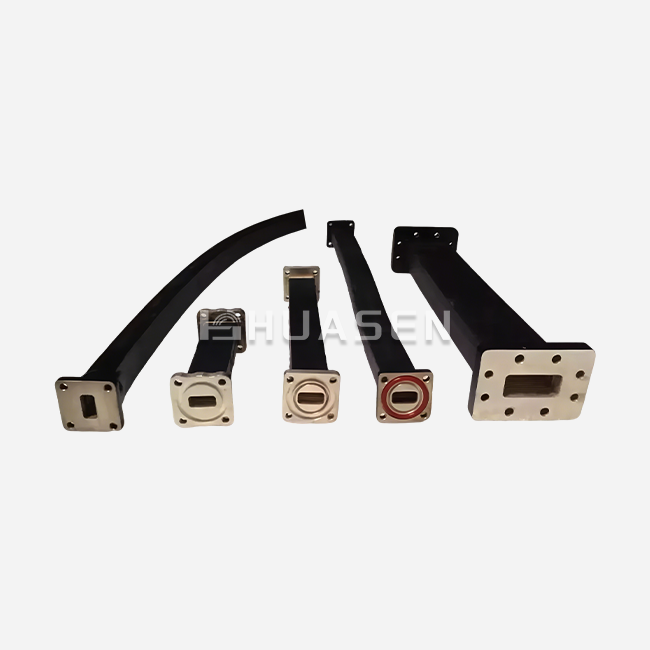
When buying things from other countries, logistics planning is very important. Larger antennas are shipped as large freight, which means they cost more to ship. Regional warehousing cuts down on the time it takes to send new units that help with network growth or repair. Buying antennas along with related parts like mounting hardware, waveguides, and radomes from the same Parabolic Antenna seller speeds up the buying process and lowers the amount of work that needs to be done on the administrative side.
Technical Support and After-Sales Service
Pre-sales engineering helps make sure that design choices are correct and that specs are clear. Manufacturers who provide help for site surveys, interference analysis, and link budget calculations add value beyond the products they sell. Sample review programs let people try things out for themselves before placing large orders, which lowers the risk of rollout.
Post-sales support includes things like guarantee coverage, getting new parts, and help with fixing problems. Standard warranty terms are between one and three years, but for important infrastructure uses, longer coverage is possible. Quick technical support teams cut down on the time it takes to fix problems in the field, which means less network downtime that affects services and income streams for end users.
Conclusion
When you need high gain, a small beamwidth, and great directivity, Parabolic Antennas are the best option. Their ability to focus RF energy makes long-distance connections reliable, whether they're linking cell phone base stations, setting up satellite links, or using radar for spying. Understanding the basic science behind parabolic reflectors, comparing their performance to other types of antennas, and being aware of actual application issues helps procurement teams and engineering professionals make smart choices. Buying from manufacturers with a lot of experience makes sure that you can get customized solutions, full expert support, and reliable supply lines that can handle the tough needs of today's defense, aerospace, and communications systems.
FAQ
Q1: How do parabolic antennas improve signal quality compared to omnidirectional designs?
Improvements of 25–35 dB over omnidirectional antennas are provided by Parabolic Antennas, which focus broadcast power into narrow lines and gather signals coming in through large openings. This directivity cuts down on multipath interference and noise from unwanted directions and makes the transmission range much longer. By keeping disturbance to nearby systems to a minimum, the targeted energy pattern makes it possible to reclaim spectrum in dense networks.
Q2: Can parabolic antennas be customized for specific frequency ranges?
You can change things like the frequency band, the shape of the feed horn for certain polarizations (linear or circular), and the accuracy of the surface based on the working wavelength. To meet customer needs, manufacturers change the shape of reflectors, choose the right materials, and set up feed networks. Dual-band designs allow for multiple frequency allocations within a single antenna assembly. This means that less tower room is needed and building costs are lower.
Q3: What environmental protection features should I specify?
For outdoor installs, you need coatings that don't fade under UV light, hardware that doesn't rust (stainless steel or hot-dip galvanized), and sealed feed boxes that keep water out. While causing little to no signal loss, radomes protect against wind loads, ice buildup, and bird hits. Temperature working ranges should match the temperature zones where the devices will be used. For land uses, these ranges are usually between -40°C and +60°C.
Partner with Huasen Microwave for High-Performance RF Solutions
Whether you're upgrading your phone system or making the next wave of tracking systems, you need antennas that are precise and reliable. Huasen Microwave Technology Co., Ltd. has more than 30 years of experience in making microwave and millimeter-wave parts. They can provide Parabolic Antennas solutions that meet the strict needs of 5G backhaul, satellite communications, and military uses. We can customize everything from frequency optimization to weather defense, and we offer full design help and quick support after the sale. As a maker of Parabolic Antennas, whether you need a single prototype for testing or a lot of them, our engineering team works closely with system designers and equipment builders to make sure everything fits together perfectly. Get in touch with us at sales@huasenmicrowave.com to talk about your unique needs and find out how our track record in waveguide components, millimeter-wave antennas, and coaxial devices can help your RF system work better.
References
1. Balanis, Constantine A. Antenna Theory: Analysis and Design. 4th ed. Wiley, 2016.
2. Stutzman, Warren L., and Gary A. Thiele. Antenna Theory and Design. 3rd ed. Wiley, 2012.
3. IEEE Standard for Definitions of Terms for Antennas. IEEE Std 145-2013.
4. ETSI EN 302 217-4-2: Fixed Radio Systems; Characteristics and Requirements for Point-to-Point Equipment and Antennas; Part 4-2: Antennas. European Telecommunications Standards Institute, 2019.
5. Milligan, Thomas A. Modern Antenna Design. 2nd ed. Wiley-IEEE Press, 2005.
6. Silver, Samuel, ed. Microwave Antenna Theory and Design. MIT Radiation Laboratory Series, Vol. 12. McGraw-Hill, 1949.
Send Inquiry